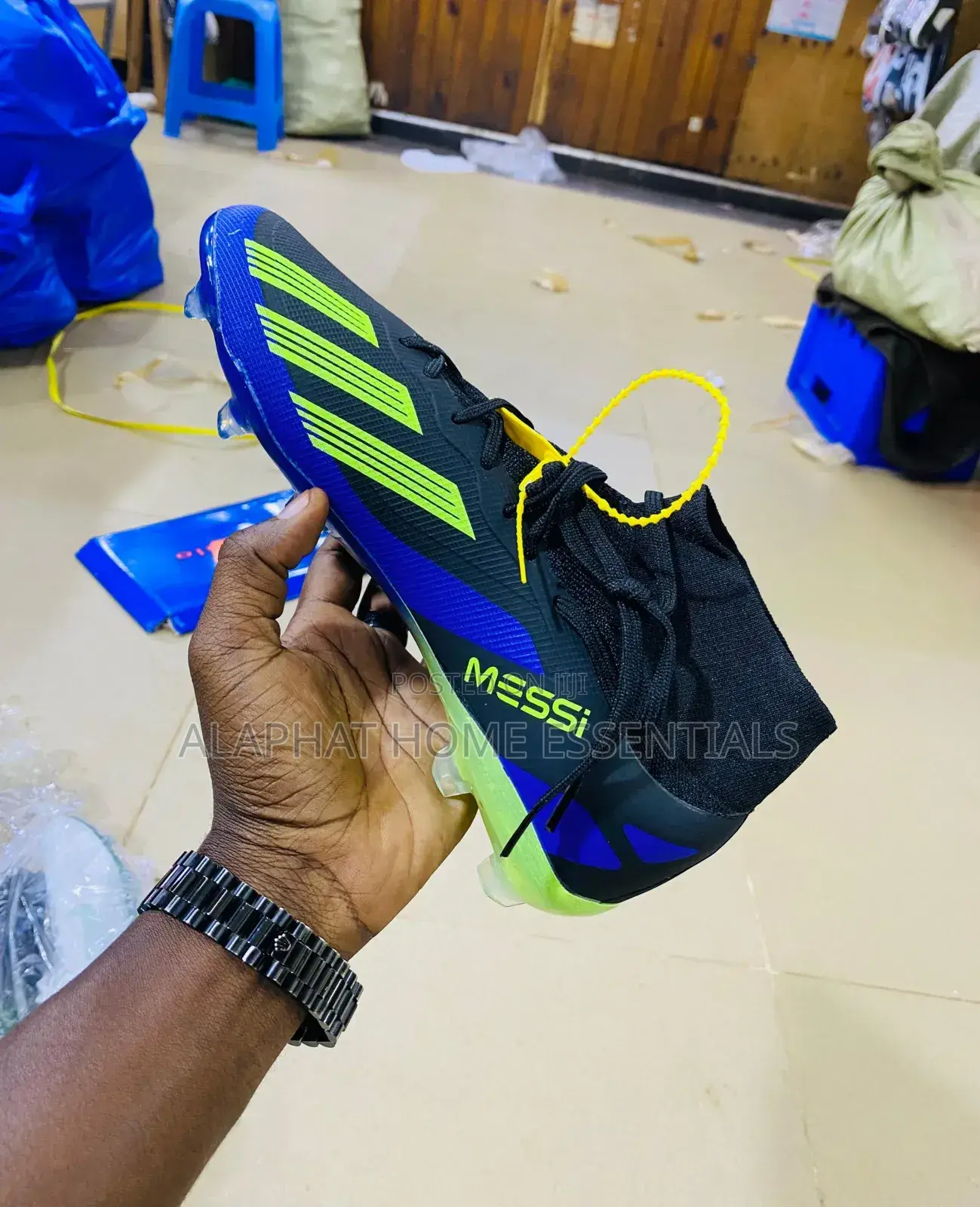
The 2014 FIFA World Cup in Brazil remains one of the most iconic chapters in football history, particularly for Lionel Messi, who led Argentina to the final. Central to his performance during that tournament was the Adidas F50 adizero "Battle Pack," a boot designed specifically for the high-stakes environment of the World Cup. Understanding the seven essentials of these boots provides insight into the intersection of elite athlete requirements and the evolution of footwear engineering.
1. The Design Philosophy: The Battle Pack Aesthetic
The most immediate and memorable essential of the 2014 World Cup boots was their striking visual identity. Adidas departed from traditional colorways, opting for a black-and-white "Battle Pack" theme. This design was not merely aesthetic; it was inspired by the movement of the warriors of the Amazon and the iconic pavement patterns of ancient Mesopotamia. For Messi, the colorway represented total focus and the "all-in" mentality required for a tournament of that magnitude. Each pattern was designed to stand out on the pitch, ensuring that even under the intense lighting of stadiums like the Maracanã, the technology remained visually distinct and synonymous with the highest level of competition.
2. Lightweight Construction: The Adizero Legacy
The core of the Messi 2014 boot was its emphasis on extreme weight reduction. Throughout his career, Messi’s playstyle has relied on low-center-of-gravity agility, rapid acceleration, and precise changes in direction. The F50 adizero was engineered to be one of the lightest boots available at the time. By utilizing advanced synthetic materials, Adidas reduced the mass of the upper to allow for a "barefoot" sensation. This minimized physical fatigue over the course of 90 minutes and allowed Messi to maintain his explosive burst of speed even during the later stages of intense knockout matches.
3. High-Speed Hybridtouch Material
While weight was critical, durability and touch remained paramount. The 2014 model utilized "Hybridtouch" technology, a synthetic material engineered to combine the benefits of leather and synthetic fibers. The material provided a consistent touch on the ball regardless of the weather conditions—a necessity for the varying climates in Brazil—while maintaining a thin profile that offered excellent feedback during high-speed dribbling. Unlike traditional leather, which can absorb moisture and become heavy in the rain, Hybridtouch remained lightweight and consistent, ensuring the boot’s performance remained stable from the first minute to the last.
4. Dribbletex 3D Grip Texture
A critical component for a player like Messi, who keeps the ball incredibly close to his feet, was the Dribbletex texture applied to the upper. This 3D raised graphic layer was designed to provide increased friction between the boot and the ball. During the 2014 tournament, where Messi was frequently pressured by multiple defenders, this texture allowed for finer ball control at top speeds. The Dribbletex layer functioned as a tactile interface that helped stabilize the ball during rapid directional changes, effectively turning the boot into an extension of the player’s foot.
5. Sprintframe Outsole and Speed Stud Configuration
The traction system of the 2014 adizero was built on the foundation of the Sprintframe chassis. This lightweight plate provided the necessary rigidity for energy transfer during sprinting while remaining flexible enough for natural foot movement. The stud configuration was specifically refined for the 2014 tournament, utilizing a mix of triangular and circular studs to optimize both grip and release. This design ensured that Messi could plant his foot firmly to cut inside or accelerate away from defenders without getting "stuck" in the turf, a common technical requirement for elite attackers operating in tight spaces.
6. The Specific Messi-Signature Customization
While the Battle Pack was a general release for all Adidas athletes, Messi’s boots featured distinct customizations that separated them from the standard retail model. This included specific internal reinforcements to accommodate his unique foot mechanics and personal branding. Messi’s influence on the boot’s development was substantial; his preference for a specific fit and a slightly more "connected" feel to the pitch often resulted in modifications that pushed the technical limits of mass-produced footwear. These subtle alterations were the "secret" essential that ensured the boot performed exactly as needed for his specific playstyle.
7. Global Marketing and Cultural Impact
The seventh essential is not found in the material, but in the cultural context of the boot. The 2014 World Cup boots served as the primary marketing vehicle for Adidas during the tournament. By aligning the brand’s most innovative technology with the world’s most recognizable player, the F50 adizero transcended sport to become a collectors' item. Its impact lies in how it successfully marketed high-performance technology to the masses, linking the experience of the average player to the specific on-pitch requirements of a global icon like Messi.
Performance Comparison: 2014 vs. Modern Standards
To understand the evolution of the 2014 technology, it is helpful to compare it against the standards of the time and the technical landscape as of 2026.
| Feature | 2014 Adizero (Battle Pack) | Modern Performance Boots (2026) |
|---|---|---|
| Primary Material | Hybridtouch Synthetic | Engineered Knits / Bio-based Synthetics |
| Weight | ~150g (ultra-light) | ~170-190g (optimized for durability) |
| Texture | Dribbletex 3D | Integrated 3D Grip Zones/Data-driven patterns |
| Sustainability | Not a primary design factor | Heavily focused on recycled materials |
| Primary Goal | Absolute minimal weight | Balance of weight, control, and stability |
Frequently Asked Questions
Did Messi wear a different version of the boot than what was available to consumers? Yes. While the public "Battle Pack" model carried the same aesthetic and core technology, professional athletes like Messi often wear boots with custom-made internal supports, modified heel counters, and specific soleplate stiffness levels to suit their personal comfort and injury prevention needs.
Is the 2014 F50 adizero still considered a high-performance boot today? By 2026 standards, the 2014 adizero is highly collectible but technologically dated. Modern boots focus more on sustainable materials and "adaptive" fits, using data-driven textile structures that offer more lockdown and comfort than the thin, synthetic materials used in 2014.
Why was the 2014 World Cup boot design black and white? The design was chosen by Adidas to create a cohesive visual theme for all their sponsored players. The high-contrast black-and-white patterns were designed to draw the eye and ensure that the brand’s technology was instantly recognizable during televised matches, symbolizing the "war" occurring on the pitch.
What was the most significant technical advancement in the 2014 boot? The refinement of the Sprintframe chassis combined with the Hybridtouch upper was the most significant technical achievement. It effectively solved the long-standing problem of creating a boot that was light enough for speed but durable enough to maintain structural integrity under the high pressure of elite-level match play.
How should someone store a pair of original 2014 Battle Pack boots in 2026? If you own a pair of these as a collector, store them in a climate-controlled environment, away from direct sunlight. Synthetic materials from that era can become brittle or sticky over time due to "hydrolysis," where the polymers break down. Using acid-free tissue paper and a shoe tree can help maintain the shape and integrity of the upper.
Recommendation for Collectors and Enthusiasts
If you are looking to acquire or study the Messi 2014 World Cup boots for historical or collection purposes, focus on verifying the model number and ensuring the integrity of the synthetic upper. Because these boots were built for performance rather than longevity, finding pristine, unworn versions is becoming increasingly difficult as of 2026. If you intend to use them for light play, be aware that the adhesives used in the 2014 production run may have weakened over the past decade; perform a thorough inspection of the soleplate-to-upper bond before attempting any physical activity to prevent separation.