Securing a $25,000 whole life insurance policy provides permanent financial protection and cash value accumulation with fixed premiums that never increase over time. Understanding how these premiums are structured requires evaluating factors such as age at issuance, health classification, permanent coverage guarantees, cash value growth mechanics, and the trade-offs between different payment structures.
Whole life insurance is a type of permanent life insurance designed to remain in force for the entire life of the insured, provided that required premiums are paid. Unlike term life insurance, which covers a specific period such as 10, 20, or 30 years and eventually expires, whole life insurance builds an asset known as cash value alongside a guaranteed death benefit. For many individuals, a face value of $25,000 represents an ideal "final expense" or burial insurance policy. It is structured to cover end-of-life expenses, medical bills, and modest debts without placing an undue financial burden on loved ones.
However, evaluating the premium for a $25,000 policy requires a thorough understanding of how life insurance companies price their products. Premiums are determined by actuarial tables that assess life expectancy, mortality risk, and administrative costs. Because whole life insurance guarantees both the death benefit and the premium rate for the lifetime of the policyholder, the underlying financial mechanics differ significantly from other forms of coverage. Navigating this niche requires looking closely at five core elements that dictate the cost and value of a $25,000 whole life policy.
1. Fixed and Level Premiums Throughout the Life of the Policy
The most defining feature of a standard whole life insurance policy is that the premium remains level and locked in from the day the policy is issued until the insured passes away, or until the policy reaches maturity (often age 100 or 121).
When you purchase a $25,000 policy at age 35, the monthly or annual premium you are quoted is the exact same amount you will pay decades later when you are 65, 85, or older. This predictability is a major advantage for individuals on fixed incomes or those who want absolute certainty in their long-term financial planning.
- Protection Against Inflationary Premium Spikes: In contrast to annual renewable term insurance or policies where premiums increase every five or ten years based on attained age, whole life premiums do not scale upward as you grow older.
- The Cost of Stability: To offer this level-rate guarantee, insurance companies must charge a higher initial premium during the early years of the policy compared to an equivalent term insurance policy. The extra premium paid in the early years is effectively a reserve fund that offsets the higher mortality risk of later years.
- Payment Frequency Options: Most insurers allow policyholders to pay premiums monthly, quarterly, semi-annually, or annually. Opting for automated electronic funds transfer (EFT) or paying annually often avoids modal fees that insurers tack on for processing frequent smaller payments.
2. Age and Health Status as Primary Pricing Determinants
Even though a $25,000 policy is considered a relatively low face value (often categorized within final expense or simplified issue markets), your age and health at the time of application are the two primary drivers of your premium rate.
Underwriting for whole life insurance can range from fully underwritten (requiring a paramedical exam, blood work, and medical record reviews) to simplified issue or guaranteed acceptance, where no medical exam is required.
| Underwriting Type | Medical Requirements | Typical Age Range | Premium Impact for $25,000 Policy |
|---|---|---|---|
| Fully Underwritten | Exam, blood/urine tests, medical records | 18–85 | Lowest rates for healthy applicants; higher rates if conditions exist. |
| Simplified Issue | Health questionnaire, prescription database check | 45–85 | Moderate rates; streamlined approval without physical exams. |
| Guaranteed Issue | No medical questions or exams | 50–80+ | Highest rates per dollar of coverage; includes a graded death benefit period. |
As illustrated above, buying a policy earlier in life yields significantly lower permanent premiums. A $25,000 policy purchased at age 30 will carry a drastically lower monthly payment than the same $25,000 policy purchased at age 65. Smokers or tobacco users will also face tobacco-specific rate classes that can double or triple the premium compared to non-smoker rates.
3. Cash Value Accumulation and Its Relationship to Premiums
A portion of every premium payment made toward a whole life insurance policy goes toward the cost of insurance and administrative overhead, while the remainder is directed into a tax-deferred cash value account.
This cash value grows according to a minimum guaranteed interest rate set by the insurance company. In the case of participating whole life policies issued by mutual companies, policyholders may also receive annual dividends, which can be used to purchase paid-up additions, reduce premiums, or be taken as cash.
- Forced Savings Mechanism: Because a set portion of your premium builds equity inside the policy, whole life acts as a conservative savings vehicle. Over time, the cash value grows and becomes accessible via policy loans or withdrawals.
- Impact of Policy Loans: If you borrow against your cash value, the outstanding loan balance and accrued interest will reduce the final $25,000 death benefit if it is not repaid before the insured's death. However, borrowing against the policy does not directly alter your ongoing premium payment, though failing to pay interest can eventually cause the policy to lapse if the loan exceeds the cash value.
- Using Cash Value to Pay Premiums: Many whole life policies feature a "reduced paid-up" or "automatic premium loan" provision. If you experience temporary financial hardship, accumulated cash value can be automatically tapped to cover the premium, keeping your $25,000 coverage active.
4. Limited-Pay vs. Continuous Premium Structures
When setting up a $25,000 whole life policy, consumers are often given choices regarding how long they wish to pay premiums. Selecting the right payment schedule is critical for matching the policy to your cash flow capabilities.
Continuous Premium (Life Pay)
Under this traditional structure, you pay premiums for the rest of your life, or until the policy matures. This spreads the cost of the $25,000 policy over the maximum possible timeframe, resulting in the lowest possible periodic (monthly or annual) premium payment.
Limited-Pay Options (e.g., 10-Pay, 20-Pay, or Paid-Up at Age 65)
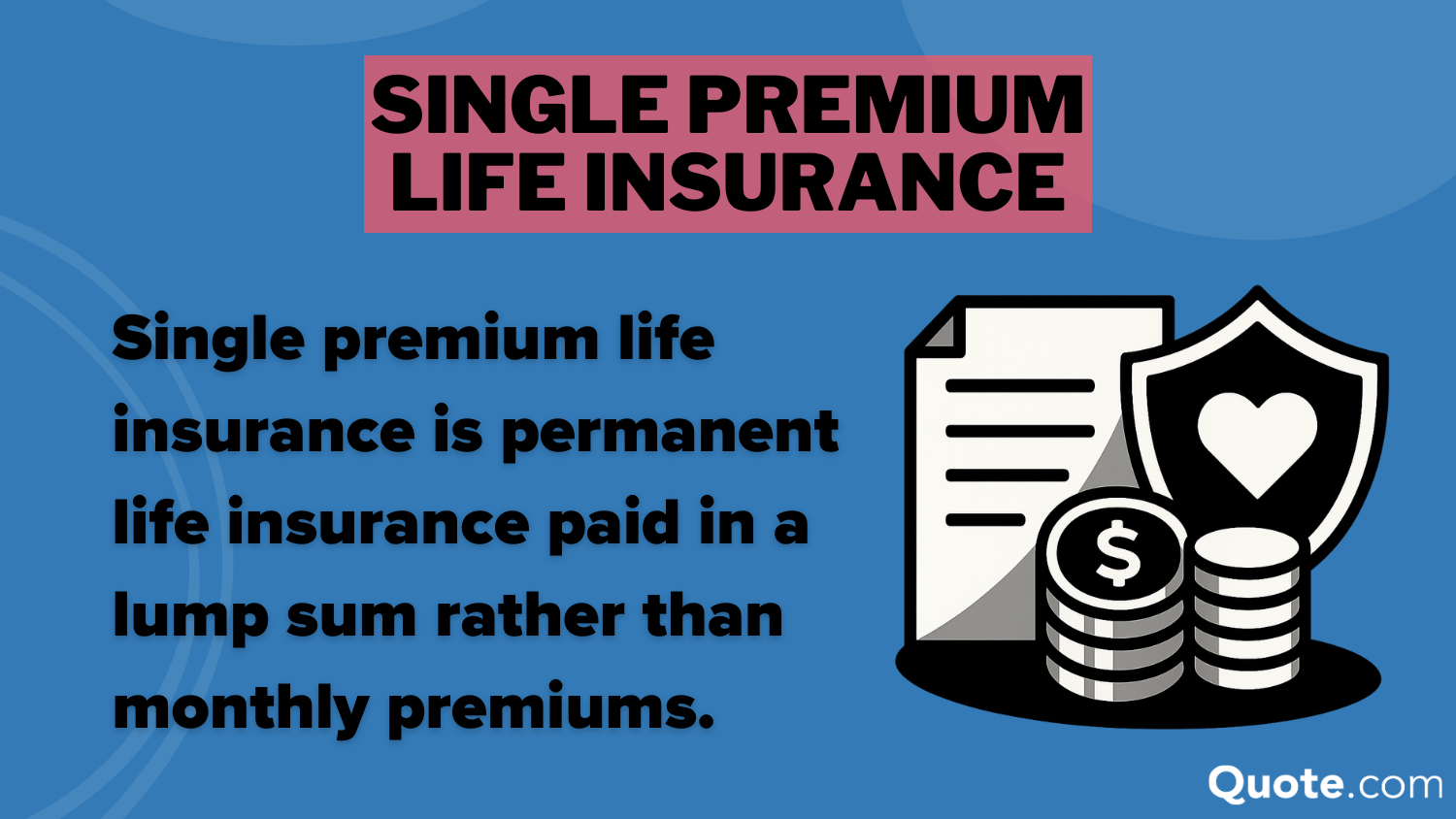
With a limited-pay policy, you agree to pay higher individual premiums over a condensed, predetermined schedule—such as 10 years, 20 years, or until you reach retirement age. Once that period ends, the policy is fully "paid up," meaning you never have to make another premium payment, but the $25,000 death benefit remains active for the rest of your life.
- Pros: Ideal for individuals who want to eliminate insurance premiums during their retirement years when fixed incomes are common.
- Cons: The annual or monthly premium is significantly higher during the payment period because the total cost of the policy is compressed into fewer years.
5. Risk of Policy Lapse and Grace Periods
Because whole life insurance relies on consistent premium payments to maintain its guarantees, failing to pay a premium on time represents the single greatest threat to keeping your $25,000 policy in force.
Insurance companies build safety nets into their contracts, but understanding these mechanisms prevents accidental policy cancellation.
- The Grace Period: If a premium payment is missed on its due date, insurers typically provide a grace period—usually 31 days—during which the policy remains fully active. If the insured passes away during the grace period, the full $25,000 death benefit is paid out, minus the overdue premium.
- Automatic Premium Loan (APL) Provision: If elected, the insurance company will automatically draw from your accumulated cash value to pay an overdue premium once the grace period expires. This prevents a lapse, provided sufficient cash value exists.
- Reinstatement Rules: If a policy lapses due to non-payment and there is insufficient cash value to sustain it, the insurer will usually allow reinstatement within a specific window (such as 2–5 years). Reinstatement typically requires paying back all overdue premiums with interest, along with providing evidence of insurability to prove your health hasn't drastically deteriorated.
Frequently Asked Questions
Can a $25,000 whole life insurance premium ever go up?
No. One of the foundational legal and contractual guarantees of a standard whole life insurance policy is that the premium rate is locked in at issuance. As long as you pay the required amount on time, the insurer cannot raise your premium due to advancing age, declining health, or economic inflation.
Is a medical exam required to get a $25,000 whole life policy?
Not always. While fully underwritten policies require a physical exam and lab work, many insurance providers offer "simplified issue" whole life policies for $25,000 coverage. These require answering a brief health questionnaire without invasive medical tests, though they may carry slightly higher premium rates than fully underwritten plans.
What happens if I stop paying the premiums on my $25,000 policy?
If you stop paying premiums and the grace period lapses without cash value available to cover the payment, the policy will terminate. However, if your policy has built up cash value, you may be eligible for non-forfeiture options, such as taking a reduced paid-0up policy with a lower death benefit or cashing out the remaining balance.
Are whole life insurance premiums tax-deductible?
Generally, no. Life insurance premiums paid for personal coverage are considered a personal expense and are not tax-deductible. Conversely, the death benefit paid out to beneficiaries is typically income-tax-free, and the cash value grows on a tax-deferred basis.
How do I choose between a monthly or annual payment schedule?
Choosing an annual payment schedule usually saves money because insurance companies often add administrative surcharges (modal factors) for processing monthly payments. However, monthly electronic bank drafts are much easier to budget for most households. Compare the total annual cost of both options before making your final selection.
Next Steps for Securing Your Policy
If you are evaluating a $25,000 whole life insurance policy, begin by requesting quotes from multiple reputable, financially stable insurance carriers (look for an A.M. Best rating of A or higher). Compare whether a continuous pay or a limited-pay structure better fits your current income and long-term retirement timeline. Consult with an independent insurance agent or financial planner who can review your specific health profile and budget to ensure the policy meets your end-of-life and legacy goals without overextending your finances.