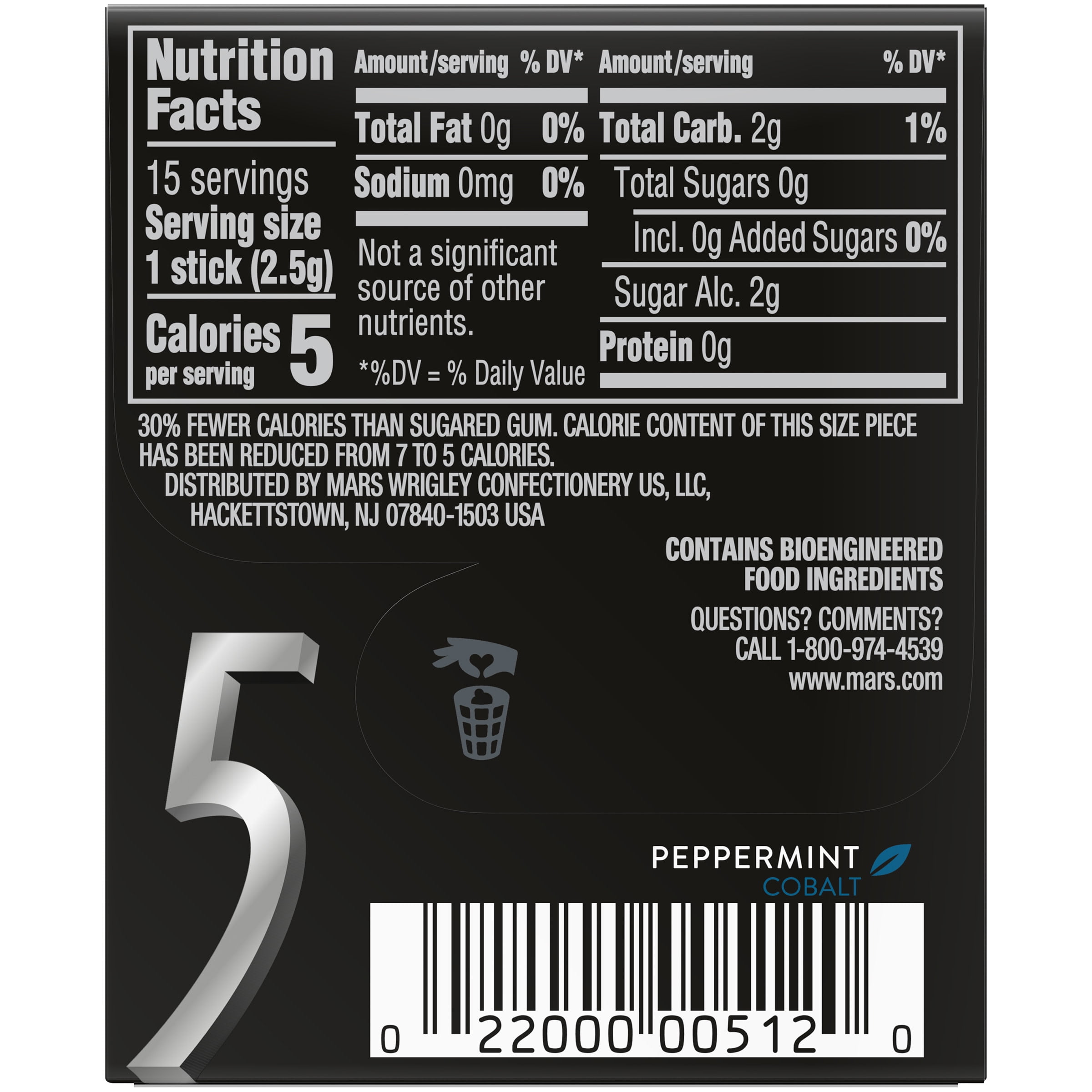
As a brand, 5 Gum does not possess a personal net worth; rather, it represents a multi-hundred-million-dollar asset within the portfolio of Mars, Incorporated. In 2026, 5 Gum remains a dominant force in the global sugar-free gum market, contributing significantly to Mars Wrigley's annual revenues, which exceed $20 billion. The Mars family, who owns the brand, has a collective net worth estimated at over $120 billion.
Understanding the Brand Valuation of 5 Gum
To discuss the "net worth" of 5 Gum, one must distinguish between the valuation of a standalone entity and the brand equity of a product line owned by a massive private conglomerate. 5 Gum is a premium brand of sugar-free chewing gum produced by Mars Wrigley, a subsidiary of Mars, Incorporated. Since its launch in 2007, the brand has focused on a "sensory experience" marketing strategy, which has allowed it to command a higher price point than traditional chewing gums.
In the financial landscape of 2026, brand valuation is determined by several factors: annual sales volume, market share within the confectionery category, brand recognition (consumer sentiment), and the projected growth of the sugar-free sector. While Mars, Inc. does not publicly disclose the specific profit and loss statements for individual brands like 5 Gum, industry analysts estimate the brand's standalone valuation—based on a multiple of its estimated annual revenue—to be in the range of $800 million to $1.2 billion.
The success of 5 Gum is a primary reason why Mars remains a leader in the global gum market. By targeting a younger, lifestyle-oriented demographic, 5 Gum has avoided the "commodity" trap that often plagues generic confectionery products. This premium positioning ensures higher margins, which directly impacts the overall valuation of the Mars Snacking division.
The Historical Financial Evolution of 5 Gum
The journey of 5 Gum’s value began with its high-profile launch by the Wm. Wrigley Jr. Company in 2007. At the time, the gum market was relatively stagnant, dominated by functional brands like Extra and Orbit. Wrigley invested heavily in R&D to create a product that felt "edgy" and "modern," featuring sleek black packaging and intense flavors.
A pivotal moment in the brand's financial history occurred in 2008, when Mars, Incorporated acquired the Wrigley Company for approximately $23 billion. This acquisition was financed in part by Warren Buffett’s Berkshire Hathaway, signaling the immense value of the Wrigley portfolio. Following this merger, 5 Gum benefited from Mars’ massive global distribution network, which allowed the brand to expand rapidly into European and Asian markets.
Throughout the 2010s and early 2020s, 5 Gum maintained its value through aggressive marketing campaigns, such as the "Stimulate Your Senses" series. By 2026, the brand has successfully navigated the shift toward online retail and convenience store dominance, maintaining a top-three position in the "breath freshening" category in North America and parts of Europe.
The Financial Powerhouse Behind the Brand: Mars, Incorporated
While 5 Gum is a successful product, its "net worth" is inextricably linked to its parent company. Mars, Incorporated is one of the largest privately held companies in the world. Being private means it is not beholden to the quarterly demands of Wall Street, allowing for long-term investments in brand building that public companies might shy away from.
In 2026, Mars, Inc. reports annual revenues exceeding $50 billion across its three primary segments:
- Mars Snacking: Includes 5 Gum, M&M's, Snickers, and Skittles.
- Mars Petcare: Includes Pedigree, Whiskas, and VCA Animal Hospitals.
- Mars Food & Nutrition: Includes Ben's Original and various healthy snacking initiatives.
The Mars family, which owns 100% of the company, is consistently ranked among the wealthiest families globally. Their combined wealth is a reflection of the cumulative value of brands like 5 Gum. Because the company is private, the "net worth" of 5 Gum is essentially the estimated price it would fetch if Mars decided to sell the brand to a competitor like Mondelez International or Perfetti Van Melle. Given 5 Gum’s market dominance, that price would carry a significant "premium" over its tangible assets.
Market Share and Competitive Analysis in 2026
To understand the financial health of 5 Gum, it is essential to compare it with its primary competitors. The chewing gum market is a highly competitive space where brand loyalty is often fickle, making market share a critical metric for valuation.
| Brand | Parent Company | Market Positioning | Estimated Revenue Share (Gum) |
|---|---|---|---|
| 5 Gum | Mars Wrigley | Premium / Sensory Experience | 12% - 15% |
| Extra | Mars Wrigley | Functional / Dental Health | 20% - 25% |
| Trident | Mondelez International | Mainstream / Sugar-Free | 15% - 18% |
| Orbit | Mars Wrigley | Global / Value-Focused | 18% - 22% |
| Mentos Gum | Perfetti Van Melle | Innovation / Texture-Focused | 8% - 10% |
As shown in the table, Mars Wrigley effectively competes against itself with multiple brands. This "portfolio strategy" ensures that whether a consumer wants a functional gum (Extra) or a premium experience (5 Gum), Mars captures the revenue. In 2026, 5 Gum holds a unique niche; it is often the highest-priced brand in the checkout aisle, which translates to a higher contribution to the parent company’s bottom line per unit sold.
Operational Costs and Profitability Factors
The net worth or valuation of 5 Gum is also a function of its operational efficiency. Chewing gum is a high-volume, low-cost manufacturing business, but the "premium" nature of 5 Gum introduces specific costs:
Research and Development (R&D)
5 Gum is known for its long-lasting flavor and unique textures (such as the "Maze" and "React" series). Maintaining this technological edge requires continuous investment in flavor encapsulation technology. In 2026, Mars has invested heavily in biodegradable gum bases to address environmental concerns, a move that protects 5 Gum's brand value against potential "plastic waste" regulations.
Marketing and Branding
5 Gum spends a higher percentage of its revenue on advertising compared to brands like Extra. Its marketing often involves high-production-value commercials, sponsorships of gaming events, and digital influencer partnerships. While these are expenses, they are also "investments in brand equity" that prevent the brand from becoming a generic commodity.
Supply Chain and Distribution
The value of 5 Gum is maximized through its "ubiquity." Mars’ distribution network ensures that 5 Gum is available in over 150 countries. The logistics of maintaining fresh stock in millions of retail points—from gas stations in rural America to hypermarkets in Tokyo—is a massive undertaking that adds to the brand's "barrier to entry" for smaller competitors.
Current Trends Affecting 5 Gum's Value in 2026
Several macroeconomic and social trends are currently influencing the valuation of the 5 Gum brand:
- The Rise of Functional Snacking: Consumers are increasingly looking for gum that does more than just freshen breath. 5 Gum has adapted by exploring "functional" variants, such as those with added caffeine or vitamins. These high-margin products increase the brand's total addressable market.
- Sustainability Mandates: In 2026, packaging sustainability is no longer optional. 5 Gum’s transition to 100% recyclable or compostable wrappers has preserved its reputation among Gen Z and Millennial consumers, who are more likely to boycott brands with poor environmental records.
- Digital Commerce: The decline of "impulse buys" at physical grocery checkouts due to the rise of self-checkout and online grocery delivery initially threatened gum sales. However, 5 Gum has successfully pivoted to "multi-pack" sales on platforms like Amazon and direct-to-consumer subscriptions, stabilizing its revenue streams.
The Role of the Mars Family Wealth
Any discussion of the "net worth" associated with 5 Gum must acknowledge the Mars family. As of 2026, siblings and heirs such as Jacqueline Mars and John Mars, along with the fourth generation of the family, maintain one of the largest private fortunes in history.
The Mars family's approach to business is famously secretive and disciplined. They operate under the "Five Principles": Quality, Responsibility, Mutuality, Efficiency, and Freedom. The "Freedom" principle is particularly relevant to 5 Gum’s worth; by remaining private, the company has the financial freedom to weather temporary market downturns without selling off brands or cutting quality to satisfy external shareholders. This stability adds a "longevity premium" to the 5 Gum brand valuation.
Challenges to 5 Gum’s Financial Standing
Despite its success, 5 Gum faces significant challenges in 2026 that could impact its long-term valuation:
- Declining Gum Consumption: Globally, chewing gum consumption has seen a slight decline as some consumers shift toward mints or away from "chewing" habits entirely.
- Ingredient Scrutiny: Increased regulatory scrutiny over artificial sweeteners like aspartame and acesulfame potassium (Ace-K) requires 5 Gum to constantly reformulate its recipes to meet changing health standards in different jurisdictions, particularly in the European Union.
- Inflationary Pressures: The rising cost of raw materials—specifically synthetic rubber bases and specialized sweeteners—compresses profit margins if the brand cannot pass these costs on to the consumer.
Expert Guidance: How Brand Value is Calculated
For those interested in the technical side of "net worth" regarding corporate brands, experts use the Royalty Relief Method. This calculates the value of the brand based on the royalty rate a company would have to pay to use the brand name if it didn't own it.
For a brand like 5 Gum in 2026:
- Revenue Projection: Estimate the brand's sales for the next 5–10 years.
- Royalty Rate: Determine a standard royalty rate for the confectionery industry (typically 3% to 8%).
- Discount Rate: Apply a discount rate based on the risk of the brand (competition, market shifts).
- Net Present Value (NPV): Calculate the present value of those future "saved" royalties.
Using this method, 5 Gum's brand value remains incredibly high because its "brand power" allows Mars to sell gum at a significantly higher price than a generic equivalent, creating a large "royalty" benefit.
Frequently Asked Questions
Is 5 Gum a public company?
No, 5 Gum is a brand owned by Mars, Incorporated, which is a private, family-owned company. It does not have a ticker symbol on any stock exchange, and you cannot buy shares in 5 Gum directly.
Who is the CEO of 5 Gum?
5 Gum does not have its own CEO. It is managed under the leadership of the President of Mars Snacking. As of 2026, the leadership of Mars, Inc. oversees the strategic direction of the entire brand portfolio, including 5 Gum, M&M's, and Snickers.
How much revenue does 5 Gum generate annually?
While exact figures are private, market analysis suggests 5 Gum generates between $400 million and $600 million in annual retail sales globally. Its contribution to Mars Wrigley's bottom line is significant due to its premium pricing and high margins.
Why is 5 Gum more expensive than other brands?
5 Gum is positioned as a "premium" lifestyle brand. Its higher price reflects its investment in unique packaging, complex flavor profiles, and extensive marketing campaigns. Consumers are willing to pay more for the "sensory experience" and the brand's image.
Has 5 Gum ever been sold?
5 Gum has never been sold as an independent entity. It was developed internally by Wrigley and became part of the Mars portfolio when Mars acquired Wrigley in 2008 for $23 billion.
Summary of 5 Gum's Financial Status
In 2026, the "net worth" of 5 Gum is best understood as a billion-dollar brand equity component of the Mars, Incorporated empire. While it is not an independent company with its own balance sheet, its market share, consumer loyalty, and premium positioning make it one of the most valuable assets in the global confectionery industry. Backed by the multi-billion-dollar resources of the Mars family, 5 Gum continues to stimulate both the senses of consumers and the financial growth of its parent company.
Final Recommendation: Investors looking to capitalize on the success of brands like 5 Gum should look toward the broader "consumer staples" sector of the stock market, as Mars itself remains strictly private. For consumers and market analysts, 5 Gum remains a case study in how "premiumization" can turn a simple commodity—chewing gum—into a high-value, culturally relevant brand.