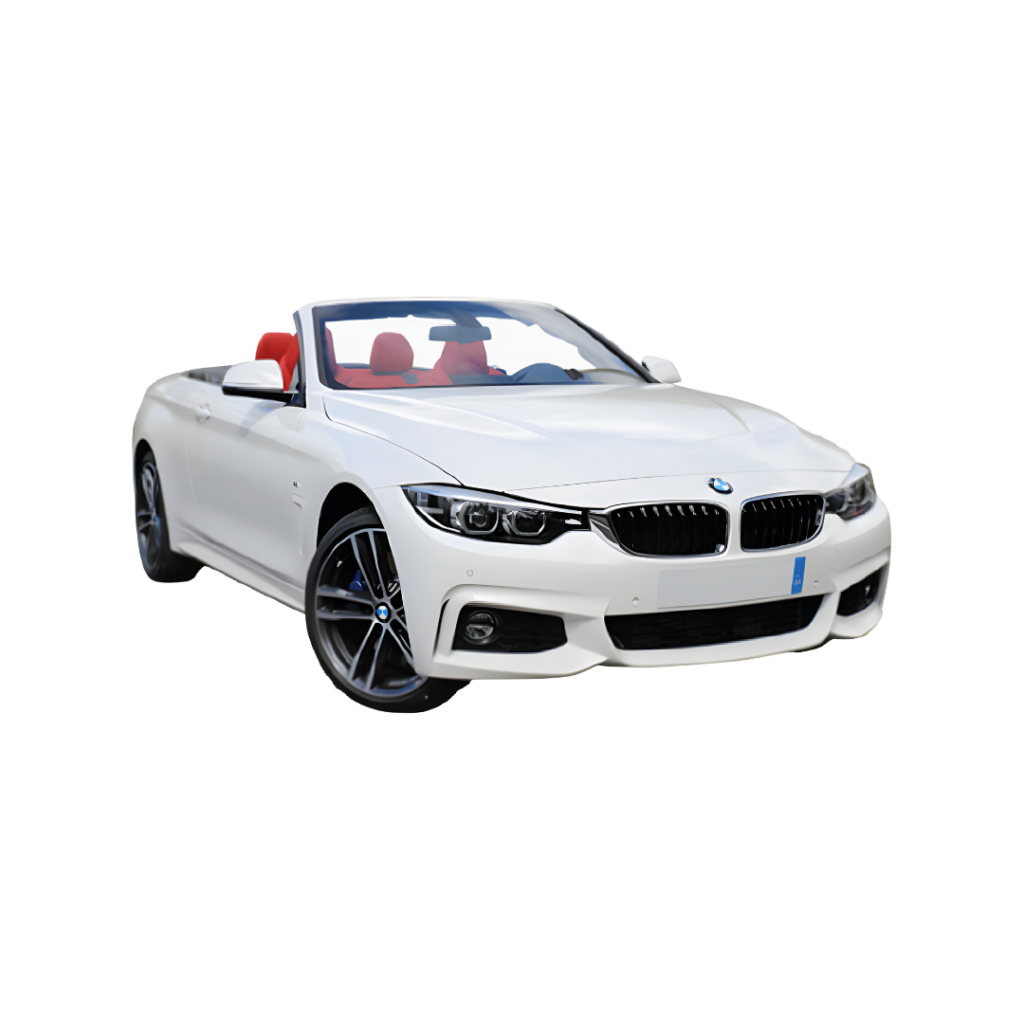
The BMW 428i achieves a 0 to 60 mph time of approximately 5.5 to 5.7 seconds for rear-wheel-drive coupe models equipped with the 8-speed automatic transmission, while xDrive all-wheel-drive variants manage the sprint in roughly 5.6 to 5.8 seconds, depending on environmental conditions, traction surfaces, and testing methodology.
Introduction to the BMW 428i Performance Profile
When BMW restructured its nomenclature to separate two-door coupe and convertible variants from the traditional 3 Series sedan lineup, the 4 Series emerged as a distinct, athletic entity. At the heart of the initial generation's powertrain options was the N20 turbocharged four-cylinder engine, featured prominently in the BMW 428i. Dissecting the 428i 0-60 performance revealed by independent testing, manufacturer specifications, and real-world owner experiences provides a comprehensive look at how this forced-induction four-banger delivered sports-car acceleration while maintaining daily drivability.
Understanding this performance requires looking past simple marketing numbers. Factors such as transmission tuning, curb weight, drivetrain configuration, and turbocharger spool behavior all play crucial roles in how the 428i launches from a standstill. This guide examines the technical specifications, real-world testing dynamics, packaging variations, and comparative standing of the BMW 428i within its competitive landscape.
The Powertrain Foundation: BMW N20 Engine Specifications
To comprehend the acceleration capabilities of the 428i, one must examine the powerplant driving the rear or all four wheels. The N20B20 engine represents a significant era of downsized, turbocharged engineering for the Bavarian manufacturer, replacing older naturally aspirated inline-six engines with a lighter, more efficient, yet remarkably punchy alternative.
| Engine Attribute | Specification |
|---|---|
| Displacement | 2.0 liters (1,997 cc) |
| Induction | Twin-scroll turbocharger |
| Horsepower | 240 hp @ 5,000–6,500 rpm |
| Torque | 255 lb-ft @ 1,250–4,800 rpm |
| Transmission Options | 6-speed manual / 8-speed ZF automatic |
The defining characteristic of the N20 engine is its broad, flat torque curve. Delivering its peak 255 lb-ft of torque from just 1,250 rpm all the way up to 4,800 rpm, the engine eliminates the traditional turbo lag that plagued older forced-induction setups. This low-end grunt is essential for achieving a rapid 0-60 mph time, as it allows the vehicle to dig out of the hole instantly without requiring the driver to aggressively rev the engine prior to releasing the clutch or brake pedal.
Factory Claims Versus Independent Real-World Testing
Automotive manufacturers frequently test vehicles under controlled, highly optimized laboratory conditions that may not reflect everyday tarmac. BMW originally claimed a 0-60 mph time of 5.7 seconds for the rear-wheel-drive 428i Coupe equipped with the standard 8-speed ZF automatic transmission, and 5.8 seconds for the manual variant.
However, independent automotive journalists and testing outlets—including Car and Driver, MotorTrend, and Edmunds—frequently put press fleet vehicles and consumer cars through rigorous VBOX GPS-verified testing. Interestingly, these third-party tests often recorded faster times than BMW's conservative factory estimates.
- Rear-Wheel Drive (RWD) Automatic: Tested consistently between 5.5 and 5.6 seconds.
- xDrive All-Wheel Drive Automatic: Tested between 5.6 and 5.7 seconds.
- Manual Transmission Variants: Tested between 5.7 and 5.9 seconds, heavily dependent on driver clutch engagement and shift speed.
The discrepancy where independent tests outpace factory numbers is common with modern BMWs, which are traditionally engineered to deliver repeatable performance across varying fuel qualities and ambient temperatures rather than chasing a single, unrepeatable glory run.
Impact of Drivetrain and Body Style Variations
The 428i nameplate covered multiple body styles and drivetrain configurations, each introducing distinct weight penalties and mechanical dynamics that subtly altered straight-line acceleration metrics.
Coupe Versus Gran Coupe and Convertible
The standard two-door Coupe serves as the baseline for optimal performance due to its lighter mass and structural rigidity. The Gran Coupe, featuring a longer roofline and four doors, adds approximately 150 to 200 pounds of structural reinforcement and bodywork. This weight gain stretches the 0-60 mph time by roughly 0.2 seconds, pushing it closer to the 5.8-second mark.
Meanwhile, the Convertible variant bears the heaviest burden. To compensate for the absence of a fixed roof, BMW integrated substantial underbody and chassis bracing to minimize cowl shake. This structural reinforcement adds nearly 400 to 500 pounds compared to the coupe, dropping the 0-60 mph acceleration time into the 6.2 to 6.4-second range.
Rear-Wheel Drive Versus xDrive All-Wheel Drive
Buyers living in climates with harsh winters frequently opted for the xDrive all-wheel-drive system. While xDrive provides exceptional traction in wet, snowy, or icy conditions, the mechanical components—including the front differential, transfer case, and half-shafts—add roughly 140 pounds of dead weight.
In a pure dry-pavement 0-60 mph sprint, the RWD model and the xDrive model perform nearly identically. The xDrive variant may launch fractionally quicker in the first 60 feet due to immediate power distribution across all four contact patches, but the extra weight slightly impedes momentum past the initial launch phase.
Launch Control, Transmission Tuning, and Driving Modes
Achieving optimal acceleration figures in a BMW 428i relies heavily on utilizing the vehicle's electronic aids and transmission programming. The vehicle features multiple drive modes via the Driving Dynamics Control switch: Eco Pro, Comfort, Sport, and Sport+.
- Select Sport or Sport+ Mode: This sharpens throttle mapping, increases steering weight, and commands the transmission to hold gears longer.
- Engage Dynamic Stability Control (DSC Sport) or Turn Off Traction Control: Completely disabling or partially reducing stability intervention prevents power-cut throttles if the rear tires experience a minor slip during launch.
- Brake-Torque Launch (Automatic Models): For automatic variants without a dedicated software-coded launch control feature, drivers hold the brake firmly with the left foot while applying steady, full throttle with the right foot to build minor boost, then quickly releasing the brake.
- Clutch Engagement (Manual Models): Drivers must balance engine revs around 2,500 to 3,000 RPM with a precise, rapid clutch release to avoid bogging the engine or inducing excessive wheel hop.
The modern ZF 8-speed automatic transmission deserves considerable credit for the 428i’s real-world acceleration prowess. Its lightning-fast shift logic minimizes interruption in power delivery, ensuring that torque is continuously applied to the rear wheels throughout the acceleration run.
Comparing the 428i to Competitors and Successors
To contextualize the 428i’s performance, it is helpful to look at how it stacked up against contemporary luxury sport coupes from Audi and Mercedes-Benz, as well as its eventual replacement in the BMW lineup.
| Model & Year | Engine Configuration | Power Output | Estimated 0-60 Time |
|---|---|---|---|
| BMW 428i (2014–2016) | 2.0L Turbo I4 (N20) | 240 hp / 255 lb-ft | 5.5 – 5.7 seconds |
| Audi A5 2.0T (2015) | 2.0L Turbo I4 | 220 hp / 258 lb-ft | 6.1 – 6.3 seconds |
| Mercedes-Benz C300 Coupe (2016) | 2.0L Turbo I4 | 241 hp / 273 lb-ft | 5.9 – 6.0 seconds |
| BMW 430i (2017–2020) | 2.0L Turbo I4 (B48) | 248 hp / 258 lb-ft | 5.5 – 5.8 seconds |
During its production run, the 428i held a slight edge over its primary German rivals in straight-line acceleration, largely due to efficient power delivery and the responsiveness of the ZF automatic transmission. When the N20 engine was retired in favor of the B48 engine for the updated 430i model, straight-line performance remained largely identical, though the newer B48 powerplant introduced a smoother acoustic profile and improved thermal management.
Common Modifications and Aftermarket Tuning Potential
Because the N20 engine relies on forced induction, it is a prime candidate for aftermarket performance gains. Many enthusiasts look beyond stock 0-60 metrics by exploring modifications to unlock extra power.
- Engine Control Unit (ECU) Tuning / Piggyback Modules: A simple plug-and-play tuning box or a full flash tune can increase turbo boost pressure safely on stock hardware, pushing horsepower from 240 to well over 300 hp.
- Upgraded Intercoolers: Enhanced cooling capacity prevents heat soak during repeated acceleration runs, ensuring consistent power delivery in warm weather.
- Cat-Back Exhaust Systems and Downpipes: Reducing exhaust backpressure helps the turbo spool faster and provides a more aggressive exhaust note.
- High-Performance Tires: Upgrading from standard all-season tires to dedicated summer performance compounds significantly improves grip during the crucial initial launch window, often shaving tenths of a second off the 0-60 time.
Drivers exploring modifications should be mindful of historical N20 mechanical considerations, particularly the timing chain guide assemblies on early production models (2012–2014). Ensuring that preventative maintenance is up to date is a mandatory prerequisite before increasing engine output.
Frequently Asked Questions
Is the BMW 428i considered a fast car?
The BMW 428i is a brisk, capable luxury sport coupe rather than a dedicated supercar. With a 0-60 mph time in the mid-5-second range, it offers more than enough acceleration for confident highway passing and spirited backroad driving, outperforming many standard family sedans and crossover SUVs.
Does the 428i have a factory launch control system?
Automatic-equipped 428i models do not feature a heavily automated, race-ready launch control program out of the box like higher-performance M Sport or M cars. However, drivers can easily execute a successful launch by utilizing Sport+ mode, disabling traction control, and brake-torquing the engine before release.
How does altitude affect the 428i 0-60 performance?
Like all turbocharged vehicles, the N20 engine in the 428i adjusts boost pressure to compensate for thin air at higher elevations better than naturally aspirated engines. However, extreme altitude will still result in a slight performance deficit due to reduced ambient air density and lower oxygen concentration for combustion.
Is the manual transmission faster than the automatic in the 428i?
No. Independent testing consistently shows that the 8-speed automatic transmission achieves quicker 0-60 mph times than the 6-speed manual. The automated gearbox executes lightning-fast shifts that human drivers simply cannot match, keeping the turbocharger spooled and power flowing without interruption.
What is the difference between the 428i and the 435i?
The primary difference lies under the hood. While the 428i utilizes a 2.0-liter turbocharged four-cylinder engine producing 240 horsepower, the 435i features a larger 3.0-liter turbocharged inline-six engine (N55) generating 300 horsepower, which drops the 0-60 mph time down to approximately 4.6 to 4.9 seconds.
Conclusion and Next Actions
The BMW 428i delivers an impressive balance of efficiency, daily comfort, and genuine athletic capability. With a verified 0-60 mph time hovering between 5.5 and 5.7 seconds, it punches well above its paper specifications thanks to a flat torque curve and an exceptionally responsive transmission. For prospective buyers, enthusiasts, or current owners looking to verify their vehicle's health, verifying proper tire condition, running high-octane fuel, and addressing routine maintenance items are the best next steps to ensure the car performs exactly as BMW intended.