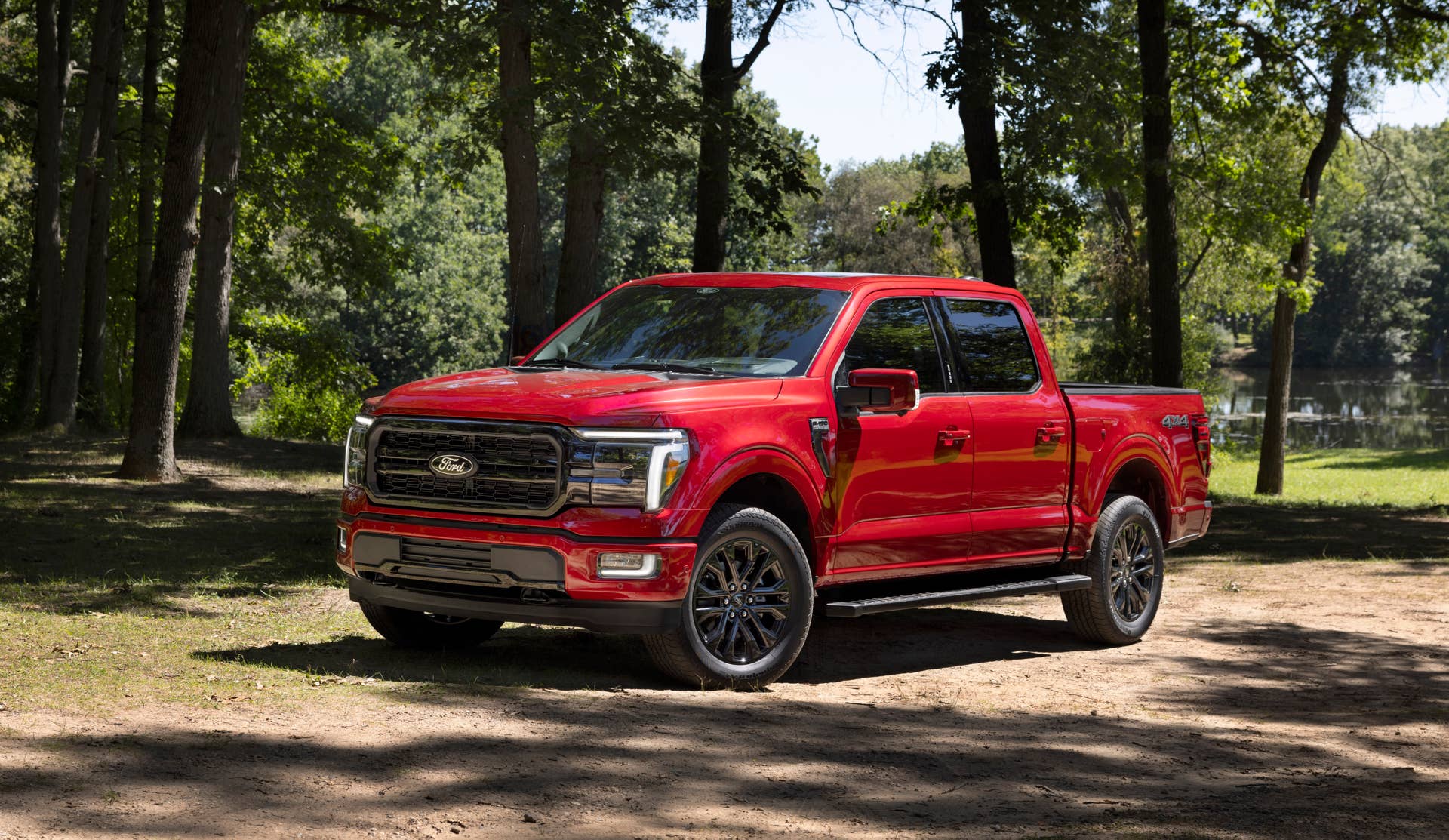
The next-generation Ford F-150 (15th generation) is anticipated to launch in late 2028 for the 2029 model year, with official dealer arrivals expected in early 2029. This timeline aligns with Ford’s traditional eight-year redesign cadence following the 2021 debut and 2024 mid-cycle update of the 14th-generation F-150.
Expected Launch Date and Production Timeline for the 15th-Gen F-150
Understanding the launch schedule for the next-generation Ford F-150 requires examining Ford Motor Company’s historical product lifecycles, manufacturing retooling requirements, and multi-energy platform strategies. The F-150 serves as the primary revenue engine for Ford Motor Company, meaning generational overhauls are calculated down to the quarter to prevent production interruptions at major assembly plants.
F-150 Generational Cadence
- 13th Generation: 2015–2020 Model Years (6 Years)
- 14th Generation: 2021–2028 Model Years (8 Years; Refresh in 2024)
- 15th Generation: 2029+ Model Years (Debuting Late 2028 / Early 2029)
Historical Model Cycles and Development Cadence
Ford has maintained a relatively consistent six-to-eight-year lifecycle for its full-size light-duty truck platforms over the past three decades. The 13th generation ran from model years 2015 through 2020, pioneering the high-strength, military-grade aluminum-alloy body over a steel ladder frame. The 14th generation launched for model year 2021, bringing heavily overhauled electrical architectures, the PowerBoost full-hybrid powertrain, and the all-electric F-150 Lightning.
Given the 2024 mid-cycle refresh—which introduced revised exterior styling, the Pro Access Tailgate, standard digital instrumentation, and streamlined ordering packages—the 14th-generation chassis is engineered to carry Ford through the 2028 model year. Consequently, industry intelligence and vehicle development schedules place the debut of the 15th-generation (2029 model year) Ford F-150 in the second half of calendar year 2028, with initial customer deliveries ramping up in the first quarter of 2029.
Key Milestones Leading to the 2029 Model Year
The path to the 2029 launch involves several critical manufacturing and testing milestones:
- Prototypes and Camouflaged Testing (Mid-2027): Engineering mules utilizing donor 14th-gen bodies with modified underpinnings will begin open-road testing, focusing on new chassis geometries, cooling loops, and advanced driver-assistance systems (ADAS).
- Official Media Unveiling (Spring/Summer 2028): Ford typically hosts global reveals 3 to 6 months prior to production start. Expect a dedicated press event detailing payload, towing, powertrain options, and software innovations.
- Plant Retooling and Pre-Production (Autumn 2028): Reconfiguration of assembly lines at Dearborn Truck Plant in Michigan and Kansas City Assembly Plant in Missouri to support revised frame dimensions and updated wiring harnesses.
- Commercial Order Banks Open (Late 2028): Fleet managers and retail customers gain access to order guides, option packages, and pricing structures.
- Initial Dealership Deliveries (Q1 2029): High-volume configurations (XLT, Lariat) arrive first, followed by specialized trims such as the King Ranch, Platinum, Tremor, and Raptor variants.
Platform Architecture and Powertrain Evolution
The 2029 F-150 transition marks a pivotal shift in Ford’s powertrain philosophy. Rather than forcing a complete jump to battery-electric power across all trim levels, Ford is tailoring its multi-powertrain matrix to match varied operational demands, long-distance towing needs, and regional charging infrastructures.
Next-Generation EcoBoost and Hybrid Systems
Internal combustion engines (ICE) and hybrid powertrains will remain core offerings for the 2029 model year. The 3.5-liter EcoBoost V6 and 2.7-liter EcoBoost V6 are expected to receive significant updates rather than outright replacement:
- Thermal Efficiency Improvements: Higher-pressure direct injection systems, dual-overhead-cam valve timing optimizations, and updated turbocharger geometries to meet tightening EPA Tier 4 and Euro-style tailpipe emissions regulations.
- Modular Hybridization: The PowerBoost hybrid system, introduced in 2021, will likely become the standard powertrain on mid-to-high trim levels. Future iterations are expected to incorporate higher-capacity lithium-ion battery packs (exceeding the current 1.5 kWh capacity) and integrated electric drive motors capable of delivering extended engine-off coasting and higher low-end torque.
Extended-Range Electric Vehicle (EREV) Integration
One of the most consequential developments slated for Ford's late-2020s truck lineup is the introduction of Extended-Range Electric Vehicle (EREV) architecture. An EREV utilizes electric drive motors to propel the wheels at all times while integrating a compact internal combustion engine solely as an onboard generator to recharge the battery when depleted.
Unlike traditional plug-in hybrids (PHEVs), an EREV mechanical drivetrain does not directly connect the gasoline engine to the drive axle. This configuration delivers the instant torque, smooth power delivery, and low-speed control of an electric vehicle while completely eliminating range anxiety during heavy towing or remote job-site operations. For buyers who haul heavy trailers over hundreds of miles—where traditional battery-electric trucks suffer severe range degradation—the 2029 F-150 EREV configuration represents a critical operational bridge.
The Evolution of the F-150 Lightning and Project T3
The standalone F-150 Lightning platform is expected to converge with Ford's next-generation EV truck architecture, developed under the internal codename "Project T3" (Trust the Truck). While early iterations relied on an adapted version of the standard 14th-gen ICE frame, the 2029-era electric pickup utilizes a dedicated, highly aerodynamic, native electric truck chassis.
Key expectations for the next-gen electric F-150 include:
- 800-Volt Electrical Architecture: Enabling ultra-fast DC fast charging capable of replenishing 10% to 80% state-of-charge in under 20 minutes under optimal thermal conditions.
- Structural Battery Pack Design: Cell-to-chassis battery integration reducing curb weight, lowering the center of gravity, and enhancing torsional rigidity.
- Advanced Thermal Management: Heat pump integration and multi-zone liquid cooling loops optimized to maintain battery performance during extreme cold or sustained heavy towing.
Interior, Connectivity, and Autonomous Driving Tech
The cabin of the 2029 Ford F-150 will emphasize functional utility, elevated digital ergonomics, and software-defined vehicle (SDV) capabilities. As truck interiors increasingly double as mobile offices and job-site command centers, physical storage and digital computing power are receiving equal priority.
2029 F-150 Technical Architecture
- Software-Defined Vehicle (SDV) - Centralized Zonal Control Modules
- Autonomous Driving
- BlueCruise 4.0
- Hands-Free Towing
- Energy Management
- Pro Power 2.0
- Bidirectional V2X
- Autonomous Driving
BlueCruise Autonomous Upgrades and Digital Cabin
By 2029, Ford’s BlueCruise hands-free highway driving system is slated to reach Version 4.0 or higher. Anticipated updates focus heavily on expanding operational domains beyond pre-mapped divide highways:
- Trailer-Aware Hands-Free Driving: Automated lane changes, speed maintenance, and wind-gust compensation while towing trailers up to specified weight limits.
- Zonal Compute Architecture: Replacing dozens of independent electronic control units (ECUs) with centralized domain controllers, allowing fast over-the-air (OTA) software updates to update vehicle dynamics, brake response, and infotainment features throughout the vehicle's lifespan.
- Advanced Augmented Reality Displays: Full-width pillar-to-pillar digital dashboards combined with augmented reality head-up displays (HUD) projecting turn-by-turn navigation overlay lines directly onto the road surface.
Onboard Power and Pro Power Onboard 2.0
Ford’s Pro Power Onboard system revolutionized job-site energy management by turning the truck into a mobile generator. The 2029 model year will advance this technology through expanded electrical outputs and enhanced bidirectional grid integration:
- Higher Continuous Wattage: Upgrading from the current peak 7.2 kW (PowerBoost) and 9.6 kW (Lightning) outputs to higher threshold levels capable of powering high-draw 240V equipment, job-site trailers, or residential electrical panels during power outages.
- Vehicle-to-Everything (V2X) Integration: Automated load management software allowing the truck to supply electricity back to smart home grids during peak energy rate periods, lowering home operating costs for owners.
Tactical Comparison: Current 14th-Gen vs. Anticipated 2029 15th-Gen F-150
The following table outlines the key technical, platform, and operational differences between the current generation F-150 and the upcoming 2029 next-generation truck.
| Technical Parameter | Current 14th-Gen F-150 (2024–2026) | Anticipated 2029 Next-Gen F-150 |
|---|---|---|
| Primary Platform | Modified High-Strength Steel Frame | Modular Multi-Energy Platform / Project T3 EV Frame |
| Standard Electrical Architecture | 12V Legacy System with CAN Bus network | High-Bandwidth Zonal Architecture (Ethernet-based) |
| Powertrain Diversity | V6 EcoBoost, V8 Naturally Aspirated, PowerBoost Hybrid, Full EV | Advanced EcoBoost Hybrid, EREV (Gas-Generator EV), Dedicated Next-Gen EV |
| Charging Architecture (EV) | 400-Volt Architecture (Max ~150 kW DC Fast Charge) | 800-Volt Architecture (250+ kW DC Fast Charge Support) |
| Pro Power Onboard Output | Up to 2.0 kW (ICE), 7.2 kW (Hybrid), 9.6 kW (EV) | Expected up to 10 kW+ across Hybrid, EREV, and EV lines |
| Hands-Free Driving Capability | BlueCruise 1.2–1.4 (Pre-mapped Highways) | Next-Gen BlueCruise (Enhanced Towing & Off-Highway Support) |
| Cabin Display Interface | 12-inch Dual Screens (Cluster & Center) | Integrated Pillar-to-Pillar Displays & AR Head-Up Display |
| Tailgate Functionality | Power Tailgate / Pro Access Swing-Gate | Next-Gen Modular Multi-Function Access Tailgate |
Buyer Strategy: Should You Buy Now or Wait for 2029?
Deciding whether to acquire a current-generation F-150 or defer purchases for the 2029 next-generation model depends on usage patterns, financial considerations, and risk tolerance regarding first-year vehicle platforms.
Factors for Personal Truck Owners
If you require a pickup truck for immediate personal use, daily commuting, moderate towing, or recreation, waiting several years for a 2029 model year may not be practical.
- Why Buy Current (14th Gen): The 2024–2026 model years represent the mature peak of the 14th-generation platform. Manufacturing assembly processes are refined, initial software bugs have been addressed via field updates, and dealership service departments possess deep technical experience with the 2.7L, 3.5L, 5.0L, and PowerBoost engines.
- Why Wait for 2029: If you are seeking cutting-edge EREV range capabilities, faster EV charging speeds, or next-generation autonomous highway driving while pulling a camper or boat, holding out for the 15th-generation platform will yield meaningful technical advancements.
Fleet Management and Lifecycle Planning
Commercial fleet managers overseeing light-duty truck allocations must balance total cost of ownership (TCO), vehicle uptime, and resale depreciation curves.
- Cycle Maintenance: Fleet vehicles purchased during model years 2024 through 2026 will reach their typical 3-to-5-year turn-in window precisely as the 2029–2030 next-generation models enter full production stability.
- First-Year Model Caution: Initial production runs of completely redesigned vehicle architectures frequently experience higher rate recall actions and early software calibration updates. Fleet operators typically benefit from scheduling major inventory rollouts during the second model year of a new generation (e.g., 2030 MY) to maximize operational uptime.
- Infrastructure Readiness: Commercial operations planning to adopt EREV or full-EV 2029 models must begin planning site electrical upgrades, depot charging hardware, and telemetry integration well ahead of vehicle delivery.
Frequently Asked Questions
Will the V8 engine still be available in the 2029 Ford F-150?
While Ford has preserved the 5.0-liter Coyote V8 in the 14th-generation truck to satisfy buyer demand in specific work and performance segments, its presence in the 2029 model line remains uncertain. Stringent corporate average fuel economy (CAFE) standards and tailpipe emissions targets mean the naturally aspirated V8 may be restricted to low-volume specialty trims, replaced entirely by higher-output EcoBoost hybrid systems, or adapted with cylinder-deactivation and mild-hybrid technology.
What is the expected starting price for the 2029 F-150?
While official pricing will not be released until late 2028, inflationary adjustments, heightened baseline standard technology, and advanced electrical architectures suggest a moderate starting price increase over current models. Base commercial XL trims are projected to begin in the low-to-mid $40,000 range, while mid-tier volume trims like the XLT and Lariat will span from $50,000 to $70,000 depending on powertrain choice.
Is the 2029 F-150 going fully electric?
No, the 2029 F-150 lineup will not be exclusively electric. Ford is pursuing a multi-powertrain strategy that includes traditional EcoBoost gas engines, advanced gasoline-electric hybrids, Extended-Range Electric Vehicles (EREV), and dedicated all-electric models. This approach ensures truck buyers in regions with limited charging infrastructure or those with heavy commercial towing demands retain practical powertrain choices.
How does an EREV powertrain differ from the current PowerBoost Hybrid?
The current PowerBoost hybrid uses a parallel system where both the gasoline engine and electric motor are mechanically linked to a 10-speed transmission to drive the wheels. An Extended-Range Electric Vehicle (EREV) uses a series system where electric motors exclusively drive the wheels at all times. The onboard gasoline engine acts purely as an electrical generator to charge the battery pack on the go, providing pure electric driving feel without range limitations.
Will current accessories like tonneau covers and bed liners fit the 2029 model?
Because generational redesigns alter outer body sheet metal, bed wall profiles, and tailgate latches, most model-specific accessories such as hard-folding tonneau covers, drop-in bed liners, and custom bed racks designed for the 14th-generation (2021–2028) truck will not directly fit the 15th-generation 2029 F-150. Universal accessories and trailer hitches retaining standard receiver dimensions will remain compatible.
Strategic Recommendation and Next Steps
If you are planning an upcoming light-duty truck purchase, structure your decision around your immediate operating constraints and lifecycle requirements:
- For Immediate Vehicle Needs (Next 1–2 Years): Proceed with ordering or purchasing a mature 14th-generation F-150 (2024–2026 model year). You will benefit from a thoroughly tested platform, verified real-world payload/towing performance, and immediate parts availability.
- For Long-Term Fleet Planning (2028+ Horizon): Audit your current fleet electrification and job-site power requirements. Engage with municipal power providers or site managers to evaluate grid capabilities for high-wattage Pro Power Onboard utilization and fast charging.
- For Future Order Tracking: Monitor official announcements from Ford Motor Company during major automotive industry events in mid-2028 to secure early order bank access when 2029 model specifications, pricing, and production windows are officially finalized.