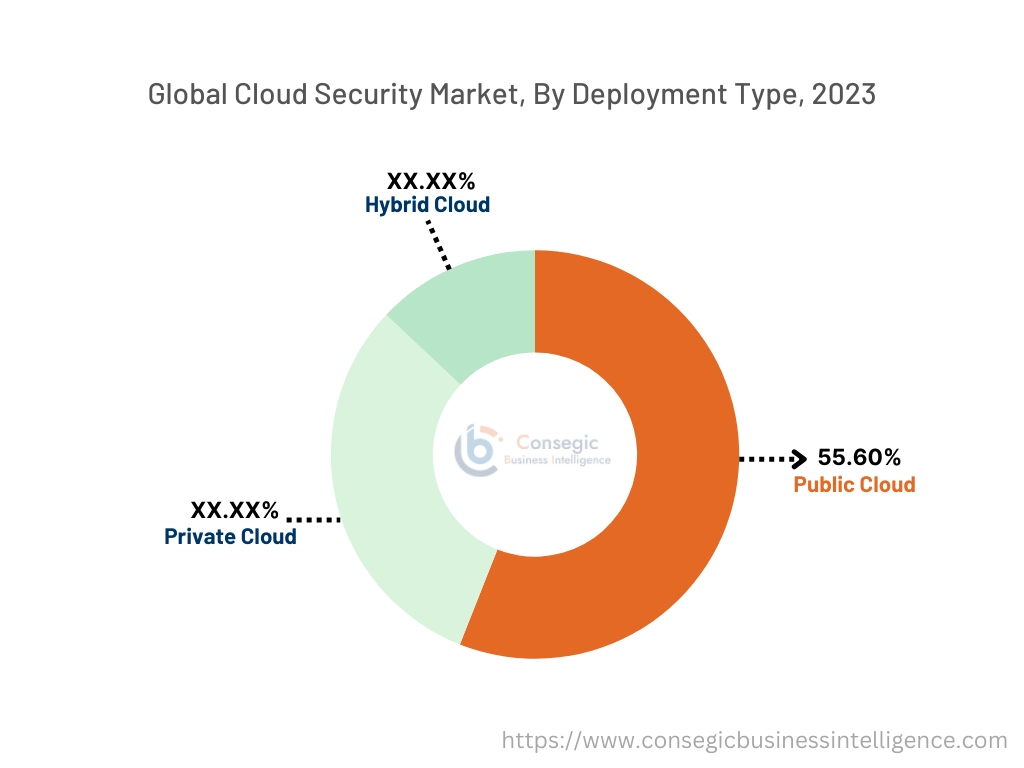
In 2026, the market demand for AI-driven cloud security audit tools has reached an all-time high, driven by the inescapable complexity of hyper-scale multi-cloud environments and the enforcement of stringent global data sovereignty laws. Organizations now view these autonomous auditing solutions as essential infrastructure for maintaining continuous compliance, reducing human error in configuration, and defending against AI-orchestrated cyber threats.
The landscape of cloud security has fundamentally shifted from reactive scanning to proactive, autonomous governance. As we navigate 2026, the traditional manual audit is largely a relic of the past, replaced by intelligent systems that provide real-time visibility and automated remediation. This surge in demand is not merely a trend but a structural necessity for any enterprise operating in a digital-first economy.
The Drivers of Demand: Why AI Is Non-Negotiable in 2026
The primary catalyst for the current demand is the Cloud Complexity Gap. As organizations have shifted from simple cloud migration to complex, multi-cloud, and poly-cloud architectures, the number of configuration points has grown exponentially. A typical mid-sized enterprise now manages thousands of microservices across AWS, Azure, and Google Cloud, alongside specialized sovereign cloud providers. Human auditors can no longer keep pace with the velocity of change in these environments.
Regulatory Compulsion and the Cost of Non-Compliance
In 2026, regulatory bodies have moved beyond periodic reporting. The "Continuous Audit" is the new standard. Regulations such as the matured EU AI Act and the updated NIST Cybersecurity Framework (CSF) 2.0 require organizations to demonstrate real-time control over their data and the AI models they deploy. AI-driven audit tools are the only viable way to map data flows and verify security controls at the speed required by these regulators. The financial penalties for non-compliance have scaled with inflation and revenue, making the investment in high-end AI audit tools a logical insurance policy.
The Cybersecurity Talent Deficit
Despite years of investment in training, the global cybersecurity talent shortage persists in 2026. Companies are unable to hire enough senior cloud security architects to perform manual deep-dives into their stacks. AI tools act as force multipliers, allowing a small team of generalist security analysts to perform the work of an entire department. These tools interpret complex logs, identify lateral movement risks, and suggest remediation steps in natural language, effectively bridging the expertise gap.
Core Capabilities Defining the 2026 Market
The market demand is specific. Organizations are no longer looking for basic "check-the-box" software; they are seeking advanced platforms that integrate into the very fabric of their CI/CD (Continuous Integration/Continuous Deployment) pipelines.
Autonomous Discovery and Identity Mapping
In 2026, the most sought-after tools are those capable of Identity and Entitlement Management (CIEM) driven by AI. In a modern cloud environment, identities are often non-human (service accounts, containers, and serverless functions). AI tools use machine learning to analyze behavior and identify "over-privileged" accounts that deviate from their baseline activities. This capability is critical for preventing "blast radius" expansion during a breach.
Natural Language Policy Translation
A significant innovation driving demand this year is the ability of AI tools to translate high-level business requirements and legal jargon into technical cloud configurations. A Chief Risk Officer can now ask the tool, "Are we compliant with the latest Singaporean Data Privacy amendments?" and the AI will automatically audit the cloud infrastructure against those specific requirements, providing a gap analysis within minutes.
Predictive Risk Scoring
Unlike the static vulnerability scores of five years ago, 2026's AI audit tools offer predictive analytics. By analyzing historical breach data, current threat intelligence feeds, and the specific configuration of a company’s cloud, these tools can predict which assets are most likely to be targeted in the next 24 hours. This allows security teams to harden specific "high-value targets" before an attack even begins.
Comparison of AI Audit Tool Generations
To understand the 2026 market, it is helpful to compare the current "Agentic AI" tools with the "Heuristic" tools that dominated the early 2020s.
| Feature | Early AI Tools (2020-2023) | Modern Agentic AI Tools (2026) |
|---|---|---|
| Analysis Type | Rule-based and heuristic | Behavioral and Generative |
| Audit Frequency | Scheduled (Daily/Weekly) | Continuous (Real-time/Event-driven) |
| Remediation | Manual or script-based | Autonomous (Agent-based) with human oversight |
| Scope | Single cloud focus | Seamless Multi-cloud/Hybrid integration |
| User Interface | Technical Dashboards | Natural Language Query (NLQ) Interfaces |
| Compliance Mapping | Manual mapping to frameworks | Automated real-time regulatory mapping |
Implementation Prerequisites and Operational Requirements
Deploying these advanced tools in 2026 requires more than just a license key. Organizations must prepare their cloud environments to benefit from AI-driven auditing.
- Unified Data Lake for Security Logs: AI is only as good as the data it consumes. Companies must centralize logs from all cloud providers, SaaS applications, and on-premises gateways. The demand for "Security Data Lakes" has grown in tandem with audit tools.
- Granular IAM Permissions: For an AI tool to audit and potentially remediate issues, it requires specific, high-level permissions. Establishing a "Least Privilege" model for the security tool itself is a critical first step.
- Policy-as-Code (PaC) Maturity: AI audit tools work best when they can compare the live environment against a "golden state" defined in code. Organizations that have not yet adopted Terraform, Pulumi, or similar infrastructure-as-code tools find it difficult to leverage the full power of 2026-era AI.
Strategic Benefits and Return on Investment (ROI)
The investment in AI-driven cloud security audit tools is substantial, often representing 15-20% of the total security budget in 2026. However, the ROI is articulated through several key channels.
Reduction in "Mean Time to Remediate" (MTTR)
Manual auditing often identifies a problem weeks after it occurred. In 2026, the "dwell time" of an attacker is measured in minutes. AI tools reduce MTTR by identifying misconfigurations (like an accidentally public S3 bucket or an exposed API key) and closing the loophole automatically within seconds. This immediate action prevents the data exfiltration that leads to multi-million dollar fines.
Elimination of Audit Fatigue
Security teams in the past were overwhelmed by "false positives"—alerts that looked like threats but were harmless. Modern AI uses context-aware analysis to filter out the noise. If an administrator is performing a scheduled maintenance task, the AI understands the context and does not trigger a high-priority alert. This allows human experts to focus on truly anomalous and dangerous activities.
Potential Risks and Limitations in the 2026 Market
Despite the high demand, the market is cognizant of the limitations inherent in AI-driven auditing. Transparency and "Explainability" are the primary concerns for 2026 stakeholders.
- AI Hallucinations in Compliance: There have been instances where Generative AI audit tools have "hallucinated" compliance status, claiming a control was in place when it was merely a misinterpretation of the underlying code. This has led to the rise of "Double-Check" protocols where a second, different AI model verifies the findings of the first.
- The "Black Box" Problem: Regulators often require companies to explain why a certain security decision was made. If an AI tool blocks a legitimate business process because it flagged it as a risk, the organization must be able to trace the logic. Tools that lack "Explainable AI" (XAI) features are seeing lower demand in 2026 compared to those that offer transparent decision-making logs.
- Adversarial AI: Just as defenders use AI to audit, attackers use AI to find the "blind spots" in those very audit tools. The 2026 market is an arms race; a tool that is effective today may be obsolete by next quarter if its underlying models aren't constantly updated.
Steps to Selecting an AI Audit Tool in 2026
For organizations looking to enter the market or upgrade their existing stack, the following steps are recommended:
- Audit the Auditor: Evaluate the tool's own security posture. Ensure the AI model training data is secure and that the vendor follows "AI-BOM" (AI Bill of Materials) standards.
- Test for Multi-Cloud Parity: Ensure the tool performs equally well across all your cloud providers. Many tools are "Azure-first" or "AWS-heavy," leading to visibility gaps in secondary clouds.
- Prioritize Integration: The tool must integrate with your existing ticketing systems (like Jira or ServiceNow) and communication platforms (Slack/Teams). An audit tool that exists in a vacuum is a liability.
- Verify Regulatory Mapping: Ensure the vendor provides guaranteed updates for the specific jurisdictions where you operate. In 2026, a tool that doesn't support the latest local data residency laws is non-functional for global enterprises.
Frequently Asked Questions
Are AI cloud security audit tools replacing human auditors entirely in 2026?
No. While AI handles the repetitive, high-volume task of scanning and basic remediation, human auditors have shifted to "High-Level Governance." Humans are now responsible for setting the risk appetite, interpreting complex legal nuances that AI might miss, and managing the ethical implications of autonomous security decisions. The role has evolved from "searcher" to "strategist."
How much do these tools cost in 2026?
Pricing has largely shifted to a consumption-based model. Organizations typically pay based on the number of "Workload Identities" or the volume of "Cloud Events" analyzed. For a mid-market company, annual costs can range from $50,000 to $250,000, while large enterprises may spend upwards of $1.5 million per year for full-suite autonomous governance.
Can these tools handle "Sovereign Clouds"?
Yes. One of the biggest growth areas in 2026 is the demand for AI audit tools that can operate within "Air-Gapped" or "Sovereign" cloud environments. These tools are designed to run locally without sending data back to the vendor's central AI for processing, ensuring compliance with strict national security laws.
What is the biggest mistake companies make when adopting these tools?
The most common error is "Set and Forget." Companies often assume that because the tool is "AI-driven," it requires no oversight. Without regular tuning of the policy engine and verification of the AI's "Reasoning Logs," the system can drift, leading to either over-permissive security or "False Positives" that grind business operations to a halt.
Do these tools support hybrid-cloud (on-premises and cloud) environments?
Most top-tier 2026 tools offer hybrid support, though the depth of auditing for on-premises legacy hardware is generally less sophisticated than for cloud-native resources. The market demand is currently strongest for tools that provide a "Single Pane of Glass" view across both environments.
Final Recommendation
As of mid-2026, the transition to AI-augmented cloud security auditing is no longer a matter of competitive advantage—it is a matter of business continuity. Organizations should prioritize tools that offer Explainable AI (XAI) and seamless multi-cloud integration. Start by deploying AI auditing to your most critical data environments (such as customer PII or proprietary R&D) before scaling to the entire enterprise. The goal is to move toward a state of "Self-Healing Infrastructure" where the audit tool doesn't just find problems but prevents them from ever manifesting in the production environment.