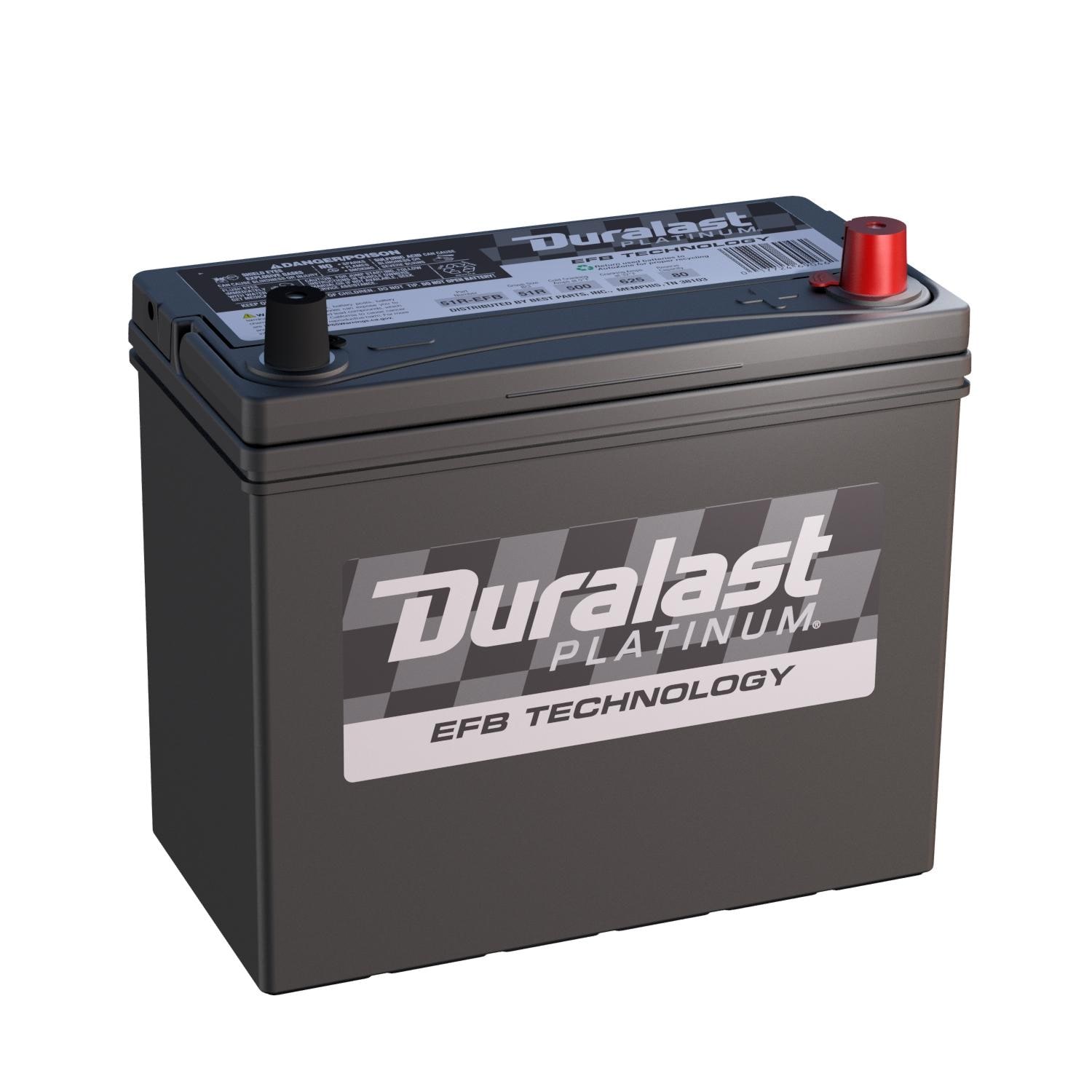
The 2016 Chevrolet Equinox typically requires a BCI Group Size 47 (H5) or Group Size 48 (H6) battery, depending on whether the vehicle is equipped with the 2.4L I4 or the 3.6L V6 engine. Most replacements favor a 12-volt battery providing between 600 and 730 Cold Cranking Amps (CCA) for optimal performance across various climates.
Selecting the correct battery for a 2016 Chevrolet Equinox involves more than just finding a unit that fits in the tray. As these vehicles age into 2026, maintaining the electrical integrity of the crossover is crucial for supporting modern infotainment upgrades, safety sensors, and reliable ignition. This guide provides a comprehensive breakdown of the technical specifications, chemistry options, and installation nuances specific to the 2016 Equinox.
Understanding BCI Group Sizes for the 2016 Equinox
The Battery Council International (BCI) assigns group sizes based on the physical dimensions and terminal placement of the battery. For the 2016 Equinox, two primary sizes dominate the market:
Group Size 47 (H5)
This is the standard size often found in the 2.4L 4-cylinder models. It is slightly smaller than the H6, making it easier to maneuver during installation. While it meets the minimum requirements for the I4 engine, it provides less reserve capacity than its larger counterpart.
Group Size 48 (H6)
The Group 48 (H6) is the standard for the 3.6L V6 Equinox but is often used as an "upgrade" for the 2.4L models. Because the battery tray in the 2016 Equinox is designed to accommodate both sizes, many owners prefer the H6. It offers a larger footprint, which generally translates to higher Cold Cranking Amps and a longer Reserve Capacity. In 2026, with many Equinox models sporting high-mileage components, the extra "juice" from an H6 battery is highly recommended to offset potential parasitic draws or aging starter motors.
Key Technical Specifications: CCA and Reserve Capacity
When shopping for a battery, the labels can be confusing. For the 2016 Equinox, two metrics are paramount: Cold Cranking Amps (CCA) and Reserve Capacity (RC).
Cold Cranking Amps (CCA)
CCA measures the battery's ability to start an engine in cold temperatures (0°F / -18°C) for 30 seconds while maintaining at least 7.2 volts.
- 2.4L Engine: Requires a minimum of 600 CCA.
- 3.6L Engine: Requires a minimum of 660–700 CCA. If you live in a northern climate where winters are harsh, opting for a battery rated at 730 CCA or higher provides a safety margin as the battery loses its chemical efficiency over time.
Reserve Capacity (RC)
Reserve Capacity indicates how many minutes the battery can supply 25 amps of power if the alternator fails. For a modern vehicle like the Equinox, which relies heavily on electronic power steering and computer-controlled fuel mapping, a higher RC (typically 90 to 120 minutes) is beneficial. It ensures that even if your charging system struggles, you have enough "limp home" time to reach a service station.
Battery Chemistry: AGM vs. Flooded Lead-Acid
By 2026, the market has shifted significantly toward Absorbent Glass Mat (AGM) technology, though traditional flooded batteries remain available.
Standard Flooded Lead-Acid
These are the traditional batteries that contain liquid electrolyte. They are cost-effective and perfectly functional for a 2016 Equinox. However, they are more susceptible to vibration and have a shorter overall lifespan—typically 3 to 5 years. They also require more attention to terminal corrosion, as they "gas" more during charging cycles.
Absorbent Glass Mat (AGM)
AGM batteries use a fiberglass mat to soak up the electrolyte, making them spill-proof and highly resistant to vibration.
- Pros: They charge up to five times faster than flooded batteries and can handle deep discharges more effectively. For a 2016 Equinox equipped with high-power aftermarket audio systems or dash cams that run while parked, AGM is the superior choice.
- Cons: They carry a higher upfront cost, often 40-60% more than a standard battery.
| Feature | Standard Flooded | AGM (Absorbent Glass Mat) |
|---|---|---|
| Typical Lifespan | 3–5 Years | 5–8 Years |
| Vibration Resistance | Moderate | High |
| Maintenance | Check for corrosion | Maintenance-free |
| Cold Weather Perf. | Good | Excellent |
| Cost (2026 Est.) | $140 – $180 | $220 – $310 |
Physical Features and Battery Location
The 2016 Equinox features a somewhat unique engine bay layout that affects how you interact with the battery.
Location and Access
The battery is located on the driver's side of the engine compartment, near the front of the vehicle. However, it is tucked under a plastic shroud and sits partially beneath a structural cross-brace. Accessing it requires removing the plastic clips holding the cover and, in many cases, loosening the bolts on the cross-brace to allow the battery to be lifted out vertically.
Terminal Orientation
The 2016 Equinox uses Top Post terminals. The positive (+) terminal is typically located toward the rear of the vehicle when the battery is installed, and it is usually covered by a red plastic flip-cap to prevent accidental grounding. Ensure any battery you purchase has the "Right-Hand Positive" layout characteristic of the H5 and H6 sizes.
Step-by-Step Replacement Guide
Replacing the battery in a 2016 Equinox is a task most DIYers can handle in 30 to 45 minutes.
1. Safety and Tools
You will need a 10mm wrench or socket for the terminals and a 13mm socket with an extension for the battery hold-down bolt and the cross-brace. Always wear eye protection and gloves, as old batteries can leak sulfuric acid or accumulate corrosive "white fuzz" (lead sulfate) on the terminals.
2. Disconnecting the Battery
Always disconnect the negative (black/minus) cable first. This breaks the circuit and prevents sparks if your wrench accidentally touches the car's metal frame while loosening the positive terminal. Once the negative is tucked aside, flip up the red cover and disconnect the positive (red/plus) cable.
3. Removing Obstructions
Remove the plastic cover by depressing the tabs. If your specific sub-model has the metal brace running over the battery, use your 13mm socket to remove the bolts. Set these aside in a secure place—do not drop them into the engine bay.
4. The Hold-Down Bolt
At the base of the battery, you will find a wedge-shaped plastic or metal block held by a long 13mm bolt. This "hold-down" ensures the battery doesn't bounce during travel. Unscrew it completely and lift the block out.
5. Swapping the Unit
Carefully lift the old battery out. Batteries are heavy (35–45 lbs), so use the handle if equipped. Before installing the new battery, inspect the tray for debris and clean the terminal connectors with a wire brush or a terminal cleaning tool.
6. Reinstallation
Place the new battery (H5 or H6) into the tray. Reinstall the hold-down block first to secure the unit. Then, connect the positive cable first, followed by the negative cable. Reinstall the cross-brace and the plastic cover.
Battery Management System (BMS) and Electronics
A common question for 2016 Equinox owners is whether the vehicle requires a "battery registration" or BMS reset. Unlike some European luxury brands, the 2016 Equinox is relatively straightforward. However, it does feature a Battery Current Sensor located on the negative cable.
This sensor monitors the state of charge and tells the alternator how much voltage to provide. When you replace the battery, the vehicle's computer may take a few driving cycles to "learn" the new battery's capacity. You do not strictly need a scan tool to register the battery, but you may notice slightly erratic idling or dimming lights for the first 50 miles as the system recalibrates.
Maintenance Tips for 2026
To maximize the life of a battery in a decade-old Equinox, consider these professional tips:
- Terminal Protection: Apply a thin layer of dielectric grease or terminal protector spray to the posts after tightening the cables. This prevents the oxidation that leads to "no-start" conditions.
- State of Charge: If the vehicle is a secondary car that sits for weeks at a time, use a dedicated battery maintainer (trickle charger). Modern electronics in the Equinox draw a small amount of current even when the car is off, which can flatten a battery over 3–4 weeks of inactivity.
- Heat Management: Heat kills batteries faster than cold. Ensure the plastic heat shield (if equipped) is replaced during installation, as it protects the battery cells from the high temperatures generated by the engine.
Troubleshooting Common Issues
If you install a new battery and the 2016 Equinox still won't start, or if the battery dies repeatedly, check the following:
- The Alternator: A failing alternator won't charge the battery while you drive. With the engine running, use a multimeter to check the voltage at the battery terminals; it should read between 13.8V and 14.5V.
- Parasitic Draw: A stuck relay or an aftermarket accessory may be draining power while the car is off.
- Loose Ground: Check the negative cable where it connects to the vehicle's frame. If this connection is rusted or loose, the battery cannot discharge or charge correctly.
Frequently Asked Questions
What happens if I use the wrong battery size in my 2016 Equinox?
If the battery is too small (e.g., a Group 35), it may not be secured properly by the hold-down wedge, leading to vibration damage. If it is too large, it won't fit in the tray or the terminals may sit too high, potentially touching the hood or the cross-brace, creating a fire hazard.
How long should the original battery last?
Standard OEM batteries typically last 3 to 5 years. By 2026, most 2016 Equinox vehicles are on their second or third battery. If yours is lasting less than 3 years, have your charging system tested for an overcharging condition.
Can I jump-start my 2016 Equinox with a dead battery?
Yes. The 2016 Equinox has clear access points for jump-starting. Connect the red clamp to the positive terminal (under the red cap) and the black clamp to a clean, unpainted metal part of the engine block or the designated grounding stud, rather than the negative terminal of the dead battery, to minimize the risk of sparks near battery gases.
Is an AGM battery really worth the extra money?
In 2026, the answer is usually yes. AGM batteries have a much lower self-discharge rate and handle the high-heat environment of the Equinox engine bay better than flooded batteries. If you plan on keeping the vehicle for another 4+ years, the AGM will likely pay for itself by outlasting two cheaper flooded batteries.
Why is there a metal bar over my battery?
That is a structural brace designed to improve the rigidity of the front chassis and protect the battery in the event of a collision. It must be removed to replace the battery, but it is essential to reinstall it correctly and torque the bolts to approximately 18-22 lb-ft to maintain vehicle safety.
Final Recommendation
For the best balance of value and performance, upgrade to a Group Size 48 (H6) AGM battery. While the 2016 Equinox can run on a Group 47, the H6 offers superior reserve capacity and cold-weather starting power, which is vital for an older vehicle's electrical system. Ensure you have a 10mm and 13mm socket set on hand before starting the project, and always dispose of your old lead-acid battery at a certified recycling center or the retailer where you purchased the new one to avoid environmental contamination and reclaim your "core charge" deposit.