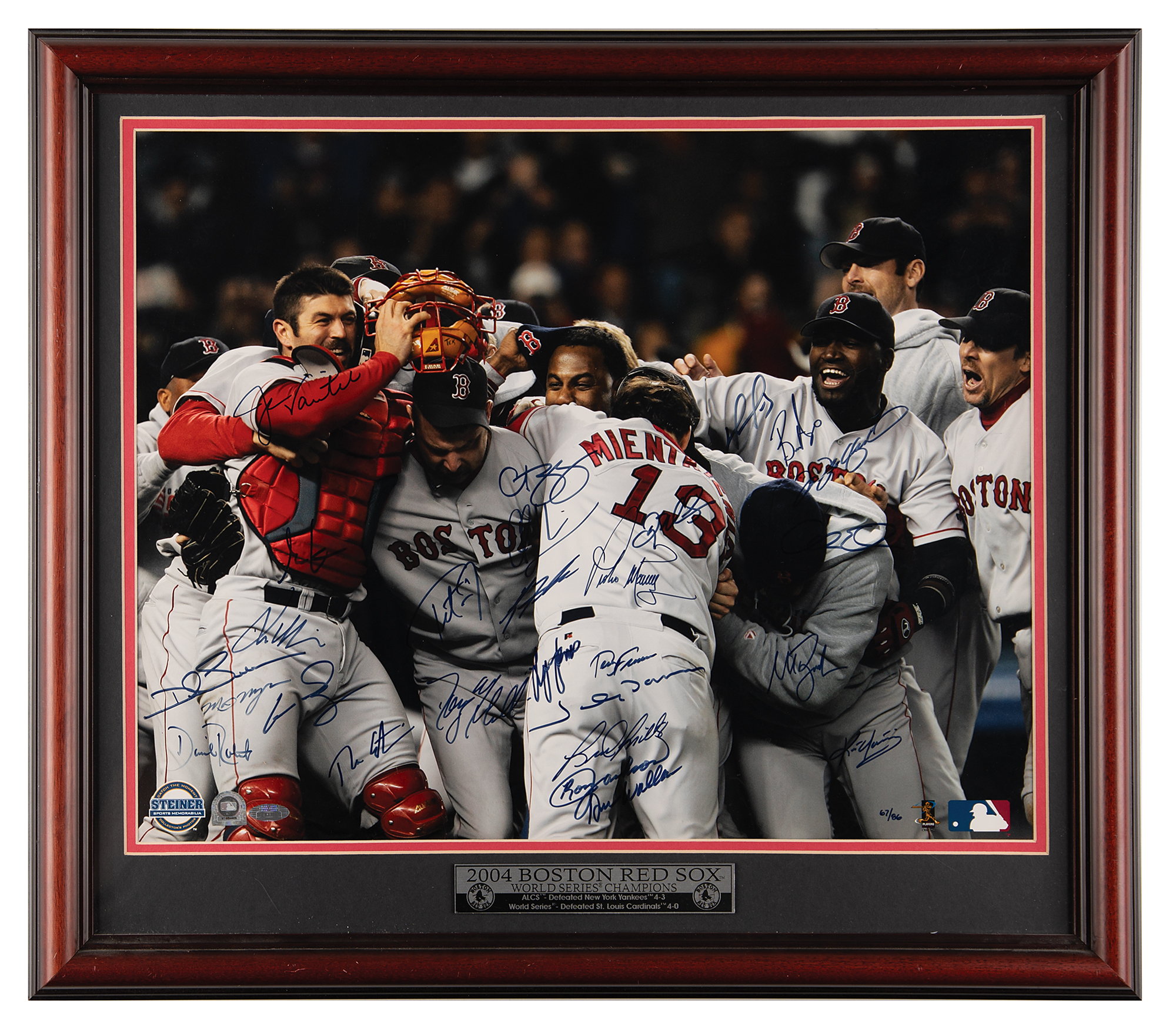
The primary catching tandem for the 2004 Boston Red Sox consisted of veterans Jason Varitek, who served as the undisputed team captain and primary starter, and Doug Mirabelli, who acted as his reliable backup and the personal catcher for knuckleball pitcher Tim Wakefield. Together, this catching duo anchored a pitching staff that ultimately overcame an 8-3 postseason deficit against the New York Yankees and swept the St. Louis Cardinals to win the franchise’s first World Series title in 86 years.
The Historic Significance of the 2004 Red Sox Catching Corps
When analyzing the historic 2004 Boston Red Sox roster, discussions often gravitate toward heavy hitters like David Ortiz and Manny Ramirez, or frontline starting pitchers like Curt Schilling and Pedro Martinez. However, the operational success of the team's pitching staff rested heavily upon the intelligence, durability, and tactical execution of its catchers. In Major League Baseball, the catching position requires a demanding blend of physical endurance, defensive mastery, game-calling acumen, and leadership in the clubhouse.
The 2004 season presented unique challenges for Boston's backstops. The organization was operating under immense historical pressure, attempting to break the legacy of the "Curse of the Bambino." Navigating a high-pressure media market while managing a volatile pitching staff required exceptional psychological resilience. Jason Varitek and Doug Mirabelli provided contrasting skill sets that, when utilized by manager Terry Francona, created an ideal tactical balance behind the plate. Their contributions extended far beyond blocking pitches and throwing out base runners; they served as the on-field generals for a pitching staff that had to navigate the formidable American League East.
Furthermore, the 2004 catching situation highlighted the evolving value of specialized roster construction. While Jason Varitek handled the conventional pitching rotation and played in the vast majority of games, the Red Sox recognized the specialized defensive requirements of catching a knuckleball. This strategic allocation of playing time maximized individual strengths and mitigated weaknesses, offering a case study in modern baseball resource management.
Jason Varitek: The Captain and Primary Starter
Jason Varitek was the literal and figurative heartbeat of the 2004 Boston Red Sox. Acquired initially in a trade with the Seattle Mariners in 1997 along with Derek Lowe for Heathcliff Slocumb, Varitek developed into one of the premier catchers in Major League Baseball by the turn of the decade. In 2004, his performance both offensively and defensively reached a career peak.
During the 2004 regular season, Varitek appeared in 143 games, demonstrating remarkable durability for a position as physically punishing as catcher. He batted .296 with a .390 on-base percentage and a .522 slugging percentage, setting career highs with 18 home runs and 73 runs batted in. His offensive production earned him his first career All-Star selection and a Silver Slugger Award. Varitek provided crucial right-handed power in the middle of a potent Red Sox lineup, often coming through with clutch hits in high-leverage situations.
Defensively, Varitek's value was immeasurable. He was renowned for his meticulous preparation, studying opposing hitters' tendencies and working closely with pitching coach Dave Wallace and the starting rotation. His ability to frame pitches, control the running game, and communicate effectively with pitchers established trust across the entire staff.
The Leadership and Defining Moments
Varitek’s leadership was solidified prior to the 2004 season when he was named the team captain, becoming the first player to hold the title for the Red Sox since Jim Rice. That leadership manifested most memorably during a nationally televised game against the New York Yankees on July 24, 2004. In the middle of a heated brawl sparked by a pitch hitting Alex Rodriguez, Varitek famously shoved his glove into Rodriguez’s face. This moment galvanized the clubhouse, serving as a turning point for a team that had struggled with consistency during the first half of the season.
In the postseason, Varitek’s poise under pressure anchored the Red Sox through historic adversity. During the American League Championship Series against the Yankees, and subsequently in the World Series against the St. Louis Cardinals, Varitek called games that neutralized potent offenses. His framing in critical late-inning situations and his calm demeanor helped settle pitchers during high-stress moments.
Doug Mirabelli: The Specialized Backup and Knuckleball Receiver
While Jason Varitek should the heavy lifting of the regular season, Doug Mirabelli played a crucial, highly specialized role that was vital to the team's pitching success. Mirabelli, acquired by Boston in 2001, was a veteran backup catcher whose career was defined by his unique ability to catch knuckleball pitcher Tim Wakefield.
Catching a knuckleball is widely considered one of the most difficult defensive assignments in baseball. The pitch unpredictable flutters and moves erratically due to the lack of spin, making it notoriously difficult to track, catch, and block. Regular catchers often struggle to prevent passed balls and wild pitches when receiving a knuckleball, which can disrupt a pitcher's confidence and give away free bases. Recognizing this, the Red Sox deployed Mirabelli almost exclusively as Wakefield's personal catcher.
In 2004, Mirabelli appeared in 51 games, starting most of Wakefield’s assignments. While his offensive numbers were modest—batting .281 with four home runs and 22 RBIs in 146 plate appearances—his defensive contribution to Wakefield's success was indispensable. Wakefield posted a 12-10 record with a 4.87 ERA in 2004, serving as a reliable innings-eater and a crucial postseason starter. Mirabelli's sure-handed receiving kept runners from advancing freely and allowed Wakefield to throw his signature pitch with absolute confidence.
The Logistics of the "Mirabelli Flight"
Mirabelli's role in 2004 generated one of the most famous logistical subplots in franchise history during the subsequent 2006 season—an event rooted in the specialized deployment strategy established during the championship run. Because Mirabelli was so essential to Wakefield, the Red Sox executed a dramatic mid-day trade to re-acquire him from the San Diego Padres just hours before a game at Fenway Park, complete with a police escort to get him from Logan Airport to the stadium in time for the first pitch. While this specific event occurred in 2006, it underscored the precedent set in 2004 regarding how deeply integrated Mirabelli's specialized skill set was into the Red Sox pitching strategy.
2004 Boston Red Sox Catchers Comparison
| Metric / Attribute | Jason Varitek | Doug Mirabelli |
|---|---|---|
| Primary Role | Starting Catcher / Team Captain | Backup Catcher / Wakefield Personal Receiver |
| Regular Season Games Played | 143 | 51 |
| Batting Average (AVG) | .296 | .281 |
| On-Base Percentage (OBP) | .390 | .331 |
| Slugging Percentage (SLG) | .522 | .459 |
| Home Runs (HR) | 18 | 4 |
| Runs Batted In (RBI) | 73 | 22 |
| Postseason Role | Primary starter for all non-Wakefield games | Primary starter for Tim Wakefield's starts |
Managing the Pitching Staff Through the Postseason
The true test of the 2004 Red Sox catching duo came during the historic October run. Managing a pitching staff that included Curt Schilling, Pedro Martinez, Derek Lowe, Bronson Arroyo, Tim Wakefield, and a bullpen featuring Keith Foulke required constant tactical adjustment.
Varitek started the majority of postseason games, catching every inning of the grueling seven-game ALCS against the New York Yankees. In Game 4, with Boston facing elimination, Varitek's game-calling helped guide the pitching staff through extra innings before David Ortiz delivered a walk-off home run. Throughout the series, Varitek neutralized the running game of the Yankees and maintained the composure of a rotation that had been battered earlier in the series.
When Tim Wakefield took the mound, Mirabelli assumed catching duties, ensuring stability for the knuckleball. In Game 5 of the ALCS, Wakefield pitched six crucial innings of relief to earn the win, with Mirabelli behind the plate. In the World Series, Mirabelli caught Wakefield's Game 1 start against the St. Louis Cardinals, helping Boston secure a 9-1 victory to set the tone for the sweep.
The ability of both catchers to handle high-pressure environments without altering their defensive philosophies enabled the Red Sox pitching staff to execute their game plans. Varitek’s leadership in the clubhouse and on the field provided a stabilizing force during the unprecedented comeback from a 3-0 deficit against New York, culminating in the final out recorded when Varitek embraced closer Keith Foulke on the mound at Busch Stadium.
Frequently Asked Questions
Who was the starting catcher for the 2004 Boston Red Sox?
Jason Varitek was the primary starting catcher for the 2004 Boston Red Sox, appearing in 143 regular-season games and serving as the team captain. He handled the bulk of the catching duties throughout the regular season and the entire postseason, earning an All-Star selection and a Silver Slugger Award.
Why did Doug Mirabelli play for the 2004 Red Sox if Jason Varitek was the starter?
Doug Mirabelli served as the specialized backup catcher and was the personal catcher for knuckleball pitcher Tim Wakefield. Because catching a knuckleball requires unique receiving skills to prevent passed balls, Mirabelli was regularly inserted into the starting lineup whenever Wakefield pitched.
What awards did Jason Varitek win in 2004?
In 2004, Jason Varitek had one of the best offensive seasons of his career, earning his first American League All-Star selection and winning a Silver Slugger Award for catchers. He batted .296 with 18 home runs and 73 RBIs while anchoring the Red Sox defense.
How did the catching tandem impact the Red Sox 2004 postseason run?
The catching tandem provided tactical balance and defensive stability during the postseason. Varitek managed the traditional pitching rotation through high-leverage situations, including the historic ALCS comeback against the Yankees, while Mirabelli successfully handled Tim Wakefield's knuckleball outings, ensuring zero defensive lapses during those critical starts.
Was Jason Varitek the captain of the 2004 Red Sox?
Yes, Jason Varitek was named team captain prior to the 2004 season. He was the first player to hold the title for the Boston Red Sox since Jim Rice, and his leadership was widely credited with helping the team maintain composure during high-pressure moments.
Practical Considerations for Historical Baseball Analysis
When evaluating historical team components like the 2004 Boston Red Sox catchers, observers should examine the interplay between traditional statistics and specialized tactical roles. Modern baseball analytics validate the decision to utilize a personal catcher for a knuckleball pitcher, as reducing wild pitches and passed balls directly impacts team ERA and win probability. For researchers, historians, and fans studying this championship team, recognizing the contributions of Varitek and Mirabelli provides a complete picture of how the 2004 roster was constructed to win under pressure.