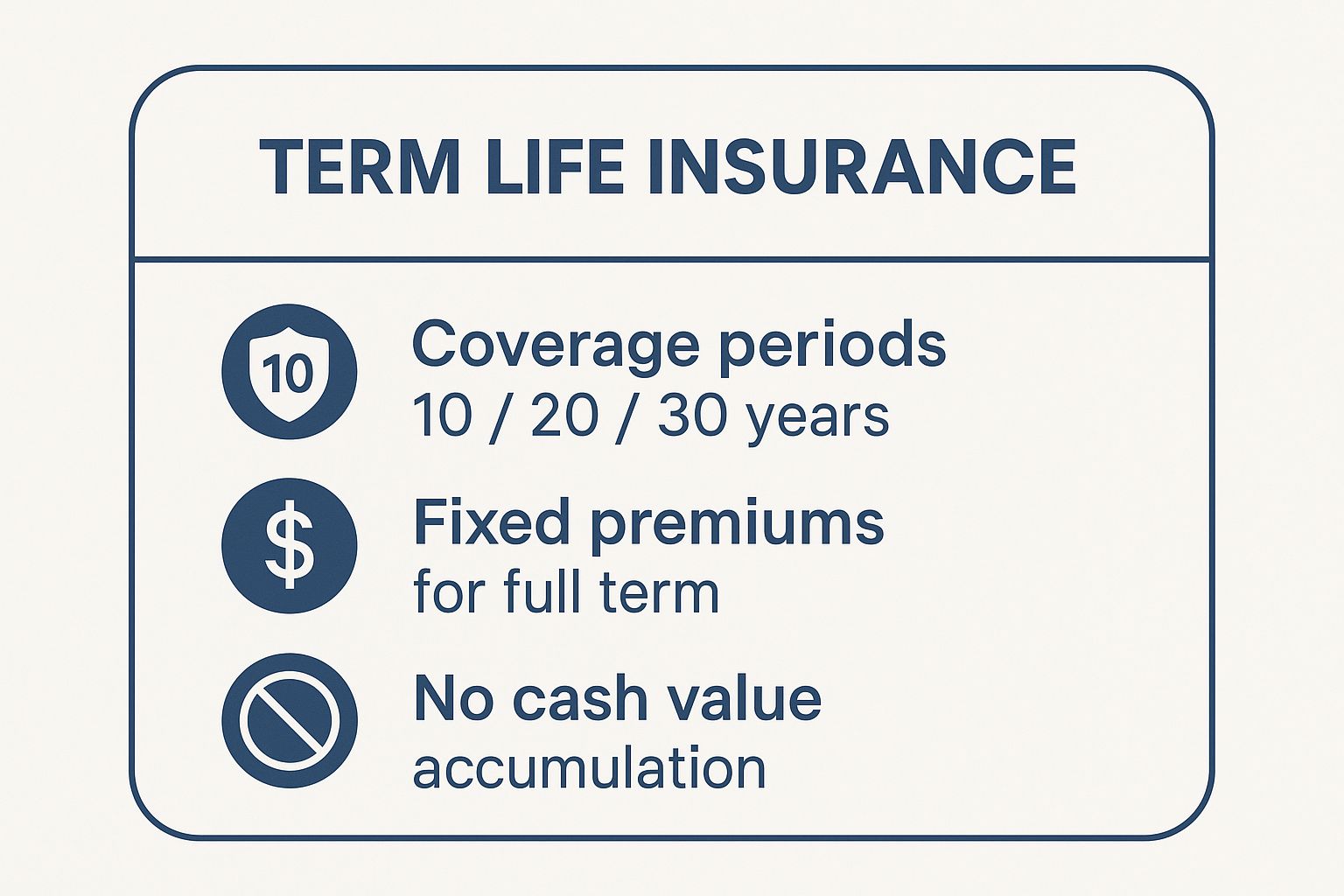
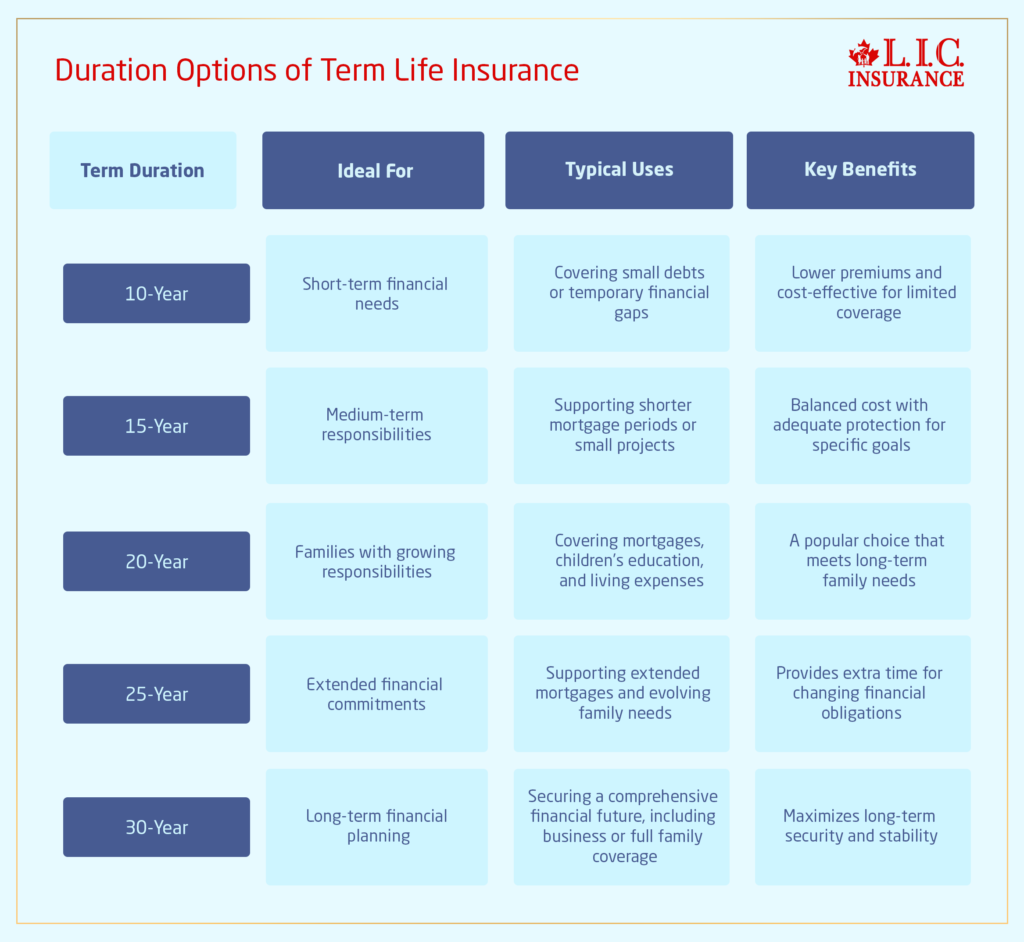
A 20-year term life insurance policy from Protective Life provides a guaranteed death benefit and fixed premium payments for a two-decade duration. It is primarily designed to cover mid-to-long-term financial obligations, such as a mortgage, income replacement, or a child’s education, offering high coverage amounts at competitive rates compared to permanent insurance.
Protective Life, a company with over a century of history and strong financial ratings, remains a top-tier choice for term insurance in 2026. Their 20-year term product, often marketed under the Classic Term brand, is particularly favored for its straightforward structure and the company's "Select Choice" underwriting process, which can streamline approval for healthy applicants.
Understanding the Structure of a 20-Year Level Term Policy
The "level" in 20-year level term insurance refers to two specific components: the premium and the death benefit. Unlike "annually renewable" term insurance, where costs increase every year, a 20-year policy locks in your rate on day one. For the entirety of the 7,300-day period (excluding leap years), your monthly or annual payment remains identical.
The death benefit is the amount paid out to your beneficiaries if you pass away during the 20-year window. Protective Life ensures this amount does not decrease over time, even if your health declines or the economy fluctuates. This predictability makes it an essential tool for financial planning, as it allows families to know exactly what support will be available in a worst-case scenario.
Why 20 Years?
The 20-year term is often called the "sweet spot" of the life insurance industry. It aligns perfectly with the most critical years of a family's financial lifecycle. For a couple with a newborn, a 20-year policy covers the child until they reach adulthood. For a new homeowner with a 30-year mortgage, a 20-year policy covers the bulk of the interest-heavy years of the loan at a significantly lower cost than a 30-year policy.
Eligibility and Underwriting Tiers
As of 2026, Protective Life utilizes a sophisticated underwriting model that balances traditional medical exams with data-driven "accelerated" underwriting. Eligibility for a 20-year term policy generally extends to individuals between the ages of 18 and 65, though the maximum age may vary slightly based on the total coverage amount requested.
Underwriting Categories
Your premium is determined by which "risk class" you fall into. Protective Life is known for being particularly competitive in specific categories:
- Preferred Best: Reserved for individuals in excellent health with no history of tobacco use and a clean family medical history.
- Preferred: For those in very good health who may have minor, well-managed issues (like slightly elevated cholesterol).
- Select Preferred: A middle-tier category for healthy individuals who might not meet the strict BMI or family history requirements of the top tiers.
- Standard (Tobacco/Non-Tobacco): For individuals with average health or those who use tobacco products.
Protective's underwriting is notably "clinical-friendly." For example, individuals with well-controlled Type 2 diabetes or those on certain blood pressure medications often find more favorable rates with Protective than with more conservative carriers.
Coverage Limits and Policy Minimums
Protective Life caters to a wide range of needs, from young families needing basic protection to high-net-worth individuals requiring complex estate planning tools.
- Minimum Coverage: Typically starts at $100,000. This is often the entry point for "Classic Term" policies.
- Maximum Coverage: Protective frequently writes policies exceeding $10 million for qualified applicants. For amounts over $5 million, additional financial documentation (such as tax returns or net worth statements) is usually required to justify the "insurable interest."
- Application Increments: Coverage is generally available in increments of $10,000 or $50,000, allowing you to tailor the benefit to your specific debt load.
Policy Riders: Customizing Your Protection
A standard 20-year term policy provides a death benefit, but "riders" allow you to add living benefits or specific protections. Protective Life offers several key options that can be attached to their term products.
Accelerated Death Benefit Rider
Usually included at no additional premium cost (though a fee may apply upon exercise), this rider allows the policyholder to access a portion of the death benefit if they are diagnosed with a terminal illness. In 2026, the definition of "terminal" typically requires a physician to certify a life expectancy of 12 months or less. This money can be used for medical bills, hospice care, or even to pay off the mortgage before death.
Waiver of Premium Rider
If you become "totally disabled" (as defined by the policy) and are unable to work, this rider steps in to pay your premiums for you. This ensures that your life insurance remains in force at a time when your income has ceased. Most versions of this rider require a six-month waiting period before the waiver takes effect.
Children’s Term Rider
This allows you to add life insurance coverage for all your children under a single rider on your own policy. It is an affordable way to ensure funds are available for funeral expenses or family counseling in the event of a child's passing. Usually, this coverage can be converted into a permanent policy for the child when they reach adulthood, regardless of their health status at that time.
Accidental Death Benefit Rider
This provides an additional payout if the cause of death is an accident (such as a car crash or a fall) rather than natural causes. While it increases the payout, many financial advisors suggest simply buying a higher base level of term insurance instead of relying on "double indemnity" riders.
Technical Specifications and Comparative Analysis
When comparing Protective Life to other industry giants, the 20-year term shines in its "conversion" flexibility and price stability.
| Feature | Protective Life (Classic Term) | Industry Average |
|---|---|---|
| Term Duration | 20 Years (Level) | 20 Years (Level) |
| A.M. Best Rating | A+ (Superior) | Varies (A- to A+) |
| Minimum Age | 18 | 18 |
| Maximum Age (20-yr) | 65 (depending on health/amount) | 60-65 |
| Conversion Period | Generally up to age 70 | Often limited to first 10 years |
| Accelerated Underwriting | Available for many applicants | Varies by carrier |
| Premium Frequency | Monthly, Quarterly, Semi-Annual, Annual | Monthly, Annual |
The Conversion Privilege: A Critical Safety Net
One of the most important details of a Protective Life 20-year term policy is the Conversion Option. This feature allows you to exchange your term policy for a permanent life insurance policy (like Universal Life) without undergoing a new medical exam.
In 2026, the conversion window for Protective is typically available until the end of the 20-year term or until the policyholder reaches age 70, whichever comes first. This is a vital safeguard. If you develop a chronic illness in your 15th year of coverage, you could convert your policy to a permanent one that lasts the rest of your life, ensuring your beneficiaries receive a payout regardless of when you pass away, and you wouldn't have to "qualify" for that new policy based on your current (declined) health.
Cost Factors and Premium Estimation
While exact quotes depend on personal data, several "external" factors influence the cost of a 20-year term policy with Protective Life.
- Age: Every year you wait to apply increases the premium by approximately 5-9%.
- Gender: Statistically, women live longer than men, resulting in lower premiums for female applicants.
- Tobacco Use: Smokers or vapers can expect to pay 2x to 3x more than non-tobacco users.
- Payment Mode: Paying your premium annually is almost always cheaper than paying monthly. Protective, like most insurers, applies a "modal factor" (a small administrative fee) to monthly payments.
In 2026, a healthy 35-year-old male might pay roughly $25–$35 per month for $500,000 of coverage, while a healthy 35-year-old female might pay $20–$28 for the same 20-year term.
The Application and Implementation Process
Applying for a 20-year term policy has become significantly more streamlined. The current 20-26 process generally follows these steps:
- Quote and Submission: You provide basic info (height, weight, age) for an initial estimate and submit a digital application.
- Tele-Interview: A representative from Protective Life may call to confirm medical history and lifestyle details (hobbies like scuba diving or pilot activities).
- Data Retrieval: Protective uses automated systems to check your Medical Information Bureau (MIB) report, motor vehicle records, and prescription drug history.
- The "Lab" Decision: If you qualify for accelerated underwriting, the medical exam (blood/urine) may be waived. If not, a paramedical professional will visit your home for a brief physical.
- Underwriting Review: A human underwriter reviews the gathered data to assign your final risk class.
- Policy Issue and Delivery: Once approved, you review the final premium. If you accept, the policy is issued digitally, and your first premium payment activates the coverage.
Pros and Cons of Protective Life 20-Year Term
Advantages
- Strong Financial Backing: Protective's high ratings from A.M. Best and Standard & Poor’s provide peace of mind that they will be able to pay claims decades from now.
- Affordability: They are consistently ranked among the lowest-cost providers for 20-year terms, especially for coverage amounts over $250,000.
- Flexible Conversion: Their conversion rules are more generous than many "budget" carriers.
- Customer Service: Protective has invested heavily in digital portals, allowing policyholders to manage beneficiaries and payments easily online.
Disadvantages
- Strict "Preferred" Guidelines: While they are friendly to certain health conditions, their requirements for the absolute lowest "Preferred Best" rates can be very stringent regarding family history.
- No "Return of Premium" (ROP) Option: Protective largely focuses on pure term protection. If you want a policy that refunds your premiums if you outlive the 20 years, you may need to look elsewhere, though ROP policies are significantly more expensive.
Frequently Asked Questions
Can I cancel my Protective Life 20-year term policy early?
Yes, you can cancel your policy at any time without penalty. Since it is a term policy, it does not build cash value. If you stop paying premiums or formally cancel, the coverage simply ceases. There are no "surrender charges" as there are with whole life insurance.
What happens after the 20-year term ends?
Once the 20-year level period expires, the policy typically enters a "renewal" phase. However, the premiums usually spike dramatically (often 10x to 20x the original cost) because you are now being insured on an year-by-year basis at an older age. Most people either let the policy lapse, convert it to permanent coverage before the term ends, or buy a new term policy if they still need protection.
Does Protective Life cover death by suicide?
Like almost all life insurance policies in the United States, Protective Life includes a two-year suicide clause. If the policyholder dies by suicide within the first two years of the policy, the death benefit is not paid, but the premiums paid into the policy are usually refunded to the beneficiaries. After the two-year mark, the death benefit is paid regardless of the cause.
Is the death benefit from a 20-year term policy taxable?
In the vast majority of cases, the death benefit paid to beneficiaries is not subject to federal income tax. However, if the payout is large enough to trigger estate taxes (which varies by year and jurisdiction), there could be tax implications. It is always best to consult a tax professional for high-value policies.
Can I decrease my coverage amount later?
Yes, Protective Life generally allows policyholders to decrease their death benefit (e.g., from $1 million down to $500,000) as their debts decrease. This will lower your premium, but you cannot increase the coverage amount later without undergoing a new medical exam and application process.
Final Recommendation
For those in 2026 seeking a balance between long-term security and monthly affordability, the Protective Life 20-year term policy is a premier choice. It is ideally suited for individuals who have clear "sunset dates" for their financial liabilities, such as the day the kids graduate or the mortgage is retired.
To ensure the best rates, applicants should aim to secure coverage while in good health and opt for the annual payment mode. If you have specific health concerns, work with an independent agent who can leverage Protective’s specific underwriting niches to your advantage. Always review the conversion options upon receiving your policy document, as this remains your most powerful tool for adapting your insurance to life's unpredictable changes.
For more information on current regulations and insurer ratings, you can visit the National Association of Insurance Commissioners (NAIC) or check the latest financial strength ratings at A.M. Best.