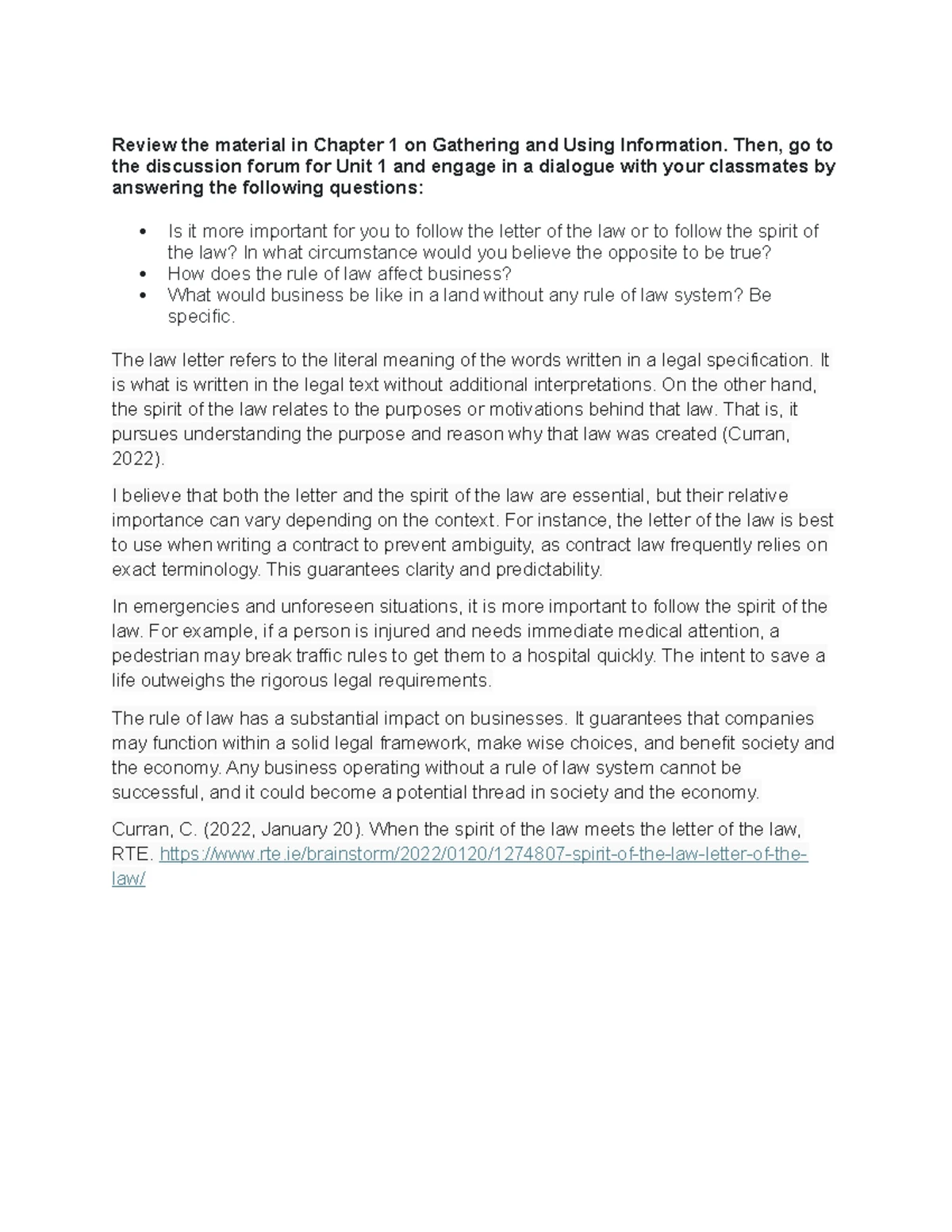
In the context of modern online educational platforms and structured curricula, "1 unit 5 discussion 1" refers to the specific inaugural discussion board prompt located within the fifth module of a course. This assignment serves as a critical bridge between theoretical learning and collaborative peer-to-peer engagement, requiring students to synthesize core concepts from the fifth unit into a cohesive, evidence-based argument or reflection.
Defining the Structure of Unit 5 Discussion 1
To succeed in "1 unit 5 discussion 1," students must first understand the pedagogical architecture of a discussion-based assignment. These exercises are rarely isolated tasks; instead, they are designed to function as the primary point of contact for class interaction. In most academic learning management systems (LMS) such as Canvas, Blackboard, or Brightspace, a discussion board labeled "Unit 5 Discussion 1" is typically part of a multi-week assessment cycle.
The number "5" denotes the progression of the course, often marking a transition into more complex, specialized, or practical subject matter. By the fifth unit, instructors generally expect students to move beyond foundational definitions and begin applying critical thinking to case studies, data sets, or theoretical frameworks. The "Discussion 1" suffix indicates this is the primary forum for this module, where the initial prompt serves as the anchor for the entire class’s conversation.
Prerequisites for Engagement
Before drafting your initial response for a Unit 5 discussion, several preparatory steps are essential. Jumping into a discussion post without a clear strategy often results in shallow contributions that fail to meet rubric criteria.
- Review the Syllabus and Rubric: Every discussion board is graded against a rubric. This document details the expectations for response length, the required number of peer responses, and the necessity of citing academic sources.
- Synthesize Unit 5 Readings: Do not attempt to answer the prompt until you have completed the assigned readings for the fifth module. Instructors look for evidence that you have engaged with the specific terminology and arguments presented in the lectures or textbooks for that week.
- Identify the Core Question: Most prompts include a "multi-part" question. Before writing, break the prompt down into individual components to ensure your post addresses all requirements, such as including a personal experience or a scholarly rebuttal.
Developing a High-Quality Initial Post
The initial post for Unit 5 Discussion 1 is your opportunity to demonstrate your grasp of the module’s objectives. A high-scoring post generally follows a standardized academic structure, even within a digital forum.
The Thesis Statement
Start your response with a clear, concise statement that answers the primary prompt. For instance, if the prompt asks you to compare two management theories covered in Unit 5, your first sentence should state which theory you believe is more effective in a contemporary organizational setting and why.
Evidence-Based Argumentation
Avoid relying solely on personal opinion. Instead, integrate direct citations from your course materials. Using phrases like "As noted by [Author] in Chapter 12..." provides credibility to your argument. When you support your claims with verified sources, you demonstrate academic rigor, which is a major factor in achieving a high score.
Practical Application
The "discussion" aspect implies that your peers should learn something from your perspective. Connect the abstract theories of the unit to real-world scenarios. If the course is about finance, apply the formulas discussed in the unit to a hypothetical business case. If it is about sociology, link the theory to a current event.
Comparing Discussion Post Requirements
Different courses have different expectations for how a student should participate in a forum. The table below outlines common expectations for high-level academic discussions:
| Requirement Feature | Expectation | Common Goal |
|---|---|---|
| Initial Post Timing | Usually 3-4 days before the deadline | Allows peers time to read and react |
| Evidence Basis | Minimum 1-2 scholarly sources | Demonstrates research and synthesis |
| Peer Response Count | 2-3 substantive replies | Encourages diverse perspectives |
| Response Quality | Adding new information or critique | Deepens the conversation |
| Formatting | APA, MLA, or Chicago style | Academic consistency |
Best Practices for Peer-to-Peer Responses
A common mistake students make in Unit 5 discussions is treating the peer-response portion as an afterthought. Simply saying "I agree with your post" is insufficient. To earn full marks, your response to a classmate should:
- Critique or Expand: If you agree, explain why, and add a piece of evidence that supports their position. If you disagree, do so respectfully by providing a counter-argument backed by your course readings.
- Ask Insightful Questions: A well-placed question can pivot the discussion toward a more complex angle, demonstrating that you are actively engaging with your peers' thought processes.
- Maintain Professionalism: Remember that the discussion board is a professional setting. Avoid informal language, slang, or aggressive tones, even if you are debating a controversial topic presented in the unit.
Common Pitfalls and Troubleshooting
Even with diligent preparation, technical and conceptual issues can occur. Here is how to resolve common hurdles related to your Unit 5 discussion:
1. The "Off-Topic" Post If you realize your draft has wandered from the prompt’s focus, use the "edit" feature before the deadline. Ensure that every paragraph contributes directly to the prompt's requirements. If the prompt has three sub-questions, ensure each is represented by at least one paragraph.
2. Technical Submission Failures Always draft your initial response in a word processor (like Microsoft Word or Google Docs) before pasting it into the LMS. If the portal times out or experiences a server error, you will not lose your work. This also allows you to perform a final spelling and grammar check outside of the browser’s limited text box.
3. Missed Deadlines Most platforms track submission times to the second. If you find yourself approaching the deadline with an incomplete post, prioritize answering the prompt’s core questions clearly and concisely rather than aiming for a high word count. A complete, shorter post is usually preferred over an incomplete, rambling one.
4. Lack of Engagement If no one is responding to your post, do not wait for others to start. Look for classmates who have posted thoughtful content and initiate a discussion by asking a relevant, academic question based on their argument. This often prompts a chain reaction of participation.
The Role of Peer Review and Constructive Criticism
In higher education, the discussion board is often intended to simulate a professional meeting or a graduate-level seminar. The goal of "1 unit 5 discussion 1" is to cultivate a learning community. When responding to peers, move beyond superficial praise. Use "Constructive Criticism" techniques: acknowledge the strength of their argument first, introduce your perspective or a conflicting data point, and then close with an inquiry that invites them to reflect further. This cycle of critique and synthesis is what separates an average student from one who actively contributes to the discourse of the course.
Ensuring Academic Integrity
Even in an online discussion format, academic integrity remains paramount. You must cite your sources, even if they are internal to the course (such as textbook chapters or lecture slides). Failing to attribute ideas—even when summarizing them in your own words—can lead to accusations of plagiarism. Always include a reference list at the bottom of your post, formatted according to the style guide required by your institution.
Preparing for Next Steps
Once the discussion window for Unit 5 closes, take a moment to review the feedback provided by your instructor. While the grade is important, the written comments from the faculty member are vital for improving your performance in the next unit. If your instructor noted that your initial post lacked sufficient supporting evidence, adjust your research strategy for the Unit 6 discussion immediately. By treating each discussion as a building block toward your final project or examination, you ensure that you are continuously improving throughout the semester.
If you are struggling with a specific concept within the unit, reach out to your instructor or teaching assistant before the submission deadline. Often, they can clarify the intent of the prompt, saving you hours of frustration and ensuring your submission aligns with the course learning outcomes for 2026.