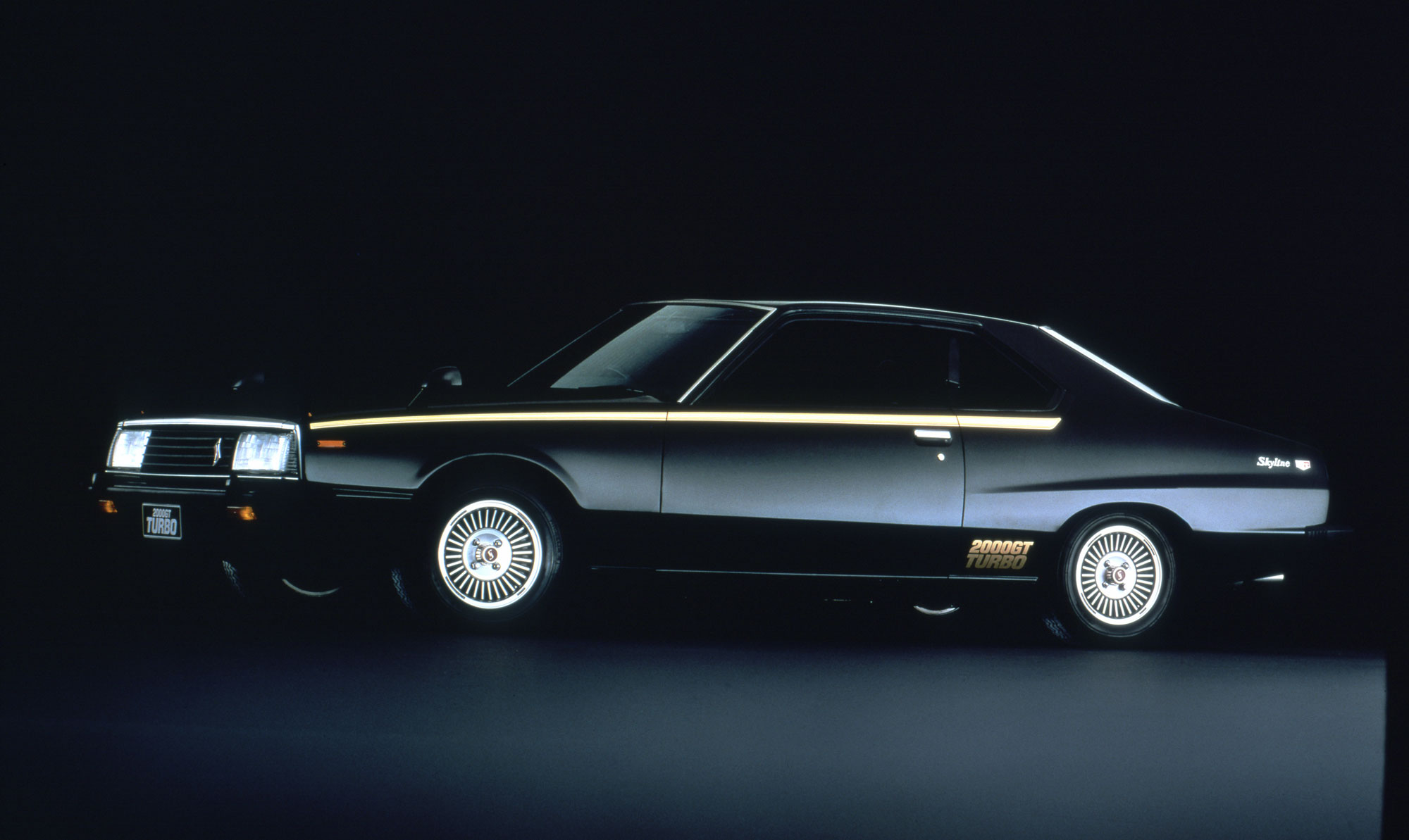
The 1980 Nissan GT-R early prototype represents a critical "missing link" in automotive history, bridging the gap between the 1973 KPGC110 and the 1989 R32. While no production GT-R was released in 1980, Nissan’s internal prototypes and the R30-series development cars served as the engineering foundation for the brand's eventual return to dominance.
The history of the Nissan GT-R is often presented as a tale of two eras: the first generation "Hakosuka" and "Kenmeri" models of the late 1960s and early 1970s, and the "Godzilla" R32 era of the late 1980s. However, the year 1980 was a pivotal moment of transition. During this time, Nissan engineers were grappling with the aftermath of the 1973 oil crisis and increasingly stringent emissions regulations while simultaneously attempting to satisfy a growing demand for the return of the GT-R badge. The 1980 prototypes were the physical manifestation of this struggle, blending experimental turbocharging technology with the new R30 chassis design.
The Historical Context of 1980: A Brand in Transition
To understand the 1980 GT-R prototype, one must understand the state of the Nissan Skyline lineup at the turn of the decade. The C210 series, known as the "Skyline Japan," was the flagship model in 1980. While the C210 was commercially successful, it lacked a dedicated GT-R variant. The legendary S20 engine of the previous GT-R had been retired due to its inability to meet new environmental standards, leaving a void in Nissan’s performance portfolio.
As 1980 progressed, Nissan began intensive testing on the R30 platform, which was slated for a 1981 release. The "early prototype" mentioned in historical archives refers to the test mules that were being fitted with a variety of experimental powerplants. Nissan's leadership was divided: one faction wanted a return to the high-revving, naturally aspirated inline-six tradition, while another pushed for the emerging technology of turbocharging. This internal conflict defined the 1980 development cycle and is why the eventual R30 performance models took a different path than their predecessors.
Technical Specifications and Engineering Philosophy
The early 1980 prototypes were built primarily on the C210 and the pre-production R30 chassis. These vehicles were "skunkworks" projects designed to test whether a modern GT-R could be viable under the then-current "53-Year Regulations" (Japan's strict 1978 emissions standards).
Powerplant Candidates: The FJ20 vs. The L-Series
The most significant technical development in 1980 was the creation of the FJ20 engine. Unlike the L-series engines used in standard Skylines, the FJ20 was a clean-sheet design specifically intended for racing and high-performance applications.
In the 1980 prototypes, engineers experimented with:
- The FJ20E: A 2.0-liter, 16-valve, DOHC (Double OverHead Cam) four-cylinder engine. This was a radical departure because all previous GT-Rs had used six-cylinder engines.
- The L20ET: A 2.0-liter SOHC turbocharged six-cylinder. While not a "true" GT-R engine by the standards of purists, it was the first mass-produced Japanese turbo engine, debuting in the C210 in late 1979/early 1980.
The 1980 prototypes were essentially testing grounds for these two competing philosophies. The FJ20 was technically superior in terms of head design, featuring a pent-roof combustion chamber and a chain-driven cam system, which was unheard of for a Japanese production four-cylinder at the time.
Chassis and Suspension Refinements
The 1980 prototypes moved away from the heavy, somewhat cumbersome feel of the C210 toward the more angular, lightweight R30 design. Key engineering focus areas included:
- Semi-Trailing Arm Rear Suspension: This setup was refined to provide better "toe-control" during high-speed cornering, a direct response to the handling criticisms of the earlier C110 models.
- Weight Distribution: By 1980, Nissan was utilizing computer-aided design (CAD) in its early forms to optimize the structural rigidity of the R30 shell without adding excessive weight. This allowed the 1980 prototypes to feel significantly more nimble than the production Skylines of the 1970s.
The Disambiguation: Why 1980 Produced No "Official" GT-R
Enthusiasts often ask why these 1980 prototypes were never badged as "GT-R." The answer lies in Nissan's corporate branding strategy of the era. The GT-R badge was considered "sacred" and was reserved for vehicles with a six-cylinder DOHC engine that could dominate on the track.
When the R30 was officially launched in 1981 (following the 1980 prototype phase), the highest performance version was labeled the 2000RS. Despite the FJ20 engine being a DOHC masterpiece, the fact that it only had four cylinders caused Nissan's marketing department to hesitate. They believed that labeling a four-cylinder car a "GT-R" would dilute the heritage established by the six-cylinder KPGC10.
Consequently, the 1980 development cars are often categorized as "RS Prototypes," even though they were designed to fill the role of the GT-R. It would take another nine years and the development of the RB26DETT engine for Nissan to feel the GT-R badge was once again appropriate.
Comparing the 1980 Transition: Specifications Overview
The following table compares the last official GT-R before the "gap," the 1980 prototype/RS development car, and the eventual R32 successor to highlight the technical evolution.
| Feature | 1973 KPGC110 (Last GT-R) | 1980 Early Prototype (R30/RS) | 1989 R32 GT-R (The Return) |
|---|---|---|---|
| Engine Code | S20 | FJ20E / L20ET | RB26DETT |
| Configuration | Inline-6, N/A | Inline-4 DOHC / Inline-6 Turbo | Inline-6 Twin-Turbo |
| Valvetrain | 24-Valve DOHC | 16-Valve DOHC / 12-Valve SOHC | 24-Valve DOHC |
| Fuel System | Triple Carburetors | Electronic Fuel Injection (ECCS) | Electronic Fuel Injection |
| Horsepower (Net) | ~160 hp | ~150 hp (Prototype stage) | 276 hp (Gentleman's Agreement) |
| Drivetrain | RWD | RWD | ATTESA E-TS AWD |
| Chassis Focus | Mechanical Grip | Aerodynamics & Electronics | Computer-Controlled Stability |
Design Evolution: From "Kenmeri" to "Newman"
The 1980 prototypes marked the aesthetic shift toward the "wedge" era of the 1980s. The R30 prototypes featured a much lower beltline and a more expansive glass area compared to the C210.
- Aerodynamics: By 1980, Nissan was utilizing the wind tunnel more extensively. The prototypes featured integrated front air dams and a more flush-mounted grille, which would eventually become the signature look of the R30 RS.
- Interior Technology: 1980 was the year Nissan began testing "Check Stations"—early electronic diagnostic systems that provided the driver with real-time feedback on fluid levels and lighting. This was a precursor to the advanced digital displays seen in the later 1980s.
- The "Iron Mask" Influence: While the famous "Iron Mask" (facelifted R30) didn't arrive until 1983, the 1980 prototypes were already experimenting with grille-less designs to improve the drag coefficient (Cd), which was a major goal for the engineering team during this period.
Legacy and Collector Interest in 2026
As of 2026, the 1980 Nissan GT-R prototypes and the early R30-series cars have seen a massive surge in collector value. For decades, these cars were overshadowed by the Hakosuka and the R32. However, the modern market has recognized that without the 1980 development cycle, the technological leaps of the R32 would not have been possible.
Collectors now seek out "Series 1" R30s manufactured in late 1981 that most closely resemble the 1980 prototypes. These vehicles are prized for their raw, mechanical feel and the FJ20 engine, which remains one of the most over-engineered four-cylinder engines in history. The FJ20's block is famously thick, allowing for significant power increases—a trait it shares with the later RB26 and VR38 engines.
Frequently Asked Questions
Was there an official 1980 Nissan Skyline GT-R for sale?
No. There was no production GT-R available in 1980. The Skyline lineup for that year consisted of the C210 "Japan" series, with the high-performance variant being the 2000GT-EX (Turbo). The GT-R nameplate was in a period of dormancy that lasted from 1973 until 1989.
What is the "1980 GT-R early prototype" often confused with?
It is most frequently confused with the early test mules for the R30 2000RS. Because these prototypes were the first DOHC Skylines since the 1973 GT-R, many contemporary journalists and enthusiasts referred to them as the "New GT-R" during their testing phase in 1980.
Why is the FJ20 engine significant to GT-R history?
The FJ20 engine, developed during the late 1970s and tested in 1980 prototypes, was Nissan's first "modern" racing engine. It introduced 16-valve DOHC technology and electronic fuel injection (ECCS) to the Skyline range. It proved that Nissan could build high-performance engines that met modern emissions standards, paving the way for the RB-series.
Where can I see a 1980 Nissan prototype today?
The best location to view these rare development vehicles and the transitionary models is the Nissan Heritage Collection (Zama DNA Garage) in Kanagawa, Japan. They occasionally display "test mules" and early pre-production R30 units that showcase the engineering work done in 1980.
Did the 1980 prototypes use turbocharging?
Yes, but in two different ways. Some prototypes used the SOHC L20ET (the first production turbo in Japan), while others served as the development bed for the FJ20ET (turbocharged DOHC), which would eventually debut in 1983. The 1980 focus was primarily on perfecting electronic fuel injection to manage boost safely.
How much is a 1980-era Skyline worth in 2026?
Prices vary significantly based on condition and specific model. A well-preserved C210 2000GT-EX from 1980 can fetch between $40,000 and $65,000, while the early R30 RS models (the production version of the 1980 prototypes) are increasingly exceeding $80,000 at international auctions.
Final Recommendation for Enthusiasts
For those looking to explore the "missing link" of the GT-R's lineage, focus your research on the R30 2000RS and the Nissan Heritage Collection archives. While the 1980 GT-R exists only as a prototype and a "what-if" scenario in Nissan's boardroom, the R30 RS is the physical realization of that 1980 development cycle. If you are a collector, 2026 remains a strategic time to acquire these mid-transition Skylines, as their historical importance as the bridge to the modern GT-R era is only now being fully realized by the global market.