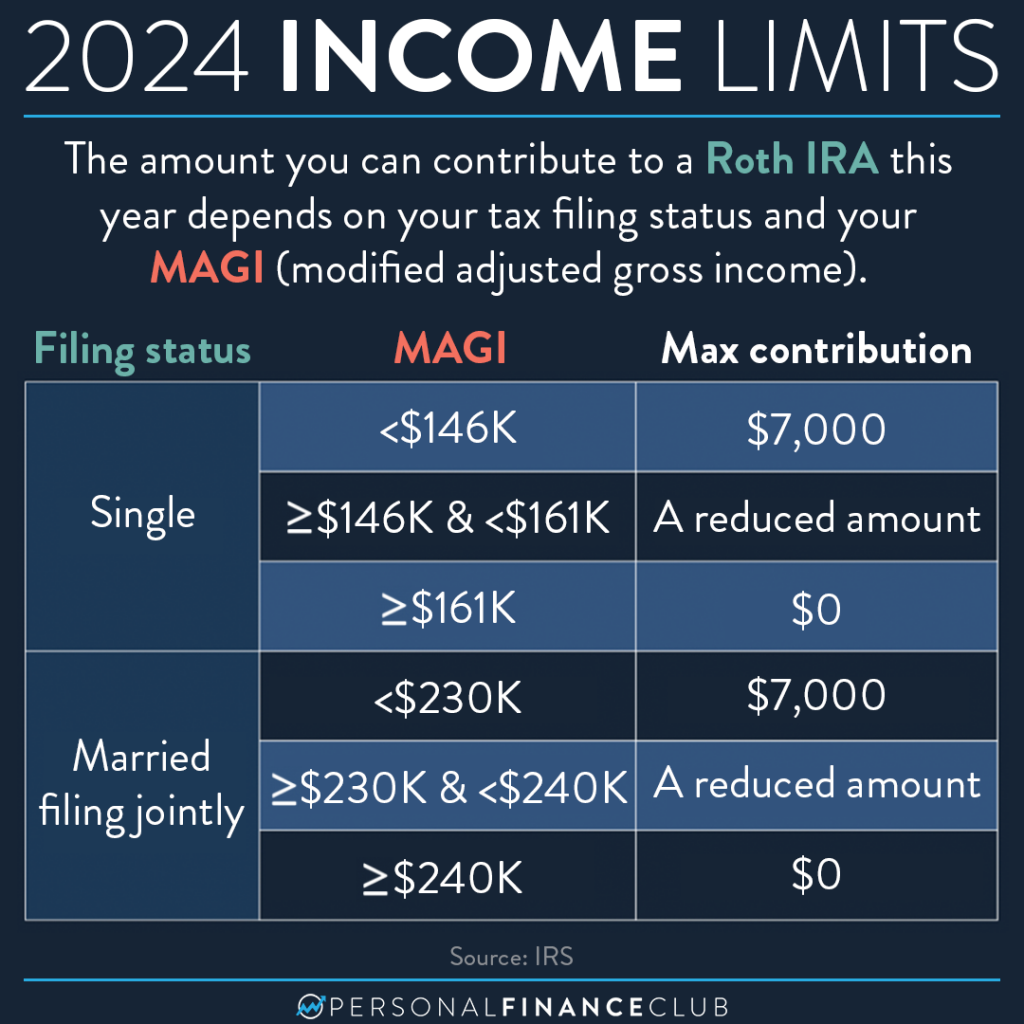
The Roth 401(k) is a powerful retirement savings vehicle that allows employees to contribute after-tax dollars to their employer-sponsored plan. Unlike the Roth IRA, which enforces strict income-based eligibility caps, the Roth 401(k) has no income limits for participation. Regardless of how much an individual earns annually, they remain fully eligible to contribute up to the maximum annual limit established by the Internal Revenue Service.
The Distinction Between Roth 401(k) and Roth IRA Eligibility
For many high-income earners, the primary challenge in tax-advantaged retirement planning is the phase-out range associated with Roth IRAs. The Internal Revenue Service (IRS) imposes specific Modified Adjusted Gross Income (MAGI) thresholds for Roth IRA contributions. If an individual’s income exceeds these limits, they are legally prohibited from making direct contributions to a Roth IRA.
The Roth 401(k), however, operates under an entirely different set of tax code provisions. Because it is categorized as a designated Roth account within a workplace retirement plan, it does not share the same legislative restrictions regarding participant earnings. Whether an employee earns $50,000 or $5,000,000 per year, they possess the same fundamental right to allocate their retirement deferrals into a Roth 401(k) account, provided their employer offers one.
This distinction is crucial for financial planning. It allows high earners—who may be "phased out" of traditional Roth IRA eligibility—to still benefit from the tax-free growth and tax-free withdrawal features of a Roth account. By shifting focus from the individual-owned IRA to the employer-sponsored Roth 401(k), professionals can secure significant tax-free assets for their future.
How the Roth 401(k) Functions
When you contribute to a Roth 401(k), you are making an "elective deferral" using money that has already been subject to income tax. Unlike a traditional 401(k), which provides an immediate tax deduction at the cost of future taxation, the Roth 401(k) reverses this timeline. You pay taxes now, but your investment growth—and any qualified distributions taken during retirement—are entirely tax-free.
The Mechanism of Tax-Free Growth
The core value proposition of the Roth 401(k) is the elimination of tax liability on investment gains. Over a 20- or 30-year career, the compounding growth on a portfolio can be substantial. If that growth is held in a traditional pre-tax account, the IRS essentially holds a "silent partner" claim on a large portion of that balance. In a Roth 401(k), the entire balance belongs to the participant, free from future income tax, provided the distribution is "qualified."
Contribution Limits in 2026
While there are no income limits, the IRS does enforce strict annual contribution limits that apply to the total of your traditional and Roth 401(k) contributions. For the 2026 tax year, employees should verify the specific elective deferral limit set by the IRS. These limits are subject to annual cost-of-living adjustments, and individuals aged 50 or older may also be eligible for "catch-up contributions," which allow for an additional amount to be deferred into the account beyond the standard limit.
Strategic Advantages for High Earners
High-income professionals often find themselves in a higher tax bracket during their working years than they might anticipate in retirement. However, the decision to use a Roth 401(k) is rarely just about current versus future tax brackets; it is about tax diversification and control.
Tax Diversification
By having both pre-tax (traditional) and after-tax (Roth) assets, a retiree in 2026 and beyond can exert greater control over their annual taxable income. During years where large expenses are anticipated, a retiree can pull from pre-tax accounts up to a certain tax bracket and then supplement with tax-free Roth distributions. This prevents "tax bracket creep" and provides a buffer against changes in federal tax law.
Asset Location and Estate Planning
Because Roth 401(k) accounts are not subject to the same Required Minimum Distributions (RMDs) as they once were—following the SECURE 2.0 Act which eliminated RMDs for Roth 401(k)s effective in 2024—they have become even more attractive for estate planning. Owners can leave these funds to beneficiaries, who may also benefit from the tax-free nature of the assets, making the Roth 401(k) an efficient vehicle for wealth transfer.
Comparing Retirement Vehicles
To clarify how the Roth 401(k) fits into a broader financial strategy, the following table compares it to other common retirement vehicles regarding income eligibility and tax treatment.
| Feature | Roth 401(k) | Traditional 401(k) | Roth IRA | Traditional IRA |
|---|---|---|---|---|
| Income Limits | None | None | Yes (Phase-outs) | None (for deduction) |
| Tax Treatment | After-tax dollars | Pre-tax dollars | After-tax dollars | Pre-tax (usually) |
| Growth | Tax-free | Tax-deferred | Tax-free | Tax-deferred |
| Distributions | Tax-free* | Taxed as income | Tax-free* | Taxed as income |
*Assuming the account is held for at least five years and the owner is age 59½ or older.
Common Misconceptions
Despite the clarity of the tax code, several myths persist regarding Roth 401(k)s.
The "Too Rich to Contribute" Myth
The most pervasive misconception is that the income limits for a Roth IRA also apply to the Roth 401(k). This is frequently confused because both are "Roth" accounts. However, the IRS rules for 401(k) plans are fundamentally different from those governing individual retirement accounts. The employer-sponsored nature of the 401(k) allows the plan sponsor to manage the administrative side of the account, keeping the eligibility criteria universal for all employees.
The "Employer Match" Confusion
Some employees fear that if they contribute to a Roth 401(k), they will lose out on their employer’s matching contribution. In reality, under current rules, employer matching contributions are almost always deposited into a traditional (pre-tax) account. This is actually a strategic advantage: it automatically builds that "tax diversification" mentioned earlier. You contribute after-tax money, and your employer provides a tax-deferred match.
Important Requirements for Qualified Distributions
While you have no income limits for contributing, you must still adhere to the rules for withdrawing money tax-free. A distribution is only "qualified" if it satisfies two conditions:
- It is made after the five-year period beginning with the first year you made a contribution to a designated Roth account in the plan.
- It is made after you reach age 59½, experience a disability, or pass away (with proceeds going to a beneficiary).
If you withdraw earnings before satisfying these requirements, you may be subject to income tax and potential penalties on the earnings portion of the withdrawal. The principal (the money you actually contributed) can typically be withdrawn without penalty, but it is best practice to keep the funds invested for the long term to maximize the tax-free compounding effect.
Practical Steps to Maximize Your Account
If you have verified that your employer offers a Roth 401(k), consider the following steps to ensure you are maximizing your opportunity:
- Review Your Plan Document: Ensure that your specific company plan allows for Roth deferrals. While many plans do, it is not a legal requirement for an employer to provide a Roth option.
- Calculate Your Contribution Ceiling: Identify the current IRS elective deferral limit and verify if your employer allows for "catch-up" contributions if you are 50 or older.
- Coordinate with HR/Payroll: Adjust your withholding elections. You will notice a slight decrease in your take-home pay because the contributions are made after-tax, but this is a deliberate trade-off for future tax savings.
- Monitor Your Allocation: Ensure that your investment selections within the Roth 401(k) align with your risk tolerance and long-term financial goals.
- Seek Professional Guidance: Because everyone’s tax situation is unique, consulting with a tax professional or a certified financial planner can help you determine the optimal split between traditional and Roth contributions based on your current tax bracket and expected future income.
Disclaimer: This information is for educational purposes and does not constitute professional tax, financial, or legal advice. Tax laws are subject to change and vary by individual circumstances. Always consult with a qualified professional before making significant changes to your retirement strategy.