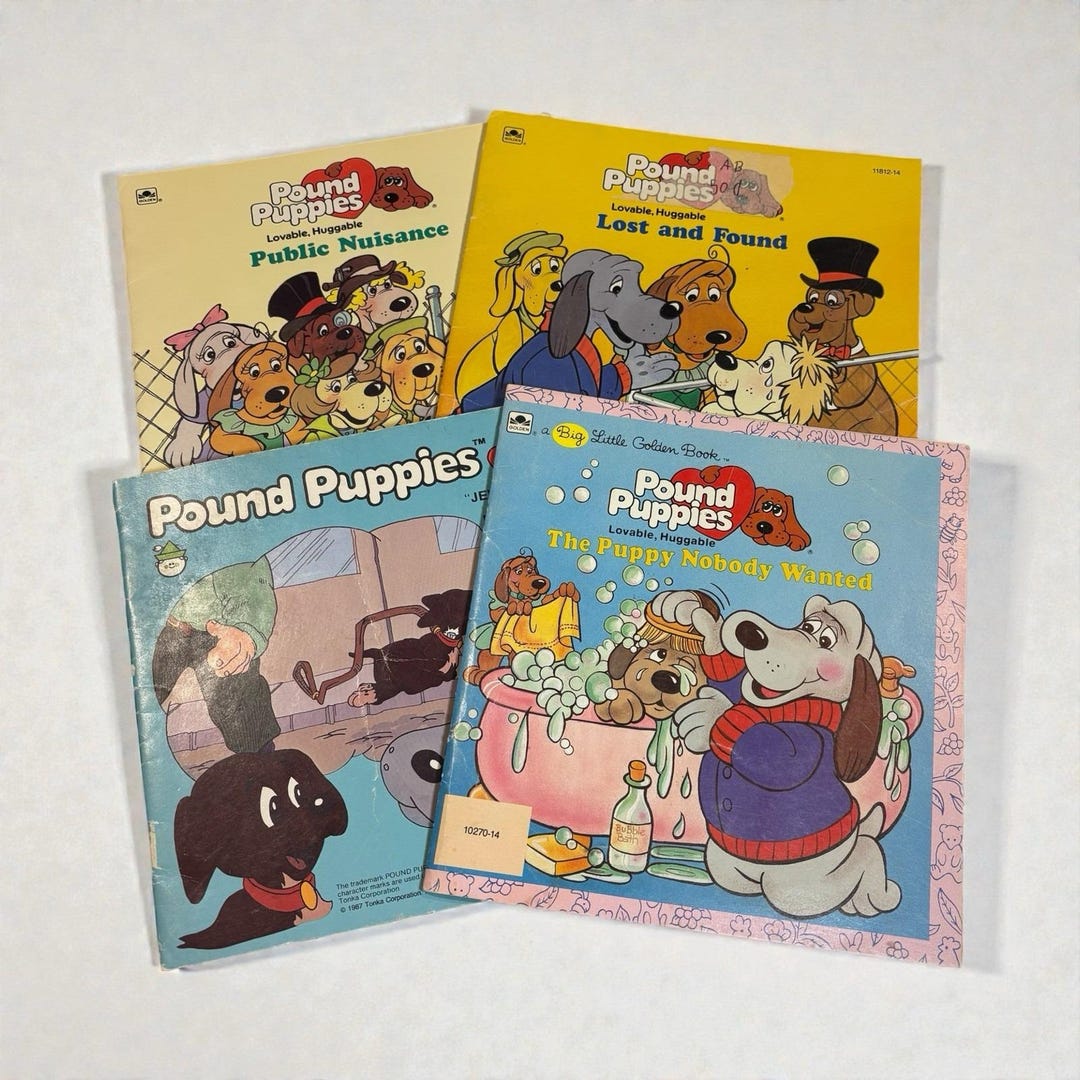
The Pound Puppies brand generated over $1.5 billion in retail sales during its peak years in the mid-1980s, making it one of the most successful toy lines in history. Today, in 2026, original 1980s vintage Pound Puppies in mint condition can command prices ranging from $150 to over $500 among serious collectors.
The Genesis of a Billion-Dollar Brand
The story of Pound Puppies is a quintessential American success story of the 1980s, blending innovative design with a brilliant marketing hook. Created by Mike Bowling in 1984, the concept was simple yet emotionally resonant: soft, floppy plush dogs that came in a cardboard "carrier" box, complete with adoption papers. This "adoption" gimmick was revolutionary, following closely on the heels of the Cabbage Patch Kids craze, and it tapped into a child's desire to nurture and "save" a pet.
Bowling, a former tool-and-die maker at Ford Motor Company, initially struggled to sell the idea. Most major toy companies rejected the prototype because the dogs looked "sad." However, Tonka—a company primarily known for its indestructible steel trucks—took a chance on the line. This decision would eventually save Tonka from financial distress and propel the brand into a global phenomenon.
By the mid-1980s, Pound Puppies were not just toys; they were a cultural staple. The $1.5 billion figure often cited represents the gross retail revenue generated across 35 countries between 1984 and 1988. This revenue includes not only the plush toys but also an extensive licensing program that spanned clothing, school supplies, board games, and even a feature-length film.
Analyzing the $1.5 Billion Revenue Stream
When analyzing the financial impact of Pound Puppies, it is important to distinguish between the creator's personal net worth and the brand's total market revenue. While Mike Bowling earned significant royalties, the $1.5 billion figure represents the massive scale of the "Pup-mania" that gripped the global market.
The Tonka Partnership
Tonka’s involvement was the catalyst for the brand’s exponential growth. In 1984, Tonka was searching for a way to diversify its portfolio. The Pound Puppies line provided the perfect vehicle. Within the first year of release, sales exceeded all projections. By 1985, Pound Puppies were the top-selling toy in several international markets, outperforming established brands like Barbie and G.I. Joe.
Licensing and Media Expansion
The $1.5 billion valuation was bolstered significantly by the "halo effect" of multimedia saturation.
- The Animated Series: Produced by Hanna-Barbera, the Pound Puppies cartoon debuted in 1986, serving as a 30-minute commercial for the toy line.
- The Movie: Pound Puppies and the Legend of Big Paw (1988) further solidified the brand’s presence in the zeitgeist, even as sales began to plateau toward the end of the decade.
- Ancillary Products: Everything from bedsheets to lunchboxes featured the iconic floppy-eared dogs. These licensed goods accounted for a substantial portion of the overall brand value.
The Evolution of the Toy Line
The original Pound Puppies were large, roughly 17 inches long, and came in a variety of colors and breeds. However, Tonka and Bowling knew they needed to innovate to maintain market share. This led to several sub-series that collectors in 2026 still pursue with vigor.
Pound Puppies Newborns
Introduced shortly after the original line, the "Newborns" were smaller, more affordable versions of the plush dogs. They often came with diapers or small blankets. Their lower price point allowed parents to buy multiple "pups," significantly increasing the total unit sales and contributing to that $1.5 billion milestone.
Rare Breeds and Variations
To keep the line fresh, Tonka introduced specific breeds, such as Dalmatians, Beagles, and Labradors. They also expanded into "Pound Purries" (cats) and "Pound Bunnies." The rarest of these, particularly those with unique fur patterns or limited-run regional releases (such as those distributed by Irwin Toy in Canada), are the items that hold the most value today.
Market Valuation: What Are Pound Puppies Worth in 2026?
As we look at the secondary market in 2026, the value of a vintage 1980s Pound Puppy is determined primarily by three factors: condition, completeness, and rarity. While millions were produced, very few survived the rough play of childhood in "collector quality" condition.
Condition and "MIP" Status
In the world of 1980s toy collecting, "MIP" (Mint in Package) or "NRFB" (Never Removed From Box) is the gold standard. Because Pound Puppies came in cardboard "dog houses" that were easily crushed or thrown away, finding a puppy still in its original, undamaged box is extremely rare.
| Item Type | Original 1980s Price | 2026 Loose Value | 2026 Mint in Box Value |
|---|---|---|---|
| Original 17" Pound Puppy | $15.00 - $20.00 | $25.00 - $45.00 | $150.00 - $350.00 |
| Pound Puppies Newborns | $5.00 - $8.00 | $10.00 - $20.00 | $75.00 - $125.00 |
| Rare Breed (e.g., Dalmatian) | $18.00 - $22.00 | $40.00 - $70.00 | $250.00 - $500.00 |
| Pound Purries (Cat) | $15.00 - $20.00 | $20.00 - $40.00 | $140.00 - $225.00 |
| International/Irwin Variants | Variable | $60.00 - $120.00 | $400.00+ |
The Role of Adoption Certificates
A "complete" Pound Puppy must include its original adoption certificate. For collectors, an unsigned certificate is significantly more valuable than one where a child wrote "Fido" in crayon in 1986. If the toy also has its original collar and red heart-shaped "P" tag, the value increases by approximately 20-30%.
Factors Influencing the 2026 Resale Market
The 2026 market for vintage toys has been influenced by a "nostalgia cycle" that typically peaks when the generation that played with the toys reaches their 40s and 50s. For Pound Puppies, this has created a steady demand.
Material Integrity
One of the challenges with 1980s Pound Puppies is the material used. The soft plush fabric is prone to "matting" if washed improperly, and the internal stuffing can break down over decades. Toys that have been kept in climate-controlled environments without exposure to sunlight or cigarette smoke command a significant premium.
Verification of Authenticity
There were many "knock-off" brands during the 1980s trying to capitalize on Tonka's success. Authentic Pound Puppies have a distinct "P" logo embroidered on their hindquarters (usually the right side). In the 2026 market, digital authentication services and high-resolution photo verification are standard requirements for high-end sales on platforms like eBay or specialized toy auction houses.
The Legacy of Mike Bowling and the Brand's Future
While Tonka was eventually acquired by Hasbro in 1991, the Pound Puppies brand has seen numerous revivals. However, for the purpose of "net worth" and historical significance, the 1980s era remains the benchmark. Mike Bowling eventually regained the rights to the brand and has continued to work on various iterations, but none have matched the $1.5 billion cultural explosion of the original decade.
The success of Pound Puppies changed how toys were marketed. It proved that an emotional narrative—the idea of "rescue" and "adoption"—could be just as powerful as technical features or action-oriented play. This marketing philosophy can be seen today in modern toy lines that emphasize mystery, unboxing, and emotional attachment.
Technical Guide for Prospective Collectors
If you are looking to invest in or sell a vintage Pound Puppy in 2026, follow these steps to ensure accurate valuation:
- Identify the Manufacturer: Look for the tush tag. Early versions were made by Tonka; Canadian versions may bear the Irwin logo.
- Check the "P" Logo: Ensure the embroidered logo is crisp. Faded or fraying logos can indicate heavy use or machine washing, which lowers the value.
- Inspect the Eyes: Original Pound Puppies had hard plastic eyes. Check for scratches or "clouding," which often happens with age.
- The "Scent" Test: Plush toys are notorious for absorbing odors. A "musty" smell usually indicates internal mold or improper storage, which can make the toy worthless to high-end collectors.
- Documentation: If you have the original cardboard carrier, do not flatten it. The structural integrity of the box is a major price driver.
Frequently Asked Questions
Did Mike Bowling personally make $1.5 billion?
No. The $1.5 billion refers to the total global retail sales of the brand during its peak. While Mike Bowling earned substantial royalties and became a multimillionaire, the bulk of the revenue went to Tonka, international distributors, and retailers.
Why are some Pound Puppies worth so much more than others?
Rarity and condition are the primary drivers. Common colors like brown or grey are less valuable than specific breeds or limited-edition patterns. Furthermore, a toy that is still sealed in its original box is exponentially more valuable than a "played-with" pup because so few boxes survived the 1980s.
Are the 2000s or 2010s revivals worth anything?
Generally, the revivals produced by companies like Galoob, Playmates, or Basic Fun hold significantly less value than the original 1984-1988 Tonka releases. Collectors prioritize the "first edition" nostalgia of the 80s line.
How can I tell if my Pound Puppy is an original 1980s version?
Check the tush tag for a date (usually 1984 or 1985) and the Tonka Corp. name. The physical design of the 80s pups is also distinct—they are longer, flatter, and have a specific "floppy" feel compared to the rounder, more stuffed versions of later years.
Is the "adoption" paper necessary for the toy to be valuable?
It is not necessary for a "loose" toy to have value, but it is necessary for a "complete" set. A puppy with its original collar and unsigned adoption certificate can sell for double the price of the plush toy alone.
Summary of Next Steps for Owners
If you discover an original Pound Puppy in your attic in 2026, do not immediately put it in the washing machine. Professional cleaning is often required to preserve the value of vintage plush. Instead, use a soft brush to remove dust and store the item in a poly-bag away from direct light. Research recent "sold" listings on major auction sites to find the specific breed and color match for your pup to determine its current market value.