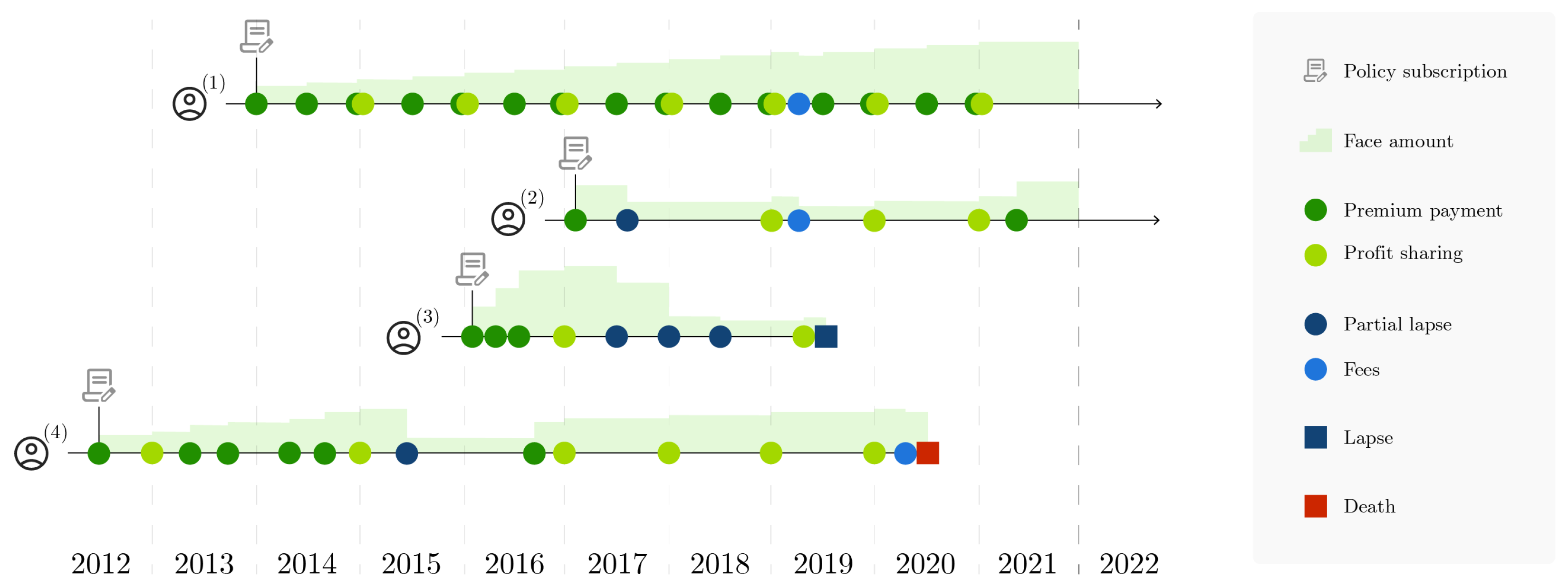
A Universal Life (UL) policy with a secondary guarantee, often referred to as a "UL G" policy, can lapse if the account value is insufficient to cover the monthly cost of insurance and administrative fees. Unlike traditional whole life insurance, these policies rely on specific premium payments to maintain the "no-lapse" guarantee, and failure to meet these funding requirements can result in the loss of the death benefit.
The Mechanics of Universal Life Policies with Secondary Guarantees
Universal Life insurance is a flexible-premium permanent life insurance product. A Universal Life policy with a secondary guarantee (UL G) is a specialized variation designed to provide a death benefit for a specific period—or even a lifetime—provided the policyholder adheres to a strict premium payment schedule.
To understand why a lapse occurs, one must distinguish between the "cash value" of the policy and the "secondary guarantee account." In a standard Universal Life policy, if the cash value drops to zero because of high costs of insurance or low interest credits, the policy lapses. A UL G policy, however, includes a "secondary guarantee" or "no-lapse guarantee" feature. As long as the policyholder pays the minimum required premiums—often called the "no-lapse guarantee premium"—the insurer guarantees the policy will remain in force even if the actual cash value of the policy falls to zero.
The lapse occurs when the policyholder fails to pay these specific premiums. If the payments fall below the threshold required to maintain the guarantee, the policy reverts to the performance of its internal cash value. If that value is insufficient, the policy terminates, often leaving the policyholder without the coverage they spent years paying for.
Why "UL G" Policies Are Vulnerable to Lapsing
The primary reason a UL G policy lapses is a mismatch between the policyholder’s expectations and the policy’s contractual requirements. Because UL policies are marketed as "flexible," many policyholders assume they can reduce or skip premium payments during periods of financial hardship. While a standard UL policy might allow this (at the cost of depleting cash value), a UL G policy strictly requires the "no-lapse" premium to maintain the guarantee.
Several factors contribute to these lapses:
- Misunderstanding Flexibility: Policyholders often interpret the "flexible" nature of Universal Life as an open-ended ability to adjust premiums without penalty. When they reduce premiums below the required "no-lapse" level, they inadvertently trigger the expiration of the guarantee.
- Increased Costs of Insurance (COI): As the insured person ages, the cost of insurance—the amount charged to keep the policy active—rises. If these costs are not offset by sufficient premium payments or interest credits, the policy relies entirely on the secondary guarantee. If that guarantee is forfeited, the policy may lapse rapidly.
- Low Interest Rate Environments: If the policy’s crediting rate (the interest the insurer adds to the cash value) is lower than the rate assumed at the time of purchase, the cash value grows more slowly. This forces the policy to rely more heavily on the secondary guarantee, making the maintenance of that guarantee even more critical.
- Automatic Premium Loans: Some policies are set up to automatically pay premiums from the cash value. If the cash value is exhausted, the policyholder may be unaware that the "loan" has stopped and the policy has entered a grace period, eventually leading to termination.
Signs That Your Policy Is at Risk
It is rarely the case that a policy lapses overnight without warning. Most insurers are required to provide notification, but policyholders often overlook these documents.
- Annual Statements: The annual statement is the most critical document for monitoring policy health. Look for a section labeled "No-Lapse Guarantee Status" or "Minimum Premium to Maintain Guarantee." If the amount paid is less than the amount required to maintain the guarantee, your policy is at risk.
- Grace Period Notices: If a policy is approaching a lapse, the insurance company will typically send a formal "Notice of Pending Lapse." This notice will state the amount required to keep the policy in force and provide a specific deadline.
- Declining Cash Value: A consistent trend of negative growth in the policy’s cash value, coupled with high monthly cost-of-insurance charges, is a warning sign that the policy is under-funded.
Comparison of Policy Structures
The following table distinguishes between standard Universal Life and UL G policies regarding their lapse triggers and maintenance requirements.
| Feature | Standard Universal Life | Universal Life with Secondary Guarantee (UL G) |
|---|---|---|
| Primary Driver | Cash Value accumulation | Premium payment performance |
| Lapse Trigger | When cash value reaches $0 | When no-lapse premium is missed |
| Flexibility | Higher (can skip payments) | Low (must meet schedule) |
| Risk Profile | Market performance dependent | Funding-discipline dependent |
| Guarantee Type | Often minimal or none | Guaranteed death benefit duration |
Steps to Take If a Policy Is in Danger
If you suspect your policy is at risk of lapsing, you must act before the end of the grace period. Once a policy has officially lapsed, reinstatement can be difficult and costly.
- Request an "In-Force Illustration": Contact your insurance provider and ask for an in-force illustration. This document shows the current status of your policy and, crucially, what premiums are required to keep the policy in force for your desired duration.
- Audit Your Payments: Compare your actual premium payments against the schedule provided in your original policy document. Ensure you have not skipped payments under the mistaken belief that the policy was "self-funding."
- Contact Your Financial Advisor or Agent: An experienced advisor can interpret the in-force illustration and help you calculate the "catch-up" premium required to restore the no-lapse guarantee.
- Explore Reinstatement Options: If the policy has already lapsed, check the contract for a "reinstatement provision." This usually requires paying all missed premiums, plus interest, and potentially providing evidence of insurability (a new medical exam).
Common Mistakes That Lead to Lapses
One of the most frequent errors is the reliance on "non-guaranteed" projections. When a policy is sold, the illustration often uses an assumed interest rate. If the market underperforms, the projections provided at the time of sale become irrelevant. Relying on these outdated projections rather than the guaranteed premium schedule is a major oversight.
Another common mistake is assuming that "Cash Value" is the same as "Equity." In a UL G policy, the cash value can be zero while the policy remains in force, provided the no-lapse premium has been paid. Conversely, a policy with cash value can still lapse if the no-lapse guarantee was already forfeited and the cash value is subsequently depleted by high fees. Always focus on the guarantee status rather than the cash value balance.
Understanding the Grace Period and Reinstatement
Every life insurance policy includes a grace period—usually 30 or 31 days—following a missed payment. During this time, the policy remains in force. If you pay the required amount before the grace period ends, the policy continues without interruption.
If the grace period expires, the policy enters a state of lapse. Reinstating a policy is not a guaranteed right; the insurer may require the owner to prove they are still "insurable." If your health has declined since the policy was first issued, the insurer may decline to reinstate the policy, even if you offer to pay the back premiums. This is why immediate communication with the insurer upon receiving a warning notice is essential.
Professional Guidance and Legal Considerations
Managing a life insurance policy is a financial responsibility that requires periodic review. Financial, tax, and legal implications vary based on the jurisdiction and the specific terms of your contract.
It is important to note that life insurance policies are governed by state law in the United States and similar regulatory bodies globally. If you believe your policy was mis-sold or that you were provided with incorrect information regarding the no-lapse guarantee, you may have grounds to file a complaint with your state’s insurance department. However, this is a last resort. The most effective path is to proactively manage the premium schedule as outlined in your contract.
Frequently Asked Questions
What is the difference between a lapse and a surrender? A lapse occurs when a policy terminates due to a failure to pay premiums or insufficient cash value to cover costs. A surrender is a voluntary action where the policyholder cancels the policy, usually to receive the remaining cash surrender value.
Can I restore a no-lapse guarantee after I have missed payments? In many cases, yes, by paying the shortfall. However, you must contact your insurer immediately. Some policies allow for a "catch-up" period, while others may require an adjustment to the death benefit or a formal reinstatement process.
Why did my policy lapse even though I was told it was "paid up"? The term "paid up" is often used colloquially. In a UL G policy, unless you have reached a specific contract-defined point where the guarantee is fully funded for life, the policy may require ongoing minimum premiums. Always verify the "no-lapse" status directly with the insurance carrier.
Are all UL policies susceptible to this type of lapse? No. This specifically applies to Universal Life policies that feature a secondary guarantee. Traditional whole life insurance policies generally have fixed premiums and do not lapse as long as those fixed premiums are paid on time.
Where can I find my policy’s "no-lapse" premium requirements? These are found in the original policy document, specifically within the "Schedule of Benefits" or the "Policy Specifications" pages. You can also request this information by calling your insurance company’s customer service department.
Moving Forward with Your Policy
If you are concerned about your UL G policy, your next action should be to request an updated in-force illustration from your insurance carrier today. Do not rely on estimates from previous years. Review the section detailing the minimum premium required to maintain the no-lapse guarantee. If there is a shortfall, determine whether your budget allows for the required catch-up payments. Maintaining the no-lapse guarantee is the most effective way to ensure that the death benefit remains intact for your beneficiaries, protecting the original purpose of your coverage.