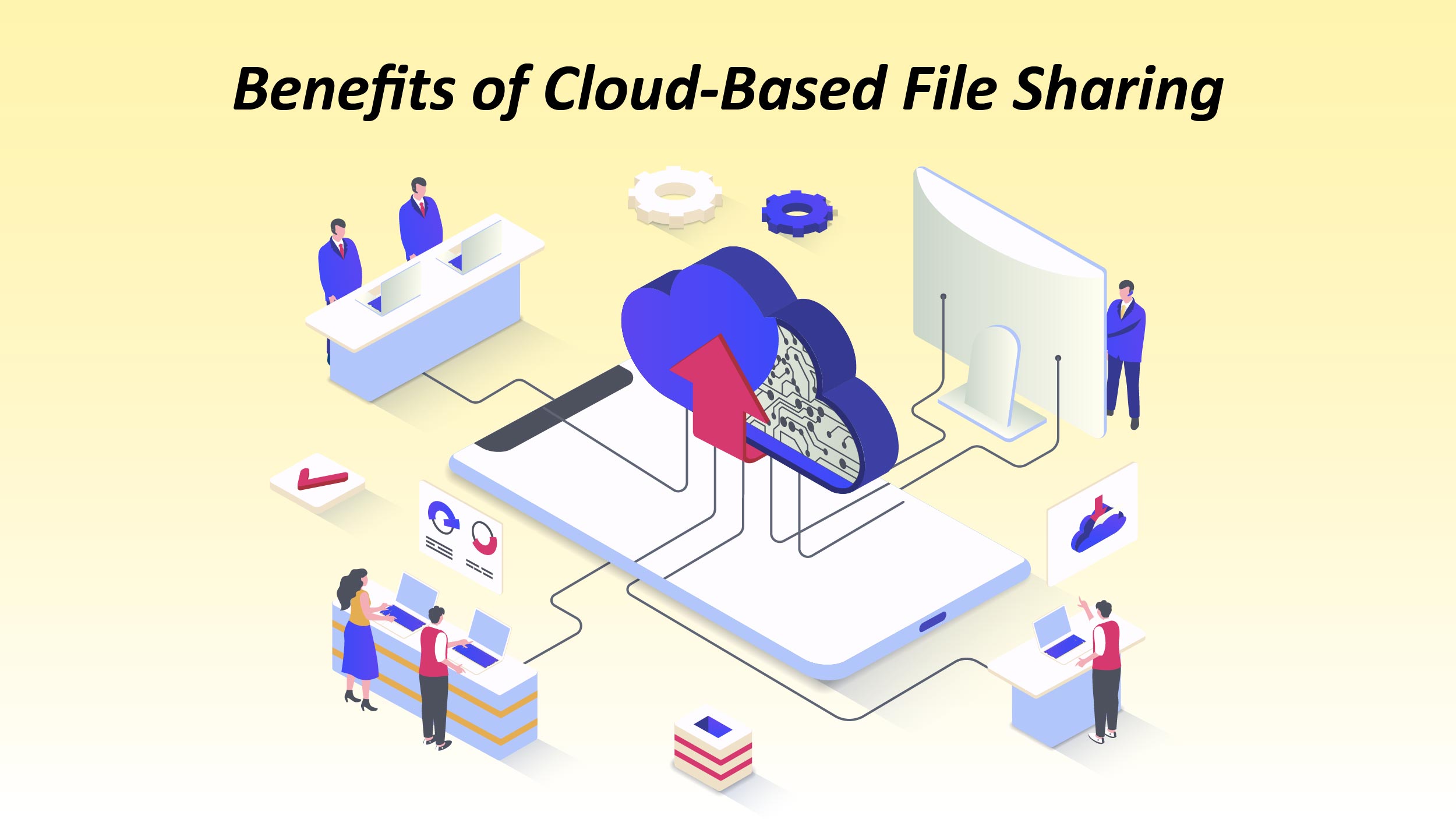
A robust, novel system architecture for secure authentication and data sharing in cloud-enabled big data environments integrates Decentralized Identity (DID), Ciphertext-Policy Attribute-Based Encryption (CP-ABE), and Proxy Re-encryption (PRE). This framework ensures that data remains encrypted throughout its lifecycle, granting data owners granular control over access policies while mitigating risks associated with centralized cloud provider vulnerabilities.
The Evolution of Big Data Security in 2026
As of 2026, the volume of data generated globally has surpassed previous projections, driven by the ubiquity of IoT devices, high-speed telecommunications, and autonomous industrial systems. Cloud-enabled big data platforms are no longer just storage repositories; they are dynamic ecosystems where data is constantly ingested, processed, and shared across heterogeneous networks. However, the traditional perimeter-based security model has proven inadequate against sophisticated lateral movement attacks and insider threats.
The fundamental challenge in cloud-enabled big data is the "honest-but-curious" nature of cloud service providers (CSPs). While CSPs generally follow protocols to maintain service availability, they may attempt to gain insights from the massive datasets stored on their infrastructure. Furthermore, the sheer scale of big data makes traditional encryption methods computationally expensive and difficult to manage when multiple users require varying levels of access.
To address these challenges, a novel system architecture must move beyond simple password-based authentication and Role-Based Access Control (RBAC). The following sections detail the components and workflows of a high-performance, secure architecture designed for the demands of 2026.
Core Components of the Novel Architecture
This architecture is built upon four primary pillars: Decentralized Identity, Attribute-Based Encryption, Proxy Re-encryption, and a Blockchain-based Audit Trail. Each component serves a specific purpose in ensuring that authentication is spoof-proof and data sharing is cryptographically enforced.
1. Decentralized Identity (DID) and Continuous Authentication
In this novel architecture, centralized identity providers are replaced with a Decentralized Identity (DID) framework. Users and devices possess unique DIDs stored on a distributed ledger, eliminating a single point of failure for authentication.
Authentication is not a one-time event at login. Instead, the system employs Continuous Behavioral Authentication. By leveraging AI models that analyze user interaction patterns—such as keystroke dynamics, navigation paths, and geographic velocity—the system can detect account takeovers in real-time. If the behavioral confidence score drops below a specific threshold, the system triggers a re-authentication challenge via FIDO3-compliant hardware tokens.
2. Ciphertext-Policy Attribute-Based Encryption (CP-ABE)
Traditional encryption requires managing thousands of individual keys for different users. CP-ABE revolutionizes this by embedding access policies directly into the encrypted data.
In a CP-ABE scheme:
- Data Attributes: Users are assigned sets of attributes (e.g., "Department: Oncology," "Clearance: Level 3," "Location: Region A").
- Access Policy: The data owner defines a logic gate policy (e.g., [Oncology AND Level 3]) when encrypting the data.
- Decryption: A user can only decrypt the data if their secret key's attributes satisfy the policy embedded in the ciphertext.
This allows for one-to-many encryption, which is highly efficient for big data environments where a single dataset might be shared with an entire research department without needing individual keys for every researcher.
3. Proxy Re-encryption (PRE) for Secure Sharing
One of the most significant hurdles in cloud security is sharing data with new users without re-encrypting the entire dataset. In our novel architecture, Proxy Re-encryption (PRE) allows the cloud server to act as a "proxy."
When a data owner wants to share an existing encrypted file with a new recipient, the owner generates a re-encryption key. The cloud server uses this key to transform the ciphertext into a format that the recipient can decrypt with their own private key. Crucially, the cloud server performs this transformation without ever seeing the plaintext data or the owner's master secret key.
4. Blockchain-Based Immutable Audit Logs
Transparency is vital for compliance with regulations like the GDPR and the updated Data Privacy Act of 2025. Every authentication attempt, policy change, and data access event is recorded on a private blockchain. This creates an immutable, timestamped record that prevents CSPs or malicious actors from altering access logs to hide unauthorized activities.
Detailed Workflow of the Secure Architecture
The implementation of this architecture follows a structured sequence that ensures data integrity from ingestion to consumption.
Step 1: Data Pre-processing and Policy Definition
Before data is uploaded to the cloud, it is partitioned into blocks suitable for big data processing (e.g., Parquet or Avro formats). The data owner defines the access structure using a tree-based logic. For instance, sensitive patient data might be restricted to users with the attributes "Role: Doctor" AND "Specialty: Cardiology."
Step 2: Encryption and Metadata Tagging
The data is encrypted using a hybrid approach. The bulk data is encrypted with a symmetric key (AES-256-GCM), while the symmetric key itself is encrypted using CP-ABE based on the defined policy. This ensures high performance for massive datasets while maintaining granular access control. The resulting ciphertext is tagged with metadata that includes the DID of the owner and the version of the access policy.
Step 3: Identity Verification and Token Issuance
When a user requests access, their DID is verified against the distributed ledger. The system checks the user's current attributes, which are managed by an Attribute Authority (AA). If the user is verified, an ephemeral Access Token is issued, cryptographically bound to their session and device.
Step 4: Secure Data Retrieval and Transformation
The user sends the Access Token and the request to the cloud storage node. If the request involves sharing data that was not originally intended for the user, the Proxy Re-encryption service is triggered. The proxy transforms the ciphertext using the re-encryption key provided by the owner.
Step 5: Local Decryption and Verification
The final decryption happens locally on the user's "Trusted Execution Environment" (TEE). By moving the final decryption step to the client-side TEE (such as Intel SGX or ARM TrustZone), the architecture ensures that even the user's local operating system cannot intercept the decrypted big data streams if the OS is compromised.
Performance Analysis: Balancing Security and Speed
A common criticism of complex encryption schemes in big data is the computational overhead. To mitigate this, the novel architecture utilizes Off-chain Indexing and Hardware Acceleration.
| Feature | Traditional Cloud Architecture | Novel System Architecture (2026) |
|---|---|---|
| Authentication | Centralized (Username/Password) | Decentralized Identity (DID) + Behavioral Biometrics |
| Access Control | Role-Based (RBAC) | Attribute-Based (ABAC/CP-ABE) |
| Encryption Type | Static (At-rest/In-transit) | End-to-End with Proxy Re-encryption |
| Data Sharing | Shared Keys or Decrypt-then-Re-encrypt | Cryptographic Proxy Transformation |
| Trust Model | Trust the Cloud Provider | Zero Trust (Cryptographic Verification) |
| Auditing | Provider-managed logs (Mutable) | Blockchain-based logs (Immutable) |
| Scalability | High, but security degrades with scale | High, security scales with attributes |
The latency introduced by CP-ABE is primarily during the encryption phase. In big data contexts, where data is "written once, read many times," this overhead is acceptable. For real-time analytics, the architecture employs a "Key Caching" mechanism within the TEE to speed up subsequent decryption requests for the same attribute set.
Privacy-Preserving Computation and Big Data Analytics
In 2026, simply storing data securely is not enough; organizations need to perform analytics on encrypted data. This architecture supports Fully Homomorphic Encryption (FHE) for specific sensitive fields.
While FHE remains computationally intensive for entire datasets, this architecture applies it selectively. For example, a cloud-based machine learning model can calculate the average age of a population or the sum of financial transactions without ever "seeing" the actual numbers. The results remain encrypted and can only be decrypted by the data owner. This allows for "Privacy-Preserving Big Data Analytics," where the utility of the data is maximized without sacrificing the privacy of the individual data subjects.
Addressing Potential Vulnerabilities and Limitations
No architecture is entirely foolproof. The primary risks in this novel system include:
- Attribute Revocation: If a user’s role changes, their attributes must be revoked immediately. The architecture handles this through a "Versioned Key" system where the Attribute Authority issues new keys and the cloud server performs a partial re-encryption to the new version.
- DID Private Key Management: If a user loses their DID private key, they lose access to their identity. This is mitigated through social recovery mechanisms and multi-signature hardware wallets.
- Collusion Attacks: A group of users might attempt to combine their attributes to satisfy an access policy they cannot satisfy individually. The CP-ABE scheme used here is mathematically proven to be "Collusion Resistant," meaning secret keys are tied to a unique user-specific random polynomial that prevents attribute merging.
Practical Implementation Guidance for Organizations
For organizations looking to deploy this architecture, the transition should be phased.
- Identity First: Begin by migrating from legacy LDAP/Active Directory systems to a DID-based framework. This immediately reduces the risk of credential stuffing and phishing.
- Attribute Mapping: Define a comprehensive attribute schema that reflects the organization's data governance policies.
- Storage Integration: Use middleware to handle the CP-ABE encryption/decryption process, ensuring that existing big data tools like Apache Spark or Hadoop can interact with the encrypted streams through standardized APIs.
- Audit Integration: Connect existing SIEM (Security Information and Event Management) tools to the blockchain audit log to provide a "single pane of glass" for security monitoring.
Expert guidance from the National Institute of Standards and Technology (NIST) regarding Attribute-Based Access Control provides a foundation for these attribute schemas, though the integration with blockchain and PRE represents the "novel" advancement of this 2026 architecture.
Frequently Asked Questions
How does this architecture handle data residency requirements?
The architecture uses geographic attributes within the CP-ABE policy. For example, a policy can specify that data can only be decrypted if the user has the attribute "Region: EU." This ensures that even if data is physically moved across cloud regions, it remains inaccessible unless the regional policy requirements are met, helping organizations comply with local laws.
Is the blockchain component scalable for millions of big data transactions?
The architecture does not store the big data itself on the blockchain. It only stores the cryptographic hashes of access logs and policy changes. By using "Layer 2" scaling solutions or sidechains, the system can handle thousands of transactions per second, which is sufficient for auditing access events even in very large enterprises.
What happens if the Attribute Authority (AA) is compromised?
The AA is the most sensitive part of the system. To prevent a single point of failure, the architecture employs a "Multi-Authority CP-ABE" scheme. In this setup, several independent authorities must cooperate to issue a user's secret key. A compromise of a single authority does not allow an attacker to generate valid keys.
Does this architecture support legacy big data applications?
Yes, through the use of a "Security Gateway" or "Sidecar" pattern. The gateway handles the complex encryption and decryption tasks, presenting the legacy application with a standard data stream. This allows organizations to secure their data without rewriting decades of analytical code.
What is the impact on energy consumption?
While encryption and blockchain do require energy, the shift toward "Proof of Stake" and "Proof of Authority" consensus mechanisms in 2026 has significantly reduced the carbon footprint of the audit layer. Furthermore, the efficiency of CP-ABE in reducing the number of required encryptions (compared to individual key management) can actually lower the overall computational load in large-scale sharing scenarios.
Next Actions for Secure Big Data Integration
The move toward a novel architecture for secure authentication and data sharing is no longer optional in a world of persistent cyber threats. Organizations should prioritize the implementation of Zero Trust principles and Attribute-Based Encryption as the core of their cloud strategy.
To begin, conduct a data sensitivity audit to identify which big data assets require the highest level of protection. Following this, pilot a DID-based authentication system with a small subset of users to test the integration with existing cloud workflows. By building a foundation of decentralized identity and cryptographic access control, you can ensure that your cloud-enabled big data environment remains both agile and secure through 2026 and beyond.