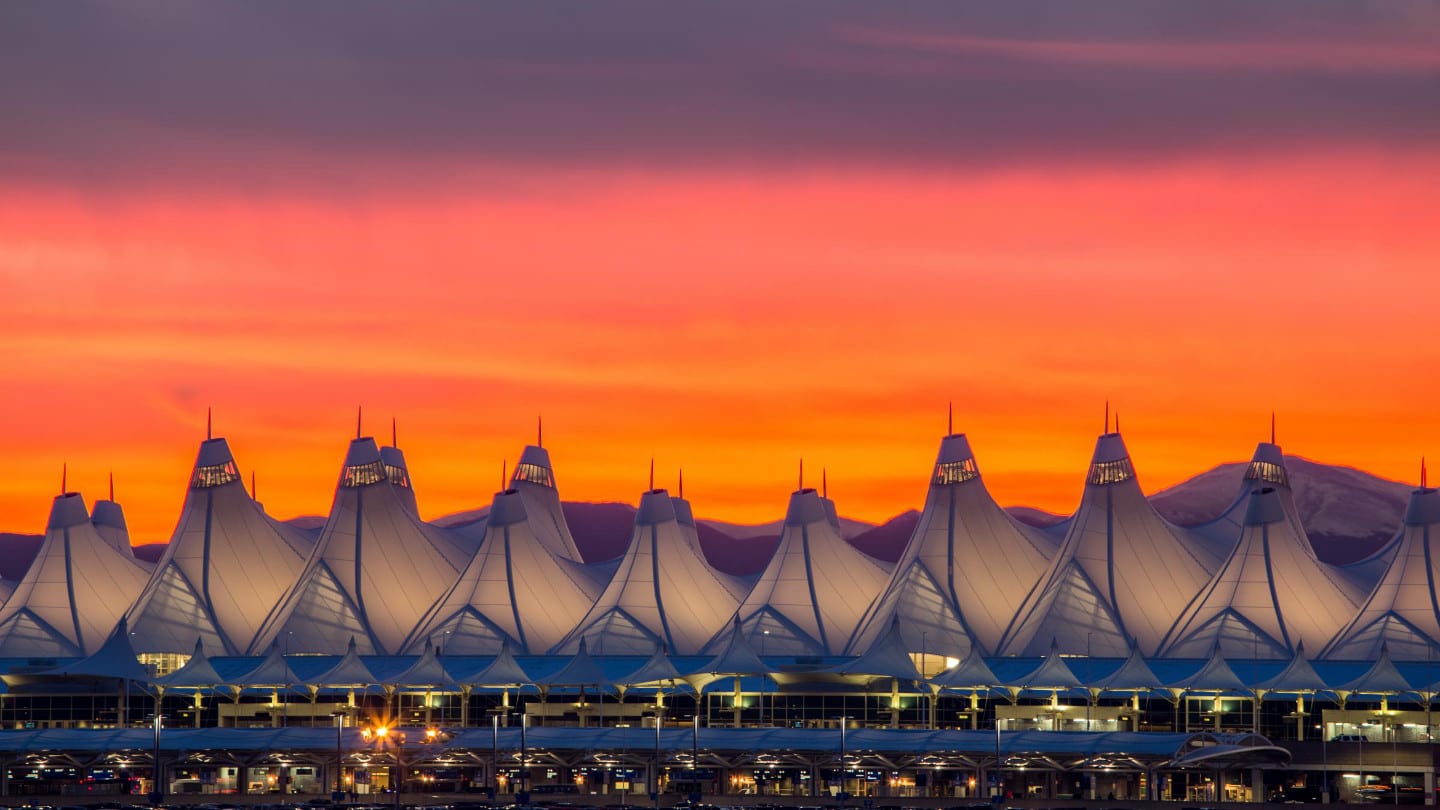
The University of Colorado A Line, commonly known as the A Line, is a 23-mile commuter rail transit service that connects Denver International Airport (DEN) directly to Denver Union Station in the heart of downtown. In 2026, it remains the most efficient transportation method, offering a 37-minute travel time and a $10.00 flat fare.
The A Line serves as the primary artery for travelers entering the Rocky Mountain region. Since its inception in April 2016, this rail link has transformed the corridor between the airport and the city center, replacing the reliance on expensive taxi rides and congested highway traffic on Interstate 70. Operated by the Regional Transportation District (RTD) as part of the Eagle P3 project, the A Line utilizes heavy-rail commuter technology, which differs significantly from the light rail lines found elsewhere in the Denver metro area.
Technical Specifications and Infrastructure
Understanding the technical nature of the A Line helps travelers appreciate its reliability and capacity. Unlike the light rail (Lines E, H, R, and W), the A Line uses electric multiple-unit (EMU) commuter rail cars. These vehicles are larger, heavier, and faster, reaching top speeds of 79 miles per hour. This speed is essential for covering the 23-mile distance across the vast high-plains landscape between the airport and the urban core.
The cars are powered by an overhead catenary system providing 25kV AC power. For passengers, the most significant technical feature is "level boarding." The platforms are built at the same height as the train floor, meaning there are no stairs to climb when entering or exiting with heavy luggage, strollers, or wheelchairs. Each train consists of two or four cars, with each car offering wide aisles and dedicated storage areas for oversized bags, bicycles, and skis—a nod to Colorado's outdoor-centric lifestyle.
The Journey: Station-by-Station Breakdown
The A Line serves eight distinct stations, each providing access to different neighborhoods and transfer points. While most travelers are focused on the two endpoints, the intermediate stops offer vital links for residents and business travelers.
- Denver Airport Station: Located directly underneath the Westin Denver International Airport Hotel, just steps from the Jeppesen Terminal.
- 61st & Peña Station: Serving the "Panasonic Smart City" (Peña Station Next), this stop features a large solar canopy and serves as a growing hub for tech-focused developments.
- 40th Ave & Airport • Gateway Park Station: A major transit center for residents in Northeast Denver and Aurora, providing connections to several bus routes.
- Peoria Station: This is a critical transfer point for the R Line light rail, which travels south through Aurora toward the Denver Tech Center.
- Central Park Station: Located near the former Stapleton International Airport site, this station serves a massive Park-n-Ride lot and the surrounding residential communities.
- 40th • Colorado Station: Provides access to the industrial and residential areas of the Elyria-Swansea neighborhood.
- 38th • Blake Station: The gateway to the River North (RiNo) Art District. This is a popular stop for those heading to trendy breweries, galleries, and boutique hotels.
- Union Station: The western terminus. This historic landmark in Lower Downtown (LoDo) connects passengers to the B, G, and N commuter lines, multiple light rail lines, and the regional bus concourse.
Fare Structure and Payment Methods in 2026
As of 2026, RTD has maintained a simplified fare structure designed to encourage ridership while ensuring the sustainability of the airport corridor. The "Airport Fare" is a specific category required for any trip that starts or ends at the Denver Airport Station.
The standard Airport Fare is $10.00. This is not just a one-way ticket; it functions as a Regional Day Pass. Once purchased, the ticket allows for unlimited rides on the entire RTD system—including the A Line, all light rail lines, and all local/regional buses—until 2:59 AM the following day.
How to Purchase Tickets
- RTD MyRide App: The most convenient method. Travelers can download the app, load funds or purchase a digital pass, and simply scan the barcode at the platform validators or show it to a transit ambassador.
- Ticket Vending Machines (TVMs): Located at every station platform. These machines accept credit/debit cards and cash.
- Contactless Payment: In 2026, most A Line validators support "Tap-to-Ride" using contactless credit cards or mobile wallets (Apple Pay/Google Pay).
- MyRide Smart Card: A physical card that can be tapped on validators for a discounted "stored value" rate, often slightly lower than the cash fare.
Discounted Eligibility
RTD offers significant discounts for certain populations. Seniors (65+), individuals with disabilities, and Medicare recipients typically pay a 50% reduced fare ($5.00 for the Airport Day Pass). The LiVE Program also provides income-based discounts for qualifying residents, while the Zero Fare for Youth initiative (if active in current 2026 policy) may allow passengers 19 and under to ride for free with a valid ID.
Operating Schedule and Frequency
One of the A Line's greatest strengths is its "turn-up-and-go" frequency. Travelers rarely need to consult a detailed timetable because the trains run so often.
| Time of Day | Frequency |
|---|---|
| Peak Morning (approx. 4:00 AM – 6:00 AM) | Every 15 minutes |
| Mid-Day (6:00 AM – 8:00 PM) | Every 15 minutes |
| Late Night (8:00 PM – 1:00 AM) | Every 30 minutes |
| Early Morning (1:00 AM – 4:00 AM) | Limited service/Maintenance window |
The first train typically departs Union Station around 3:15 AM to accommodate early-morning flights, while the last train from the airport usually departs around 1:26 AM. Passengers should always verify the specific last-train time via the RTD website or app, as maintenance work can occasionally result in "bus bridges" during the overnight hours.
Comparing Transportation Options: A Line vs. Others
Choosing the A Line over a rideshare (Uber/Lyft) or a rental car depends on the traveler's destination and party size. However, for a single traveler or a couple heading to downtown Denver, the rail is almost always the superior choice in 2026.
| Feature | A Line Commuter Rail | Rideshare (Uber/Lyft) | Rental Car |
|---|---|---|---|
| Cost | $10.00 per person | $50.00 – $90.00+ | $70+ per day + Parking |
| Travel Time | 37 Minutes (Fixed) | 35 – 60+ Minutes (Traffic dependent) | 35 – 60+ Minutes |
| Reliability | High (Independent of I-70 traffic) | Variable | Variable |
| Drop-off Point | Union Station (Central Hub) | Specific Address | Parking Garage |
| Luggage Capacity | High (Dedicated bins) | Limited to vehicle size | Dependent on vehicle |
While a rideshare offers door-to-door service, the A Line avoids the unpredictable congestion of the I-70 and I-270 interchange, which can frequently double travel times during rush hour or winter weather events.
Navigating the Terminals: Finding the Train
At Denver International Airport (DEN)
After arriving and collecting luggage at the Jeppesen Terminal, travelers should follow signs for the Transit Center. The station is located at the south end of the terminal, underneath the Westin Hotel. Passengers must take the long escalators located in the center of the Great Hall (near the security exits) down to the platform level. It is a roughly 5-to-10-minute walk from the baggage claim area to the train platform.
At Denver Union Station
The A Line arrives at the Commuter Rail Platforms, which are located outside, behind the historic Union Station Great Hall and the Crawford Hotel. These tracks (Tracks 1 through 8) are separate from the underground bus concourse and the light rail platforms (which are about a 2-block walk away at the Chestnut Pavilion). If you are arriving from downtown, enter the station from Wynkoop Street, walk through the Great Hall, and proceed straight to the outdoor tracks.
Amenities and Passenger Experience
The A Line was designed specifically with airport travelers in mind. Unlike standard city buses, the commuter rail cars feature:
- Large Luggage Racks: Located near the doors for heavy suitcases.
- Overhead Bins: For smaller carry-on items and jackets.
- Bicycle Racks: Two dedicated spots per car.
- Power Outlets: Many seats offer AC power for charging devices during the 37-minute trip.
- Climate Control: Robust heating and cooling systems to handle Colorado's extreme temperature swings.
- Security: RTD Transit Police and contracted security officers frequently patrol the trains and platforms. Additionally, the trains are equipped with closed-circuit television (CCTV) for passenger safety.
Common Mistakes to Avoid
- Buying the Wrong Fare: Do not buy a "Standard" local ticket ($2.75). The A Line requires an "Airport" fare. If you are caught with a local ticket at the airport station, you may be issued a citation or required to pay the difference.
- Confusing Light Rail with Commuter Rail: At Union Station, the A, B, G, and N lines are on the outdoor tracks. The E and W light rail lines are located at a different platform a few blocks west. Always look for the "A Line" signage.
- Forgetting to Validate: If using a paper ticket from a machine or a MyRide card, you must "tap" or validate before boarding. There are no fare gates; instead, the system operates on a "proof of payment" basis.
- Missing the Last Train: While the A Line runs late, it is not a 24-hour service. If your flight arrives after 1:30 AM, you will likely need to arrange for a rideshare or wait until the early morning service resumes.
Future Outlook and Reliability in 2026
By 2026, the A Line has matured into a cornerstone of Colorado’s infrastructure. Ongoing maintenance programs ensure that the 25kV power lines and the sophisticated positive train control (PTC) systems remain operational. While the line faced software integration challenges in its early years (2016-2018) regarding crossing gate timing, those issues have long been resolved, making the A Line one of the most reliable commuter rails in the United States.
For the most up-to-date information regarding service interruptions, passengers should utilize the RTD Next Ride web tool, which provides real-time GPS tracking of trains.
Final Recommendation
For any traveler landing at DEN in 2026, the A Line is the recommended "default" option. It is cost-effective, environmentally friendly, and immune to the traffic woes of the Denver metro area. Whether you are a tourist heading to the RiNo Art District or a business traveler with a meeting near Union Station, the A Line provides a world-class transit experience that rivals major European and Asian airport links.
Frequently Asked Questions
How much does the A Line cost in 2026? The fare is $10.00 for a one-day pass, which includes the trip from the airport and unlimited rides on all other RTD buses and trains for the remainder of the day. Discounts are available for seniors, youth, and low-income riders.
How long is the train ride from DEN to Union Station? The total travel time is approximately 37 minutes. This is a fixed schedule that does not change based on road traffic, though extreme weather or maintenance can occasionally cause minor delays.
Where do I catch the train at Denver International Airport? The station is located at the Denver Airport Transit Center, directly underneath the Westin Hotel at the south end of the Jeppesen Terminal. Follow signs for "Transit Center" or "Train to City."
Does the A Line run 24 hours a day? No, the A Line does not run 24/7. Service typically begins around 3:00 AM and concludes around 1:30 AM. There is a small window during the overnight hours where no trains operate to allow for track maintenance.
Can I bring my skis or bicycle on the A Line? Yes. The A Line cars are designed with commuters and outdoor enthusiasts in mind. There are dedicated luggage racks for large suitcases and ski bags, as well as designated areas for bicycles in each car.
Do I need to buy a ticket before I board? Yes, RTD operates on a proof-of-payment system. You must purchase and validate your ticket or scan your mobile app at the platform before stepping onto the train. Fare inspectors frequently check for valid tickets during the journey.