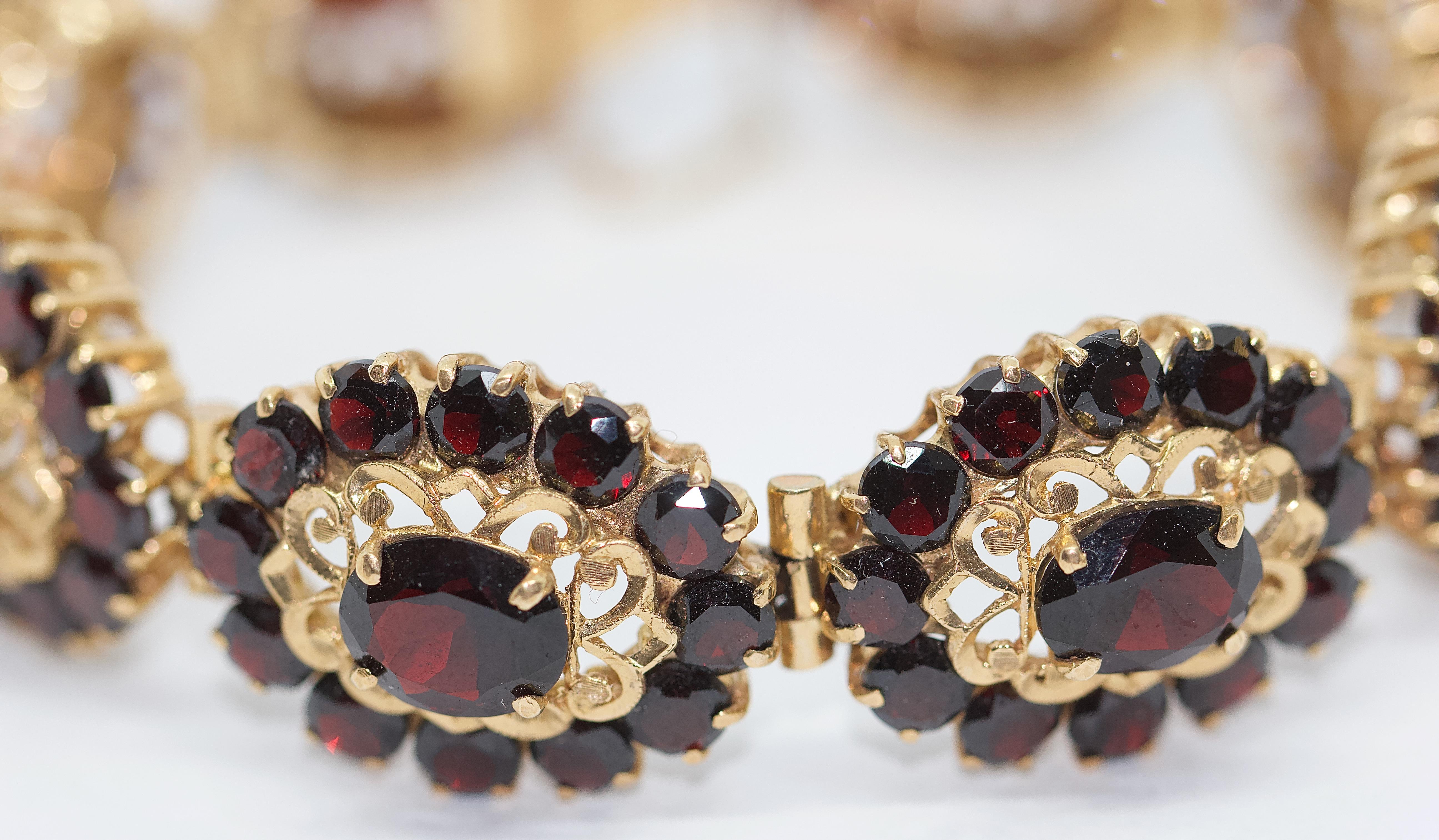
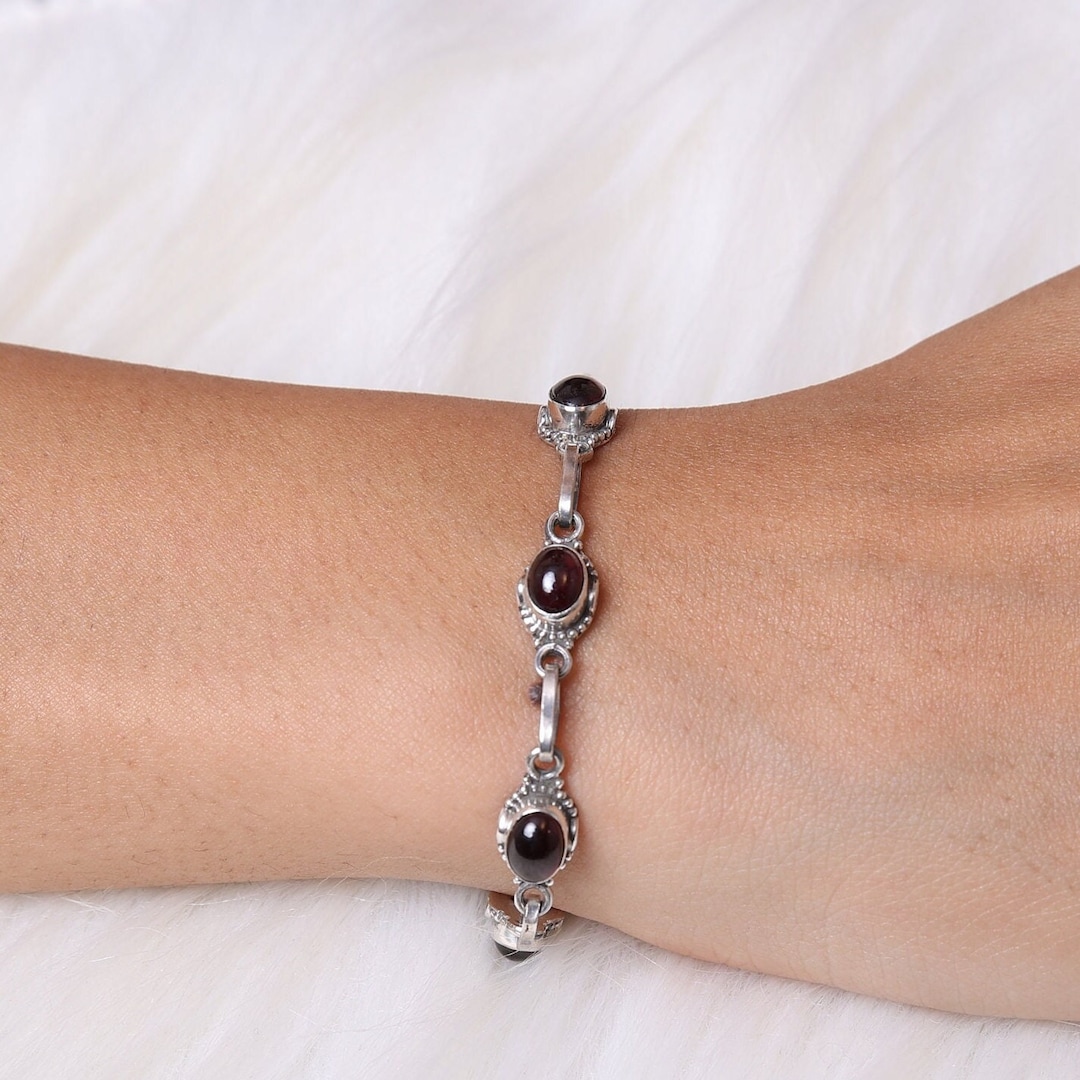
Choosing a garnet bracelet involves evaluating the specific variety of the gemstone, understanding its Mohs hardness rating, and assessing the quality of its setting to ensure longevity. Proper care requires a gentle cleaning routine, avoidance of ultrasonic cleaners, and secure storage to prevent the stone's brittle edges from chipping against other jewelry.
Understanding Garnet as a Gemstone
Garnet is not a single mineral but a group of closely related silicate minerals that share a similar crystal structure. While most consumers associate garnet with the deep, saturated red of the Pyrope or Almandine varieties, the group encompasses a broad spectrum of colors, including the vibrant greens of Tsavorite, the orange hues of Spessartite, and the rare color-changing varieties.
When you select a bracelet, the variety of garnet significantly influences both its aesthetic appeal and its durability. Most common red garnets have a hardness of 6.5 to 7.5 on the Mohs scale, making them reasonably resilient for daily wear. However, their physical structure makes them prone to internal inclusions and fractures, which can compromise the stone if it is subjected to a sharp blow. Understanding these properties is the first step in protecting your investment.
Key Factors for Choosing the Right Bracelet
Selecting a garnet bracelet requires a balance between personal preference and material quality. Unlike diamonds, where the "Four Cs" (Cut, Color, Clarity, Carat) are universally standardized, garnets are often judged by the saturation of their color and their refractive index.
1. Assessing Color and Clarity
The value of a garnet is primarily determined by its color. For red garnets, you should look for a vibrant, saturated tone that does not appear too dark or "inky" under low lighting. In green garnets like Tsavorite, brilliance and clarity are paramount. Because garnets are often eye-clean (lacking visible inclusions), any obvious marks or cloudiness should be viewed as a negative indicator of value.
2. Evaluating the Setting
A garnet bracelet is only as durable as its setting. Because garnet can be susceptible to chipping, particularly at the girdle—the edge where the stone meets the metal—a protective setting is essential.
- Bezel Settings: These surround the stone with a rim of metal, providing the highest level of protection against accidental knocks.
- Prong Settings: These allow more light to enter the stone, enhancing its brilliance, but they leave the edges of the garnet more exposed. If you choose prongs, ensure the jeweler has used a sufficient number (at least four for larger stones) to secure the gem.
3. Bracelet Construction
Consider the structural integrity of the bracelet base. A high-quality garnet bracelet should feature a sturdy clasp and articulated links that do not pinch the skin or snag on clothing. Inspect the metal quality; 14k or 18k gold and sterling silver are standard choices. Ensure that the metal thickness is sufficient to support the weight of the stones without warping over time.
Comparison of Popular Garnet Varieties
| Variety | Typical Color | Mohs Hardness | Typical Use |
|---|---|---|---|
| Almandine | Deep Red / Brownish | 7.0 - 7.5 | Beaded or cabochon bracelets |
| Pyrope | Purplish Red | 7.0 - 7.5 | Faceted stone settings |
| Tsavorite | Vivid Green | 7.0 - 7.5 | Premium jewelry / High-value |
| Spessartite | Orange / Red-Orange | 7.0 - 7.5 | Statement pieces |
| Demantoid | Emerald Green | 6.5 - 7.0 | Rare, collector-grade jewelry |
Essential Care and Maintenance
Because garnets are semi-precious stones with distinct physical limitations, they require a specialized care regimen. You should treat a garnet bracelet with more caution than you would a diamond or sapphire bracelet.
Routine Cleaning
The most effective way to clean a garnet bracelet is through simple, non-abrasive methods. Avoid commercial jewelry cleaners, which may contain harsh chemicals that can react with the metal settings or cause discoloration in porous mounting materials.
- Preparation: Fill a small bowl with lukewarm water and a tiny amount of mild, fragrance-free dish soap.
- Soaking: Allow the bracelet to soak for no more than 5–10 minutes.
- Gentle Scrubbing: Use a very soft-bristled brush, such as a child’s toothbrush, to remove dust or skin oils from behind the stones, where debris tends to accumulate.
- Rinsing: Rinse the bracelet thoroughly under a gentle stream of warm water.
- Drying: Pat the piece dry immediately using a lint-free microfiber cloth. Ensure no moisture remains in the crevices, as this can encourage oxidation in some metals.
Professional Inspections
Even with meticulous at-home care, a professional inspection is recommended annually. A jeweler can check for loose prongs or bent settings. Garnets can sometimes loosen if the metal fatigue occurs in the setting, and catching a loose stone early is the only way to prevent accidental loss.
Significant Risks to Avoid
- Ultrasonic Cleaners: Never use ultrasonic jewelry cleaners. These devices use high-frequency vibrations that can cause internal fractures in the garnet to expand, potentially shattering the stone.
- Thermal Shock: Sudden changes in temperature can damage the stone. Keep your bracelet away from steam cleaners or prolonged exposure to extreme heat.
- Chemical Exposure: Remove your garnet bracelet before swimming in chlorinated pools or using household cleaning chemicals. Chlorine and bleach can damage the alloy of the setting and eventually dull the luster of the garnet.
Proper Storage Strategies
Storage is a frequently overlooked aspect of gemstone care. Because garnets have a hardness of approximately 7.5, they can easily scratch softer gemstones like opals or pearls, and they can be scratched by harder gemstones like diamonds.
Store your garnet bracelet in a dedicated fabric-lined jewelry box or an individual soft pouch. This prevents the piece from rubbing against other jewelry items. If you own multiple pieces, keep them separated by compartments to ensure that the setting of one piece does not cause mechanical damage to the surface of another.
Troubleshooting Common Issues
If you notice your garnet bracelet looks cloudy or dull, it is usually due to the buildup of body lotions, oils, or soaps on the back of the stones. This prevents light from entering and reflecting back out, which is the mechanism that gives the garnet its "fire." A thorough cleaning as described above usually restores the luster.
If a stone appears loose, stop wearing the bracelet immediately. Take it to a professional jeweler who has experience with colored gemstones. Do not attempt to tighten the prongs yourself; applying the wrong amount of pressure can crack the garnet or result in the complete failure of the setting.
Frequently Asked Questions
How often should I clean my garnet bracelet? You should clean your bracelet every few weeks if you wear it daily, or whenever you notice it losing its brilliance. Regular cleaning prevents the accumulation of oils that can dull the gem's natural luster over time.
Can I wear a garnet bracelet every day? Yes, garnet is durable enough for daily wear, provided you choose a design with a protective setting and remove the bracelet before engaging in heavy physical labor, contact sports, or cleaning with harsh chemicals.
Why does my garnet bracelet look different in various lights? Garnets possess specific refractive properties, meaning they react to different light sources differently. A garnet may appear dark red in low indoor light but exhibit vibrant flashes of color under bright sunlight or direct incandescent lighting.
Are all garnets deep red? No, while red is the most common, garnets occur in every color except blue. If you are looking for something unique, explore varieties like Tsavorite for green or Spessartite for bright orange tones.
Is it safe to use jewelry dip solutions on a garnet bracelet? No. Avoid liquid dip solutions, as they often contain acids or chemicals that can strip the finish from metal settings and damage the porous areas of the garnet or its setting, leading to long-term degradation.
Final Recommendations
To enjoy your garnet bracelet for years, start by selecting a piece that prioritizes structural protection, such as a bezel or high-walled prong setting. Inspect the jewelry regularly for movement in the stones, and adhere strictly to a manual, gentle cleaning schedule. By avoiding ultrasonic machines and harsh chemicals, you protect the internal stability of the mineral while maintaining its aesthetic brilliance. For high-value pieces, consult a reputable jeweler every year to confirm that the integrity of the setting remains intact, ensuring your bracelet remains a lasting part of your collection.