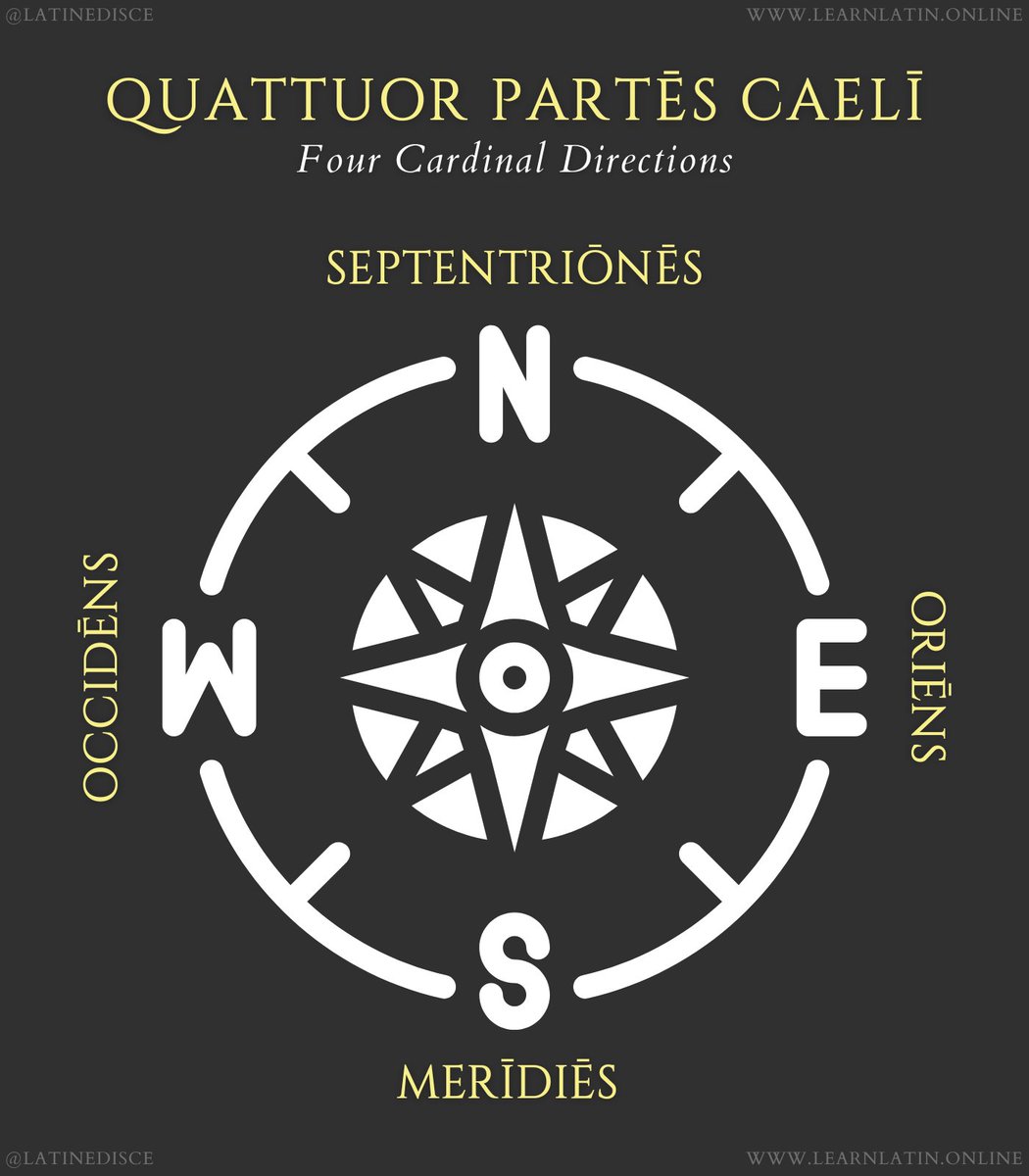
To determine if you are facing north or south, you can use a smartphone compass app, observe the sun’s position, or analyze environmental clues. In the Northern Hemisphere, the sun is generally in the southern sky at midday; in the Southern Hemisphere, it is in the north. On a smartphone, the blue beam in map apps indicates your facing direction.
Orientation is a fundamental skill that combines ancient observational techniques with modern satellite technology. Whether you are navigating a dense urban environment, hiking through a remote wilderness, or simply trying to position furniture in a new home to catch the morning light, knowing your cardinal directions—North, South, East, and West—is essential. In 2026, while we rely heavily on digital assists, understanding the mechanical and natural principles behind these tools ensures you are never truly lost, even when technology fails.
Utilizing Digital Tools and Smartphone Sensors
In the modern era, the most immediate answer to "Am I facing north or south?" lies in the pocket of almost every individual. Smartphones are equipped with a suite of sensors designed to provide precise orientation data. The primary hardware component responsible for this is the magnetometer, a tiny sensor that measures the strength and direction of magnetic fields.
Calibrating Your Digital Compass
Before trusting your phone’s compass, calibration is vital. Most modern devices in 2026 use advanced sensor fusion, combining data from the magnetometer, accelerometer, and gyroscope. However, local magnetic interference from steel buildings, vehicles, or even large batteries can skew results. To calibrate your device, most operating systems recommend moving the phone in a "figure-eight" motion. This allows the sensor to sample the magnetic environment and subtract local "noise" from the Earth’s actual magnetic field.
When you open a compass app, the "top" of your phone serves as the pointer. If the needle or the degree indicator (0° or 360°) aligns with the top of your device, you are facing True North (or Magnetic North, depending on your settings). Conversely, if the 180° mark is at the top, you are facing South.
Using GPS and Map Applications
Global Positioning System (GPS) technology offers another layer of verification. Apps like Google Maps or Apple Maps use a "flashlight" or "beam" icon emanating from your current location blue dot. The direction this beam points is your current heading. A significant advantage of GPS-based orientation is that it is not affected by local magnetic interference. However, GPS requires a clear line of sight to satellites and may struggle in "urban canyons" where high-rise buildings reflect signals.
Determining Direction Using the Sun
If digital tools are unavailable, the sun remains the most reliable celestial guide. Because the Earth rotates from west to east, the sun appears to rise in the east and set in the west. However, its exact path across the sky changes based on your latitude and the time of year.
The Shadow-Stick Method
The shadow-stick method is one of the oldest and most accurate ways to find your bearings without equipment. It requires only a straight stick, two small stones, and about 15 to 20 minutes of time.
- Place the Stick: Find a level spot of ground and push a stick (about 3 feet high) vertically into the earth so it casts a distinct shadow.
- Mark the First Tip: Place a stone at the very end of the shadow cast by the stick. This point represents West, as the sun is currently to the east of its future position.
- Wait: Wait approximately 15 to 20 minutes. As the sun moves across the sky, the shadow will move in the opposite direction.
- Mark the Second Tip: Place another stone at the new tip of the shadow. This point represents East.
- Draw the Line: Draw a straight line between the two stones. This is your East-West line.
- Find North and South: Stand with the first stone (West) to your left and the second stone (East) to your right. You are now facing North. Your back is toward the South.
Midday Sun Observations
In the Northern Hemisphere (anywhere north of the Tropic of Cancer), the sun will be due South at its highest point in the sky (solar noon). If you face the sun at midday, you are facing South. In the Southern Hemisphere (south of the Tropic of Capricorn), the midday sun will be due North. This rule becomes more complex between the two Tropics, where the sun’s midday position shifts between North and South depending on the season.
Navigating by the Stars
At night, the stars provide a fixed reference point for orientation. The method you use depends entirely on which hemisphere you are currently occupying.
The Northern Hemisphere: Finding Polaris
The North Star, or Polaris, is located almost exactly above the Earth’s North Pole. Unlike other stars, it does not appear to move across the sky during the night. To find Polaris, first locate the Big Dipper (Ursa Major). Find the two stars that form the outer edge of the "bowl" of the dipper. Follow a straight line from these "pointer stars" across the sky; the first bright star you hit is Polaris. If you are facing Polaris, you are facing True North.
The Southern Hemisphere: The Southern Cross
The Southern Hemisphere lacks a single "South Star." Instead, navigators use the Southern Cross (Crux). This constellation consists of four bright stars in a cross shape. To find South, look at the long axis of the cross and imagine extending that line further into the sky by about four and a half times its length. Drop a vertical line from that imaginary point down to the horizon; that point on the horizon is due South.
Using Environmental and Urban Clues
Nature and human architecture often provide subtle hints about cardinal directions. While these methods are less precise than celestial or digital navigation, they offer valuable context when other methods are obscured.
Vegetation and Moss Growth
A common myth suggests that "moss only grows on the north side of trees." In reality, moss grows where it is coolest and dampest. In the Northern Hemisphere, the north side of a tree receives less direct sunlight and stays moist longer, making it a preferred spot for moss. However, in a dense, humid forest, moss may grow on all sides. A more reliable botanical clue is the density of branches; in the Northern Hemisphere, the south-facing side of a tree often has more robust growth and more foliage because it receives more sunlight throughout the year.
Satellite Dishes and Solar Panels
In urban and suburban areas, human-made structures are often oriented toward the equator to maximize signal or energy reception.
- Satellite Dishes: In the Northern Hemisphere, residential satellite dishes (such as those for television) are almost always pointed toward the South to communicate with geostationary satellites orbiting above the equator.
- Solar Panels: Efficient solar installations in the Northern Hemisphere are tilted toward the South to capture the maximum amount of sunlight throughout the day. In the Southern Hemisphere, they face North.
Street Grids and House Numbers
Many cities, particularly in North America, were built on a grid system aligned with cardinal directions. In cities like Chicago or New York, major avenues often run North-South, while streets run East-West. Additionally, in some municipalities, house numbers are assigned based on their side of the street (e.g., even numbers on the East/North side and odd numbers on the West/South side). Checking a local map once can help you internalize these patterns for an entire region.
Understanding Magnetic vs. True North
When using a compass or a digital device, it is crucial to understand the difference between Magnetic North and True North.
- True North (Geographic North): This is the fixed point where all lines of longitude meet at the North Pole. It is the "top" of the Earth’s axis.
- Magnetic North: This is the point toward which a compass needle points, driven by the Earth’s liquid iron core. Magnetic North is not fixed; it shifts over time due to changes in the Earth’s magnetic field.
The difference between these two points is called magnetic declination. Depending on your location on Earth, the "error" between your compass and True North could be several degrees. In 2026, most smartphone apps automatically compensate for declination using your GPS location, providing you with a reading of True North. However, if you are using a traditional baseplate compass, you must manually adjust for the local declination listed on your topographic map. Information on current declination can be found through agencies like the National Oceanic and Atmospheric Administration (NOAA).
Comparison of Orientation Methods
| Method | Accuracy | Reliability (No Power) | Best Use Case |
|---|---|---|---|
| Smartphone Compass | High (±1-3°) | Low (Requires Battery) | Quick urban/trail checks |
| Shadow-Stick | High (±2-5°) | Excellent | Survival/Wilderness |
| Polaris (North Star) | Very High (<1°) | Excellent | Nighttime navigation (North) |
| Southern Cross | Moderate (±5-10°) | Excellent | Nighttime navigation (South) |
| Satellite Dishes | Low (General) | High | Urban/Suburban orientation |
| Vegetation Clues | Low/Variable | High | Supporting evidence only |
Troubleshooting Common Errors
Even with the best tools, errors in orientation are common. Recognizing these issues early can prevent you from heading in the wrong direction.
Magnetic Interference
If you are standing near a large metal object, a power line, or even a heavy-duty magnet in a bag clasp, your compass (digital or analog) will likely provide a false reading. This is known as "deviation." Always step at least 15 feet away from vehicles or large structures before taking a reading.
"Lost in the Woods" Psychology
The human brain is notoriously bad at maintaining a straight line without external visual references. Studies have shown that people without a compass or fixed landmark tend to walk in circles. This happens because of slight differences in leg strength or stride length. Always pick a landmark (a specific tree or rock) in the direction you want to go, walk to it, and then pick the next one. Do not simply trust your "sense of direction."
The "Overhead Sun" Problem
Near the equator during the equinoxes, the sun can be almost directly overhead at noon. This makes it nearly impossible to determine North or South using shadows for an hour or two. During these times, it is better to wait until the sun is lower in the sky or rely on a magnetic compass.
Frequently Asked Questions
Does the sun always rise exactly in the East?
Not exactly. The sun only rises due East and sets due West on the spring and autumnal equinoxes. During the summer solstice, the sun rises and sets further to the North (in the Northern Hemisphere). In the winter, it rises and sets further to the South. However, for general orientation, the "East-ish" and "West-ish" rule is usually sufficient.
Can I use my analog watch as a compass?
Yes. In the Northern Hemisphere, point the hour hand of your watch at the sun. The point halfway between the hour hand and the 12 o'clock mark is South. In the Southern Hemisphere, point the 12 o'clock mark at the sun. The point halfway between 12 and the hour hand is North. Note that during Daylight Savings Time, you should use the 1 o'clock mark instead of 12.
Why does my phone compass keep spinning?
This usually indicates a need for calibration or significant magnetic interference. Move away from electronic devices, large metal objects, or magnets. Perform the "figure-eight" calibration motion. If the problem persists, ensure your phone's software is updated, as sensor fusion algorithms are frequently refined in 2026 systems.
Is the North Pole moving?
Yes, the Magnetic North Pole is constantly drifting. In recent years, it has been moving from the Canadian Arctic toward Russia at a rate of about 25–30 miles per year. This is why it is important to use the most current magnetic declination data when navigating with a traditional compass. True North (the geographic pole), however, remains stationary relative to the Earth's crust.
If I am at the North Pole, which way is South?
If you are standing exactly on the Geographic North Pole, every direction you face is South. In this unique location, East and West cease to exist as traditional directions because all lines of longitude originate from the point beneath your feet.
Practical Recommendations
To ensure you can always find your way, adopt a "redundancy" approach to navigation. Never rely solely on a single method. If your smartphone tells you that you are facing North, cross-reference that with the position of the sun or the layout of the streets.
If you are heading into the wilderness, always carry a physical baseplate compass and a paper map of the area. Familiarize yourself with the local magnetic declination before you depart. For urban navigation, take a moment to look at a map and identify a major landmark (like a mountain range, a lake, or a famous skyscraper) and know its cardinal direction relative to the city center. This mental "anchor" will allow you to orient yourself instantly just by looking at the horizon.