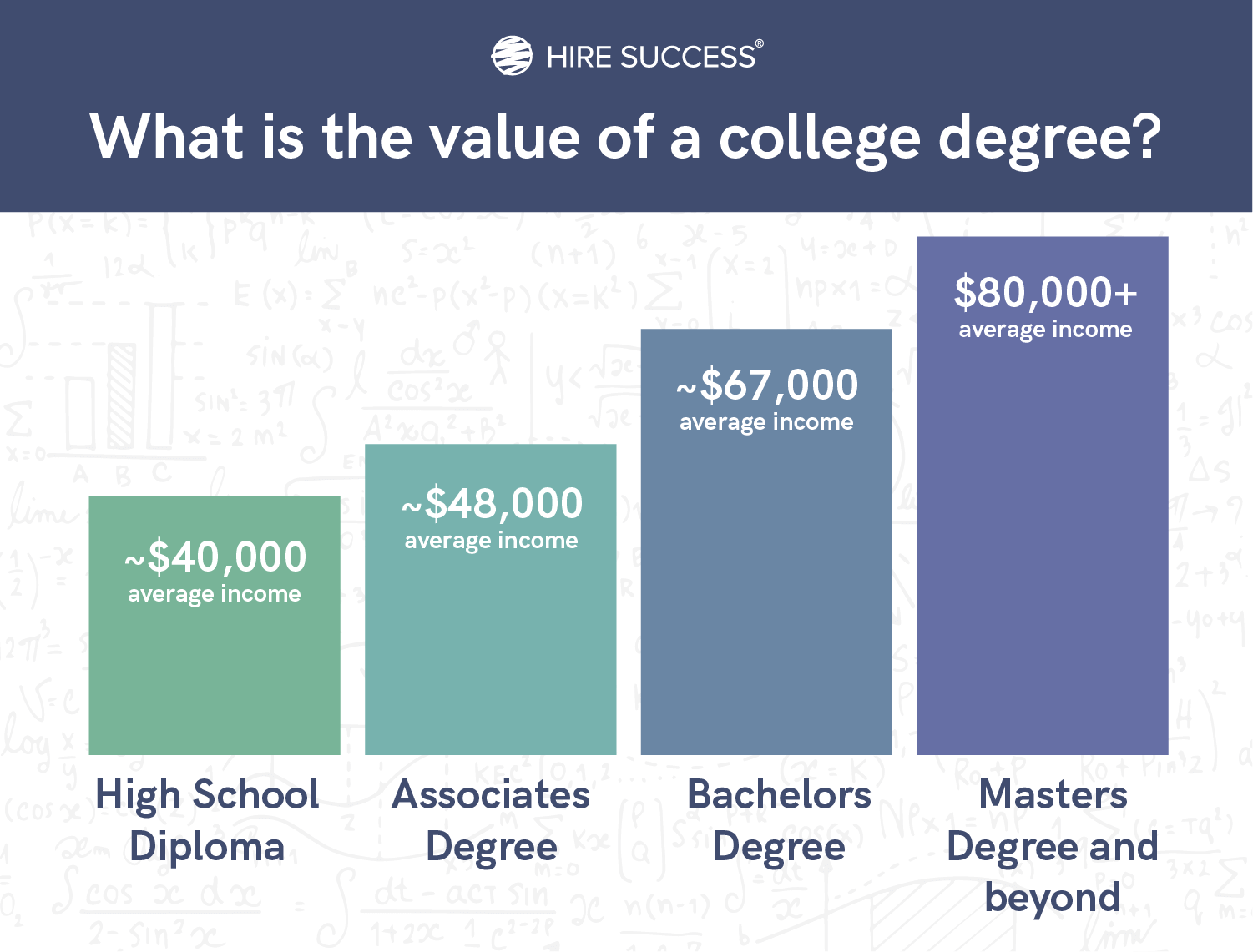
For the majority of individuals in 2026, a college degree remains a worthwhile investment, providing a median lifetime earnings increase of over $1 million compared to a high school diploma. However, its value is increasingly contingent on the specific field of study, total debt incurred, and the evolving demand for technical skills versus traditional academic theory.
The Evolving Economic Value of Higher Education
In 2026, the debate surrounding the utility of a four-year degree has reached a fever pitch. While the "college premium"—the gap between the earnings of college graduates and those with only a high school diploma—remains significant, the path to achieving that premium has become more complex. Historically, a degree was a universal signal of competence. Today, it functions more as a specialized credential. Data from the Bureau of Labor Statistics and contemporary educational researchers suggest that while the average graduate earns substantially more over a 40-year career, the "average" masks a massive variance between disciplines.
The economic value of a degree is no longer just about the piece of paper; it is about the "sheepskin effect" coupled with tangible skill acquisition. Employers in 2026 are more sophisticated in their recruitment, often using automated systems to verify not just the degree, but the specific coursework and projects completed. This shift means that a degree from a prestigious university still holds weight in networking and "first-look" scenarios, but the functional value of the education is what sustains long-term career growth.
Furthermore, the "opportunity cost" of college has never been higher. When a student chooses to attend a four-year institution, they are not only paying tuition and fees; they are also foregoing four years of potential wages. In a labor market where entry-level roles in trades and technology often start at competitive salaries, the decision to delay full-time employment must be backed by a clear expectation of a higher future ceiling.
Calculating the Real Cost of a Degree in 2026
To determine if a degree is "worth it," one must look beyond the sticker price of tuition. The total cost of attendance (COA) includes housing, books, transportation, and the increasingly high cost of digital course materials and laboratory fees. In 2026, the average cost for a public in-state four-year education has stabilized somewhat due to increased state subsidies in certain regions, yet private non-profit institutions continue to see rising costs.
Debt-to-Income Ratio
A primary rule of thumb for 2026 students is that total undergraduate debt should not exceed the expected first-year salary after graduation. For example, if a student expects to earn $60,000 as a junior accountant, taking on $100,000 in debt creates a financial burden that can take decades to resolve, effectively neutralizing the "worth" of the degree. High interest rates on private loans compared to federal options further complicate this calculation.
Financial Aid and Grants
The landscape of financial aid has shifted toward "income-share agreements" and expanded Pell Grants. Many students find that through a combination of community college "2+2" programs (two years at community college followed by two years at a university) and employer-sponsored tuition reimbursement, the net cost of a degree can be reduced by 50% or more. In these cases, the ROI becomes almost indisputable, as the initial capital outlay is significantly lowered.
The Impact of Major and Field of Study on ROI
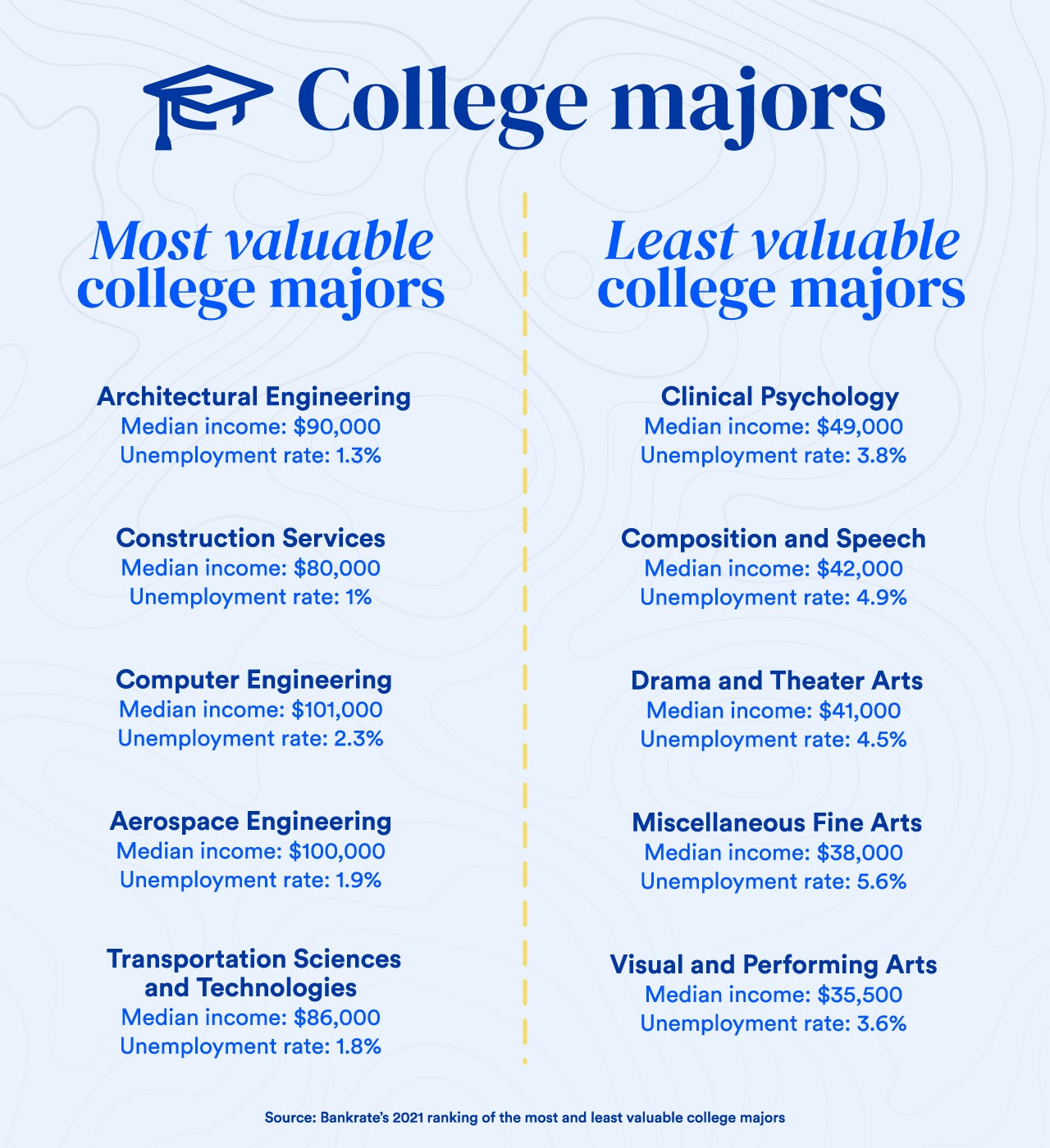
The most critical factor in the "worth" of a degree in 2026 is the choice of major. We are seeing a widening "ROI Gap" between quantitative, healthcare, and technical fields versus the humanities and social sciences. This does not mean that a degree in Philosophy or History lacks intrinsic value, but from a purely financial perspective, the time-to-recoup investment is much longer.
High-ROI Majors
Fields such as Computer Science (specifically with a focus on AI and Machine Learning), Nursing, Petroleum Engineering, and Specialized Finance continue to dominate the top of the earnings charts. These degrees offer a direct pipeline into high-demand industries. In 2026, a degree in Nursing, for instance, offers near-100% job security and a starting salary that often outpaces the debt required to obtain the degree within three to five years.
Low-ROI and "Passion" Majors
Conversely, degrees in the performing arts, some liberal arts, and certain social sciences often result in lower median starting salaries. For these graduates, the "worth" of the degree is frequently found in the soft skills developed—critical thinking, communication, and adaptability. However, without a clear pivot into a corporate or technical role, these graduates may find themselves "underemployed," working in jobs that do not technically require a degree.
Non-Monetary Benefits of a College Education
While ROI is often measured in dollars, the non-monetary benefits of a college education remain substantial. Research consistently shows that college graduates experience better health outcomes, longer life expectancy, and higher levels of civic engagement. The university environment provides a structured space for personal development, networking, and the formation of social capital that is difficult to replicate in self-study or trade environments.
The networking aspect cannot be overstated. In 2026, the phrase "it's not what you know, but who you know" still rings true in high-level corporate, legal, and medical circles. Access to alumni databases, career centers, and internship pipelines provides a "safety net" and a "ladder" that often accelerates career progression far beyond what a person without a degree might experience, even if they possess similar technical skills.
The Rise of Alternative Pathways
The year 2026 has seen a stabilization of "alternative credentials." Coding bootcamps, professional certifications (like those offered by Google, IBM, or Microsoft), and traditional trade apprenticeships are now viewed as legitimate competitors to the four-year degree.
Trade Schools and Apprenticeships
As the aging workforce in trades (plumbing, electrical work, HVAC) retires, the demand for skilled labor has surged. These paths often allow individuals to earn while they learn, entering the workforce with zero debt and a high starting wage. For many, the "worth" of a trade certification in 2026 exceeds that of a general liberal arts degree because the market demand is more urgent and the supply of workers is lower.
Skill-Based Hiring
Many Fortune 500 companies have officially removed degree requirements for a significant portion of their roles, focusing instead on "skill-based hiring." This movement prizes verified competencies over academic credentials. If a candidate can prove they can write production-ready code or manage a complex supply chain through portfolio work or micro-credentials, the lack of a degree is no longer a deal-breaker.
Comparison of Educational Pathways (2026 Estimates)
| Pathway | Average Duration | Average Total Cost | Median Entry Salary | Long-Term Growth Potential |
|---|---|---|---|---|
| Public University (In-State) | 4 Years | $45,000 - $60,000 | $55,000 - $75,000 | High |
| Private University | 4 Years | $150,000 - $250,000 | $60,000 - $85,000 | High (Networking Peak) |
| Community College + Transfer | 4 Years | $25,000 - $35,000 | $55,000 - $75,000 | High |
| Trade School | 1-2 Years | $10,000 - $25,000 | $50,000 - $70,000 | Moderate to High |
| Professional Certifications | 6-12 Months | $1,000 - $5,000 | $45,000 - $65,000 | Field Dependent |
How to Determine if College is Right for You
Deciding whether to pursue a degree in 2026 requires a cold, hard look at both personal goals and market realities. Follow this decision-making framework to evaluate your specific situation:
- Identify the Target Career: Research the specific job you want. Does it legally require a degree (like Medicine, Law, or Professional Engineering)? If so, the degree is a mandatory investment.
- Audit the Local Labor Market: Use tools like the Bureau of Labor Statistics (BLS) or LinkedIn Economic Graph to see the projected growth for that role over the next decade.
- Perform a Cost-Benefit Analysis: Calculate the total cost of the degree (including interest on loans) and compare it to the projected earnings of that career path versus a trade or certification path.
- Evaluate the "Soft" ROI: Consider how much you value the social experience, the geographical move, and the safety net of an alumni network.
- Look for Hybrid Options: Consider if a part-time degree while working, or starting at a community college, offers a better balance of risk and reward.
Potential Pitfalls: When a Degree is NOT Worth It
There are specific scenarios where a college degree becomes a net negative for an individual’s financial health:
- The "Unfinished" Degree: The worst financial outcome is taking on student loans but failing to graduate. You are left with the debt but none of the "degree premium" in the labor market.
- Excessive Debt for Low-Paying Fields: Borrowing $100,000 for a career that pays $35,000 a year is a recipe for lifelong financial instability.
- Lack of Career Direction: Using college as a place to "find yourself" without a plan can lead to wasted credits and unnecessary debt. In 2026, it is often better to take a gap year or work in a trade while deciding on a major rather than spending tuition money on aimless exploration.
FAQs
Is a Master’s degree required for most jobs in 2026?
No, a Master’s degree is not required for most jobs, though "credential inflation" has made it more common in fields like Education, Occupational Therapy, and Data Science. In 2026, many employers value three years of relevant work experience more than a two-year Master's degree, unless the role is highly specialized or academic in nature.
How has AI impacted the value of a college degree?
AI has shifted the value of a degree away from "knowledge retention" and toward "critical synthesis" and "human-centric skills." Degrees that teach students how to leverage AI tools effectively are more valuable than those that focus on tasks AI can now automate, such as basic data entry, entry-level accounting, or simple code writing.
Can I get a high-paying job without a degree in 2026?
Yes, particularly in technology, skilled trades, and sales. Many "new-collar" jobs prioritize specific certifications and demonstrated experience. However, the "ceiling" for management roles in many large corporations still often requires a degree for advancement into the executive suite.
Is the reputation of the college still important?
Prestige still matters for high-finance (Investment Banking), top-tier Consulting, and Big Law. For the vast majority of other industries—including Healthcare, Tech, and Education—the accreditation of the program and your actual skills matter far more than the name on the diploma.
What is the average timeframe to pay off student loans in 2026?
For those who borrow the national average, the typical repayment period is between 10 and 15 years. However, students who utilize income-driven repayment plans or work in public service (qualifying for Public Service Loan Forgiveness) may see their debt managed or forgiven over a different timeline.
Practical Recommendation
If you are pursuing a career in a regulated profession or a high-compensation technical field, pursue the degree but prioritize minimizing debt through community college transfers or in-state options. If your interests lie in the creative arts or general business, consider a "skills-first" approach: gain entry-level experience or certifications first, and only pursue the degree if you hit a career ceiling that requires it. Always use a 10-year ROI projection before signing any loan documents.