Exposure to asbestos fibers remains a significant public health concern because these microscopic, needle-like particles can remain trapped in the body for decades, causing chronic inflammation and cellular damage. When these fibers penetrate the delicate linings of the lungs, heart, or abdomen, they can trigger the development of malignant tumors. Understanding the specific types of cancer associated with asbestos is critical for those with a history of occupational or environmental exposure, as early identification often dictates the success of intervention strategies.
The Mechanism of Asbestos-Induced Malignancy
To understand how asbestos causes cancer, one must first recognize the physical properties of the mineral. Asbestos is a collective term for a group of six naturally occurring fibrous minerals known for their heat resistance and tensile strength. When materials containing asbestos are disturbed—through cutting, sanding, or demolition—the fibers become airborne.
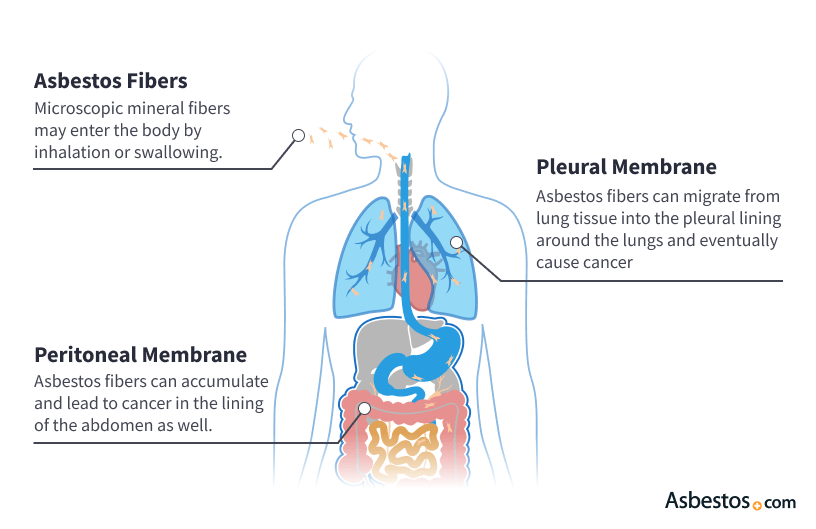
Once inhaled or ingested, these fibers are nearly impossible for the human body to break down or expel due to their microscopic size and durability. They migrate into the mesothelium, a protective membrane covering the internal organs. Over time, the physical irritation and biochemical reactions caused by these fibers lead to chronic inflammation, scarring (fibrosis), and eventual genetic mutations in the mesothelial cells. These mutations are the primary drivers of the cancers discussed below.
Mesothelioma: The Defining Asbestos Cancer
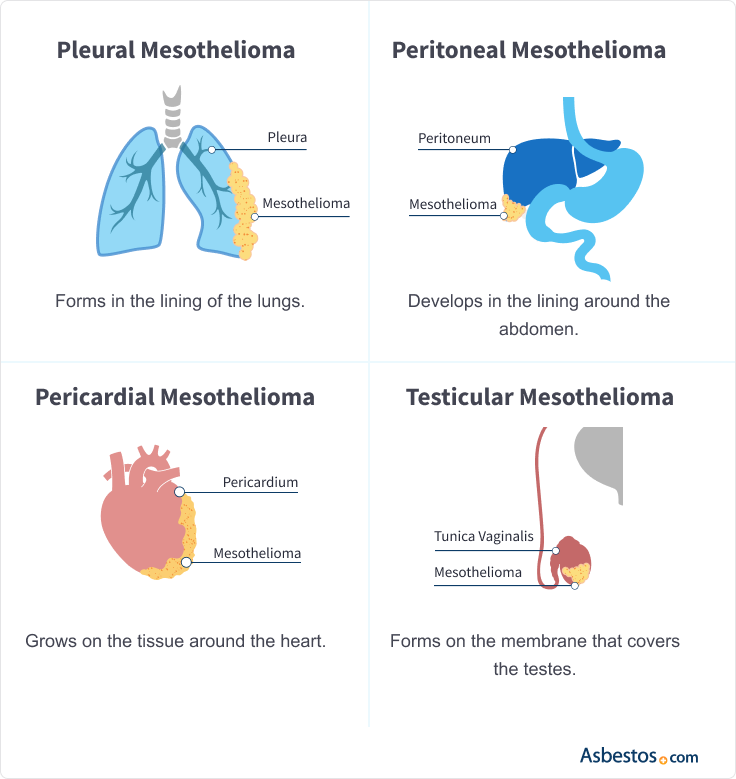
Mesothelioma is perhaps the most well-known cancer associated with asbestos exposure. It is a rare, aggressive malignancy that originates in the mesothelium. Because the mesothelium covers several vital organs, mesothelioma is categorized by the specific site of the tumor.
Pleural Mesothelioma
This is the most common form, accounting for approximately 75% to 80% of all cases. It occurs in the pleura, which is the lining surrounding the lungs and chest cavity. Early symptoms are often subtle, frequently mimicking less severe respiratory conditions. Patients may experience:
- Persistent, dry coughing.
- Pain in the chest wall or under the rib cage.
- Shortness of breath (dyspnea).
- Unexplained weight loss and night sweats.
Peritoneal Mesothelioma
This type develops in the peritoneum, the lining of the abdominal cavity. While less common than the pleural variant, it is highly debilitating. As the tumor grows, it can cause the abdominal lining to thicken, leading to fluid buildup (ascites). Symptoms often include abdominal swelling, pain, nausea, and changes in bowel habits.
Pericardial and Tunica Vaginalis Mesothelioma
These are extremely rare forms of the disease. Pericardial mesothelioma occurs in the sac surrounding the heart, often leading to heart rhythm irregularities and chest pain. Tunica vaginalis mesothelioma affects the lining of the testes, typically presenting as a painless lump or swelling in the scrotum.
Lung Cancer and Asbestos Synergy
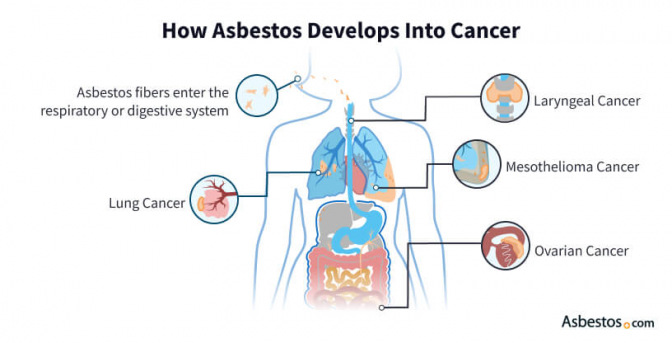
While mesothelioma is the signature cancer of asbestos exposure, lung cancer (bronchogenic carcinoma) is statistically more common among those who have been exposed. Unlike mesothelioma, which is specifically tied to the mesothelium, asbestos-related lung cancer occurs directly within the lung tissue.
The clinical distinction is vital: if a patient has a history of heavy asbestos exposure, the development of lung cancer is often considered an occupational disease. The risk is compounded exponentially when the individual has a history of smoking. Clinical data consistently shows that the synergy between asbestos fibers and tobacco smoke increases the likelihood of lung cancer significantly more than the sum of the two risks individually. Symptoms usually include chronic cough, hemoptysis (coughing up blood), and recurrent respiratory infections.
Other Cancers Associated with Asbestos
Research has continued to expand our understanding of how asbestos impacts various systems in the body. Beyond mesothelioma and primary lung cancer, several other malignancies have been linked to long-term fiber ingestion and inhalation.
Laryngeal Cancer
The larynx (voice box) is susceptible to asbestos fibers as they pass through the throat. Several major health organizations, including the International Agency for Research on Cancer (IARC), have classified asbestos as a confirmed cause of laryngeal cancer. Symptoms often involve hoarseness or difficulty swallowing.
Ovarian Cancer
Evidence suggests a link between asbestos fibers and ovarian malignancy. It is hypothesized that fibers can migrate through the reproductive tract, eventually reaching the ovaries. While this is less common than lung-related cancers, it remains a recognized clinical risk for women with long-term occupational or secondary household exposure.
Clinical Comparison Table: Primary Asbestos-Related Cancers
| Cancer Type | Primary Location | Primary Risk Factor | Common Symptoms |
|---|---|---|---|
| Pleural Mesothelioma | Lung lining | Asbestos inhalation | Chest pain, dyspnea, fatigue |
| Peritoneal Mesothelioma | Abdominal lining | Asbestos ingestion/inhalation | Abdominal pain, swelling, weight loss |
| Lung Cancer | Lung tissue | Asbestos + Tobacco usage | Chronic cough, chest pain, coughing blood |
| Laryngeal Cancer | Voice box | Asbestos exposure | Hoarseness, dysphagia |
| Ovarian Cancer | Ovaries | Fiber migration | Pelvic pain, abdominal bloating |
Diagnostic Procedures and Verification
Because the symptoms of asbestos-related cancers are often non-specific, diagnostic processes are typically multi-staged. Physicians usually begin with imaging studies, such as X-rays or CT scans, to identify pleural plaques, thickening of the lining, or mass lesions.
When a suspicious mass is detected, a biopsy is the definitive diagnostic tool. A pathologist examines tissue samples to determine whether the cells are malignant and to confirm the presence of asbestos-related cellular changes. In cases of mesothelioma, immunohistochemistry markers are used to differentiate the cancer from other types of metastatic lung tumors.
It is important to note that these diagnostic procedures are specialized. Patients who have reason to believe they were exposed to asbestos—whether through industrial work in manufacturing, construction, shipyards, or building maintenance—should inform their healthcare providers of this history, even if their current symptoms seem mild.
Managing the Latency Period
The most challenging aspect of asbestos-related cancer is the latency period. The time between initial exposure to asbestos and the manifestation of cancer is typically 20 to 50 years. This long delay means that individuals who worked in high-risk environments during the mid-to-late 20th century may only now be presenting with symptoms.
Because the disease often remains dormant for so long, there is no standardized, universal screening program for the general population. However, individuals with known heavy exposure—such as those who worked in asbestos mining, asbestos-containing insulation installation, or textile manufacturing—may benefit from periodic consultations with a pulmonologist. Early detection remains the most effective way to improve prognosis and access targeted treatment options.
Frequently Asked Questions
Is all asbestos equally dangerous?
Not necessarily, though all forms are classified as carcinogenic. Amphibole asbestos fibers (such as crocidolite or amosite) are generally considered more hazardous than serpentine fibers (chrysotile) because they are more needle-like and tend to persist in the lungs for longer periods. However, all types of asbestos pose a significant health risk.
Can smoking increase my risk of mesothelioma?
Interestingly, smoking does not appear to increase the risk of developing mesothelioma specifically. However, smoking significantly increases the risk of developing lung cancer in an asbestos-exposed individual. The combined effect of these two factors is multiplicative, not just additive.
How do I know if I have been exposed to asbestos?
Exposure is most common in historical occupational settings. If you worked in construction, insulation, shipyards, or automotive repair prior to the tightening of safety regulations in the late 1970s and 1980s, you may have been exposed. Secondary exposure also occurred for family members living with workers who brought asbestos dust home on their clothing.
What treatments are available for these cancers?
Treatment depends on the type and stage of cancer. Standard approaches include surgical resection, chemotherapy, radiation therapy, and increasingly, immunotherapy. Because these cancers are rare and complex, patients are often encouraged to seek care at specialized centers that focus on mesothelioma and thoracic malignancies.
Is there a cure for mesothelioma?
Currently, mesothelioma is considered a life-limiting disease, and a universal cure does not exist. Treatment is focused on prolonging life, managing symptoms, and improving the patient’s quality of life. Emerging clinical trials and targeted biological therapies continue to be a focus of ongoing research.
Taking Proactive Next Actions
If you have concerns regarding a history of asbestos exposure, the most constructive step is to compile a detailed work and residential history. Document the years you worked, the specific job titles you held, the materials you handled, and the locations where you lived.
Present this information to your primary care physician or a pulmonologist. While this does not guarantee a specific health outcome, it ensures that your medical team is aware of the specific environmental risks associated with your history. Early intervention and informed medical monitoring are the most effective ways to manage the risks associated with past asbestos exposure.