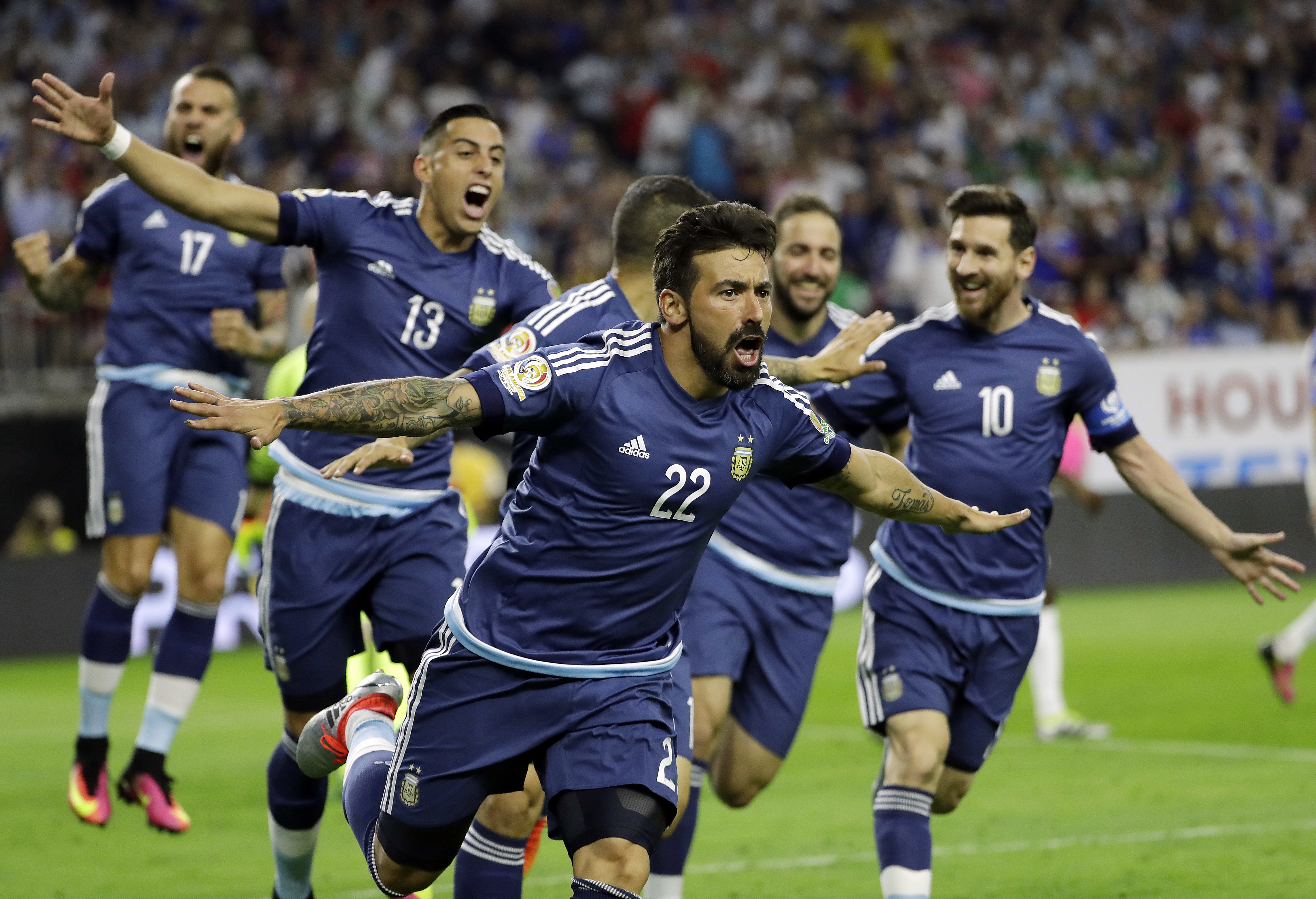
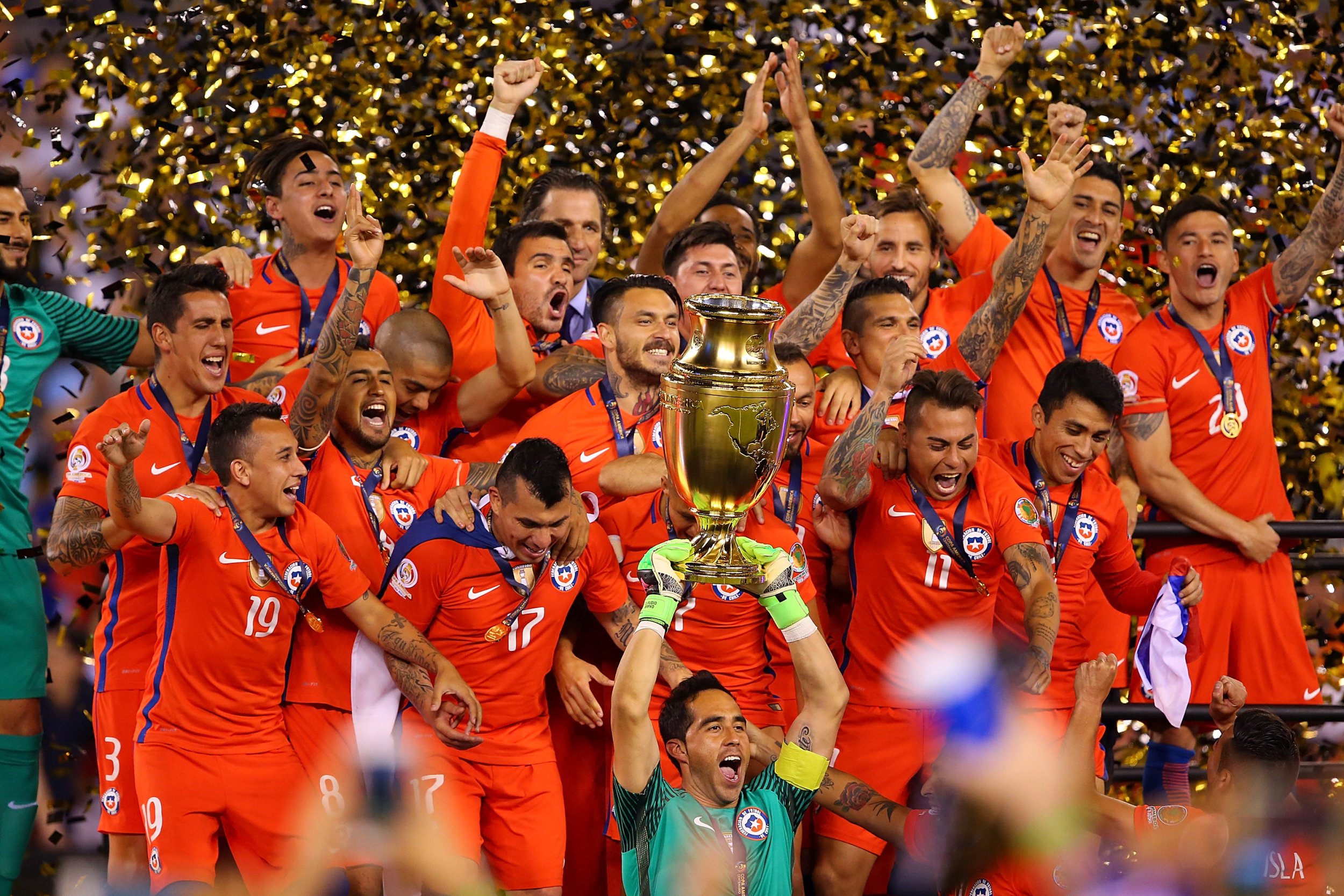
Despite entering the tournament as heavy favorites, Argentina did not win the 2016 Copa América Centenario. They reached the final but were defeated by Chile in a penalty shootout (4–2) following a 0–0 draw after extra time. This loss marked Argentina’s third consecutive defeat in a major international final and famously led to Lionel Messi’s brief retirement from the national team.
The 2016 Copa América Centenario was a landmark event in the history of association football. Organized to celebrate the 100th anniversary of CONMEBOL, it was the first time the tournament was hosted outside of South America, with the United States serving as the host nation. For Argentina, the tournament was supposed to be the moment they ended a 23-year trophy drought. Instead, it became one of the most agonizing chapters in the country's sporting history—a "nadir" that, from our current 2026 perspective, we now recognize as the turning point that eventually led to their 2021, 2022, and 2024 successes.
The Significance of the 2016 Copa América Centenario
The 2016 edition was an extraordinary collaboration between CONMEBOL and CONCACAF. Featuring 16 teams (10 from South America and 6 from North/Central America), the tournament was played in high-capacity NFL stadiums across the United States. For Argentina, the stakes were impossibly high. After losing the 2014 World Cup Final to Germany and the 2015 Copa América Final to Chile, the pressure on Lionel Messi and manager Gerardo "Tata" Martino was immense.
The tournament was not just a celebration of history; it was a test of Argentina’s "Golden Generation." The squad featured peak-era talent including Lionel Messi, Sergio Agüero, Gonzalo Higuaín, Javier Mascherano, and Ángel Di María. Throughout the group stages and the knockout rounds, Argentina looked nearly invincible, leading many fans and pundits to believe that the 2016 title was a foregone conclusion.
Argentina’s Path to the MetLife Stadium Final
Argentina’s journey to the final was a masterclass in offensive football. They were placed in Group D alongside the defending champions Chile, Panama, and Bolivia.
- The Group Stage: Argentina opened with a 2–1 win over Chile, even without a fully fit Messi. They followed this with a 5–0 thrashing of Panama (where Messi scored a hat-trick as a substitute) and a 3–0 win over Bolivia. They finished the group stage with a perfect record and a goal difference of +9.
- The Quarter-finals: Argentina faced Venezuela in Foxborough. Behind two goals from Gonzalo Higuaín and brilliance from Messi, the Albiceleste cruised to a 4–1 victory.
- The Semi-finals: Facing the host nation, the United States, in Houston, Argentina delivered a flawless performance. Messi scored a legendary free-kick to become Argentina's all-time leading scorer, surpassing Gabriel Batistuta, as they won 4–0.
By the time they reached the final, Argentina had scored 18 goals and conceded only two. They were the statistical favorites in every category heading into the rematch against Chile.
Analysis of the 2016 Final: Argentina vs. Chile
The final took place on June 26, 2016, at MetLife Stadium in East Rutherford, New Jersey, before a crowd of 82,026. The match was a grueling, physical encounter that lacked the fluid attacking play Argentina had shown earlier in the tournament.
Tactical Gridlock and Red Cards
The match was characterized by high tension and aggressive officiating by referee Héber Lopes. Chile’s strategy focused on neutralizing Messi through physical pressure and tactical fouling. In the 28th minute, Chile’s Marcelo Díaz was sent off for a second yellow card after obstructing Messi. With a man advantage, Argentina seemed poised to take control.
However, the numerical advantage lasted only until the 43rd minute, when Argentina’s Marcos Rojo was shown a straight red card for a challenge on Arturo Vidal. The decision was controversial, but it leveled the playing field to 10 versus 10, fundamentally changing the tactical landscape.
Missed Opportunities
The most discussed moment of regulation time occurred in the 21st minute. A defensive error by Chile’s Gary Medel left Gonzalo Higuaín one-on-one with goalkeeper Claudio Bravo. Higuaín’s chip went narrowly wide of the post, a moment that echoed his missed chance in the 2014 World Cup Final. Argentina continued to create half-chances, including a powerful header by Sergio Agüero in extra time that was spectacularly saved by Bravo, but they could not find the net.
| Category | Argentina | Chile |
|---|---|---|
| Shots (On Goal) | 18 (3) | 4 (2) |
| Possession | 46% | 54% |
| Corner Kicks | 9 | 4 |
| Fouls | 14 | 22 |
| Yellow Cards | 3 | 4 |
| Red Cards | 1 | 1 |
The Penalty Shootout Heartbreak
After 120 minutes of scoreless football, the match proceeded to penalties. For Argentina, this was a repeat of the 2015 final, and the psychological weight was palpable.
- Round 1: Arturo Vidal stepped up first for Chile, and Sergio Romero saved it. Argentina had the immediate advantage. Lionel Messi, the captain and best player in the world, stepped up to take Argentina’s first penalty. In a shock to the global football community, Messi blasted the ball over the crossbar.
- Subsequent Rounds: Nicolás Castillo and Charles Aránguiz scored for Chile; Javier Mascherano and Sergio Agüero scored for Argentina. Jean Beausejour converted Chile's fourth.
- The Decisive Moment: Lucas Biglia took Argentina’s fourth penalty, which was saved by Claudio Bravo.
- The Clincher: Francisco Silva stepped up for Chile and calmly slotted the ball into the bottom corner.
Chile won the shootout 4–2, securing back-to-back Copa América titles and leaving Argentina in a state of collective despair.
The Aftermath: Messi’s Retirement and National Crisis
The immediate aftermath of the 2016 final was perhaps more significant than the game itself. In the mixed zone after the match, a visibly distraught Lionel Messi told reporters, "The national team is over for me. It’s been four finals, it’s not meant for me. I tried. It was the thing I wanted most, but I couldn't get it, so I think it's over."
This announcement sent shockwaves through the sporting world. It wasn't just about a lost trophy; it was the potential end of the greatest player's international career at the age of 29. The retirement sparked a massive "No Te Vayas, Lio" (Don't go, Lio) campaign in Argentina, involving everyone from fans in the streets of Buenos Aires to the President of the Republic.
Messi eventually rescinded his retirement a few months later, citing his love for the country and the shirt. However, the 2016 loss remained a deep scar on the team's psyche for years, leading to a period of instability that included a disappointing 2018 World Cup campaign.
Historical Perspective: From 2016 Heartbreak to 2026 Dominance
Looking back from 2026, the 2016 loss is viewed as the final catalyst for the total restructuring of Argentinian football. Following the departure of Gerardo Martino and later Jorge Sampaoli, the appointment of Lionel Scaloni—initially an interim coach—led to the "Scaloneta" era.
The lessons learned from the 2016 disappointment—specifically the need for a more cohesive tactical system that didn't over-rely on Messi—paved the way for:
- 2021 Copa América Title: Ending the 28-year drought by beating Brazil at the Maracanã.
- 2022 Finalissima: Dominating Italy at Wembley.
- 2022 FIFA World Cup: Securing the third star in Qatar.
- 2024 Copa América: Retaining the continental crown.
The 2016 final remains the only time in the modern era that a team successfully defended the Copa América title against Argentina in a final, cementing that Chilean squad’s place in history while serving as the ultimate motivation for Argentina's later redemption.
Frequently Asked Questions
Did Argentina ever win the Copa América in the 2010s?
No. During the 2010s, Argentina reached the final twice (2015 and 2016) but lost both times to Chile on penalties. They also reached the quarter-finals in 2011 (losing to Uruguay) and the semi-finals in 2019 (losing to Brazil). Their trophy drought, which began in 1993, did not end until the 2021 tournament.
Why was the 2016 tournament called the "Centenario"?
The "Centenario" (Centennial) was a special, commemorative edition of the Copa América to celebrate 100 years since the founding of CONMEBOL and the first South American Championship in 1916. Because it was a special edition, it was held only one year after the 2015 Copa América.
Who missed the penalties for Argentina in the 2016 final?
Lionel Messi and Lucas Biglia missed their penalties for Argentina. Messi's miss was particularly notable as he shot over the bar, while Biglia’s attempt was saved by Chilean goalkeeper Claudio Bravo.
Where was the 2016 Copa América final played?
The final was played at MetLife Stadium in East Rutherford, New Jersey, USA. It remains one of the highest-attended soccer matches in the history of the stadium, drawing over 82,000 spectators.
Was the 2016 Copa América an official trophy?
Yes, it was a fully sanctioned, official FIFA and CONMEBOL tournament. While it was a "special edition," the title is recognized as a major international trophy. Chile's win in 2016 made them back-to-back champions of South America.
Practical Recommendation for Fans and Historians
For those researching the 2016 final, it is essential to view the match footage in the context of the era's tactical trends. Chile’s "Sampaoli-Bielsa" style of high-pressing football was at its peak, providing a blueprint for how to frustrate technically superior sides. If you are looking for a complete archive of match statistics and official reports, the CONMEBOL official site and FIFA’s historical archives provide the most accurate primary source data on player lineups and disciplinary actions.