Antoine Walker earned approximately $108 million in total salary across 12 NBA seasons, anchored by a landmark six-year, $71 million contract extension signed with the Boston Celtics in 1999. While his contracts made him one of the highest-paid players of his era, his subsequent 2010 bankruptcy became a cautionary tale for professional athletes.
The Foundation: The 1996 Rookie Scale Contract
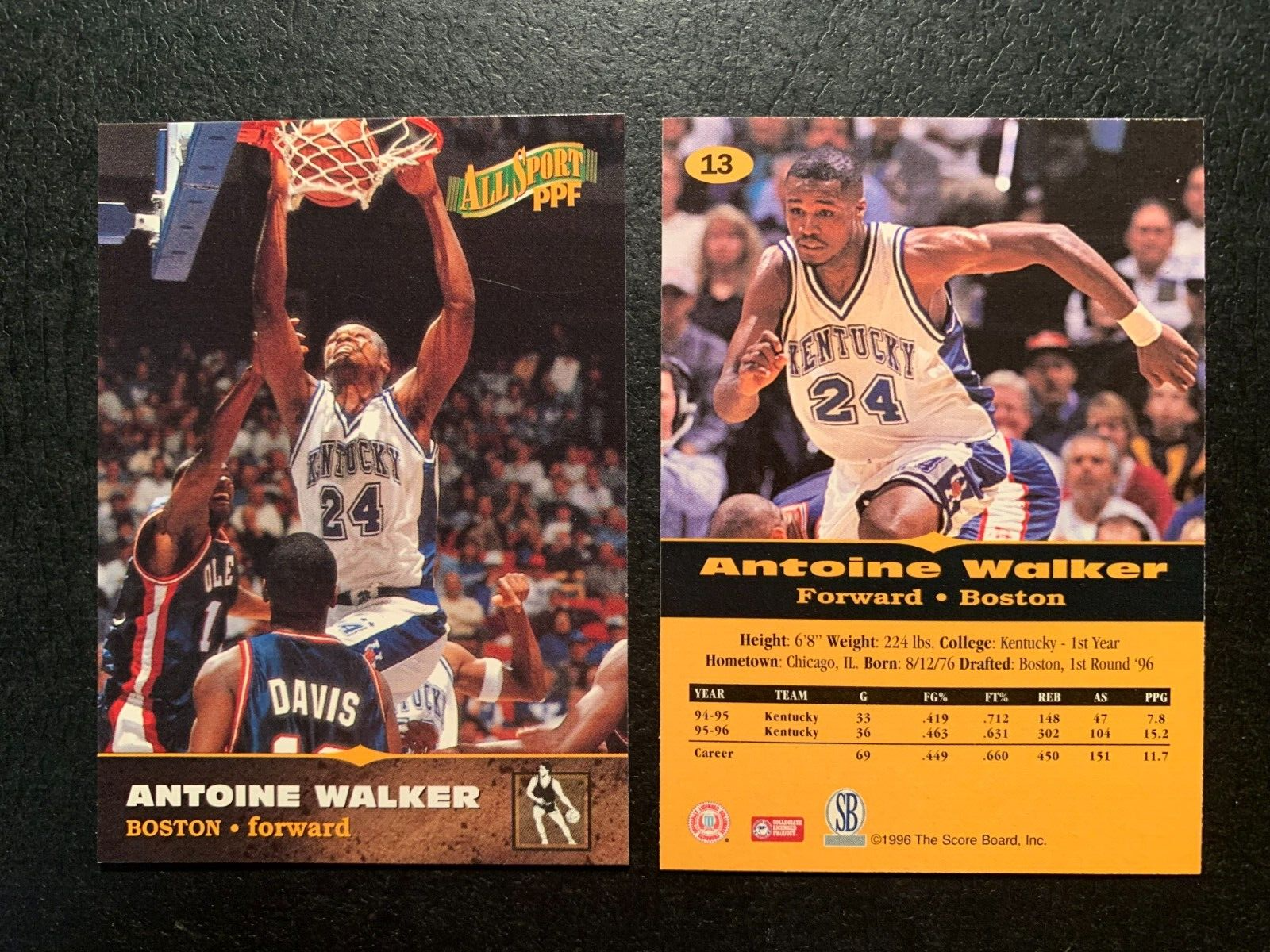
Antoine Walker entered the NBA as the 6th overall pick in the legendary 1996 NBA Draft, a class that included Kobe Bryant, Allen Iverson, and Ray Allen. At the time, the NBA utilized a structured rookie salary scale that dictated the earnings of first-round picks based on their draft position.
Walker’s initial contract with the Boston Celtics was a three-year deal worth approximately $5.3 million. In the mid-1990s, this was a significant sum for a 20-year-old, but it was merely the entry point for what would become a decade of massive earnings. During his rookie season (1996-1997), Walker earned $1.6 million, a figure that increased to $1.8 million and $2.1 million in the subsequent two years.
His performance during this period justified the investment. Walker immediately became a focal point of the Celtics' offense, averaging 17.5 points and 9.0 rebounds per game as a rookie. By his second season, he was an All-Star. This rapid ascent set the stage for one of the most significant contract negotiations in the franchise's history at that time.
The 1999 Max Extension: The $71 Million Milestone
The defining "Antoine Walker contract" is undoubtedly the six-year, $71 million extension he signed in late January 1999. This deal was struck immediately following the 1998-1999 NBA lockout, a period of labor strife that fundamentally changed how NBA contracts were structured.
The Impact of the 1999 Lockout
Before the 1999 lockout, there were fewer restrictions on individual player salaries (as seen in Kevin Garnett’s previous $126 million deal). The new Collective Bargaining Agreement (CBA) introduced "maximum salaries" based on years of service. Because Walker was entering his fourth year, he was eligible for the "middle-tier" max, which typically started at roughly 25% of the salary cap.
Terms and Structure
The Celtics, led by Rick Pitino, viewed Walker as the cornerstone of the franchise alongside a young Paul Pierce. The extension broke down into escalating annual payments:
- Initial Year (1999-2000): Approximately $9 million.
- Annual Raises: The contract included standard 12.5% annual raises (the maximum allowed for players with "Bird Rights").
- Total Valuation: By the final year of the deal (2004-2005), Walker’s annual salary had risen to over $14.6 million.
This contract reflected the "Point Forward" revolution Walker helped pioneer. At 6'9", his ability to handle the ball and shoot three-pointers made him a unique offensive weapon, though his shot selection would later become a point of contention among analysts and coaches.
Contract Movement: Trades and Salary Transfers
In the NBA, when a player is traded, their existing contract moves with them. Walker’s $71 million deal was traded multiple times, illustrating how high-value contracts serve as both assets and liabilities in league logistics.
The Trade to Dallas (2003)
In October 2003, just before the season began, the Celtics traded Walker and Tony Delk to the Dallas Mavericks for Raef LaFrentz, Chris Mills, and Jiri Welsch. At this point, Walker was still owed roughly $27 million over the final two years of his extension. The Mavericks, known for their high-spending owner Mark Cuban, absorbed Walker’s salary into their star-studded roster that already featured Dirk Nowitzki and Steve Nash.
The Atlanta Hawks Stint (2004-2005)
Walker’s time in Dallas was short-lived. In 2004, he was traded to the Atlanta Hawks. For the Hawks, acquiring Walker’s expiring contract was a strategic move to clear salary-cap space for the following summer. Walker played 53 games for Atlanta, maintaining high production levels, which led to a nostalgic return to Boston via trade in February 2005 to finish out the final year of his massive 1999 extension.
The 2005 Free Agency and the Miami Heat Deal
When Walker’s $71 million contract finally expired in 2005, he was 28 years old and still considered a valuable veteran contributor. He became a free agent during a summer that featured the largest trade in NBA history—a 13-player, five-team deal.
Walker signed a new five-year contract worth $38 million as part of a sign-and-trade that landed him with the Miami Heat. This contract was significantly smaller in annual value than his previous deal, reflecting the market's correction on his efficiency and the reality of his role transitioning from a primary "number one" option to a championship-level "sixth man" or specialized starter.
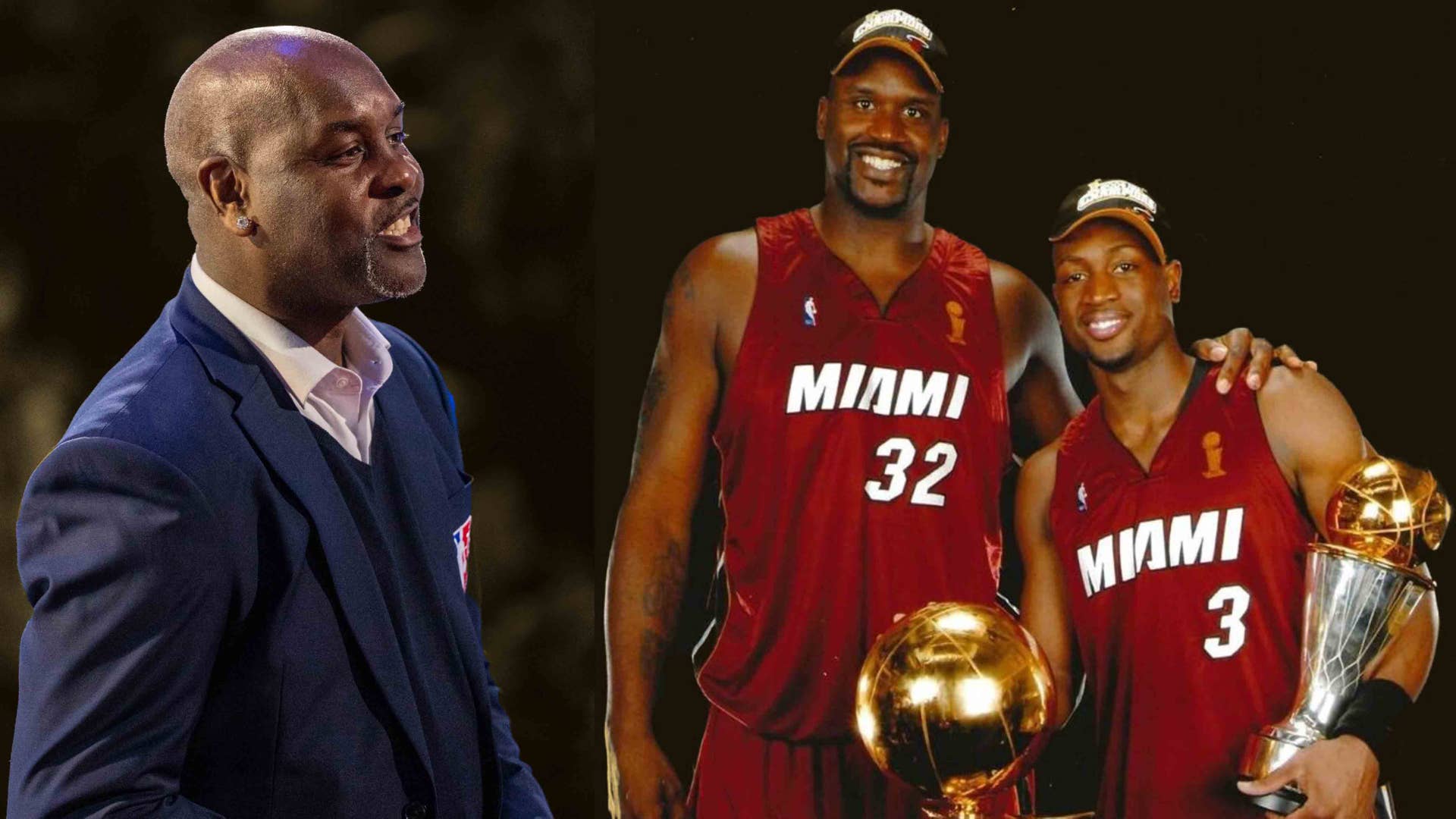
This contract proved to be his most successful from a competitive standpoint. In 2006, Walker played a pivotal role in helping the Miami Heat win the NBA Championship. His ability to space the floor provided the necessary room for Dwyane Wade and Shaquille O'Neal to dominate the paint.
The Final Years: Minnesota and the Buyout
By 2007, Walker’s production began to decline, and his remaining contract became a "trade chip." The Heat traded him to the Minnesota Timberwolves in a deal involving Ricky Davis and Mark Blount.
Walker’s tenure in Minnesota was brief and marked the beginning of the end of his NBA career. In 2008, after appearing in only 46 games for the Timberwolves, the team opted to move in a younger direction. This led to a contract buyout.
Understanding the Buyout
In an NBA buyout, a player and a team agree to terminate the contract early. The player usually agrees to take a slightly smaller lump sum of the remaining guaranteed money to become a free agent, while the team gains a roster spot and potentially minor cap relief. Walker received the bulk of his remaining $9 million salary for the 2008-2009 season, but he would never sign another significant NBA contract.
Antoine Walker Career Earnings Summary
The following table outlines the estimated salary earnings for Antoine Walker throughout his NBA career. Note that these figures represent gross salary and do not account for taxes, agent fees, or escrow withholdings.
| Season | Team | Annual Salary (Estimated) | Contract Status |
|---|---|---|---|
| 1996-97 | Boston Celtics | $1,603,000 | Rookie Scale |
| 1997-98 | Boston Celtics | $1,844,000 | Rookie Scale |
| 1998-99 | Boston Celtics | $2,085,000 | Rookie Scale |
| 1999-00 | Boston Celtics | $9,000,000 | 6yr/$71M Extension |
| 2000-01 | Boston Celtics | $10,130,000 | 6yr/$71M Extension |
| 2001-02 | Boston Celtics | $11,250,000 | 6yr/$71M Extension |
| 2002-03 | Boston Celtics | $12,375,000 | 6yr/$71M Extension |
| 2003-04 | Dallas Mavericks | $13,500,000 | 6yr/$71M Extension |
| 2004-05 | ATL / BOS | $14,625,000 | 6yr/$71M Extension |
| 2005-06 | Miami Heat | $6,400,000 | 5yr/$38M Contract |
| 2006-07 | Miami Heat | $7,000,000 | 5yr/$38M Contract |
| 2007-08 | Minnesota Timberwolves | $8,500,000 | 5yr/$38M Contract |
| 2008-09 | Minnesota (Buyout) | $9,300,000 | Final Guaranteed Year |
| Total | All Teams | $108,112,000 | Career Earnings |
Source: Historical salary data compiled from Basketball-Reference and archived NBA financial reports.
Bankruptcy and the Loss of the $108 Million Fortune
Despite a career that saw him earn over $100 million in gross salary, Antoine Walker famously filed for Chapter 7 bankruptcy in 2010. The bankruptcy filing listed $12.7 million in liabilities against just $4.3 million in assets.
Factors Leading to Financial Collapse
The dissolution of Walker's contract earnings was not the result of a single event but a combination of systemic issues:
- Support for "The Entourage": Walker estimated he supported up to 70 friends and family members, providing them with cars, homes, and monthly stipends.
- Real Estate Losses: The 2008 global financial crisis devastated Walker’s real estate firm, Walker Ventures. He had personally guaranteed numerous loans that went into default when the market crashed.
- Gambling: Walker’s affinity for high-stakes gambling in Las Vegas led to significant debts. In 2009, he faced criminal charges related to $770,000 in unpaid gambling debts to three different casinos.
- Lifestyle Inflation: Maintaining multiple mansions, a fleet of luxury cars (including a customized Maybach), and designer clothing drained his liquid cash reserves.
The bankruptcy served as a turning point. Walker was forced to sell his 2006 Championship ring for $21,750 to help satisfy creditors.
Life After the NBA: Financial Literacy and Consulting (2026 Perspective)
As of 2026, Antoine Walker has successfully rebuilt his life, not by regaining his $100 million fortune, but by leveraging his experience to educate others. He has spent the last decade working as a financial literacy consultant, specifically targeting young athletes entering the professional ranks.
Walker often speaks about the "mirage" of the NBA contract. He explains that a $71 million contract does not result in $71 million in the bank. After taxes (roughly 40-50%), agent fees (3-4%), and NBA escrow (10%), a player often sees less than half of the headline figure. Walker’s mission in 2026 is to ensure that modern players, who are now signing contracts exceeding $300 million, do not repeat the mistakes of the early 2000s.
His autobiography, Gone in a Flash, remains a staple in the NBA's rookie transition program. He emphasizes the importance of saying "no" to family and friends and the dangers of personal guarantees in business deals—lessons he learned the hard way through the rise and fall of his own contracts.
Common Mistakes in Evaluating NBA Contracts
When analyzing the "Antoine Walker contract" or similar deals, fans and media often fall into several traps:
- Ignoring the Net vs. Gross: As Walker frequently points out, the published contract number is the gross amount. A $100 million career often nets approximately $45 million after mandatory expenses.
- The Escrow System: The NBA retains 10% of every player's check in escrow to ensure the 50/50 split of Basketball Related Income (BRI) between owners and players. If the league underperforms, players may not get that money back.
- Guarantees: Unlike the NFL, NBA contracts are generally fully guaranteed for skill, injury, and cap. This is why the Celtics were obligated to pay Walker the full $71 million regardless of his on-court performance or trades.
Frequently Asked Questions
What was the largest single contract Antoine Walker signed?
The largest contract was the 1999 extension with the Boston Celtics, valued at approximately $71 million over six years. This deal made him one of the highest-paid forwards in the league at the time.
How much did Antoine Walker make in total in the NBA?
His total career earnings from NBA salaries were approximately $108,112,000. This does not include endorsement deals with brands like Adidas, which likely added several million more to his peak earnings.
Did Antoine Walker lose all his money?
Yes, in 2010, Walker filed for Chapter 7 bankruptcy. He has since stated that he went through the entire $108 million. He successfully exited bankruptcy in 2012 and has spent the years since then working as a speaker and consultant.
Why was Antoine Walker traded so many times during his big contract?
Walker remained a productive player, but his high salary made him a primary tool for teams looking to match salaries in large trades. His "expiring contract" in 2004-2005 was particularly valuable for teams looking to clear salary-cap space.
Does Antoine Walker still have his 2006 Championship ring?
No. As part of his bankruptcy proceedings, Walker was forced to sell his Miami Heat championship ring. It was sold to a private buyer to pay off a portion of his debts.
Practical Recommendations for Tracking Athlete Contracts
For those interested in the financial evolution of professional sports, understanding a player's contract history requires looking beyond the headlines:
- Use Verified Databases: Sites like Spotrac and Basketball-Reference provide historical data that accounts for buyouts and trades.
- Consider the Era: A $71 million contract in 1999 was equivalent to a "Supermax" deal today when adjusted for the percentage of the team's total salary cap.
- Monitor the CBA: Every time the NBA signs a new Collective Bargaining Agreement, the rules for contracts change. Walker's career was defined by the 1999 CBA, which introduced the first individual player salary caps.