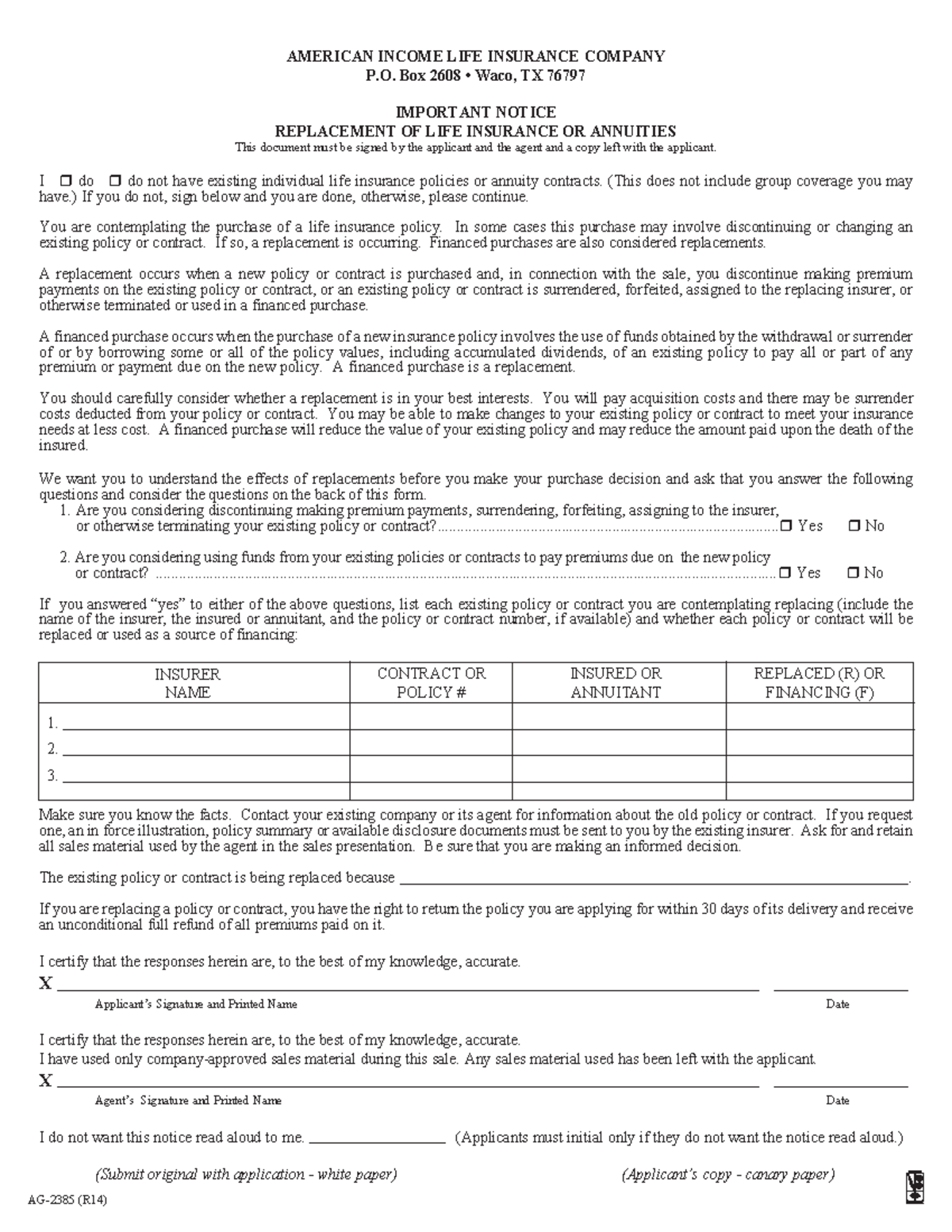
Canceling an American Income Life (AIL) insurance policy requires submitting a written request directly to the company. Policyholders must typically provide their policy number, personal identification details, and a clear statement of intent to terminate coverage. Because life insurance contracts are legally binding financial agreements, it is essential to follow the specific procedures outlined in your policy document to ensure the cancellation is processed correctly and to avoid unintended premium charges.
Understanding the Contractual Nature of AIL Policies
American Income Life Insurance Company, a subsidiary of Globe Life Inc., specializes in supplemental life insurance, often marketed to labor unions, credit unions, and associations. When you sign an AIL insurance contract, you are entering into a legal agreement that outlines the specific terms under which coverage is provided, the premiums due, and the conditions for termination.
Unlike a subscription service that can be toggled off via an online dashboard, a life insurance policy is a formal financial product regulated by state insurance departments. Because these policies may accumulate cash value (depending on the specific type of policy, such as whole life versus term life), the company requires verifiable proof of the policyholder's identity before honoring a cancellation request.
It is important to recognize that AIL policies are often sold through a network of independent agents. While these agents assist with the initial application and explanation of benefits, the administrative task of canceling a policy usually rests with the corporate office or the dedicated policyholder services department. Relying solely on an agent to cancel your policy can sometimes lead to delays; therefore, direct communication with the company is the most reliable path.
Prerequisites Before Canceling Your Coverage
Before you initiate the cancellation process, you must gather the necessary documentation and verify the status of your coverage. Failing to have these details prepared can result in prolonged correspondence and potential frustration.
- Policy Number: This is the most critical piece of information. You can find this on your original policy document, your initial application receipt, or on any billing statement you have received.
- Proof of Identity: You will likely need to provide your full legal name, current address, and the last four digits of your Social Security number to verify that you are indeed the policyholder.
- Verification of Policy Type: Determine if your policy is a term life or a whole life plan. If you have a whole life policy, it may have accrued a "cash surrender value." If you cancel a policy with cash value, you are entitled to receive those funds back, minus any surrender charges outlined in your contract.
- Automatic Payment Information: If you are paying your premiums via automatic bank draft or credit card, you must be prepared to stop those payments. Simply canceling the policy may not automatically stop an automated bank draft if the timing of the request coincides with a scheduled withdrawal.
Step-by-Step Cancellation Process
While procedures can occasionally shift based on internal administrative updates, the standard methodology for canceling an American Income Life policy involves a formal, written request.
1. Draft a Formal Letter of Cancellation
The most effective way to cancel your policy is through a signed, written statement. This creates a paper trail that serves as evidence of your request. Your letter should include:
- Your full name as it appears on the policy.
- The policy number.
- A clear statement: "I wish to cancel my policy effective immediately."
- Your current contact information (phone number and email address).
- Your signature and the date of signing.
2. Confirm the Submission Method
Check your specific policy document for the contact information for the "Policyholder Services" department. Generally, you can submit your request via certified mail or, in some cases, through an official secure portal if one is provided for your specific region. Sending via certified mail with a return receipt requested is highly recommended, as it provides proof that the company received your request on a specific date.
3. Request Written Confirmation
Once you have submitted your request, follow up by phone or email to ensure that the request has been received and processed. Ask the representative for a written confirmation letter or an email stating that the policy has been terminated and that no further premiums will be drafted. Keep this confirmation in your permanent financial records.
4. Stop Automatic Payments
If your premiums were being deducted via Electronic Funds Transfer (EFT), contact your bank after you receive confirmation of the cancellation. Inform them that the authorization for American Income Life to draft your account has been revoked. While AIL is obligated to stop the drafts, notifying your financial institution acts as a secondary layer of protection against unauthorized future charges.
Comparing Life Insurance Cancellation Types
When considering cancellation, it is helpful to understand the implications based on the type of policy you hold.
| Policy Type | Financial Implication | Considerations |
|---|---|---|
| Term Life | No refund of premiums | Coverage simply expires upon cancellation; no cash value. |
| Whole Life | May provide a payout | Potential for cash surrender value; check for surrender fees. |
| Universal Life | Varies by performance | Cash value is tied to internal account interest; fees may apply. |
Risks and Considerations Before Canceling
The decision to cancel your life insurance should be made with a full understanding of the long-term financial consequences. Once a policy is canceled, restoring that coverage is rarely as simple as reversing the cancellation.
- Loss of Eligibility and Rating: If you choose to re-apply for life insurance in the future, your premiums will be based on your age at the time of the new application. Because premiums increase as you age, you will likely pay significantly more for a new policy than you were paying for your existing one.
- Health Status Changes: Life insurance underwriting requires a medical assessment. If you have developed health issues since your original policy was issued, you may find yourself in a higher risk category, leading to higher premiums or even denial of coverage.
- The "Free Look" Period: If you have very recently purchased the policy, check your contract for a "free look" period (usually 10 to 30 days, depending on the state). During this window, you can cancel your policy and typically receive a full refund of any premiums paid, provided you have not filed a claim.
Troubleshooting Common Issues
If you find that the company continues to bill you after you have submitted a formal cancellation, follow these steps to resolve the discrepancy:
- Locate Your Proof of Submission: Reference the certified mail receipt or the confirmation email you received from the initial cancellation request.
- Escalate the Communication: Call the AIL customer service line and ask to speak with a supervisor. Provide the date of your initial request and the proof of submission.
- File a Complaint with the State Insurance Commissioner: Every state has a Department of Insurance that regulates companies like AIL. If the company fails to process your cancellation in accordance with your contract or state law, you can file a formal consumer complaint through your state's insurance regulatory website. This often forces the company to audit the account and rectify the error immediately.
- Review Your Bank Statements: If unauthorized charges continue, present your documentation to your bank’s fraud or dispute department. They may be able to block further transactions from that specific merchant ID.
Assessing the Need for Replacement Coverage
If you are canceling your AIL policy because you are dissatisfied with the cost or the terms, do not simply leave yourself without coverage if you have dependents who rely on your income. Before finalizing the cancellation of your current policy, it is often prudent to secure a new policy first. This strategy, known as "overlapping coverage," ensures that you are never left without a safety net during the transition period.
Once your new policy is approved, delivered, and the first premium has been paid, you can proceed with canceling the AIL policy. This approach minimizes the risk of a "lapse in coverage," which could occur if the new policy underwriting process takes longer than anticipated.
Frequently Asked Questions
Can I cancel my American Income Life policy over the phone? While you may be able to initiate the conversation over the phone, AIL and most insurance carriers require a written signature to process a cancellation. Always follow up a phone call with a written, signed request to ensure the process is legally finalized.
Will I get a refund if I cancel my policy mid-month? Refund policies vary depending on the terms of your contract and the state in which you live. Generally, if you pay in advance, you may be entitled to a pro-rated refund for the remainder of the period, but you should not assume a refund is guaranteed. Consult your policy document or ask a customer service representative during the cancellation process.
What happens to my cash value if I have a whole life policy? If your policy has accumulated cash value, you are entitled to the surrender value as defined in your contract. Be aware that many policies have surrender charges in the early years, which can significantly reduce the amount you receive. Request a "surrender quote" from AIL to see the exact amount you would be entitled to upon cancellation.
Can I cancel the policy just by stopping my premium payments? While stopping payments will eventually lead to the policy lapsing, it is not a recommended way to cancel. A lapse can sometimes trigger "automatic premium loan" provisions where the company uses your policy's cash value to pay the premiums without your knowledge, which can eventually drain the policy’s value entirely. It is always better to formally terminate the contract to ensure a clean break.
Does canceling my policy impact my credit score? No. Life insurance premiums are not debt in the traditional sense, and failing to pay them or canceling a policy does not report to credit bureaus. However, it does permanently forfeit the death benefit and any other riders associated with that policy.
Next Steps for Policyholders
To proceed with the cancellation, start by retrieving your policy documents to identify your policy number and the contact address for the administrative office. Draft your formal letter of cancellation today, ensure it includes your signature, and send it via certified mail. By taking these steps, you protect yourself from ongoing billing and ensure that your request is handled with the formality required for financial service agreements. If you are uncertain about the financial implications regarding cash value or tax consequences, consult with a qualified financial advisor before mailing your request.