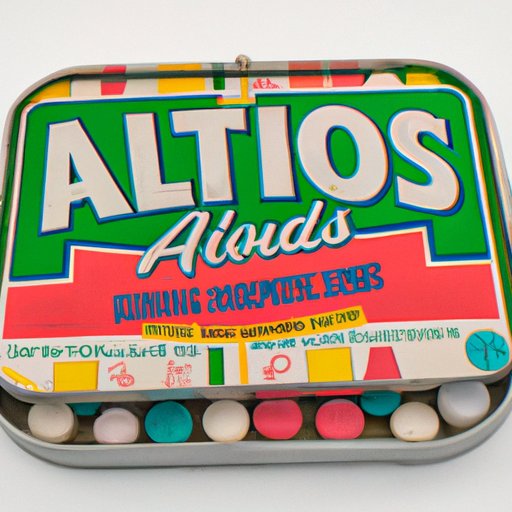
The Altoids Peach flavor, specifically part of the "Altoids Sours" line, was a hard candy product famous for its intense tartness and signature round tin. Although discontinued by Mars, Inc. in 2010, it remains a cult classic in 2026, frequently cited by confectionery enthusiasts for its unique balance of artificial peach aromatics and sharp malic acid coating.
The Identity and Heritage of Altoids Peach Sours
To understand the Altoids Peach flavor, one must first understand the era that birthed it. In the early 2000s, the confectionery market experienced a "sour revolution." Brands were competing to see which could provide the most bracing, mouth-puckering experience. Altoids, a brand owned by Callard & Bowser (and later Mars/Wrigley) with a history dating back to the 1780s, decided to pivot from its "Curiously Strong" mints to "Curiously Strong" sours.
The Peach flavor was introduced as part of the initial expansion of the Sours line, which also included Citrus, Tangerine, Apple, and Raspberry. While Tangerine often took the spotlight as the most popular, Peach developed a dedicated following among those who preferred a slightly more floral, stone-fruit finish to their sour candy experience.
Packaging and Visual Presentation
The Altoids Peach Sours were instantly recognizable by their packaging. Unlike the rectangular tins used for Peppermint or Wintergreen mints, the Sours were housed in circular, vibrantly colored tins.
- The Tin Design: The Peach tin featured a warm, orange-gold hue that signaled the flavor inside. The lid was typically a "press-on" style that provided a satisfying tactile click when closed.
- The Candy Aesthetic: Each candy was a small, pill-shaped disc. They were not smooth; instead, they were coated in a crystalline dust of sugar and acid, giving them a frosted appearance. This coating was the "first strike" of sourness that consumers encountered.
- Portability: The round tin became a staple of early 2000s "Everyday Carry" (EDC) culture. Long after the candies were finished, the tins were repurposed for holding guitar picks, sewing kits, or small electronic components—a legacy that continues in DIY circles even in 2026.
The Flavor Profile: A Deep Dive into Peach
The Altoids Peach flavor was distinct because it did not attempt to mimic a fresh, organic peach. Instead, it leaned into the "confectionery peach" profile—a specific blend of esters that created a nostalgic, candy-aisle aroma.
The Initial Sour Strike
The primary experience of eating an Altoids Peach Sour was the immediate chemical reaction on the tongue. The candies were heavily coated in malic acid. Unlike citric acid, which provides a sharp, quick zap (like a lemon), malic acid provides a lingering, deep tartness that mimics the "bite" found in the skin of a green apple or a tart peach.
For the first 15 to 30 seconds, the flavor was almost exclusively sour. This was intentional, fitting the "Curiously Strong" brand promise. Users often reported a "sandpaper" sensation on the tongue if they consumed multiple candies in a single sitting, a result of the acidic crystals and the rough texture of the hard candy base.
The Floral Peach Transition
Once the outer acidic layer dissolved, the secondary flavor profile emerged. The Peach variant was noted for its "fuzzy" aromatic qualities. It used gamma-undecalactone, a common compound in peach flavorings, which provides a creamy, fruity, and slightly floral note.
Because the candy was a "hard" candy (boiled sugar), the flavor release was slow. This allowed the sweetness of the sugar base to eventually temper the initial sourness, resulting in a finish that was surprisingly smooth compared to the aggressive start. Compared to the Tangerine flavor, which remained sharp throughout, the Peach flavor was considered the "mellowest" of the Sours line.
Technical Specifications and Ingredients
While the exact proprietary formula remains a trade secret of Mars, Inc., the general composition of Altoids Peach Sours followed the standard hard candy manufacturing process known as "panning" and "acid sanding."
| Component | Detail |
|---|---|
| Base Sweetener | Corn syrup and Sugar (Sucrose) |
| Acidulants | Malic Acid (Primary), Citric Acid (Secondary) |
| Flavoring | Natural and Artificial Peach Flavors |
| Coloring | Yellow 5, Red 40 (standard for 2004-2010 production) |
| Texture | Hard-boiled sugar with crystalline coating |
| Discontinued Year | 2010 |
| Manufacturer | Mars, Inc. (formerly Wrigley/Callard & Bowser) |
The Role of Malic Acid
Malic acid was the "secret sauce" of the Peach Sours. It occurs naturally in stone fruits, including peaches, but at much lower concentrations. By concentrating this acid on the surface of the candy, Altoids created a sensory bridge between the "idea" of a tart fruit and the reality of a shelf-stable confection. The acidity also served as a preservative, ensuring the candies didn't lose their "kick" over time.
Why Were Altoids Peach Sours Discontinued?
In 2010, the entire Altoids Sours line was pulled from the market. In 2026, this remains one of the most frequently asked questions in the snack world. The decision was not based on a single factor but a combination of market shifts and production logistics.
1. Declining Sales Volume
While the Sours had a vocal fan base, they never achieved the consistent, high-volume sales of the core Altoids Mint line. The mints (Peppermint, Spearmint, Wintergreen) are viewed as functional breath fresheners, whereas the Sours were viewed as "recreational" candy. In the competitive landscape of the mid-2000s, recreational candies had shorter lifecycles.
2. Production Complexity
The round tins were more expensive to manufacture and fill than the standard rectangular tins. The "acid sanding" process—applying the sour coating—also required specialized equipment that differed from the standard mint pressing machines. When Mars acquired Wrigley (and by extension Altoids), they streamlined their portfolio, focusing on high-margin, high-volume products.
3. The "Mouth Sensitivity" Issue
Though largely anecdotal, there were frequent consumer complaints regarding the intensity of the sours. The combination of high malic acid content and the abrasive texture could lead to temporary tongue irritation or "burning" if consumed in large quantities. While not a safety risk that triggered a recall, it may have limited the product's "snackability" compared to milder competitors.
The Aftermarket and Modern Replicas in 2026
Since their discontinuation, Altoids Peach Sours have become a "holy grail" for nostalgic collectors. As of 2026, unopened tins from the original production run are extremely rare and generally considered unsafe for consumption due to the degradation of the oils and sugars over nearly two decades.
The Collector’s Market
Sealed tins of Altoids Peach Sours occasionally appear on auction sites like eBay. Collectors prize them more for the aesthetic of the tin and the "time capsule" nature of the product than the candy itself. Prices for a single sealed tin have been known to reach significant amounts, driven by "nostalgia-bait" social media trends.
The Rise of "Public Domain" Sours
Because Mars showed no interest in reviving the original formula, independent candy makers have stepped in. Most notably, companies like Lofty Pursuits (a historical confectionery shop) have gained fame for reverse-engineering the Altoids Sours.
These replicas, often referred to as "Public Domain Sours," attempt to match the malic acid intensity and the specific peach aromatics of the original. For enthusiasts in 2026 looking to relive the experience, these artisanal recreations are the closest available match to the 2004-2010 Peach Sours.
Practical Performance: How They Compared to Peers
In the hierarchy of the Altoids Sours family, the Peach flavor occupied a specific niche.
- Peach vs. Tangerine: Tangerine was the "flagship." It was brighter and more acidic. Peach was the "sophisticated" alternative, offering a deeper, more complex fruit flavor that felt less like a citrus explosion and more like a dessert.
- Peach vs. Apple: The Apple flavor was famously polarizing, often described as tasting like a "sour cocktail." Peach was more universally liked because the peach flavor naturally pairs well with high acidity.
- Peach vs. Citrus: Citrus was a blend of lemon and lime. It was the most "basic" of the line. Peach offered a more distinct identity that couldn't be easily replicated by other brands like Lifesavers or Jolly Ranchers.
Common Mistakes and Misconceptions
When researching or discussing Altoids Peach Sours in 2026, several misconceptions often arise:
- "They are still in production somewhere": No. Mars, Inc. has officially confirmed multiple times that there is no active production of Altoids Sours in any global market. Any "new" listings are either old stock or third-party replicas.
- "Altoids Arctic is the same thing": After the Sours were discontinued, Altoids launched the "Arctic" line. While these are small and come in tins, they are sugar-free mints, not the sugar-based, acid-coated hard candies that defined the Peach Sours.
- "The flavor was natural": While the tins often highlighted "Natural Flavor," the primary experience was driven by a sophisticated blend of artificial esters and high-intensity organic acids. This was a product of food science, designed for impact rather than organic accuracy.
Frequently Asked Questions
Were Altoids Peach Sours sugar-free?
No, the original Altoids Sours, including the Peach flavor, were made with real sugar and corn syrup. This sugar base was essential for creating the hard candy structure and providing a counterbalance to the extreme malic acid coating. Modern "Arctic" Altoids are often sugar-free, which is one reason they fail to replicate the exact texture and "crunch" of the original Sours.
Can you still buy the original Peach flavor tins?
While you can find the empty tins on secondary markets like eBay or Etsy, finding a sealed, "fresh" tin is virtually impossible in 2026. Any remaining sealed tins are over 15 years old, and the candy inside is likely crystallized, sticky, or otherwise unpalatable. Most buyers purchase these for the tin itself or as a display piece.
Why did my tongue hurt after eating them?
The "hurt" was caused by the malic acid coating. Malic acid has a low pH, and when it sits on the delicate tissue of the tongue, it can cause mild chemical irritation. Additionally, the crystalline structure of the coating was abrasive. Consuming multiple candies in a short period essentially "exfoliated" the top layer of the tongue, leading to sensitivity.
Did Altoids Peach Sours contain any allergens?
The primary ingredients were sugar-based and did not contain common allergens like nuts, dairy, or gluten. However, they were produced in facilities that may have handled other products. For those with extreme sensitivities to artificial dyes, it is worth noting that they contained Yellow 5 and Red 40.
Are there any current brands that taste like Altoids Peach Sours?
As of 2026, the most accurate flavor match is produced by Lofty Pursuits under their "Sour" line. Other boutique "sour drop" candies available in specialty candy shops may offer a similar malic-acid-heavy profile, but very few match the specific "Peach" aromatic blend used by Altoids.
Final Recommendation: Navigating the Legacy
For those seeking the Altoids Peach flavor experience in 2026, the best course of action is to look toward artisanal candy makers who specialize in "retro" recreations. While the original tins are beautiful collectibles, the candy inside is a relic of the past.
The Peach flavor stands as a testament to a specific moment in confectionery history when "strength" was the ultimate marketing tool. It remains a benchmark for how fruit flavors can be combined with aggressive acid profiles to create a memorable, if slightly painful, sensory experience. If you are a collector, keep your tins; if you are a fan of the flavor, support the independent confectioners keeping the "Public Domain" versions alive.