Your Allstate auto insurance premium is the periodic cost you pay to maintain active coverage, calculated based on a complex synthesis of your personal profile, vehicle characteristics, regional risk factors, and chosen policy limits. By understanding the specific variables that influence your rate in 2026, you can take proactive steps to manage costs while ensuring your financial protection remains adequate for your needs.
The Anatomy of an Auto Insurance Premium
An auto insurance premium is not a static fee but a dynamic calculation of actuarial risk. When Allstate or any major insurer calculates a premium, they are essentially estimating the likelihood that you will file a claim and the potential severity of that claim. This process begins with foundational data points and extends into highly specific behavioral metrics.
The base premium is determined by the "risk pool" to which you are assigned. This pool consists of individuals with similar driving profiles, locations, and vehicle types. If members of your specific pool demonstrate a high frequency of accidents or total loss claims, the premiums for everyone in that cohort tend to rise. Conversely, your individual adjustments—such as a clean driving record or the installation of safety equipment—allow Allstate to move you to a more favorable risk tier within that pool.
Core Factors Influencing Your Rate
While the specific mathematical algorithms used by Allstate are proprietary, the industry utilizes several universal benchmarks. Understanding these will help you identify which levers you can pull to potentially lower your premiums.
Driving History and Personal Profile
Your history as a driver is often the single most significant factor in your premium. Accidents, traffic violations, and DUIs stay on your record for a predetermined number of years, typically ranging from three to five depending on state regulations. During this time, these incidents function as red flags that categorize you as a "high-risk" driver. In 2026, the absence of such incidents remains the most effective way to secure the lowest possible base rates.
Vehicle Specifications
The vehicle you drive dictates the cost of potential repairs and the risk of theft. Allstate considers the "Safety Rating," "Repairability Index," and "Theft Rate" of your specific make and model. A vehicle with expensive-to-replace specialized sensors, high-performance engines, or a high record of catalytic converter theft will naturally carry a higher premium than a standard commuter vehicle with widely available, inexpensive parts.
Location and Regional Risk
Where you garage your vehicle significantly impacts your premium. Insurance is highly regulated at the state level, and the laws governing minimum liability requirements vary by jurisdiction. Beyond state laws, Allstate analyzes localized data:
- Population Density: Higher traffic congestion leads to more minor collisions.
- Weather Patterns: Regions prone to hail, flooding, or wildfires necessitate higher premiums to cover comprehensive claims.
- Crime Rates: High-theft areas result in higher comprehensive coverage costs.
Policy Structure and Coverage Limits
The coverage options you select are the most direct influence you have on your monthly or semi-annual bill. Every policy has a "declarations page" that outlines your limits. Choosing the minimum state-required liability often leads to the lowest premium, but it also leaves you financially vulnerable if an accident exceeds those limits.
| Coverage Type | Purpose | Impact on Premium |
|---|---|---|
| Liability | Covers injuries/damage caused to others. | Mandatory; price scales with limits. |
| Collision | Repairs your vehicle after an accident. | Optional/Required for loans; high impact. |
| Comprehensive | Covers theft, fire, and weather damage. | Optional/Required for loans; moderate impact. |
| Uninsured Motorist | Protects you from hit-and-runs or uninsured drivers. | Recommended; low-to-moderate impact. |
Increasing your deductible is a standard method to lower your premium. By agreeing to pay $1,000 instead of $500 out-of-pocket in the event of a claim, you assume more of the risk, which allows Allstate to reduce your recurring premium.
The Role of Telematics and Discounts
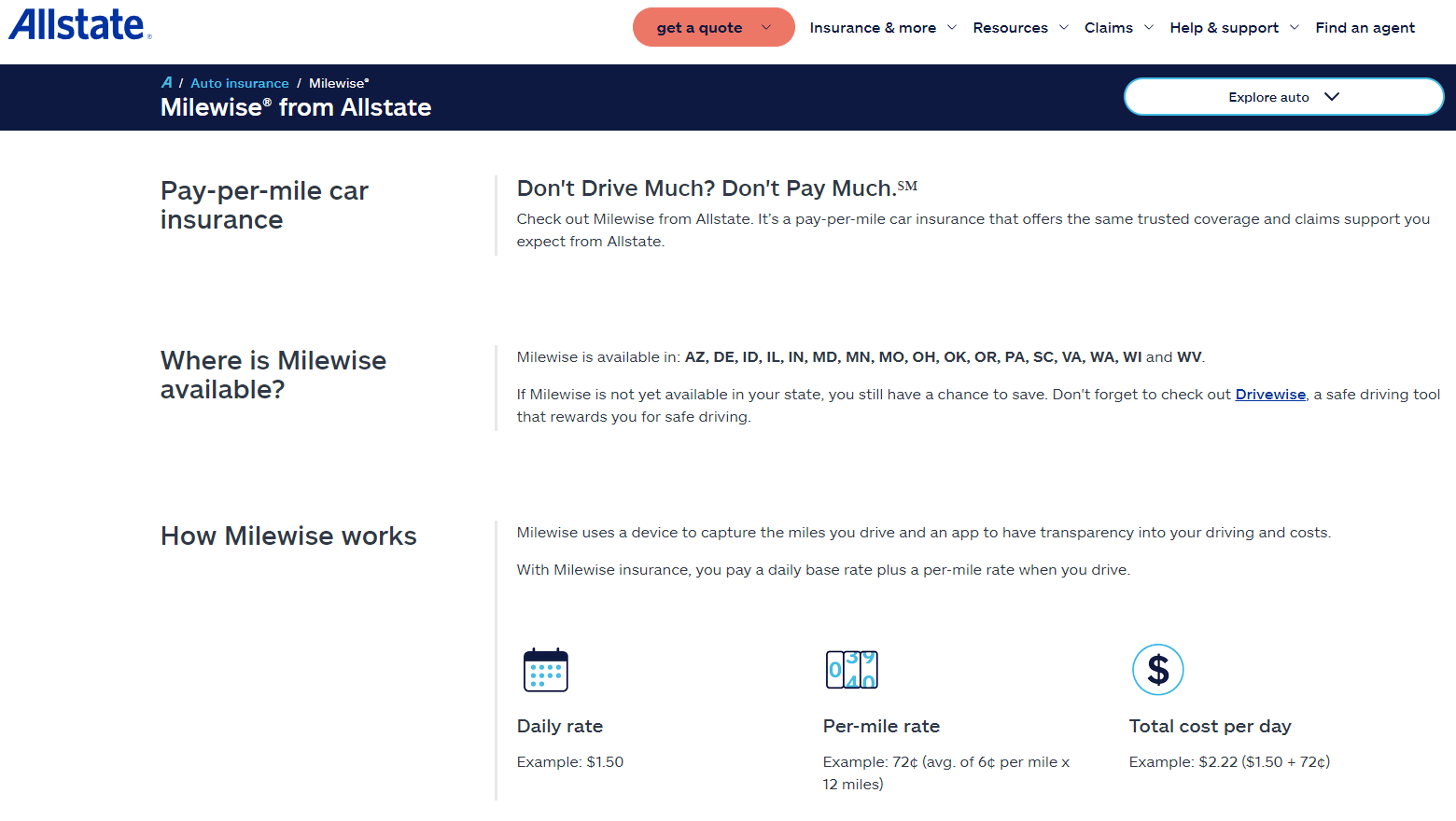
In recent years, the industry has shifted toward personalized insurance products. Allstate utilizes programs like Milewise and Drivewise to integrate real-time driving data into the premium calculation process.
- Drivewise: This program tracks driving habits such as high-speed braking, nighttime driving, and acceleration. If the data shows you are a safe driver, you can earn discounts that apply directly to your renewal premium.
- Milewise: This is a pay-per-mile program. It is particularly effective for those who work from home or have a very short commute. Instead of a flat premium, your bill consists of a base rate plus a small daily cost per mile driven.
Beyond telematics, standard discounts remain a cornerstone of cost management. Always verify with your Allstate agent that you have applied for all eligible credits, which may include:
- Multi-Policy Discount: Combining auto with homeowners or renters insurance.
- Student Discounts: For young drivers with high grade point averages.
- Safety Feature Discounts: For vehicles equipped with factory-installed anti-lock brakes, airbags, and anti-theft devices.
- FullPay Discount: Paying the entire six-month or annual premium upfront rather than in installments.
Troubleshooting Premium Fluctuations
If you notice an unexpected increase in your premium upon renewal, it is rarely due to a single administrative error. Start by reviewing your latest renewal offer, which Allstate typically sends 30 to 45 days prior to the expiration of your current policy.
Common reasons for a rate hike include:
- Inflationary Adjustments: The rising cost of auto parts and labor is a national trend in 2026. Insurers adjust base rates to account for the increased cost of settling claims.
- Rate Filings: Insurance companies must file for rate changes with state regulators. If the state approves an increase for the entire market, your policy may be impacted regardless of your individual driving record.
- Changes in Credit Rating: In most states, your credit-based insurance score (which is different from a standard lending credit score) is a factor in pricing. If your score has dropped, your premium may be adjusted upward at the next renewal.
Frequently Asked Questions
Why did my premium increase even though I haven't had an accident? Premiums are influenced by group risk, not just individual behavior. If the overall cost of claims in your zip code increases—due to increased local accident frequency or higher costs for vehicle repairs—the base rates for the entire area will rise to ensure the company remains solvent.
Can I change my coverage mid-policy to lower my premium? Yes. You can contact your agent to adjust your limits, remove optional coverages (like roadside assistance or rental reimbursement), or increase your deductibles at any time. However, be aware that changes typically take effect at the start of the next billing cycle or are prorated based on your state's regulations.
Does my credit score affect my Allstate auto insurance premium? In many jurisdictions, yes. Insurers use "insurance-based credit scores," which correlate credit history with the likelihood of filing a claim. You can improve this score over time by paying bills on time and keeping your credit utilization low. Note that some states explicitly prohibit the use of credit scores in auto insurance pricing.
What is the difference between a quote and an actual premium? A quote is an estimate based on the information provided during the application. An actual premium is the binding contract rate issued after Allstate verifies your data, including your driving history (via the Motor Vehicle Report) and your insurance history (via the C.L.U.E. report).
Professional Recommendation
To manage your Allstate auto insurance premium effectively, perform an "Annual Coverage Review" with your agent. Do not wait for a renewal notice to ask questions. Every 12 months, confirm that the mileage estimates for your vehicle are accurate, verify that your household has all possible bundling discounts applied, and assess whether your current deductible level aligns with your liquid savings. If you find your premium is consistently higher than market averages for your demographic, ask for a "coverage audit" to ensure you are not paying for expensive add-ons—such as excessive rental reimbursement or towing—that you may no longer need.