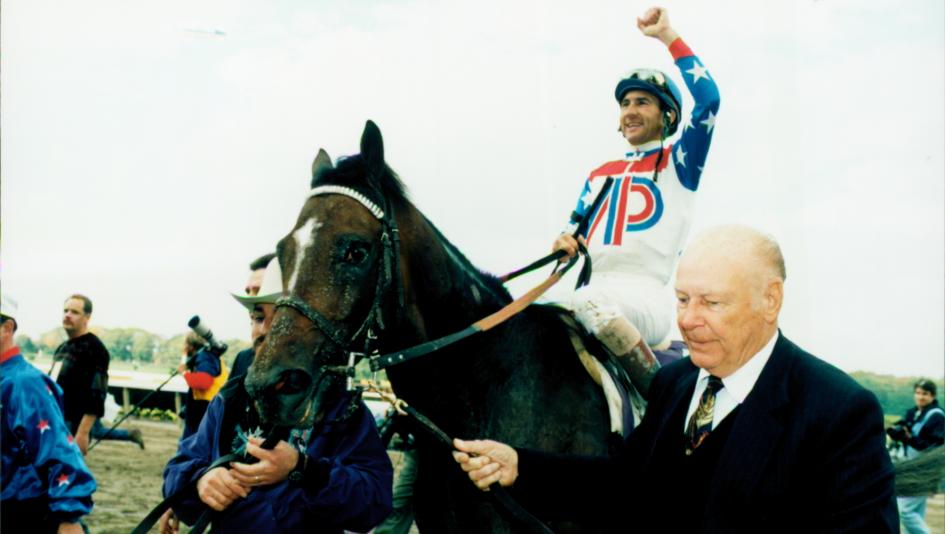
At the time of his passing in 2000, Allen Paulson’s net worth was estimated to be between $400 million and $500 million. As the primary force behind Gulfstream Aerospace and a titan of Thoroughbred horse racing, his fortune was built through aggressive aerospace acquisitions, pioneering jet design, and a world-class breeding operation.
Allen E. Paulson remains one of the most significant figures in 20th-century American industry. His journey from a penniless teenager during the Great Depression to the head of a global aviation empire is a classic narrative of American entrepreneurship. However, the true complexity of the "Allen Paulson net worth" discussion lies not just in his peak earnings, but in the massive legal and tax battles that followed his death, which continued to shape the distribution of his assets well into the 21st century.
The Early Ventures: From Mechanic to Mogul
Allen Paulson did not inherit wealth; he engineered it. Born in Clinton, Iowa, in 1922, Paulson moved to California as a teenager with virtually no financial resources. His initial entry into the workforce involved cleaning hotel rooms and selling newspapers, but his mechanical aptitude led him to a job as a mechanic for TWA in 1941.
His service in the U.S. Army Air Corps during World War II provided the technical foundation that would later define his career. Upon returning to civilian life, he began a small-scale operation buying surplus aircraft engines. This venture evolved into California Airmotive in 1951.
The Conversion Business
The initial accumulation of Paulson's wealth came from a brilliant realization: there was a massive surplus of military aircraft after WWII and the Korean War that could be repurposed for the burgeoning commercial and private sectors. California Airmotive became a leader in converting these airframes. By the 1960s, Paulson was not just a mechanic; he was a sophisticated dealer in heavy metal. He purchased used Lockheed Constellations and Douglas DC-7s, refurbishing them for freight and passenger transport. This period established his reputation for "buying low and selling high" in the capital-intensive world of aviation.
The Gulfstream Acquisition: Creating the Crown Jewel
The defining moment for Allen Paulson’s net worth occurred in 1978. At the time, the Grumman American aviation plant in Savannah, Georgia, was struggling. Paulson took a monumental risk, purchasing the company for $52 million. He renamed it Gulfstream Aerospace, and under his leadership, it became the gold standard for corporate travel.
Innovation and Market Dominance
Paulson was more than a financier; he was a visionary who understood that the global elite needed faster, longer-range travel. He oversaw the development of the Gulfstream III and Gulfstream IV. These aircraft were not just planes; they were status symbols and essential business tools for Fortune 500 CEOs and world leaders.
The financial success of Gulfstream was staggering. By focusing on the ultra-premium end of the market, Paulson ensured high margins and a captive audience. In 1985, at the height of the company's prestige, Paulson sold Gulfstream Aerospace to Chrysler for $637 million. This sale catapulted him into the ranks of the Forbes 400.
The Strategic Buyback
In a move that demonstrated his deep understanding of the industry, Paulson didn't stay away from Gulfstream for long. When Chrysler looked to divest from its non-automotive assets in 1990, Paulson partnered with the private equity firm Forstmann Little & Co. to buy the company back. This maneuver allowed him to regain control of his legacy while maintaining a significant equity stake. His ability to navigate these high-stakes corporate transactions solidified his reputation as a master of the "deal."
Thoroughbred Racing: The Second Empire
While aviation was the source of his primary wealth, horse racing was Paulson’s passion and a significant secondary asset class. He entered the world of Thoroughbred racing in the late 1970s and, applying the same rigor he used in aviation, built Brookside Farms into a powerhouse.
The Legend of Cigar
No discussion of Allen Paulson’s financial or cultural legacy is complete without mentioning Cigar. Generally considered one of the greatest racehorses of all time, Cigar won 16 consecutive races, including the inaugural Dubai World Cup and the Breeders' Cup Classic.
The financial impact of a horse like Cigar is multifaceted:
- Purse Money: During his career, Cigar earned nearly $10 million in prize money, a record at the time.
- Asset Valuation: At his peak, Cigar was valued in the tens of millions as a potential sire. Although he was later found to be sterile (resulting in a massive insurance payout of approximately $25 million to the owners), the prestige he brought to Paulson’s stables was immeasurable.
- Breeding Operations: Paulson owned hundreds of horses and several prestigious farms. His breeding operation was a sophisticated business that generated significant annual revenue through stud fees and yearling sales.
Financial Milestones and Exit Strategies
Allen Paulson’s net worth was characterized by liquidity events followed by reinvestment in capital-heavy industries. His wealth was not tied up in passive stocks but in tangible assets—jets, real estate, and livestock.
| Milestone Year | Event | Estimated Transaction Value |
|---|---|---|
| 1951 | Founded California Airmotive | Initial Bootstrap |
| 1978 | Purchase of Grumman American | $52 Million |
| 1985 | Sale of Gulfstream to Chrysler | $637 Million |
| 1990 | Buyback of Gulfstream (with Forstmann Little) | Approximately $825 Million |
| 1996 | Peak of Cigar’s Racing Career | $10 Million in Purses |
| 1999 | Sale of remaining Gulfstream shares | Undisclosed (Multi-million) |
The Complexity of the Paulson Estate
When Allen Paulson passed away in July 2000, his net worth was not a simple number that could be cut into checks for his heirs. It was an intricate web of trusts, real estate holdings, and ongoing business interests. The valuation of his estate became the subject of one of the most protracted legal battles in the history of the U.S. Tax Court and the Ninth Circuit Court of Appeals.
The IRS Battles and Personal Liability
The "Paulson v. United States" case became a landmark for tax professionals. Following his death, the estate was valued at approximately $450 million. However, a significant portion of the estate was held in the Allen E. Paulson Living Trust.
The IRS claimed that the estate owed over $100 million in estate taxes, interest, and penalties. Because the estate's assets were distributed to various family members and trusts before the tax bill was settled, the government sought to hold the individual heirs personally liable. This litigation lasted for over two decades, with major rulings occurring as recently as 2023 and 2024 regarding the fiduciary duties of those overseeing the Paulson fortune. This legal friction significantly diminished the actual "take-home" wealth of the Paulson descendants compared to the headline net worth figures often cited.
Real Estate and Miscellaneous Holdings
Beyond aviation and horses, Paulson maintained a high-profile real estate portfolio. This included:
- The Del Mar Country Club: Located in Rancho Santa Fe, California, this was a premier asset and a hub for his social and business dealings.
- Private Residences: Paulson owned luxury properties in Georgia, California, and Kentucky, reflecting his status as a global businessman.
- Aviation Technology Patents: Paulson held several patents related to aircraft design, particularly in the realm of supersonic flight, which provided a stream of intellectual property value.
Comparing Historical Wealth to 2026 Values
To understand the scale of Allen Paulson's net worth, one must adjust for inflation. A fortune of $500 million in the year 2000 is equivalent to approximately $915 million in 2026 dollars.
During his era, a half-billion-dollar net worth placed an individual in the upper echelon of American society, as the era of the "hundred-billionaire" (like Elon Musk or Jeff Bezos) had not yet arrived. Paulson was a peer of the corporate raiders and industrial titans who defined the 1980s and 90s, where wealth was measured by the ownership of heavy industry and physical infrastructure.
Practical Expert Guidance: Lessons from the Paulson Legacy
For those analyzing the financial trajectory of Allen Paulson, there are several key takeaways regarding wealth building and preservation:
- Vertical Integration: Paulson didn't just sell jets; he understood the mechanics, the financing, and the branding. By controlling multiple stages of the aviation lifecycle, he maximized his margins.
- Asset Diversification vs. Passion: While Paulson was diversified, his secondary assets (horses) were in a high-risk category. His success in racing was rare; for most, it is a "wealth-burning" hobby. Paulson turned it into a profit center through scale and expertise.
- Estate Planning Precision: The decades-long litigation over his estate serves as a cautionary tale. For high-net-worth individuals, the structure of trusts and the timing of asset distribution are as important as the accumulation of wealth itself. Failure to account for federal tax liens can lead to personal liability for heirs.
Frequently Asked Questions
How did Allen Paulson make his first million?
Allen Paulson made his initial significant wealth through California Airmotive, a company he started in 1951. He focused on purchasing surplus military aircraft engines and airframes, converting them for commercial use, and selling them to airlines and freight companies.
Who inherited Allen Paulson's net worth?
His estate was primarily divided among his third wife, Madeleine Paulson, and his three sons from a previous marriage. However, the distribution was heavily contested in court for over 20 years, with the U.S. government eventually stepping in to claim a large portion of the assets to cover unpaid estate taxes.
Did Allen Paulson own any other companies besides Gulfstream?
Yes. Aside from California Airmotive and Gulfstream, he owned Brookside Farms, several real estate development companies, and the Del Mar Country Club. He was also a major shareholder and board member at Chrysler for a period following the sale of Gulfstream.
What happened to the Paulson horse racing stable?
After his death, much of the stable was liquidated to pay for estate taxes and settle legal disputes. His wife, Madeleine, continued some racing operations, and his son, Michael Paulson, also remained involved in the industry for a time, though not at the massive scale maintained during Allen's lifetime.
Was Allen Paulson a pilot?
Yes, Allen Paulson was an accomplished pilot who held several world speed records. He often piloted his own Gulfstream jets, which gave him a unique perspective on the products he was selling, allowing him to push for technical improvements that other CEOs might have overlooked.
The Final Assessment of a $500 Million Fortune
Allen Paulson’s net worth was a reflection of a life lived at high velocity. He successfully navigated the transition from the propeller age to the jet age, creating a brand in Gulfstream that remains the pinnacle of its industry in 2026. While his estate faced significant legal hurdles after his death, his influence on aviation and Thoroughbred racing is undisputed. He demonstrated that with technical expertise and a willingness to take calculated risks on distressed assets, it was possible to build an empire that spanned the skies and the turf.