Lunar New Year is a major international festival marking the first new moon of the lunisolar calendar. Celebrated by billions, it signifies a fresh start, family reunions, and the warding off of ill fortune. In 2026, the festival begins on February 17, ushering in the Year of the Horse.
The Foundations of the Lunar Calendar
To understand everything about the Lunar New Year, one must first understand the calendar that governs it. Unlike the Gregorian calendar, which is based on the Earth’s orbit around the sun, the lunisolar calendar tracks both the moon’s phases and the sun’s longitude. This is why the date of the Lunar New Year fluctuates every year, typically falling between January 21 and February 20.
The calendar is divided into 12-year cycles, with each year represented by one of twelve zodiac animals: the Rat, Ox, Tiger, Rabbit, Dragon, Snake, Horse, Goat, Monkey, Rooster, Dog, and Pig. However, the system is even more complex, incorporating the five elements—Wood, Fire, Earth, Metal, and Water. This creates a 60-year cycle before a specific animal and element combination repeats. For example, 2026 is specifically the Year of the Fire Horse, a combination that last occurred in 1966.
The arrival of the new moon signals the start of the month, but the "New Year" specifically begins with the second new moon after the winter solstice. This timing is deeply rooted in agrarian history, as it traditionally signaled the time for farmers to prepare for the spring planting season. This is why the festival is frequently referred to as the Spring Festival (Chunjie) in China.
The Significance of 2026: The Year of the Fire Horse
As we navigate 2026, the spotlight is on the Horse, the seventh animal in the Chinese zodiac. In Chinese culture, the Horse represents energy, strength, and independence. Those born under this sign are often seen as charismatic, hardworking, and animated.
The addition of the Fire element in 2026 makes this year particularly significant. The Fire Horse is known for being more adventurous and competitive than other Horses. In traditional interpretations, Fire Horse years are seen as periods of high energy, rapid social changes, and intense passion. Historically, these years have been associated with both great innovation and volatility, making 2026 a year where many feel a collective push toward bold new beginnings and social dynamism.
Historical Origins and the Legend of Nian
The origins of Lunar New Year are thousands of years old, blending ancient solar observations with folklore. The most enduring legend is that of Nian, a terrifying beast that would emerge from the sea or mountains at the end of winter to feast on livestock and villagers.
According to the myth, an old man discovered that Nian was terrified of the color red, bright lights, and loud noises. To protect themselves, villagers began hanging red scrolls on their doors, lighting torches, and setting off bamboo crackers (the precursor to modern fireworks). These practices were successful in driving Nian away, and the "Passing of the Nian" (Guo Nian) became the synonymous term for celebrating the New Year. Today, these ancient defense mechanisms have evolved into the joyous traditions of red lanterns, firecrackers, and the ubiquitous red envelopes.
Essential Traditions and Rituals
While regional customs vary, several core traditions define the Lunar New Year experience. These rituals are designed to clear out the "stale" energy of the previous year and make room for "fresh" luck.
Thorough House Cleaning
Days before the New Year begins, families engage in a rigorous cleaning of their homes. This is not merely chores; it is a ritualistic sweeping away of bad luck and misfortune that may have accumulated over the past twelve months. Once the New Year begins, however, cleaning stops. Sweeping on New Year’s Day is strictly forbidden, as it is believed you might accidentally sweep your new luck out the door.
The Reunion Dinner
The most important event of the entire festival is the Reunion Dinner, held on New Year’s Eve. Family members travel from across the globe to be present. In China, this mass movement of people is known as Chunyun, often cited as the largest annual human migration on Earth. The dinner is a lavish feast where every dish is chosen for its symbolic meaning, emphasizing wealth, longevity, and togetherness.
Red Envelopes (Hongbao/Li Xi/Sebaetdon)
One of the most recognizable traditions involves the exchange of red envelopes containing money. Known as hongbao in Mandarin, these are typically given by married couples or elders to children and unmarried young adults. The significance lies not in the amount of money, but in the red paper itself, which symbolizes good luck and protection from evil spirits. In the modern era of 2026, digital red envelopes sent via mobile apps have become as common as the physical ones, allowing family members to share luck across continents instantly.
Regional Nuances: A Global Celebration
Though often called "Chinese New Year," the festival is celebrated with distinct cultural identities across Asia and the diaspora.
Seollal (South Korea)
In Korea, the celebration is known as Seollal. It focuses heavily on ancestral rites and family elders. A centerpiece of Seollal is the consumption of tteokguk, a soup made with sliced rice cakes. Eating a bowl of tteokguk is symbolically linked to turning a year older. Many Koreans also wear hanbok, the traditional attire, and perform sebae, a formal deep bow to elders to show respect and receive blessings.
Tết Nguyên Đán (Vietnam)
In Vietnam, the festival is called Tết. One of the most critical aspects of Tết is the decoration of homes with peach blossoms (hoa đào) in the north or yellow apricot blossoms (hoa mai) in the south. A traditional food item is bánh chưng, a square sticky rice cake filled with mung beans and pork, wrapped in banana leaves. It represents the Earth and is a staple of the ancestral altars during the holiday.
Lunar New Year in the West
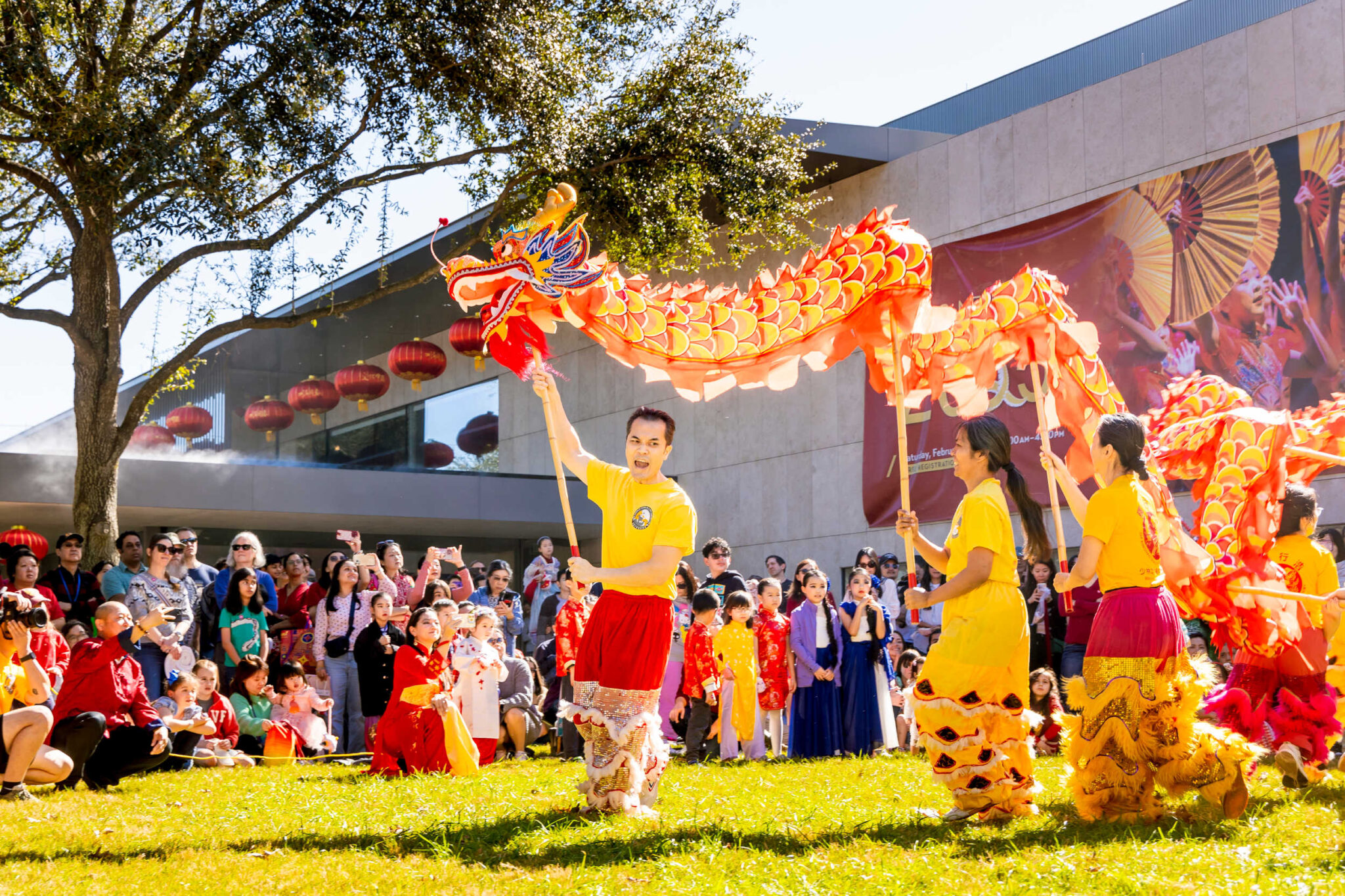
In cities like San Francisco, Sydney, London, and Vancouver, Lunar New Year has become a mainstream cultural event. Grand parades featuring lion and dragon dances draw millions of spectators. These performances are not just entertainment; the lion dance is intended to bring prosperity, while the dragon dance represents power and dignity.
Symbolic Foods and Their Meanings
Food is the "language" of the Lunar New Year. To understand the festival is to understand the puns and symbolism found on the dinner table.
| Food Item | Symbolic Meaning | Why it is Eaten |
|---|---|---|
| Fish (Yu) | Abundance and Surplus | The word for fish sounds like "surplus" in Chinese. Leaving some fish on the plate represents having more than enough for the next year. |
| Dumplings (Jiaozi) | Wealth | Their shape resembles ancient silver and gold ingots. It is believed that the more dumplings you eat, the more money you will make. |
| Longevity Noodles | Long Life | These noodles are much longer than normal and are served uncut. Swallowing them whole or in long strands symbolizes a long, healthy life. |
| Rice Cakes (Niangao) | Success and Growth | The name sounds like "getting higher year by year," symbolizing promotions at work or growth in height for children. |
| Tangyuan | Family Togetherness | These sweet rice balls are round, which symbolizes wholeness and the family unit staying together. |
| Citrus Fruits | Luck and Wealth | Oranges and tangerines are displayed and gifted because their golden color symbolizes gold, and the word for "tangerine" sounds like "luck." |
Taboos and Superstitions: What to Avoid
To ensure a prosperous year, there are several "don'ts" that many observers still follow strictly during the first few days of the Lunar New Year.
- Don't say negative words: Words related to death, sickness, or poverty are avoided. If a child mentions these, parents may "wash" the child's mouth with a cloth to symbolize wiping away the bad omen.
- Don't break ceramics: Breaking a bowl or plate is seen as a sign of broken luck or loss of wealth. If something does break, people often wrap it in red paper and say "Sui sui ping an," a phrase that sounds like "peace every year" but uses a pun on the word for "shattered."
- Don't use scissors or knives: Sharp objects are thought to "cut" the stream of wealth and success. Most food preparation is finished before the clock strikes midnight on New Year's Eve.
- Don't borrow or lend money: Starting the year in debt is believed to set a pattern of financial struggle for the following twelve months. All debts should ideally be settled before New Year's Day.
The Schedule of Celebration: From Eve to Lantern Festival
The Lunar New Year is not just a single day; it is a 15-day cycle that concludes with the Lantern Festival.
- New Year's Eve: The peak of excitement. Family reunion dinner, staying up late to welcome the new year (Shousui), and the first round of fireworks.
- Day 1: Visiting elders and immediate family. It is a day of rest and greeting neighbors with "Gong Xi Fa Cai" (Mandarin) or "Gung Hay Fat Choy" (Cantonese).
- Day 2: Traditionally the day married daughters visit their birth parents. It is also considered the birthday of all dogs, and many people give their pets a special treat.
- Day 3-7: Visiting friends, distant relatives, and temples. Different days are dedicated to different deities, such as the God of Wealth.
- Day 15 (The Lantern Festival): The final day of the celebration. The streets are filled with colorful lanterns, often with riddles written on them for children to solve. It marks the first full moon of the new year and the official end of the holiday period.
Future Dates and Zodiacs
As we celebrate the Year of the Fire Horse in 2026, it is helpful to look ahead at the coming years to plan for future festivities.
| Year | Lunar New Year Date | Zodiac Animal |
|---|---|---|
| 2024 | February 10 | Wood Dragon |
| 2025 | January 29 | Wood Snake |
| 2026 | February 17 | Fire Horse |
| 2027 | February 6 | Fire Goat |
| 2028 | January 26 | Earth Monkey |
| 2029 | February 13 | Earth Rooster |
| 2030 | February 3 | Metal Dog |
Frequently Asked Questions
Is Lunar New Year always the same as Chinese New Year?
While the terms are often used interchangeably, "Lunar New Year" is a broader term that encompasses various cultures including Korean Seollal, Vietnamese Tết, and Mongolian Tsagaan Sar. These festivals occur at the same time and share some roots but have distinct cultural rituals and traditional foods.
Why does the date change every year?
The date is determined by the Chinese lunar calendar, which follows the moon's cycles. Because a lunar month is shorter than a solar month, an extra "intercalary" month is added roughly every three years to keep the calendar synchronized with the seasons, causing the start date to shift between late January and mid-February.
What is the most common greeting for the New Year?
In Mandarin, the most common greeting is "Xin Nian Kuai Le" (Happy New Year). "Gong Xi Fa Cai" is also popular, though it literally means "Wishing you enlarge your wealth." In Cantonese, "Gung Hay Fat Choy" is the equivalent. In 2026, you might also hear "Happy Year of the Horse!"
Why is the color red so prominent?
Red is considered the most auspicious color in many Asian cultures. It symbolizes fire, which is believed to ward off evil spirits and bad luck. It also represents vitality, celebration, and prosperity, making it the default color for decorations, clothing, and gift envelopes.
Can anyone celebrate the Lunar New Year?
Yes, Lunar New Year has become a global celebration. Many people who do not have Asian heritage participate by attending community festivals, enjoying traditional foods at restaurants, or learning about the zodiac animals. It is widely seen as an inclusive celebration of spring and renewal.
Practical Recommendations for 2026
If you are planning to celebrate the Lunar New Year in 2026, begin your preparations by mid-January. If you live in a city with a significant Asian population, expect many businesses to close for at least the first three days of the festival, starting February 17.
To participate respectfully, consider wearing something red, gifting citrus fruits when visiting friends, and learning a few phrases in the local language of the community you are celebrating with. Above all, focus on the spirit of the holiday: reconciling with the past, honoring your family, and looking forward to the vibrant, high-energy opportunities that the Year of the Fire Horse promises to bring. For more official cultural insights, you can visit the Smithsonian Institution's resources on Asian cultural heritage or check the National Museum of Asian Art for specific 2026 exhibition schedules.