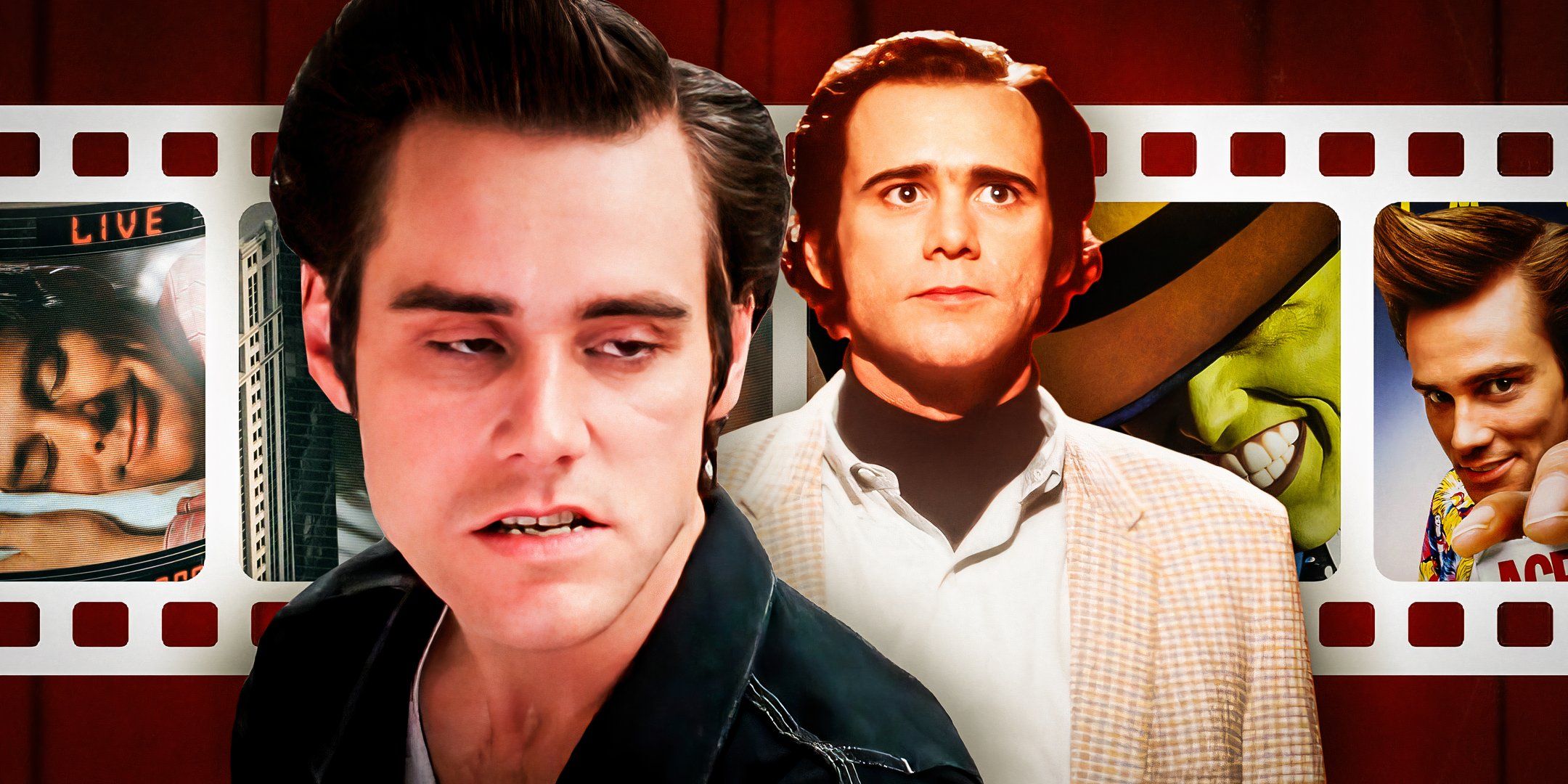
Jim Carrey has portrayed over 50 distinct characters across film and television, ranging from the manic energy of Ace Ventura and The Mask to the poignant vulnerability of Truman Burbank and Joel Barish. His career is defined by an unparalleled ability to blend extreme physical comedy with profound dramatic depth.
Jim Carrey remains one of the most transformative actors in Hollywood history. Known initially for his "rubber-faced" comedy and high-octane physical performances, he eventually proved his mettle as a serious dramatic actor capable of anchoring philosophical and emotionally complex narratives. As of 2026, his filmography stands as a testament to the evolution of a performer who refused to be pigeonholed into a single genre. This guide explores the complete spectrum of his roles, categorizing them by their cultural impact, narrative depth, and the specific acting techniques Carrey employed to bring them to life.
The 1994 Trifecta: The Birth of a Superstar
The year 1994 is often cited in film history as one of the most successful single years for any leading man. Carrey released three massive hits that established his brand of high-energy comedy.
Ace Ventura: Pet Detective
As Ace Ventura, Carrey introduced a character that was essentially a live-action cartoon. The character’s distinctive quips, like "Alrighty then!" and "Loo-hoo-zer-her," became instant cultural touchstones. To play the eccentric pet detective, Carrey leaned into a flamboyant physicality, using his entire body—from his exaggerated gait to his expressive facial muscles—to command every frame. The role required a delicate balance of being obnoxious yet strangely competent, a feat Carrey achieved by giving Ace a genuine love for animals that grounded his absurdity.
Stanley Ipkiss and The Mask
In The Mask, Carrey played a dual role: the timid bank clerk Stanley Ipkiss and his uninhibited alter ego, The Mask. This film showcased Carrey's ability to transition from a "straight man" to a chaotic force of nature. While the film utilized groundbreaking CGI for the time, many of the character's wild expressions were actually Carrey’s own facial contortions. The character of The Mask was a tribute to classic Tex Avery cartoons, allowing Carrey to perform "smash-and-stretch" comedy in a live-action setting.
Lloyd Christmas in Dumb and Dumber
Rounding out 1994, Carrey starred as Lloyd Christmas. Unlike the hyper-competent Ace or the magically empowered Mask, Lloyd was defined by his profound lack of intelligence. Carrey’s performance here was more collaborative, relying on the chemistry with Jeff Daniels (Harry Dunne). The character’s bowl cut and chipped tooth (which was Carrey’s actual tooth, as he removed a cap for the role) added to the visual comedy of a man perpetually out of his depth.
The Dramatic Pivot: Proving the Critics Wrong
By the late 1990s, Carrey sought to move beyond the "funny man" archetype. He took on roles that required stillness, introspection, and a suppression of his natural comedic instincts.
Truman Burbank in The Truman Show (1998)
As Truman Burbank, Carrey played a man whose entire life was a televised reality show without his knowledge. This was a turning point. Carrey had to convey the existential dread of a man realizing his reality is a fabrication. The performance is nuanced; he starts with a "sitcom-ready" cheerfulness that slowly decays into paranoia and eventual resolve. The film earned him a Golden Globe for Best Actor in a Motion Picture – Drama, signaling his arrival as a serious contender in the industry.
Andy Kaufman in Man on the Moon (1999)
Carrey’s portrayal of the avant-garde comedian Andy Kaufman (and his alter ego, Tony Clifton) is legendary for its "Method" intensity. As documented in later behind-the-scenes features, Carrey remained in character throughout the entire production, even when the cameras weren't rolling. He captured Kaufman's enigmatic nature—the way he delighted in confusing audiences rather than simply making them laugh. This role was less about imitation and more about a complete psychological inhabitation of a complex subject.
Joel Barish in Eternal Sunshine of the Spotless Mind (2004)
Many critics consider Joel Barish to be Carrey's finest performance. Under the direction of Michel Gondry, Carrey played a quiet, heartbroken man who undergoes a procedure to erase the memories of his ex-girlfriend. This role required Carrey to be the "quietest" person in the room, a stark contrast to his early career. By playing Joel with such vulnerability and restraint, he anchored the film’s surrealist elements in genuine human grief.
The Iconic Villains and Antagonists
Carrey’s energy makes him a natural fit for antagonists who need to dominate the screen and provide a foil for the hero.
- The Riddler (Edward Nygma): In Batman Forever (1995), Carrey took on the classic DC villain. His Riddler was a manic, neon-green whirlwind that channeled the campy energy of the 1960s television series while adding a modern, obsessive edge.
- The Cable Guy (Ernie "Chip" Douglas): This 1996 role was ahead of its time. Carrey played a lonely, borderline-sociopathic cable installer. While it was marketed as a comedy, the performance was a dark exploration of loneliness and media obsession, polarizing audiences who expected another Ace Ventura.
- Count Olaf: In Lemony Snicket's A Series of Unfortunate Events (2004), Carrey portrayed the villainous theater troupe leader. This role allowed him to play multiple "sub-characters" (Stefano, Captain Sham), effectively showcasing his range as a character actor within a single film.
- Dr. Ivo Robotnik: In the Sonic the Hedgehog franchise (2020, 2022, 2024), Carrey returned to his high-energy roots. As the genius madman Robotnik, he brought back the "rubber-face" comedy for a new generation, proving that his comedic timing remained sharp even decades after his debut.
Comparison of Jim Carrey’s Most Influential Characters
The following table categorizes several of Carrey's most prominent roles by their narrative function and the specific "acting mode" he utilized.
| Character Name | Project Title | Year | Primary Genre | Acting Style |
|---|---|---|---|---|
| Ace Ventura | Ace Ventura: Pet Detective | 1994 | Slapstick Comedy | High-Energy Physicality |
| Stanley Ipkiss | The Mask | 1994 | Fantasy/Comedy | Dualistic/Transformative |
| Lloyd Christmas | Dumb and Dumber | 1994 | Buddy Comedy | Naive/Absurdist |
| The Riddler | Batman Forever | 1995 | Superhero/Action | Manic/Theatrical |
| Truman Burbank | The Truman Show | 1998 | Satire/Drama | Nuanced/Existential |
| Andy Kaufman | Man on the Moon | 1999 | Biopic | Method/Transformative |
| The Grinch | How the Grinch Stole Christmas | 2000 | Holiday/Fantasy | Prothetic-Led Physicality |
| Bruce Nolan | Bruce Almighty | 2003 | Fantasy Comedy | Relatable Leading Man |
| Joel Barish | Eternal Sunshine... | 2004 | Sci-Fi/Romance | Muted/Melancholic |
| Dr. Robotnik | Sonic the Hedgehog | 2020 | Action/Adventure | Classic "Rubber-Face" |
Television Roots: In Living Color
Before he was a movie star, Jim Carrey (then credited as James Carrey) was a standout performer on the sketch comedy show In Living Color (1990–1994). This was his laboratory for character development.
One of his most famous creations was Fire Marshall Bill, a horribly disfigured safety inspector who frequently injured himself while demonstrating safety hazards. The character’s catchphrase, "Let me tell ya somethin'!", and his grotesque grin were early indicators of Carrey’s willingness to go to extremes for a laugh. Other notable characters included Vera de Milo, a masculine female bodybuilder, and a variety of celebrity impressions, including Vanilla Ice and Jay Leno. These sketches were crucial because they taught Carrey how to build a character from a single physical quirk or vocal inflection.
Animated and Voice Roles
Carrey’s voice is as expressive as his face, leading to several successful ventures into animation.
- Horton (Horton Hears a Who!): Carrey voiced the titular elephant with a mix of sincerity and whimsy, perfectly capturing the spirit of Dr. Seuss’s creation.
- Ebenezer Scrooge (A Christmas Carol): In the 2009 Robert Zemeckis adaptation, Carrey used performance-capture technology to play Scrooge at various ages, as well as the three ghosts. This required him to modulate his voice and movements to reflect the different stages of Scrooge’s life and the ethereal nature of the spirits.
The Evolution of "The Carrey Persona"
In his later years, Carrey’s characters began to reflect his own personal interests in spirituality and the nature of fame. His role as Jeff Pickles in the Showtime series Kidding (2018–2020) is perhaps the most meta-commentary on his career. Jeff Pickles is a beloved children's television host (reminiscent of Mr. Rogers) who struggles to maintain his kindness in a world filled with tragedy. The character served as a bridge between Carrey’s public image as a source of joy and his private explorations of grief and philosophy.
Frequently Asked Questions
Which character did Jim Carrey find the most difficult to play?
Carrey has frequently cited The Grinch as his most physically demanding role. The makeup process took up to eight hours daily, and the prosthetic suit was so restrictive and uncomfortable that he sought training from a CIA operative on how to endure torture techniques to stay calm during the months of filming.
Is Jim Carrey still acting as of 2026?
While Carrey has spoken openly about his desire for a "quiet life" and a potential retirement from major film roles, he has remained active in specific projects that interest him, such as the Sonic the Hedgehog franchise and his artistic pursuits in painting and sculpture. He has stated that if a script is "written in gold ink" and feels important for people to see, he will return to the screen.
How many times has Jim Carrey played the same character in sequels?
Carrey famously avoided sequels for much of his career. He played Ace Ventura twice (Pet Detective and When Nature Calls), Lloyd Christmas twice (Dumb and Dumber and Dumb and Dumber To), and Dr. Robotnik three times. He notably did not return for the sequels to The Mask, Bruce Almighty, or Dumb and Dumber (the prequel).
Did Jim Carrey win an Oscar for any of his dramatic roles?
Despite winning two Golden Globes for The Truman Show and Man on the Moon, Jim Carrey has never been nominated for an Academy Award. This is often cited by film historians as one of the most significant "snubs" in the history of the Oscars, particularly regarding his work in The Truman Show and Eternal Sunshine of the Spotless Mind.
Which character is considered his most "underrated"?
Many fans and critics point to his role as The Cable Guy. Initially dismissed as too dark for a Jim Carrey comedy, the film has gained a massive cult following for its sharp satire of media consumption and Carrey’s unsettling, layered performance as the lonely Chip Douglas.
Conclusion and Next Steps
To truly appreciate Jim Carrey’s filmography, one should watch his work chronologically. Start with the manic energy of Ace Ventura to understand the foundation of his stardom, then move to The Truman Show to witness his dramatic awakening, and finally watch Eternal Sunshine of the Spotless Mind to see the peak of his emotional range. Whether he is a green-skinned holiday grouch or a grieving man trying to hold onto a memory, Jim Carrey’s characters are united by a sense of total commitment that few actors can match.
For those interested in the craft of acting, researching the "behind-the-scenes" documentaries for Man on the Moon (such as Jim & Andy: The Great Beyond) offers a fascinating look at the psychological toll and technical dedication Carrey brings to his most immersive roles.