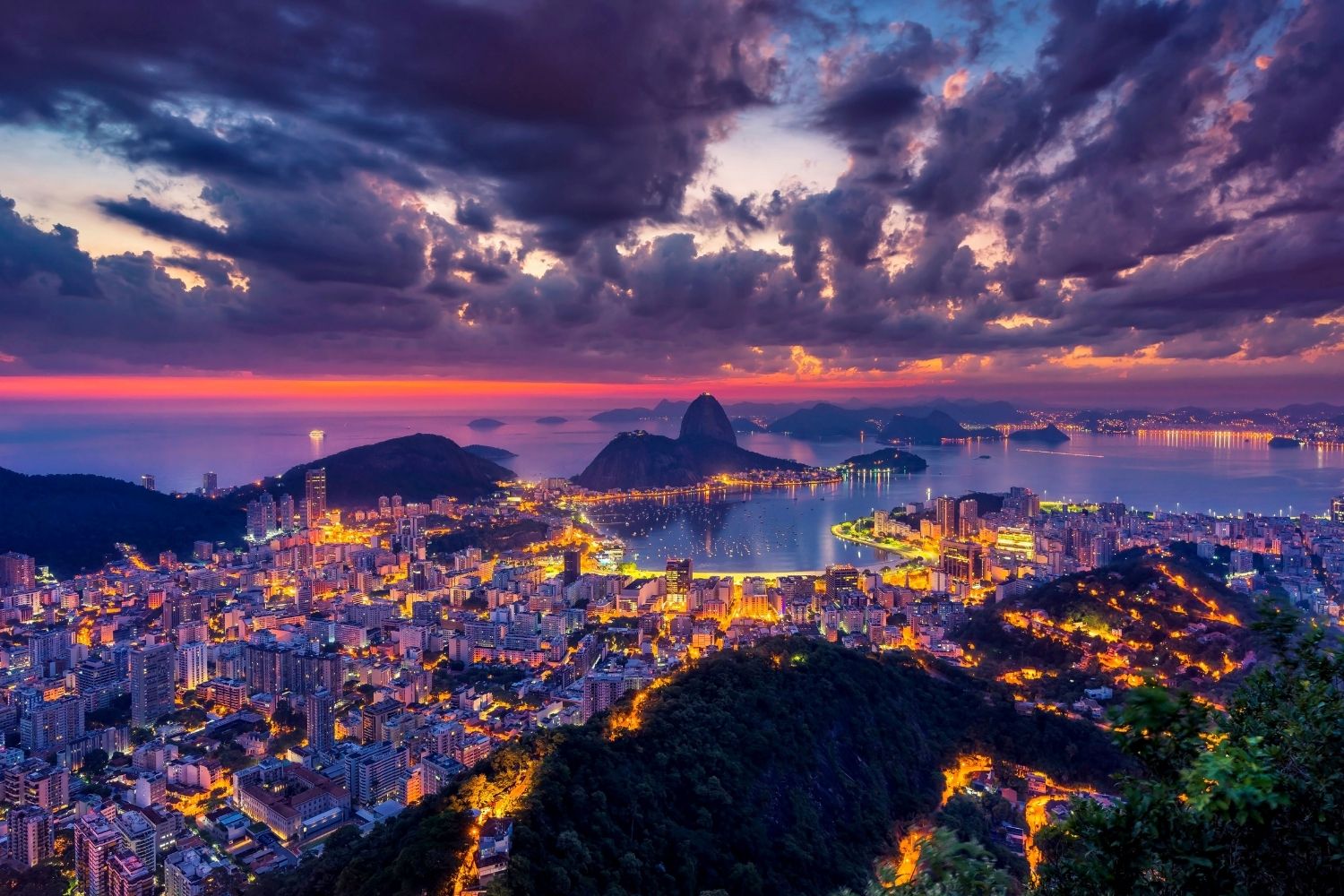
Brazil is the largest nation in South America and the fifth-largest country globally by landmass, characterized by its unparalleled biodiversity, the Amazon Rainforest, and a diverse cultural heritage. As of 2026, it stands as a leading global economy, a pioneer in digital financial systems, and a critical player in international environmental policy.
Brazil is a country of continental proportions, sharing borders with every South American nation except Ecuador and Chile. For those looking to understand the nation in 2026, it is essential to view it through several lenses: its five distinct administrative regions, its rapidly evolving digital economy, its complex social fabric, and its role as the world's "ecological lungs." Whether you are a business traveler, an eco-tourist, or a student of international relations, navigating Brazil requires an appreciation for both its modern infrastructure and its deep-rooted traditions.
Regional Geography and Environmental Diversity
Brazil is divided into five primary regions, each functioning almost like a separate country in terms of climate, dialect, and economic focus. Understanding these divisions is the first step for any comprehensive analysis of the nation.
The North: The Amazonian Heart
The North region comprises the largest portion of Brazilian territory, dominated by the Amazon Basin. In 2026, this region remains the focus of intense global environmental scrutiny and domestic development. It is home to the world's largest tropical rainforest and the most extensive river system. The city of Belém, which hosted the COP30 climate summit in 2025, has become a modernized hub for "bio-economy" initiatives, focusing on sustainable forest products rather than extraction.
The Northeast: Cultural Cradle and Tourism Powerhouse
The Northeast is known for its stunning coastline and semi-arid interior (the Sertão). It is the region where Portuguese colonization began, resulting in a rich Afro-Brazilian culture. Cities like Salvador and Recife are major cultural centers. Economically, the Northeast has seen a massive surge in renewable energy, particularly wind and solar power, making it a leader in Brazil's green energy transition in 2026.
The Central-West: Agribusiness and Governance
This region includes the capital, Brasília, a planned city known for its modernist architecture. The Central-West is the engine of Brazil’s agribusiness sector. The states of Mato Grosso and Mato Grosso do Sul lead the world in soy and beef production. It also contains the Pantanal, the world’s largest tropical wetland, which offers the highest concentration of wildlife in the Americas, surpassing even the Amazon for jaguar sightings.
The Southeast: The Economic Engine
The Southeast is the most populous and wealthiest region. It contains the "Golden Triangle" of São Paulo, Rio de Janeiro, and Belo Horizonte. São Paulo serves as the financial capital of Latin America, while Rio de Janeiro remains the primary face of Brazilian tourism and the oil and gas industry. By 2026, the Southeast has further solidified its role as a tech hub, hosting thousands of startups in the "San Pedro Valley" (Belo Horizonte) and São Paulo’s financial districts.
The South: European Influence and Industry
The South region—comprising Paraná, Santa Catarina, and Rio Grande do Sul—is noted for its subtropical climate and significant European immigration history (German, Italian, and Polish). It has high human development indices and a robust manufacturing sector. The city of Curitiba remains a global model for urban planning and public transportation.
The Brazilian Economy and the Digital Real (Drex)
By 2026, Brazil has moved beyond its traditional reputation as merely a commodity exporter. While it remains a global leader in iron ore, crude oil, and agricultural products, the nation has undergone a massive digital transformation.
The Success of Pix and Drex
One of the most significant developments in the mid-2020s was the evolution of the Brazilian payment system. Pix, the instant payment system launched by the Central Bank of Brazil, is now the universal standard for all transactions, from street vendors to major corporations.
Building on this, Drex (the Digital Real) is fully operational in 2026. Unlike cryptocurrencies, Drex is a Central Bank Digital Currency (CBDC) that allows for "smart contracts" and automated financial services. This has reduced the cost of credit and improved the security of property transfers and complex financial agreements, making Brazil one of the most technologically advanced financial markets in the world.
Key Economic Sectors
- Agribusiness: Brazil continues to be the "breadbasket of the world," leading exports in coffee, sugar, orange juice, and soybeans.
- Energy: Petrobras remains a dominant force in deep-water oil extraction (Pre-salt layers), but the country has reached a milestone where over 85% of its electricity comes from renewable sources (hydro, wind, solar, and biomass).
- Manufacturing: The aerospace industry, led by Embraer, is a significant high-tech export sector, particularly in the regional jet and sustainable aviation fuel (SAF) segments.
Cultural Landscape: Identity and Society
Brazilian culture is a "melting pot" (mestiçagem) of indigenous populations, Portuguese colonizers, and enslaved Africans, followed by waves of immigrants from Japan, Italy, Germany, and the Middle East.
Language and Communication
Portuguese is the official and near-universal language. However, Brazilian Portuguese differs significantly from the European variant in phonology and syntax. In 2026, English proficiency is growing in business hubs like São Paulo, but a basic grasp of Portuguese or "Portuñol" (a mix of Portuguese and Spanish) is still highly recommended for travelers.
Social Values and the "Jeitinho"
Brazilian society is characterized by high levels of sociality and the concept of "O Jeitinho Brasileiro"—the "Brazilian way" of finding creative, informal solutions to bureaucratic or rigid problems. While often viewed as a positive trait of adaptability, it is also a subject of national debate regarding its impact on formal legal structures.
Religion and Festivals
While Brazil remains the world's largest Catholic country by population, there has been a significant rise in Evangelical Protestantism. Additionally, Afro-Brazilian religions like Candomblé and Umbanda maintain deep cultural roots, especially in the Northeast. Festivals like Carnival (held in February or March) and the Festa Junina (June festivals) are massive cultural events that shut down entire cities and generate billions in revenue.
Essential Travel Logistics and Entry Requirements
Traveling to Brazil in 2026 requires specific preparation regarding documentation and health.
Visa Policy (2026 Update)
As of early 2025, Brazil reinstated visa requirements for citizens of the United States, Canada, and Australia. Travelers from these nations must obtain an e-Visa before arrival. The process is entirely digital and typically grants a 10-year multiple-entry permit for US citizens and a 5-year permit for Canadians and Australians. Citizens of most European Union countries and the United Kingdom continue to enjoy visa-free entry for tourism.
Health and Safety
The World Health Organization (WHO) and the Brazilian Ministry of Health recommend several vaccinations for travelers:
- Yellow Fever: Highly recommended for those visiting rural areas, the North, or the Central-West.
- Dengue: In 2026, Brazil utilizes a widespread vaccination program for Dengue, but travelers should still use insect repellent, as mosquito-borne illnesses remain a concern in tropical zones.
- Safety: While Brazil is a vibrant destination, urban crime remains a challenge. Travelers are advised to use ride-sharing apps (like Uber or 99) rather than hailing taxis on the street and to avoid displaying expensive jewelry or electronics in high-traffic public areas.
Connectivity
Brazil has a robust 5G network in all major state capitals. For travelers, purchasing a local SIM card (e-SIM) from providers like Vivo, Claro, or TIM is the most cost-effective way to stay connected.
Comparison of Major Brazilian Urban Centers (2026 Data)
| City | Population (Est.) | Primary Economy | Climate Type | Top Attraction |
|---|---|---|---|---|
| São Paulo | 12.6 Million | Finance, Tech, Trade | Humid Subtropical | Avenida Paulista / Art Museums |
| Rio de Janeiro | 6.8 Million | Tourism, Oil, Culture | Tropical Savanna | Christ the Redeemer / Ipanema |
| Brasília | 3.1 Million | Government, Services | Tropical (Dry Winter) | National Congress / Architecture |
| Salvador | 2.9 Million | Tourism, Petrochemicals | Tropical Rainforest | Pelourinho (Historic Center) |
| Manaus | 2.3 Million | Free Trade Zone, Eco-tourism | Equatorial | Amazon Theatre / River Tours |
| Curitiba | 1.9 Million | Manufacturing, Logistics | Oceanic (Cfb) | Botanical Garden / Wire Opera |
Biodiversity and Environmental Policy
Brazil holds approximately 15% to 20% of the world's total biodiversity. This natural capital is managed through a complex system of Federal Conservation Units under the ICMBio (Chico Mendes Institute for Biodiversity Conservation).
The Amazon and the Pantanal
In 2026, the Brazilian government has intensified efforts to reach "Zero Deforestation" by 2030. Satellite monitoring by INPE (National Institute for Space Research) provides real-time data to law enforcement to curb illegal logging and mining. For visitors, this has led to a rise in "Scientific Tourism," where travelers can participate in research projects in the Amazon or the Pantanal.
Coastal Preservation
The Brazilian coast stretches over 7,400 kilometers. Locations like Fernando de Noronha, a volcanic archipelago, have strict daily visitor limits and environmental taxes to preserve their pristine ecosystems. These measures are essential for protecting the coral reefs and marine life that are vital to the local economy.
Frequently Asked Questions
Do I need a visa to visit Brazil in 2026?
Yes, if you are a citizen of the United States, Canada, or Australia, you are required to have an e-Visa. Most European, British, and South American citizens do not require a visa for stays of up to 90 days. You should check the official Itamaraty (Ministry of Foreign Affairs) website for the most current reciprocity list before booking travel.
Is Brazil safe for solo travelers?
Brazil is generally safe for solo travelers who follow standard safety protocols. Stick to well-lit, populated areas, use reputable transportation apps, and keep your phone out of sight when not in use. Some cities have "Tourist Police" (DEAT) specifically trained to assist international visitors.
What is the best time of year to visit?
This depends on the region. For Rio and the South, the summer months (December to March) are the most popular but very hot. For the Amazon or the Pantanal, the "dry season" (July to October) is best for wildlife spotting. If you wish to avoid crowds and high prices, the "shoulder" months of April, May, September, and October are ideal.
Can I use my credit card everywhere in Brazil?
Yes, Brazil has one of the highest rates of card and digital payment acceptance in the world. Even beach vendors often have portable card machines. However, the local Pix system is now the most common form of payment. Some international travel apps now allow tourists to link their accounts to the Pix network for easier local transactions.
What is the official currency and can I use US Dollars?
The official currency is the Real (BRL). US Dollars are not accepted for daily transactions. You should exchange a small amount of cash for emergencies, but rely primarily on cards or digital payments. You can check current exchange rates via the Central Bank of Brazil.
Practical Recommendation for Next Actions
If you are planning a trip or business venture in Brazil for 2026, your first step should be to verify your specific visa requirements through the Brazilian consulate in your jurisdiction. For travelers, focus your itinerary on one or two regions rather than trying to see the whole country in one trip; the distances are vast and travel times can be significant. For business interests, familiarize yourself with the Drex ecosystem and the LGPD (Brazil's General Data Protection Law), which governs all digital operations within the country.