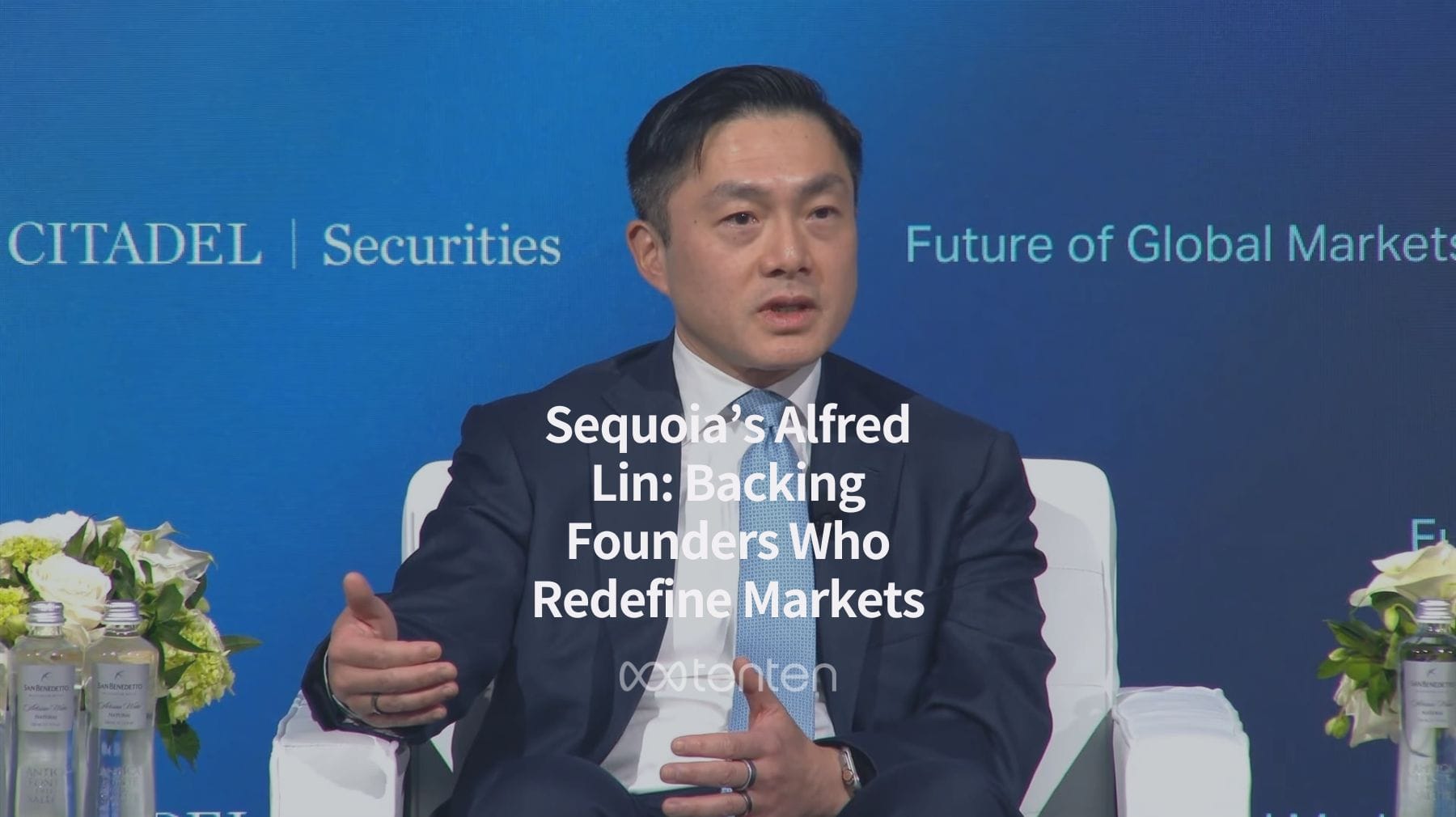
Alfred Lin is a prominent venture capitalist and partner at Sequoia Capital, renowned for his early-stage technology investments, disciplined operational background, and deep strategic guidance of category-defining consumer and enterprise software companies. Before establishing himself as one of the industry's premier investors, Lin built a formidable reputation as an entrepreneur, chief financial officer, and chief operating officer, most notably at Zappos and LinkExchange. His approach to venture capital combines rigorous financial analytics with a founder-centric philosophy, emphasizing long-term corporate culture, sustainable unit economics, and resilient leadership. This profile examines Lin's career trajectory, investment philosophy, key portfolio companies, and broader impact on the venture capital landscape.
Biography and Early Operational Foundation
Understanding Alfred Lin's impact in venture capital requires examining his operational background. Long before managing billions of dollars in venture funds, Lin operated on the other side of the cap table as a founder and executive. He earned a Bachelor of Arts in Applied Mathematics from Harvard University and a Master of Statistics from Stanford University. This quantitative foundation heavily informs his approach to risk assessment, market sizing, and financial modeling.
Lin’s early career included roles at Venture Strategy Group and as a management consultant before diving into the turbulent waters of the late-1990s dot-com era. His operational career accelerated when he joined LinkExchange as Chief Financial Officer, working alongside Tony Hsieh. After Microsoft acquired LinkExchange in 1998, Lin and Hsieh co-founded Zhi Ventures, an investment and incubation firm that backed several early internet startups.
The Zappos Era: Scaling Culture and Logistics
Lin’s most influential operational chapter unfolded at Zappos, where he joined as Chief Financial Officer and Chief Operating Officer in 2005. At Zappos, Lin was not merely managing the ledger; he was architecting the financial runway, fulfillment infrastructure, and corporate culture that allowed the online shoe and apparel retailer to scale rapidly.
During his tenure, Zappos achieved dramatic top-line revenue growth, scaling gross merchandise sales from near inception to over $1 billion. Lin played a pivotal role in securing critical venture funding rounds from Sequoia Capital—a relationship that ultimately bridged his operational career with his investing future. When Amazon acquired Zappos in 2009 in a deal valued at approximately $1.2 billion, Lin managed the complex transaction, cementing his reputation as a master of financial strategy and operational execution.
Transition to Venture Capital: Joining Sequoia Capital
Following the acquisition of Zappos, Alfred Lin joined Sequoia Capital as a partner in 2010. Sequoia, one of Silicon Valley's oldest and most prestigious venture capital firms, had a long history of backing legendary enterprises such as Apple, Google, Oracle, and Cisco. Lin’s addition to the partnership signaled a deliberate pivot toward pairing elite operational experience with early-stage investing.
In venture capital, partners with genuine operating credentials bring a distinct lens to pitch meetings. Rather than evaluating companies solely through abstract market projections, Lin could assess an enterprise's unit economics, supply chain bottlenecks, organizational scaling challenges, and customer acquisition costs from firsthand experience. This operational empathy made him a preferred partner for ambitious founders navigating the chaotic early years of company-building.
Investment Philosophy and Core Principles
Alfred Lin’s venture capital philosophy centers on a few enduring principles: founder empowerment, obsession with customer service, cultural resilience, and disciplined financial growth.
- Founder-Centric Partnership: Lin views his role not as a controller, but as a trusted advisor and sounding board. He famously asserts that venture capital is a service business where the founders are the primary clients.
- Culture as a Competitive Advantage: Forged in the crucible of Zappos, where company culture was treated as an operational imperative, Lin evaluates whether founding teams possess a distinct cultural anchor that can withstand hyper-growth and market adversity.
- Product-Market Fit and Unit Economics: While growth is essential, Lin emphasizes sustainable unit economics over vanity metrics. Companies must demonstrate a clear path to profitability and genuine utility for their end users.
- Long-Term Horizon: Sequoia Capital is known for its multi-decade investment horizons, and Lin embodies this patience. He resists the temptation to optimize for short-term valuation spikes, preferring instead to build durable, generational businesses.
Key Investments and Portfolio Impact
Over more than a decade at Sequoia, Alfred Lin has led investments in and served on the boards of numerous market-leading companies spanning fintech, consumer technology, enterprise software, and artificial intelligence. His portfolio includes several iconic startups that transformed their respective industries.
Airbnb
One of Lin’s most consequential early investments was in Airbnb. When Sequoia led Airbnb’s Series A funding round in 2010, the home-sharing concept faced immense skepticism from traditional investors regarding regulatory hurdles, trust, and safety. Lin recognized the profound shift in consumer behavior toward collaborative consumption and peer-to-peer marketplaces. Beyond capital, Lin provided strategic guidance to founders Brian Chesky, Joe Gebbia, and Nathan Blecharczyk as the company scaled its trust and safety infrastructure, expanded internationally, and navigated complex global regulatory frameworks.
DoorDash
Lin led Sequoia’s investment in DoorDash, recognizing the immense potential of localized logistics and on-demand delivery networks. DoorDash required sophisticated optimization algorithms, a dense marketplace of merchants, couriers, and consumers, and fierce operational discipline to survive in a hyper-competitive delivery market. Lin worked closely with CEO Tony Xu and the founding team to scale operations nationwide, eventually culminating in DoorDash's public debut.
Other Notable Investments
Lin's investment footprint extends across multiple sectors:
- Houzz: An online platform for home remodeling and design, where Lin supported the company's international expansion and monetization strategies.
- Hearth/Sezzle/Fintech: Various early-stage financial technology ventures aimed at modernizing consumer credit and payment infrastructure.
- AI and Infrastructure: Supporting emerging generative AI and enterprise infrastructure companies that leverage data to automate complex business workflows.
Comparative Analysis: Operational vs. Traditional VCs
The venture capital ecosystem features various investor archetypes, ranging from former investment bankers and consultants to seasoned operators. The table below outlines the core differences in approach between operator-turned-investors like Alfred Lin and traditional financially trained venture capitalists.
| Dimension | Operator-Turned-Investor (e.g., Alfred Lin) | Traditional Financial VC |
|---|---|---|
| Primary Lens | Operational execution, product scalability, unit economics, and culture. | Financial modeling, market sizing, valuation multiples, and portfolio diversification. |
| Founder Empathy | High; understands the psychological and logistical toll of scaling a startup. | Moderate to High; views founders primarily through risk-return tradeoffs. |
| Value Add | Assisting with executive hiring, organizational design, and crisis management. | Assisting with subsequent financing rounds, M&A strategy, and governance. |
| Decision Speed | Often decisive based on pattern recognition of team dynamics and execution capability. | Rigorous quantitative diligence, market research, and committee approval. |
Frequently Asked Questions
What was Alfred Lin's role at Zappos?
Alfred Lin served as the Chief Financial Officer (CFO) and Chief Operating Officer (COO) of Zappos from 2005 until its acquisition by Amazon in 2009. In this dual capacity, he managed the company's financial planning, supply chain logistics, legal affairs, and operational scaling, helping grow annual gross merchandise sales past $1 billion.
Which notable companies has Alfred Lin invested in?
As a partner at Sequoia Capital, Lin has led or co-led investments in several major technology companies, most notably Airbnb and DoorDash. His portfolio also includes Houzz, Reddit, and various early-stage enterprise software and consumer marketplace startups.
What is Alfred Lin's investment philosophy?
Lin's investment philosophy centers on backing exceptional founding teams who build obsessive customer loyalty and durable corporate cultures. He emphasizes sustainable unit economics, long-term market potential, and operational resilience rather than short-term valuation metrics.
How does Alfred Lin's background as an operator influence his investing style?
Having served as a CFO, COO, and co-founder, Lin understands the internal challenges startups face, such as cash flow management, hiring executive talent, and maintaining culture during hyper-growth. This enables him to offer practical, empathetic advice rather than purely theoretical financial guidance.
What educational background does Alfred Lin have?
Alfred Lin holds a Bachelor of Arts in Applied Mathematics from Harvard University and a Master of Statistics from Stanford University. This quantitative training underpins his rigorous analytical approach to evaluating early-stage business models.
Conclusion and Strategic Takeaways
Alfred Lin’s trajectory from quantitative mathematician and startup executive to one of the world's leading venture capitalists illustrates the power of combining rigorous analytical discipline with deep operational empathy. Through his work at Sequoia Capital and transformative investments in companies like Airbnb and DoorDash, Lin has helped shape the modern consumer internet and marketplace economy. For aspiring founders and investors alike, his career offers a masterclass in how to evaluate risk, scale organizational culture, and build generational enterprises that endure market cycles.