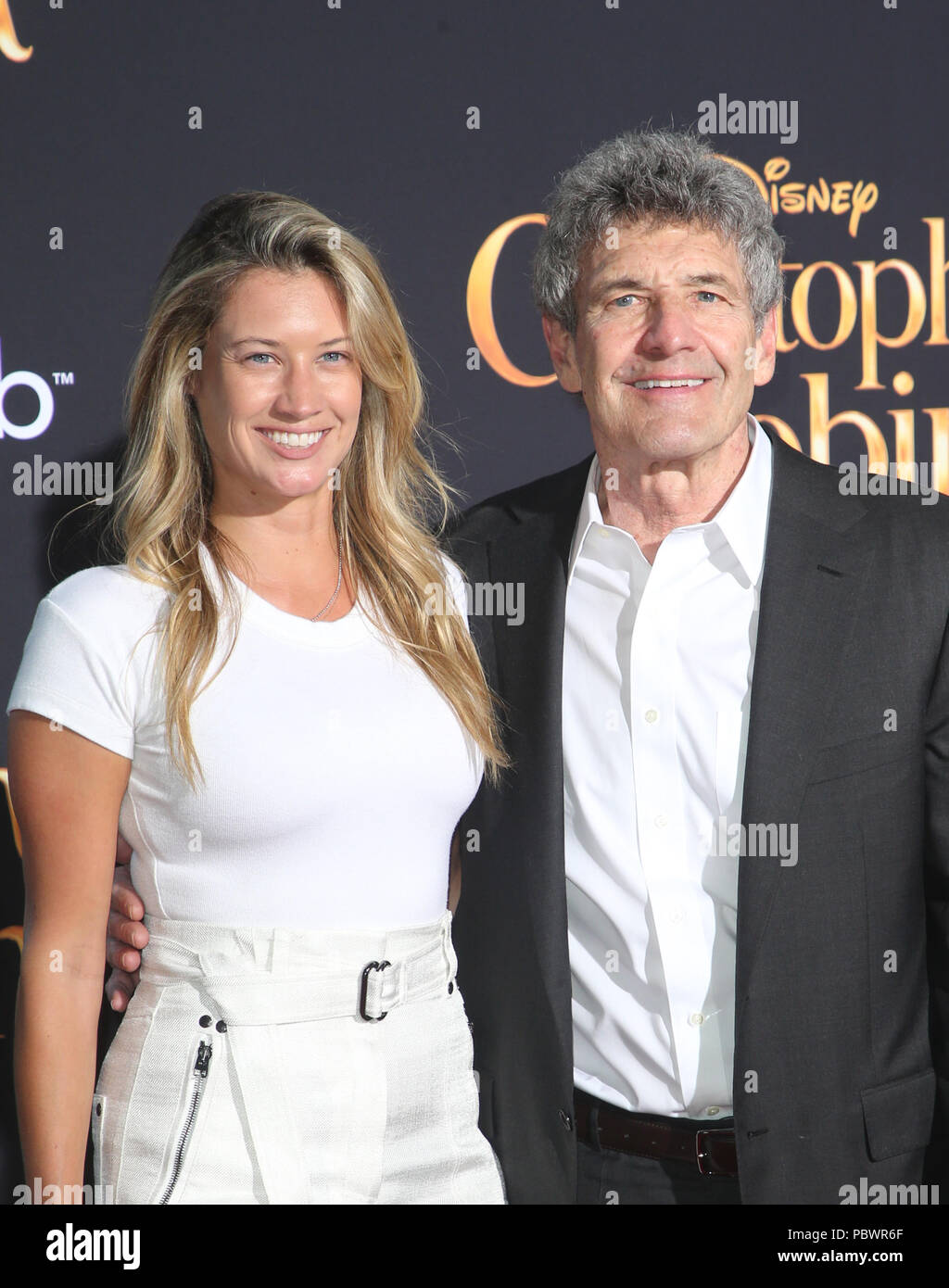
As of 2026, Alan Horn’s net worth is estimated to be between $50 million and $100 million. This valuation is the result of a prolific five-decade career in the entertainment industry, characterized by his foundational role at Castle Rock Entertainment and his transformative leadership as Chairman of both Warner Bros. and Walt Disney Studios.
Alan Horn is widely regarded as one of the most successful film executives in history. While he is not a "celebrity" in the traditional sense, his financial standing reflects his status as the primary architect behind the modern blockbuster era. His wealth is a combination of executive salaries, performance-based bonuses, equity from company sales, and a sophisticated portfolio of real estate and personal investments. Understanding his net worth requires looking past a simple salary figure and examining the massive corporate value he generated for the world’s largest media conglomerates.
The Foundations of Fortune: The Castle Rock Era
Before Alan Horn became the face of Disney’s film division, he was an entrepreneur. In 1987, Horn co-founded Castle Rock Entertainment alongside Rob Reiner, Glenn Padnick, Andrew Scheinman, and Martin Shafer. This move was the most significant catalyst for his initial wealth accumulation.
Castle Rock was not just a production company; it was a hit-making machine that produced cultural touchstones like Seinfeld, When Harry Met Sally..., and The Shawshank Redemption. Unlike a standard executive, Horn held an equity stake in the company.
In 1993, Ted Turner’s Turner Broadcasting System acquired Castle Rock Entertainment for a reported $100 million. While the specific distribution of the sale price among the five founders remains private, Horn’s share of the acquisition was substantial. Furthermore, the deal allowed Castle Rock to continue operating as an independent entity under the Turner (and later Time Warner) umbrella, ensuring Horn remained in a high-earning leadership position with backend participation in the company’s ongoing hits.
The Warner Bros. Tenure: 1999–2011
In 1999, Alan Horn was named President and Chief Operating Officer of Warner Bros. During his 12-year tenure, the studio became the dominant force in global cinema. Horn was the primary champion of the "tentpole strategy"—the idea that a studio should focus on a few massive, high-budget films that could drive an entire year’s revenue.
Key financial drivers during this era included:
- The Harry Potter Franchise: Horn oversaw all eight films, which collectively grossed over $7.7 billion worldwide.
- The Dark Knight Trilogy: Christopher Nolan’s Batman films redefined the superhero genre and generated billions in revenue and merchandise.
- The Ocean’s Trilogy: Successful mid-budget star vehicles that bolstered the studio's bottom line.
Executive compensation for a President and COO at a major studio like Warner Bros. typically consists of a base salary in the low seven figures, supplemented by significant bonuses tied to the studio's annual EBITDA (Earnings Before Interest, Taxes, Depreciation, and Amortization). By the time Horn "retired" from Warner Bros. in 2011, his net worth had been significantly bolstered by a decade of record-breaking studio performances.
The Disney Renaissance: A Masterclass in Corporate Value
In 2012, Bob Iger lured Alan Horn out of a brief retirement to become Chairman of Walt Disney Studios. At the time, Disney’s film division was struggling with high-profile misses. Horn’s arrival coincided with a period of unprecedented growth and acquisition.
Under Horn’s leadership, Disney integrated the acquisitions of Lucasfilm and 20th Century Fox, while maximizing the potential of Marvel Studios and Pixar. He oversaw the release of Star Wars: The Force Awakens, Avengers: Endgame, and the live-action "reimagining" slate (e.g., The Lion King, Aladdin).
Compensation at the Disney Level
As Chairman of Walt Disney Studios, Horn was one of the highest-paid executives in the industry. While Disney only publicly discloses the exact compensation of its CEO and CFO in SEC Proxy Statements, historical data for equivalent roles suggests:
- Base Salary: Typically ranging from $2 million to $5 million.
- Equity Grants: Restricted Stock Units (RSUs) and stock options that vest over several years. During Horn's tenure, Disney's stock price saw significant appreciation, greatly increasing the value of his equity packages.
- Performance Bonuses: In 2019, Disney became the first studio to gross over $11 billion in a single year. Execs at Horn's level receive "success bonuses" when the studio hits these historic milestones.
By the time Horn transitioned to a consulting role in late 2021 and fully retired shortly thereafter, he had overseen more billion-dollar films than any other executive in history.
Comparative Leadership Impact: Box Office Revenue
To understand why Horn’s net worth is so substantial, one must look at the sheer volume of capital he managed. The following table highlights the commercial success of the franchises under his direct supervision.
| Franchise/Era | Studio | Primary Years | Estimated Global Box Office |
|---|---|---|---|
| Harry Potter | Warner Bros. | 2001–2011 | $7.7 Billion |
| The Dark Knight | Warner Bros. | 2005–2012 | $2.4 Billion |
| Marvel Cinematic Universe | Disney | 2012–2021 | $20+ Billion |
| Star Wars (Sequels/Spin-offs) | Disney | 2015–2019 | $6.7 Billion |
| Pixar (Post-2012 Slate) | Disney | 2012–2021 | $8+ Billion |
Alan Horn’s Real Estate and Personal Assets
High-level entertainment executives often hold a significant portion of their wealth in residential real estate. Alan Horn and his wife, Cindy Horn, have been long-time residents of the Los Angeles area.
Their primary residence has historically been a significant estate in the East Gate area of Bel-Air. Properties in this exclusive enclave often command prices between $20 million and $50 million. In addition to their primary residence, the Horns have been active in environmental philanthropy, which suggests a well-diversified portfolio capable of supporting significant charitable giving without depleting their core net worth.
How Executive Wealth is Calculated in Hollywood
It is a common mistake to assume that a studio head’s wealth is solely "salary." For a figure like Alan Horn, wealth is structured through several sophisticated financial vehicles:
1. Deferred Compensation
Many top-tier executives defer a portion of their annual earnings into investment accounts that grow tax-deferred until retirement. This allows the principal to compound over decades, often resulting in a payout that far exceeds the original earnings.
2. Backend Participation
While mostly associated with actors and directors, some senior executives have "points" or "bonus pools" based on the performance of a specific slate of films. Given Horn's track record of hits, these performance-based triggers likely added millions to his annual take-home pay during peak years.
3. Board Seats and Consulting
Following his formal retirement from Disney, Horn has remained active in a consulting capacity. Senior advisors of his caliber can command daily or project-based rates that rival the annual salaries of mid-level professionals. Additionally, he has served on various boards, which often include stipends and additional equity grants.
Frequently Asked Questions
What is Alan Horn's current role in 2026?
Alan Horn is officially retired from his full-time executive duties at Walt Disney Studios. However, he maintains an emeritus-style influence in Hollywood, occasionally serving as a strategic consultant for major media mergers or creative transitions. His legacy remains tied to the "Horn-Iger" era, which is studied as the gold standard for studio management.
Did Alan Horn own a part of Disney?
No, Alan Horn did not own a founding stake in Disney like Walt Disney did. He was a high-level employee. However, like all C-suite and Chairman-level executives, he received significant compensation in the form of Disney stock (DIS). Over his decade-long tenure, these stock grants would have made him a significant individual shareholder, though not a majority owner.
How does Alan Horn's net worth compare to Bob Iger's?
Alan Horn's net worth is considerably lower than Bob Iger's. While Horn was a key lieutenant, Iger served as CEO of the entire Walt Disney Company. CEO compensation packages are significantly higher, often including tens of millions of dollars in annual stock awards. While Horn is worth an estimated $50M–$100M, Iger’s net worth is estimated to be in the $600 million to $700 million range.
Which movie contributed most to Alan Horn’s wealth?
It is difficult to point to a single movie, but the Harry Potter series and the Avengers films were likely the most impactful. These films didn't just earn a high box office; they triggered massive performance bonuses and increased the value of the companies (Warner Bros. and Disney) where Horn held equity and stock options.
Is Alan Horn still involved in Castle Rock Entertainment?
Castle Rock Entertainment was relaunched as an independent production company in 2021 with a $175 million capital infusion. While Horn’s co-founders, like Rob Reiner, are leading the charge, Horn’s involvement is primarily that of a supportive founder and advisor rather than a day-to-day executive.
Strategic Takeaway: The Value of the "Horn Touch"
Alan Horn’s net worth is more than just a reflection of his bank account; it is a testament to the value of curated quality. Throughout his career, Horn proved that by focusing on high-quality storytelling and broad-audience appeal, a studio could generate consistent, multi-billion-dollar returns.
For those looking to understand the financial landscape of Hollywood in 2026, Horn represents the era of the "Mega-Executive." His wealth was built not by appearing on screen, but by identifying the stories that the global audience wanted to see and providing the corporate infrastructure to bring those stories to life. His financial success serves as a blueprint for the modern media executive: combine creative intuition with rigorous fiscal discipline and a long-term equity-focused mindset.