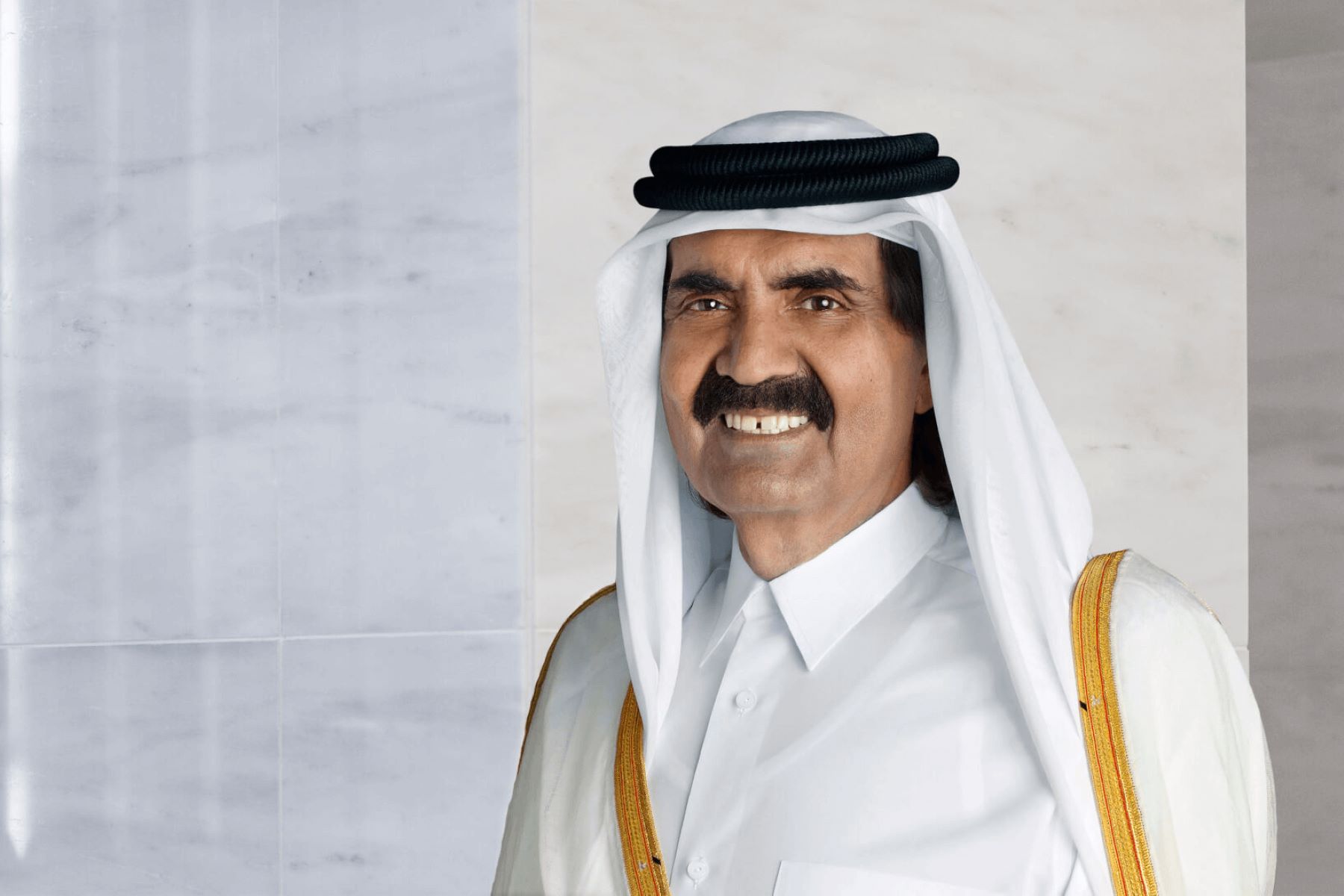
As of 2026, the Al Thani family, the ruling dynasty of Qatar, holds a collective net worth estimated at over $450 billion. This immense wealth is derived from the country's vast liquefied natural gas (LNG) reserves, strategic global investments via the Qatar Investment Authority (QIA), and an extensive portfolio of private international real estate and luxury assets.
The financial stature of the House of Thani represents one of the most significant concentrations of capital in the modern world. Unlike private corporate dynasties, the Al Thani wealth is deeply intertwined with the sovereign wealth of the State of Qatar. While individual family members maintain private fortunes, the collective power of the family is exerted through state-led investment vehicles that have transformed Qatar from a pearl-diving hub into a global financial powerhouse. Understanding this net worth requires a multi-dimensional look at energy markets, sovereign investment strategies, and the private acquisitions of the family’s most prominent figures.
The Foundation of Wealth: Natural Gas and the North Field
The primary engine behind the Al Thani family's wealth is the North Field, the world’s largest non-associated natural gas field. Qatar shares this field with Iran, but its aggressive development of LNG technology has allowed it to become the world’s leading exporter of the resource.
By 2026, the expansion of the North Field East and North Field South projects has reached peak production capacity. These projects were designed to increase Qatar’s LNG production from 77 million tonnes per annum (mtpa) to 126 mtpa. The revenue generated from these exports flows directly into the state coffers and, by extension, supports the infrastructure and lifestyle of the ruling family. The Al Thani family has successfully navigated the global transition toward cleaner energy by positioning LNG as a "bridge fuel," ensuring that their primary source of income remains relevant even as the world moves away from coal and oil.
The Role of QatarEnergy
QatarEnergy, the state-owned petroleum company, acts as the operational arm of this wealth. Under the guidance of the Al Thani family, the company has entered into numerous joint ventures with global giants like ExxonMobil, Shell, and TotalEnergies. These partnerships not only provide capital but also technical expertise, ensuring the family’s resources are extracted with maximum efficiency.
The Qatar Investment Authority (QIA): The Global Wealth Engine
While gas provides the income, the Qatar Investment Authority (QIA) provides the growth and diversification. Founded in 2005, the QIA is Qatar’s sovereign wealth fund, and in 2026, its assets under management (AUM) are estimated to exceed $500 billion. The Al Thani family uses the QIA to shield the national economy from the volatility of energy prices by investing in stable, long-term assets across the globe.
Significant Corporate Holdings
The Al Thani family, through the QIA, owns significant stakes in some of the world's most recognizable brands. These investments are not merely passive; they often come with board representation or significant influence over corporate strategy. Notable holdings include:
- Volkswagen Group: Qatar remains one of the largest shareholders in the German automotive giant.
- Barclays Bank: A relationship forged during the 2008 financial crisis has matured into a cornerstone of Qatar’s financial portfolio.
- Sainsbury’s: The QIA is the largest shareholder in this major UK supermarket chain.
- Glencore: Significant investment in the world’s largest commodity trader.
- Empire State Realty Trust: Owners of the Empire State Building in New York.
By diversifying into tech, healthcare, and green energy sectors in the mid-2020s, the family has ensured that their net worth is insulated from the localized economic shifts of the Middle East.
The "Landlords of London": Real Estate Holdings
A massive portion of the Al Thani family net worth is tied up in prime real estate, particularly in London. The family’s affinity for the British capital is so pronounced that they are often referred to as the "Landlords of London," owning more of the city than the British Crown Estate in certain sectors.
Landmark UK Properties
The family’s real estate portfolio is a mix of commercial landmarks and ultra-luxury residential estates. Key properties include:
- Harrods: The world-famous luxury department store in Knightsbridge was purchased for an estimated £1.5 billion in 2010.
- The Shard: Western Europe's tallest building is majority-owned by the state of Qatar.
- The Savoy Hotel: One of London’s most iconic hotels.
- Chelsea Barracks: A multi-billion-pound residential development.
- The Olympic Village: Rebranded as East Village after the 2012 London Olympics.
Global Expansion
Beyond London, the Al Thani family has acquired significant assets in Paris, including luxury hotels like the Peninsula Paris and prestigious office buildings on the Champs-Élysées. In the United States, their focus has been on luxury hospitality in New York and Los Angeles, as well as commercial real estate in Washington D.C.
Individual Wealth of Key Al Thani Members
While the $450 billion figure represents the collective and state-linked wealth, several individual members of the family hold personal fortunes that rank them among the world’s richest people.
Sheikh Tamim bin Hamad Al Thani
As the current Emir of Qatar, Sheikh Tamim oversees the distribution of national wealth. While his personal net worth is difficult to separate from state assets, estimates place his private fortune in the billions. His lifestyle reflects this, with access to a fleet of private 747s and some of the world's most expensive residences.
Sheikh Hamad bin Khalifa Al Thani (The Father Emir)
The architect of modern Qatar, the Father Emir, was responsible for the pivot toward LNG. His personal wealth is largely tied up in private investment vehicles and a legendary collection of superyachts and art.
Sheikh Hamad bin Jassim Al Thani (HBJ)
Often referred to as "the man who bought London," the former Prime Minister and head of the QIA, Sheikh Hamad bin Jassim, is a billionaire in his own right. His personal investment firm, Paramount Services Holdings, owns significant stakes in companies like Deutsche Bank. His personal net worth is estimated to be well over $2 billion, though some analysts suggest it is much higher due to undisclosed private equity holdings.
Luxury Assets: Yachts, Art, and Aviation
The Al Thani family is synonymous with the pinnacle of luxury. Their spending in the high-end markets of art and maritime vessels is unmatched by almost any other dynasty.
The Al Thani Art Collection
The family, particularly through the efforts of Sheikha Al-Mayassa bint Hamad bin Khalifa Al Thani, has spent billions of dollars on Western and Islamic art. They have famously purchased works such as Paul Cézanne's The Card Players for a reported $250 million and Paul Gauguin's When Will You Marry? for nearly $300 million. These are not just decorations; they are high-value financial assets held within the family’s private foundations.
Superyachts and Private Aviation
The family owns several of the world's largest and most expensive yachts. The Katara and the Al Lusail are staples in the Mediterranean, each costing hundreds of millions of dollars to build and millions more to maintain annually. Their aviation needs are met by Qatar Amiri Flight, a VIP airline owned and operated by the government for the exclusive use of the Royal Family and high-ranking government officials.
| Category | Estimated Value / Major Assets | Primary Source of Wealth |
|---|---|---|
| Sovereign Wealth (QIA) | $500B+ (AUM) | Natural Gas Revenues |
| London Real Estate | £10B+ (Estimated) | Direct Acquisition / QIA |
| Energy Reserves | Trillions in unextracted value | North Field (LNG) |
| Private Art Collection | $2B - $5B | Private Acquisitions |
| Sports Investments | Paris Saint-Germain (PSG), SCW | Soft Power / Diversification |
Sports and Soft Power: Beyond Direct Revenue
The Al Thani family has pioneered the use of sports as a tool for financial growth and "soft power." The most notable example is the ownership of Paris Saint-Germain (PSG) through Qatar Sports Investments (QSI). While the club itself is a valuable asset, the broader goal is to increase Qatar’s global brand recognition, which facilitates easier entry into international markets for their other business interests.
The legacy of the 2022 FIFA World Cup continues to play a role in 2026. The infrastructure built for the tournament—ranging from the Doha Metro to luxury hotels—has increased the underlying value of the family’s domestic land holdings. By hosting international events, the Al Thani family ensures that Qatar remains a central hub for global tourism and business, sustaining the family's net worth through non-energy sectors.
Challenges to Wealth Preservation in 2026
Despite their massive wealth, the Al Thani family faces several challenges in maintaining their net worth in the late 2020s:
- Energy Transition: As global economies move toward net-zero emissions, the long-term value of gas reserves is under scrutiny. The family’s aggressive diversification into green hydrogen and renewable tech is an attempt to mitigate this risk.
- Geopolitical Stability: Being located in a volatile region means that any regional conflict could impact production facilities or shipping routes in the Strait of Hormuz.
- Internal Distribution: With thousands of members in the House of Thani, managing the distribution of wealth and maintaining family unity is a constant administrative task.
Comparison with Other Global Dynasties
To put the Al Thani family net worth into perspective, it is often compared to other ruling families in the Middle East. While the Al Saud of Saudi Arabia may have a higher collective net worth (estimated over $1 trillion), the Al Thani family has a higher wealth-per-capita ratio due to the smaller size of the family and the massive revenue of the state relative to its population. Compared to Western dynasties like the House of Windsor, the Al Thani wealth is significantly more liquid and more directly involved in global private equity and commercial markets.
Frequently Asked Questions
How much of the Al Thani net worth is private versus state-owned?
The line between private Al Thani wealth and Qatari state wealth is often blurred. While the QIA manages "state" funds, the family makes all executive decisions regarding those funds. However, individual members like Sheikh Hamad bin Jassim have private investment firms (e.g., Paramount Services Holdings) that are strictly separate from the national treasury.
Does the Al Thani family pay taxes on their wealth?
In Qatar, there is no personal income tax for citizens, and the ruling family operates under a different financial framework than private citizens. Internationally, they structured their investments through sovereign entities which, until recently, enjoyed various tax exemptions in countries like the UK. However, changes in international tax laws in the 2020s have required more sophisticated tax planning for their global real estate holdings.
What is the primary source of the family's income in 2026?
Liquefied Natural Gas (LNG) remains the primary source. Although the family has diversified into finance and real estate, the massive scale of the North Field expansion provides the liquidity necessary to fund all other investments.
Is the Al Thani family the richest in the world?
They are consistently ranked among the top five wealthiest ruling families globally. While the House of Saud typically holds the top spot due to the sheer size of the Saudi state, the Al Thani family is often considered the wealthiest on a per-capita basis among ruling royals.
How does the 2030 National Vision affect their net worth?
The Qatar National Vision 2030 is a roadmap to transform Qatar into an advanced society capable of sustaining its development. For the Al Thani family, this means shifting their net worth from a reliance on "ground wealth" (gas) to "knowledge and investment wealth." This strategy is intended to ensure their net worth continues to grow even after the world's fossil fuel demand peaks.
Practical Recommendation for Further Research
For those looking to track the movement of Al Thani wealth, the most transparent indicators are the quarterly reports and acquisition announcements from the Qatar Investment Authority (QIA). Monitoring major real estate transactions in London’s West End and New York’s Manhattan often reveals the family's private investment trends. Furthermore, tracking the annual revenue of QatarEnergy provides the best baseline for the family's "new" wealth generated each year.