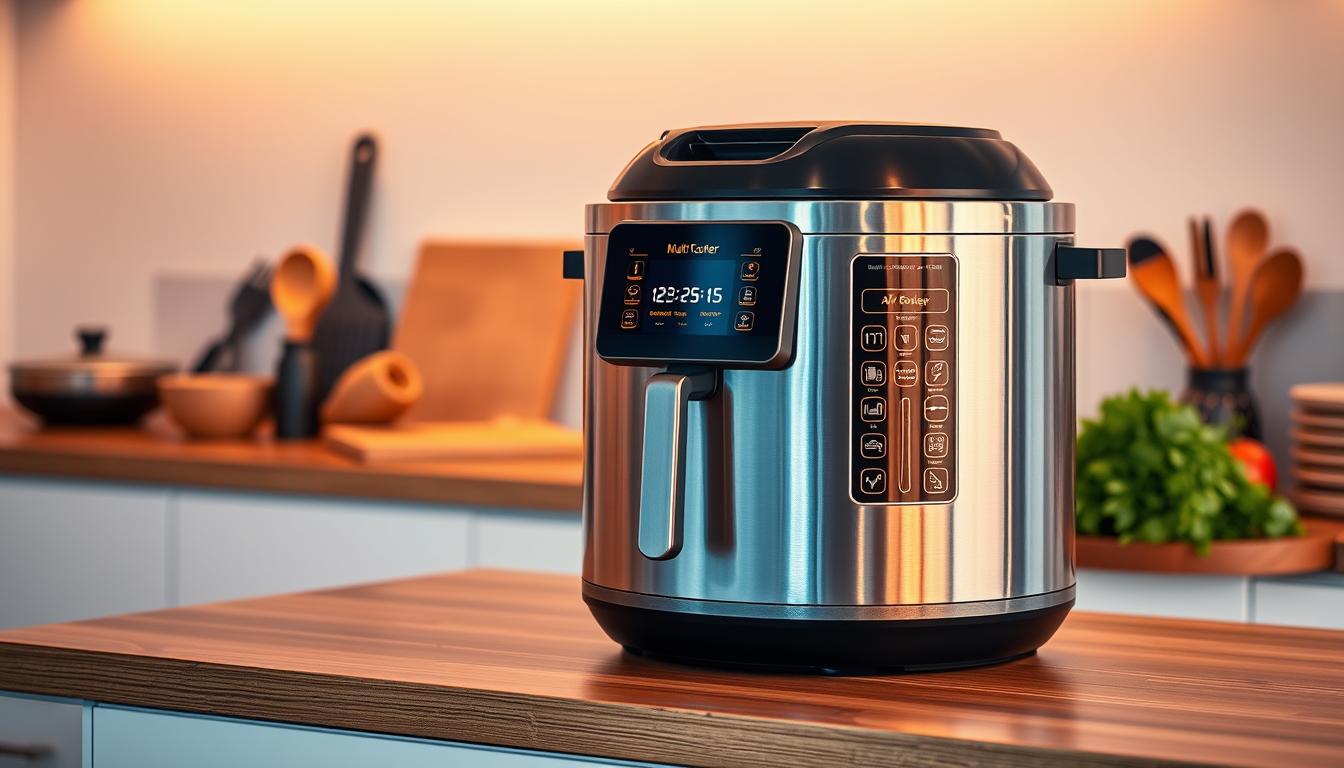
An air cooker is a high-performance kitchen appliance that uses rapid convection technology to cook food by circulating intense heat and controlled humidity. By combining a powerful heating element with a high-speed fan, it creates a "whirlwind" of hot air that mimics the results of deep frying and roasting, providing a crispy exterior while maintaining internal moisture without excessive oil.
The transition from traditional ovens to specialized air-based appliances has revolutionized home cooking over the last decade. As we look at the landscape in 2026, the term "air cooker" has evolved beyond the basic air fryer. Modern air cookers are sophisticated climate-controlled devices that manage temperature, air velocity, and even moisture levels to optimize the chemical reactions required for perfect textures. Understanding the internal mechanics of these devices is essential for anyone looking to master modern culinary technology.
Defining the Air Cooker: More Than a Standard Air Fryer
To understand how an air cooker works, one must first distinguish it from its predecessor, the basic air fryer. While the terms are often used interchangeably, by 2026, the "Air Cooker" category generally refers to third-generation appliances that incorporate climate sensors and precision moisture control alongside standard convection.
A standard air fryer focuses primarily on high-velocity dry heat. In contrast, a comprehensive air cooker manages the "micro-climate" inside the cooking chamber. This involves not just heating the air, but also calculating the exact amount of steam to retain or vent based on the specific food profile. This allows the device to perform tasks that standard air fryers struggle with, such as sous-vide-style results, delicate vegetable preservation, and complex baking, all while retaining the ability to "air fry" proteins to a crisp.
The Core Physics: Convection and Heat Transfer
At the heart of every air cooker is the principle of convection heat transfer. In a conventional oven, heat is largely static; the air moves slowly, which can lead to cold spots and uneven cooking. An air cooker solves this through "Rapid Air Technology" or "Cyclone" airflow patterns.
The Heating Element
Most air cookers utilize a high-wattage nichrome (nickel-chromium) heating coil, typically situated at the top of the cooking chamber. When electricity passes through this coil, it encounters resistance, generating significant thermal energy. In 2026 models, these elements are often coupled with infrared emitters to provide a secondary layer of radiant heat, which penetrates the surface of the food more deeply than air alone.
The High-Speed Fan
Directly above or behind the heating element sits a powerful fan. This is not a standard cooling fan; it is designed to move air at speeds often exceeding 20 meters per second. This high-velocity air picks up the thermal energy from the heating element and carries it downward. The design of the cooking basket—often featuring a mesh bottom or a "starfish" shape—forces the air to hit the bottom of the chamber and bounce back up, creating a constant, turbulent vortex. This ensures that the food is hit by heat from every possible angle simultaneously.
The Maillard Reaction
The primary goal of an air cooker's physics is to trigger the Maillard reaction. This is a chemical reaction between amino acids and reducing sugars that gives browned food its distinctive flavor and texture. For this to occur, the surface moisture of the food must be evaporated quickly, and temperatures must reach between 140°C and 165°C (280°F to 330°F). Because the air cooker moves air so rapidly, it strips away the "cool" moisture boundary layer that surrounds food, allowing the Maillard reaction to occur much faster than in a traditional oven.
Key Hardware Components and Their Functions
Understanding the "how" requires a breakdown of the specific components that facilitate the air cooker’s operation.
- Thermal Sensors and NTC Thermistors: Modern air cookers use Negative Temperature Coefficient (NTC) sensors to monitor the internal environment hundreds of times per second. These sensors ensure the temperature remains stable, preventing the "cycling" effect (where temperatures fluctuate wildly) common in cheaper appliances.
- Humidity Sensors: A hallmark of the advanced air cooker is the ability to detect moisture levels. By measuring the steam released by the food, the device can automatically adjust the fan speed or open a vent to ensure the exterior becomes crispy while the interior stays juicy.
- The Cooking Chamber: Usually coated in ceramic or high-grade non-stick materials, the chamber is designed to reflect radiant heat back toward the food, maximizing energy efficiency.
- Exhaust System: As food cooks, it releases steam and smoke. The exhaust system filters these gases—often through an integrated carbon filter—before venting them out the back of the machine. This prevents the pressure from building up and maintains the "dry" heat required for browning.
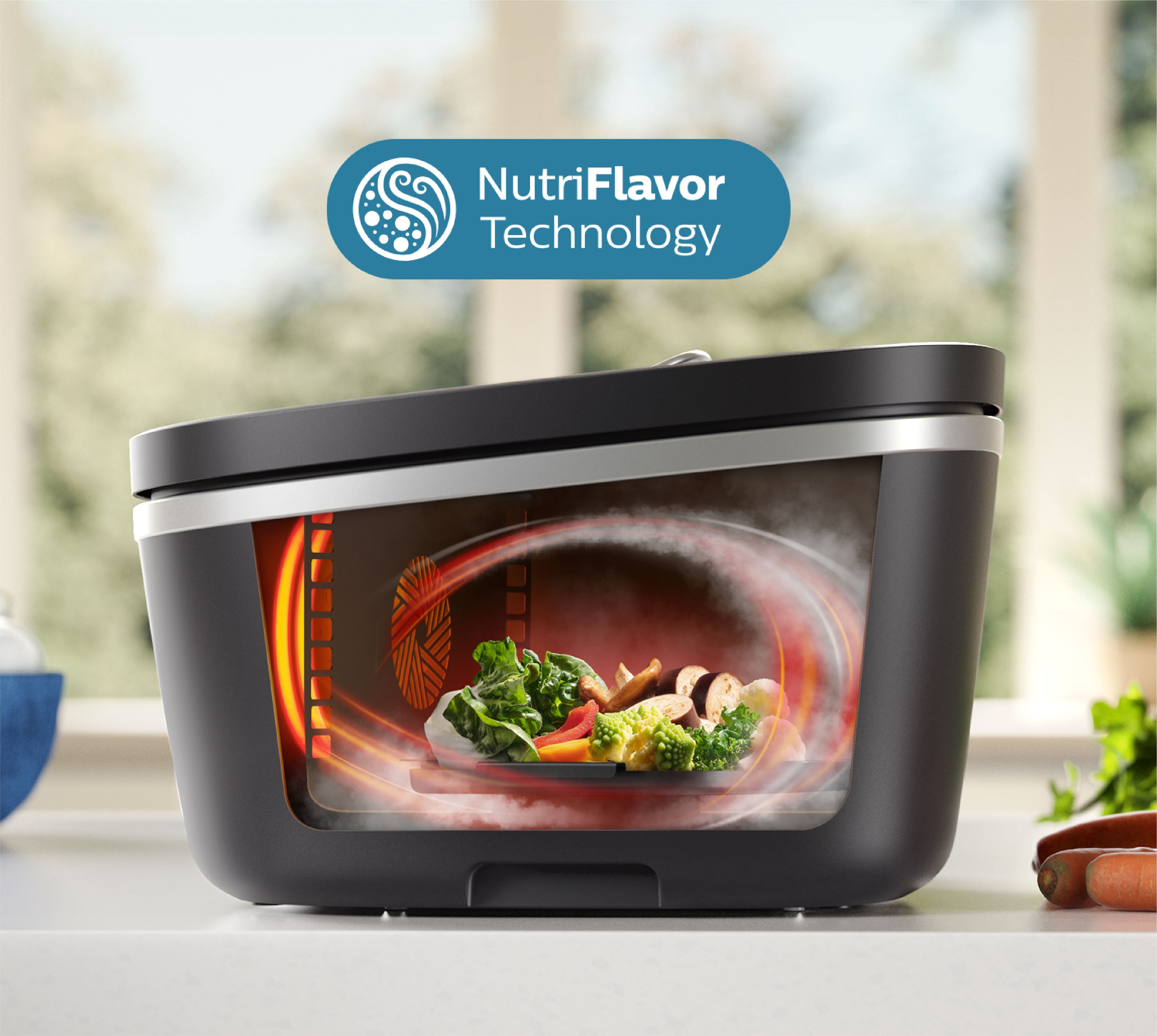
The Role of Moisture Control (NutriFlavor Technology)
By 2026, the biggest advancement in air cooking technology is the integration of moisture management, often referred to by manufacturers like Philips as NutriFlavor or similar proprietary terms. Standard air frying can sometimes lead to "dehydrated" food because the high-speed air removes too much internal moisture.
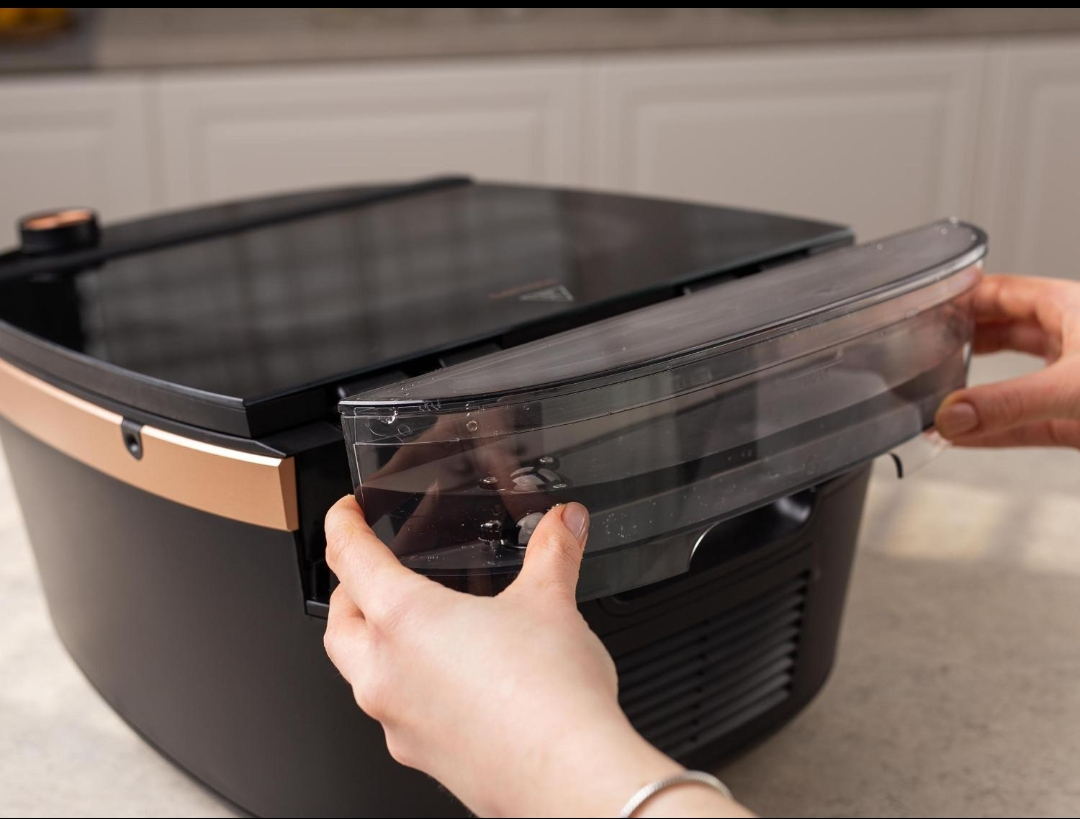
Advanced air cookers solve this by using an integrated water reservoir or by precisely controlling the exhaust vent. If the sensors detect that the food's internal temperature is rising too slowly while the surface is drying out, the machine will restrict the airflow or introduce a pulse of steam. This creates a "steam-convection" environment. The steam transfers heat more efficiently than dry air, cooking the center of the food faster, while the final phase of the cooking cycle uses high-speed dry air to achieve the desired crispness.
Comparison of Cooking Technologies
To see how the air cooker fits into the modern kitchen, it is helpful to compare it to traditional methods.
| Feature | Air Cooker (2026 Models) | Traditional Convection Oven | Deep Fryer | Microwave Oven |
|---|---|---|---|---|
| Heat Source | Radiant + High-Speed Convection | Static or Low-Speed Convection | Hot Oil (Conduction) | Electromagnetic Waves |
| Cooking Speed | Very Fast (1.5x - 2x faster) | Standard | Fast | Extremely Fast |
| Texture Result | Crispy exterior, moist interior | Balanced, can be dry | Maximum Crispness | Often soggy or rubbery |
| Oil Required | Minimal to None (0-15ml) | Moderate | High (1-3 Liters) | None |
| Precision | High (AI & Sensor driven) | Medium | Manual | Low (Time-based) |
| Versatility | High (Bake, Roast, Fry, Steam) | High | Low (Frying only) | Low (Reheating/Steaming) |
Step-by-Step: The Air Cooking Process
To visualize how an air cooker works during a standard cycle, follow this operational sequence:
1. The Preheating Phase
While many air cookers claim "no preheat" is necessary, the device actually performs a rapid warm-up. The heating element stays on continuously until the NTC sensors report the target temperature. The fan runs at a lower speed to distribute this initial heat evenly.
2. The Active Cooking Cycle
Once the food is inserted, the fan ramps up to its maximum RPM. This creates the "air-curtain" effect. If the user has selected a specific program (e.g., "Air Cook Salmon"), the device uses its internal database to adjust the climate. For salmon, it might maintain a higher humidity for the first 60% of the time to preserve Omega-3 fatty acids, then switch to high-dry-heat for the final 40% to crisp the skin.
3. Exhaust and Pressure Regulation
As the temperature inside reaches the set point, the heating element begins to pulse on and off to maintain precision. Excess steam generated by the food's water content is pushed through the exhaust vent to prevent the "steaming" effect that would otherwise lead to soggy food.
4. The Cooling Down Phase
After the timer expires, the heating element shuts off, but the fan often continues to run for a short period. This protects the internal electronics from heat soak and begins the process of cooling the exterior of the food slightly, which can actually help the "crisp" set properly.
Maintenance and Safety Mechanics
The longevity of an air cooker depends on the maintenance of its airflow components. Because the fan moves air at such high speeds, any grease buildup on the heating element or fan blades can cause smoke or reduce efficiency.
- Self-Cleaning Cycles: Many 2026 air cookers include a "steam clean" function where the user adds a small amount of water to the basket, and the machine runs a low-heat cycle to loosen grease using the internal humidity.
- Safety Cut-offs: Air cookers are equipped with thermal fuses. If the fan fails, the temperature around the heating element would skyrocket instantly. The thermal fuse detects this anomaly and cuts power to the element to prevent fire hazards.
- Automatic Pause: Most units feature a magnetic or mechanical switch that detects when the basket is removed, instantly halting the fan and heating element to prevent the user from being blasted by 200°C air.
Common Troubleshooting for Air Cookers
Even with advanced 2026 technology, users may encounter issues. Understanding the mechanics helps in resolving them.
- White Smoke: This usually occurs when high-fat foods (like bacon) drip oil onto the bottom of the chamber or the heating element. The oil reaches its smoke point and vaporizes. Solution: Adding a tablespoon of water to the bottom drawer can help neutralize the smoke point of the dripping fat.
- Uneven Browning: This is often a result of overcrowding. If the air cannot circulate under and around the food, the convection vortex is broken. Solution: Ensure the basket is only filled to the recommended level to maintain airflow integrity.
- The "E1" or "E2" Error Code: These typically indicate a sensor failure or an open circuit in the NTC thermistor. Because air cookers rely on precision data, they will shut down if they cannot verify the internal temperature.
Frequently Asked Questions
Does an air cooker use a lot of electricity?
While air cookers use high-wattage elements (typically 1,400 to 2,200 watts), they are generally more energy-efficient than traditional ovens. This is because the cooking chamber is small and the cooking time is significantly reduced. An air cooker can often roast a chicken in 40 minutes, whereas a full-sized oven would require 15 minutes of preheating and 60 minutes of cooking, consuming much more total kilowatt-hours.
Can you put aluminum foil or parchment paper in an air cooker?
Yes, but with caution. Because the air cooker relies on bottom-up airflow, covering the entire basket with foil will block the air, leading to uneven cooking. If using foil or paper, it should be weighted down by food and only cover a portion of the basket to allow the "cyclone" effect to continue.
Is air cooking actually healthier?
Technically, yes, in terms of fat reduction. Air cooking reduces the calorie count of traditionally fried foods by 70% to 80% because it uses the food's natural fats to achieve crispness. Additionally, advanced 2026 air cookers that use humidity control help preserve heat-sensitive vitamins (like Vitamin C and B vitamins) that are often lost during high-heat dry roasting or boiling.
Why is my air cooker making a loud rattling noise?
This is almost always related to the fan. Since the fan rotates at high speeds, even a small piece of debris or a slightly loose fan nut can cause significant vibration. If the noise is new, check for any food debris that might have been sucked up into the heating element shroud.
Practical Recommendations
To get the most out of an air cooker, users should treat it as a precision instrument rather than a "set and forget" microwave. For the best results:
- Prioritize Airflow: Never stack flat items (like schnitzel or chicken breasts) directly on top of each other.
- Use High-Smoke-Point Oils: If you do use oil for extra crispness, choose avocado or grapeseed oil, which can handle the 200°C+ temperatures without smoking.
- Clean the Heating Element: Once a month, once the unit is completely cool, wipe the top heating element with a damp cloth to prevent carbonized grease buildup.