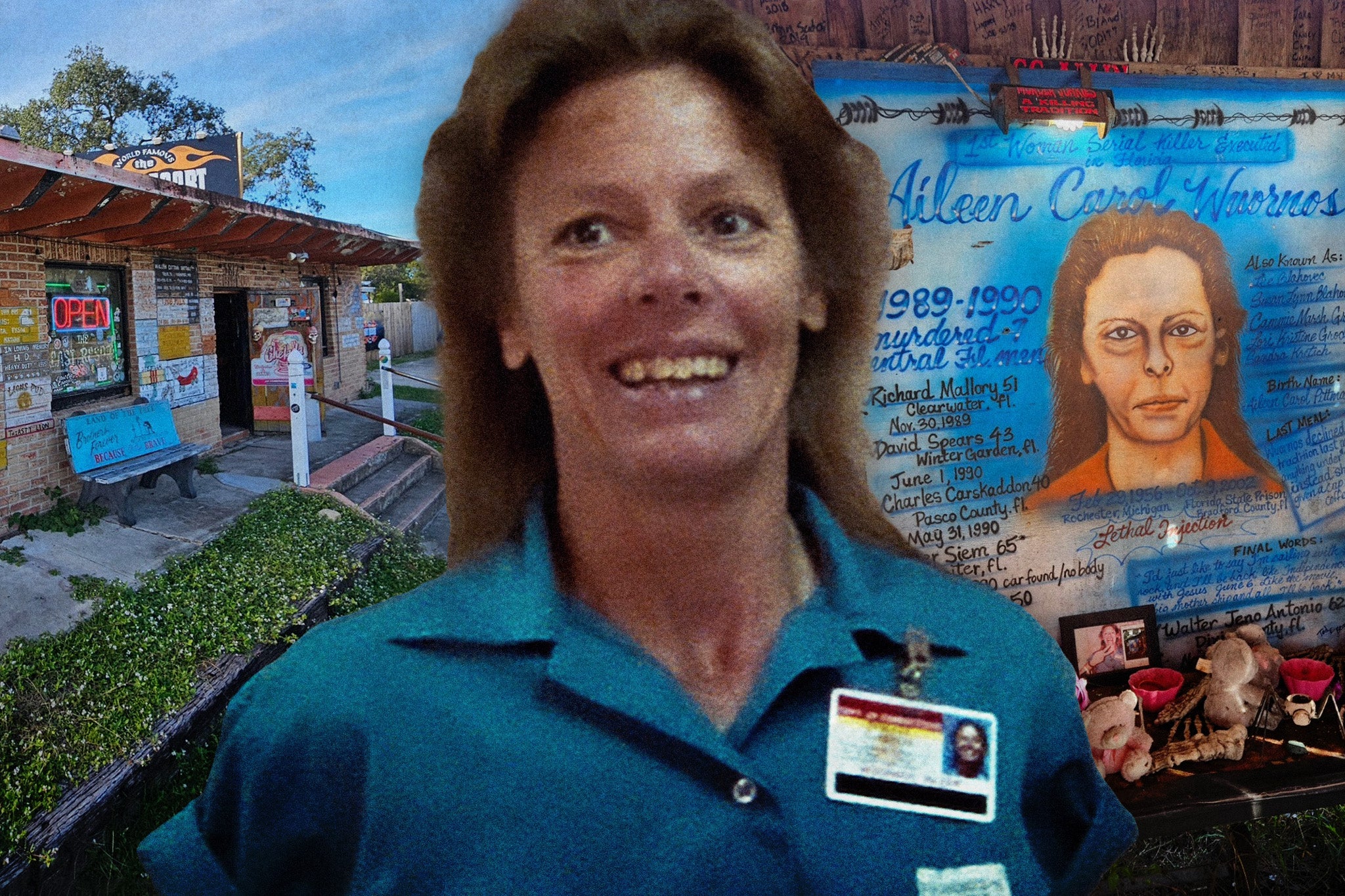
Aileen Wuornos remains one of the most documented figures in American criminal history, but the narrative often omits or simplifies the role of her surviving family members. Her half-sister, Keith Schlotterbeck, emerged as a significant, albeit reluctant, figure in the public consciousness during the intense media scrutiny surrounding Wuornos’s trials and eventual execution. Understanding Schlotterbeck’s position provides essential context regarding the familial background, the legal proceedings, and the complex human dynamic that existed behind the sensationalized headlines of the 1990s and early 2000s.
The story of the Wuornos sisters is rooted in a fractured childhood in Michigan, characterized by instability, trauma, and, eventually, profound estrangement. While Aileen Wuornos gained international notoriety for the murders of seven men in Florida between 1989 and 1990, Keith Schlotterbeck maintained a largely private existence, only stepping into the spotlight when the gravity of her sister’s crimes necessitated her input or when the media sought to construct a comprehensive profile of the killer.
Familial Origins and Early Life
Aileen Wuornos and Keith Schlotterbeck shared a mother, Diane Wuornos, but were born into a family environment marked by severe dysfunction. To understand the trajectory of their adult lives, it is necessary to acknowledge the conditions of their youth. The sisters were raised in a household where their father, Leo Pittman, was largely absent, and their mother struggled with significant instability.
Historical reports indicate that the sisters spent much of their childhood under the care of their grandparents in Troy, Michigan. This period is often cited by biographers and psychologists as a formative era of neglect and volatility. The difference in their paths—with Aileen engaging in high-risk behaviors and drifting into a life of crime, and Keith navigating a path of relative anonymity—highlights the divergence that can occur even among siblings raised in the same precarious household. By the time Aileen moved to Florida and began the string of events that would define her legacy, the sisters had long been separated by physical distance and emotional disconnect.
The Media Spotlight: Schlotterbeck’s Role During the Trial
When the trial of Aileen Wuornos reached its zenith in the early 1990s, the media sought every possible angle to explain the "why" behind the killings. Keith Schlotterbeck became a primary point of contact for investigative journalists and documentary filmmakers.
Schlotterbeck’s public statements during this period were characterized by a mix of confusion, sorrow, and defensiveness. She was frequently asked to reconcile the sister she remembered—a sibling she had not been close to for many years—with the "serial killer" depicted by the prosecution and the international press. Unlike some family members of notorious offenders who choose to profit from or aggressively campaign against the individual, Schlotterbeck’s engagement appeared to be a reaction to the persistent intrusion of the press.
Her testimony and public comments served to humanize a subject who was otherwise being stripped of all complexity by the binary nature of the courtroom. She provided the court and the public with insights into their shared history, which defense teams occasionally utilized to argue that Aileen’s upbringing contributed to her later psychological instability.
Distinguishing Fact from Speculation
A recurring challenge in analyzing the lives of individuals like Aileen Wuornos is the proliferation of inaccuracies in popular media. Following the success of fictionalized adaptations of Wuornos’s life—most notably the 2003 film Monster—many viewers began to conflate cinematic portrayals with the historical record.
Keith Schlotterbeck’s accounts have been vital in correcting narratives that suggest a deep, lifelong bond between the sisters. In reality, by the time the murders occurred, the two women were essentially strangers. Reports from the era confirm that their communication was sporadic, and the emotional intimacy required for a supportive sisterly relationship was largely absent. Scholarly analysis of the case often distinguishes between "familial support" and "familial burden," with Schlotterbeck’s experience clearly falling into the latter category as she was thrust into the role of spokesperson for a family member she barely recognized.
Comparison of Life Paths
To better visualize the diverging paths of the sisters, one can examine the following factors that influenced their adult lives.
| Factor | Aileen Wuornos | Keith Schlotterbeck |
|---|---|---|
| Public Presence | Subject of global notoriety | Private individual |
| Legal Involvement | Convicted defendant in death penalty case | Witness/Consulted family member |
| Relationship | Estranged | Estranged |
| Primary Environment | Florida/Transient lifestyle | Michigan/Stable environment |
| Post-Trial Status | Executed in 2002 | Remained out of public eye |
The Legal and Psychological Context
From a technical perspective, the inclusion of family members in criminal proceedings like those of Wuornos is common, yet rarely results in a change of verdict. Defense attorneys often call family members to the stand to provide "mitigating evidence." This is designed to show the jury that the defendant is a product of their environment, aiming to secure a sentence of life imprisonment rather than death.
In the case of Aileen Wuornos, the testimony provided by those who knew her as a child—including Schlotterbeck—was intended to highlight a history of physical and emotional abuse. However, the prosecution successfully argued that these factors did not absolve Wuornos of her personal agency or the calculated nature of her actions. For Schlotterbeck, the legal process was not just a quest for justice for the victims; it was a traumatic public dissection of her own childhood.
Reflections on the Media Coverage
Since the early 2000s, the way the media covers the families of convicted criminals has evolved. In 2026, observers looking back at the coverage of Keith Schlotterbeck often note how the media effectively used her as a prop. During the 1990s, there was little regard for the psychological impact of public shaming on the innocent siblings of the accused. Journalists often pursued Schlotterbeck with the intent of obtaining "the scoop" on her sister’s internal state, often ignoring the fact that she had no insider knowledge of the crimes.
This historical lesson has informed contemporary journalistic standards, where there is now a greater emphasis on the consent and privacy of family members who find themselves adjacent to high-profile criminal cases.
Frequently Asked Questions
Did Keith Schlotterbeck support Aileen Wuornos during her trials? Keith Schlotterbeck provided testimony regarding their shared upbringing, which was a strategic part of the defense's argument for mitigation. However, she was not an active participant in her sister's legal strategy and maintained that they were essentially strangers who had lost contact years prior to the events in Florida.
Was Keith Schlotterbeck involved in any documentaries? While she was featured in archival footage and provided interviews for various investigations into her sister's life, Schlotterbeck generally avoided the spotlight. Her appearances were usually prompted by journalists seeking to flesh out the background of the case, rather than through her own initiative.
Why is there so much confusion about their relationship? The confusion stems from the intense dramatization of Aileen Wuornos’s life in film and literature. These works often take creative liberties with familial bonds to create a more compelling narrative, leading the public to believe the sisters were close when the reality was one of profound emotional estrangement.
What is the current status of the family records? As of 2026, public record remains the most reliable source for information regarding this family. Most details have been meticulously documented in court records from the State of Florida. Any information outside of these records—such as unverified tabloid claims—should be viewed with significant skepticism.
Did Aileen Wuornos have other siblings? Beyond their half-sister relationship, the family history is complex. Aileen Wuornos was born after the death of her father, and the household was a shifting environment. Records suggest she had a brother, but Keith Schlotterbeck remains the primary point of interest for researchers studying the family's influence on the case.
Next Steps for Researchers
For those interested in a deeper analysis of the Wuornos case, the most productive path is to consult official trial transcripts rather than pop-culture documentaries. The Florida Department of Corrections and legal databases house the verified testimony provided during the trials, which remains the most accurate account of the facts. When analyzing family members like Keith Schlotterbeck, it is essential to prioritize primary documents to ensure an accurate understanding of the individual’s actual involvement versus the role constructed by the media.
If you are writing or researching this topic, focus on the distinction between the objective facts of the case and the subjective, often speculative narratives presented in retrospective media. By anchoring your research in the available court records and verified biographical data, you can avoid the common pitfalls of sensationalism.