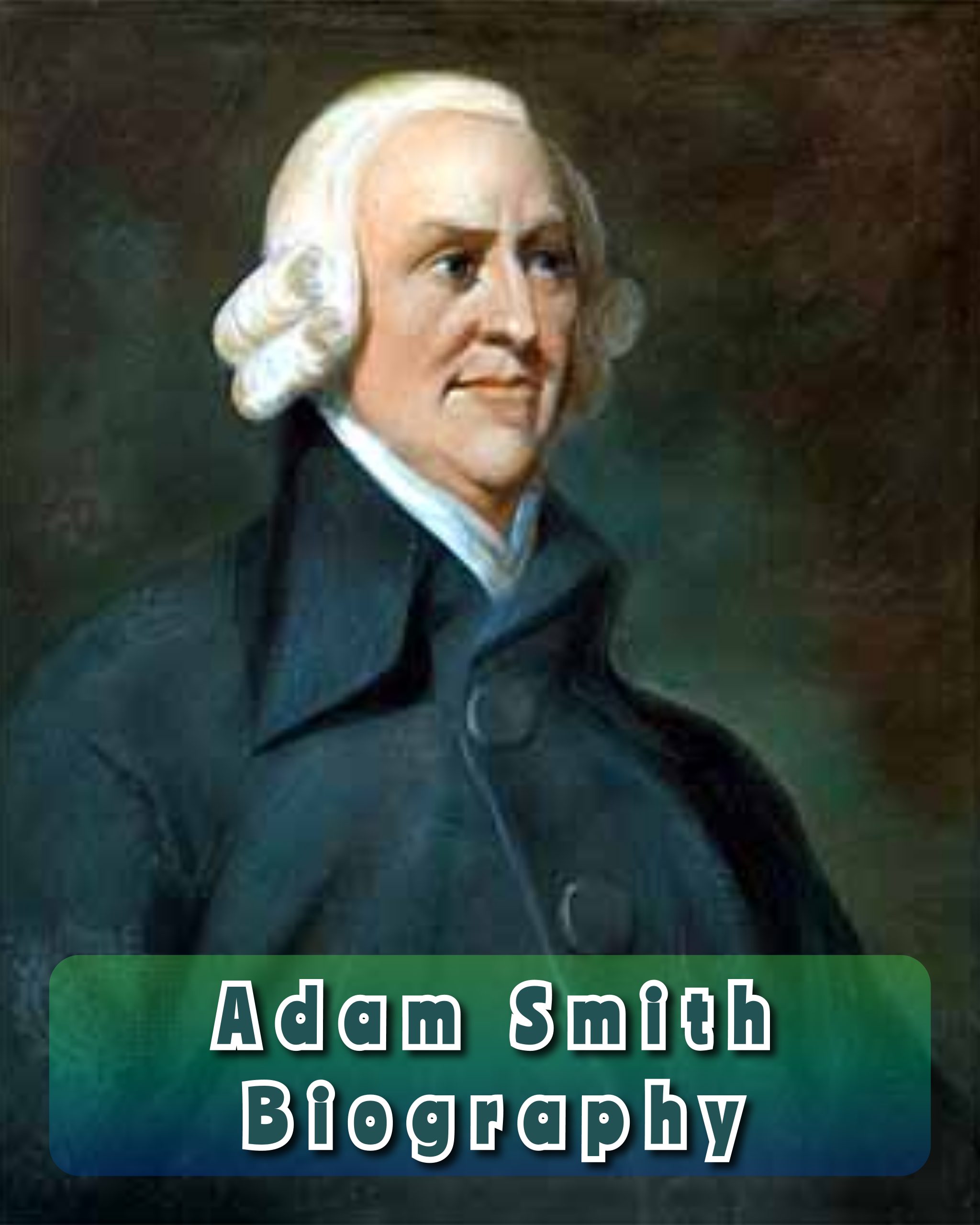
Determining the "net worth" of Adam Smith, the 18th-century Scottish moral philosopher and pioneer of political economy, requires shifting from modern accounting standards to an examination of his earned income, property, and the social standing he maintained throughout his life. Smith died in 1790 with a modest personal fortune, primarily composed of his salary as a Customs Commissioner and the royalties from his seminal works, representing a successful academic and civil service career rather than the massive accumulation of commercial capital.
The Financial Reality of an 18th-Century Intellectual
To understand the financial standing of Adam Smith, one must first discard modern expectations of the "net worth" of a globally influential figure. In the late 18th century, wealth was almost exclusively tied to land ownership, hereditary titles, or significant mercantile trade. Smith did not belong to the landed gentry, nor was he an industrialist. His economic life was defined by the transition from the sheltered environment of the Scottish Enlightenment universities to the administrative rigors of government service.
Smith’s primary sources of income during his life were his academic salary at the University of Glasgow, a life-long pension earned from his time as a tutor to the young Duke of Buccleuch, and his final, long-standing position as a Commissioner of Customs for Scotland. His wealth was not "net worth" in the sense of a diversified portfolio of stocks and real estate, but rather a reflection of the "fixed income" lifestyle of a high-ranking professional in the Enlightenment era.
Academic Earnings and the Buccleuch Pension
Adam Smith’s early career as a Professor of Moral Philosophy at the University of Glasgow provided him with a respectable middle-class income. Professors at the time often received fees directly from students, creating a variable income stream based on the popularity of their lectures. However, the most significant inflection point in Smith’s financial history was his decision to leave academia in 1764.
He accepted a position as a traveling tutor to the young Henry Scott, 3rd Duke of Buccleuch. This role was not merely a job; it was a social and financial advancement. The contract stipulated a significant salary—£300 per year—and, crucially, a pension of £300 per annum for the rest of his life. This was a substantial sum in 1764, essentially providing Smith with a degree of financial independence that allowed him to dedicate the next decade to the composition of The Wealth of Nations (1776). Without this guaranteed annuity, his ability to produce his magnum opus would have been constrained by the necessity of ongoing teaching or administrative obligations.
The Customs Commissioner Period
In 1778, two years after the publication of The Wealth of Nations, Smith was appointed a Commissioner of Customs for Scotland. This role was suggested by his friend and fellow intellectual, Henry Dundas. The appointment was both a mark of social prestige and a significant financial boost, paying £600 per year—an immense salary for the time.
For the final twelve years of his life, Smith functioned as a high-level bureaucrat. His work involved the daily management of tax collection, the enforcement of trade regulations, and the oversight of Scottish ports. While modern readers might find it ironic that the "father of free trade" spent his final years enforcing the very customs duties he criticized, his contemporaries viewed it as a natural reward for a man of his stature. During this period, his annual income surpassed that of many local landowners, placing him firmly in the upper echelons of Edinburgh’s professional class.
Evaluating Assets and Expenditures at Death
When Adam Smith died on July 17, 1790, his estate was valued at approximately £5,000 to £6,000. In 2026, when adjusted for inflation and the vast changes in global purchasing power, this is a difficult figure to contextualize accurately. However, in the context of the late 18th century, this sum was not the wealth of an industrial magnate, but it was significant enough to represent a life of comfort, stability, and prudent management.
Smith was known for a somewhat frugal lifestyle, despite his high income. He lived in Panmure House in Edinburgh with his mother until her death in 1784 and his cousin, Janet Douglas. His expenditures were largely directed toward the maintenance of his library, the support of his extended family, and the social obligations inherent in being a public figure. He did not engage in risky speculative investments, and he held no vast tracts of land. His "worth" at death was the accumulation of a lifetime of salaries, managed with the same analytical caution he applied to his economic theories.
Comparative Financial Standing Table
The following table provides a breakdown of Smith’s primary revenue sources compared to the economic context of his era.
| Period | Role | Estimated Annual Income | Financial Significance |
|---|---|---|---|
| 1751–1764 | Professor, Glasgow University | £150–£200 | Base professional income |
| 1764–1774 | Traveling Tutor (Buccleuch) | £300 + Expenses | Provided lifetime financial security |
| 1778–1790 | Commissioner of Customs | £600 | High-ranking bureaucratic wealth |
| 1776–1790 | Royalties (Wealth of Nations) | Varies | Minor compared to salary |
The Role of Publications and Royalties
A common misconception is that Adam Smith became wealthy through the massive success of his books. While The Wealth of Nations went through five editions during his lifetime and was translated into several languages, the publishing industry of the late 18th century functioned differently than today. Intellectual property laws were in their infancy, and authors rarely received the kind of life-changing royalty percentages that modern best-selling authors expect.
Smith received payments for his manuscripts, but these were typically flat fees paid by publishers. While he certainly benefited financially from his fame, the royalties from his writing served more as supplemental income rather than the primary driver of his estate. His true wealth was the salary he commanded because his reputation allowed him to hold prestigious positions.
Social Status vs. Net Worth
It is essential to distinguish between Adam Smith's net worth and his social capital. By 1790, Smith was one of the most famous men in Europe. His influence on policy and economic thought was immense, yet this prestige did not equate to a massive bank balance. In the 18th century, influence was often wielded through patronage and proximity to power.
Smith lived in Edinburgh, the center of the Scottish Enlightenment, where he was a central figure in the intellectual "clubs" of the city. He did not own a country estate or a fleet of ships. He was, in modern terminology, a highly paid, upper-middle-class professional. The lack of vast landed wealth is notable because, in the physiocratic economic view (which Smith engaged with throughout his work), land was the ultimate source of value. By focusing his efforts on bureaucratic and intellectual work, Smith effectively lived as a member of the "monied" class that his own theories helped to eventually supplant the landed aristocracy.
Frequently Asked Questions
Did Adam Smith become a millionaire from his books?
No. Adam Smith did not become a millionaire from his books. While his works were internationally acclaimed and highly influential, the publishing model of the 18th century did not provide for the kind of multi-million-pound wealth accumulation seen in modern publishing. His income was derived primarily from university salaries, tutoring pensions, and government positions.
Why was a free-trade advocate a Customs Commissioner?
Smith’s role as a Commissioner of Customs was a matter of professional and political necessity. In the 18th century, high-level government appointments were often granted to intellectuals who had the favor of the ruling political elite. While his work involved collecting the very duties he critiqued, he saw this as his civic duty and a means to maintain his financial independence while continuing his intellectual work.
How much would Adam Smith’s estate be worth today?
Adjusting historical wealth is notoriously imprecise due to the vast differences in goods and services available. If adjusted solely for inflation using the Bank of England's historical calculators, his estate of roughly £6,000 would be worth several hundred thousand pounds in 2026. However, this ignores the change in standard of living and the relative purchasing power of a top-tier salary in 1790 compared to today.
What happened to Smith’s money after his death?
Smith was known for his generous support of friends and family during his life. Upon his death, his assets were divided among his heirs. Because he had no direct descendants, his estate helped support his extended family and contributed to his legacy of supporting educational and social causes.
Did Smith invest in the stock market?
The modern stock market did not exist in the way we know it during Smith’s lifetime. The East India Company and the South Sea Company were major financial entities of the day, but Smith was famously skeptical of the joint-stock company model. His personal financial habits were marked by caution, savings, and salary accumulation rather than market speculation.
Next Steps for Economic Researchers
For those looking to further understand the personal finances of Enlightenment figures, the primary resources are the archives held by the University of Glasgow and the National Records of Scotland. These repositories contain the administrative ledgers and tax records that provide the only verifiable evidence of Smith's income. Researchers should approach Smith’s finances not as a case study in investment strategy, but as a lens into the professional and bureaucratic life of an 18th-century intellectual.
Disclaimer: This article provides a historical and financial overview based on documented academic research. It does not constitute financial advice. Historical currency conversions are estimates for illustrative purposes only.