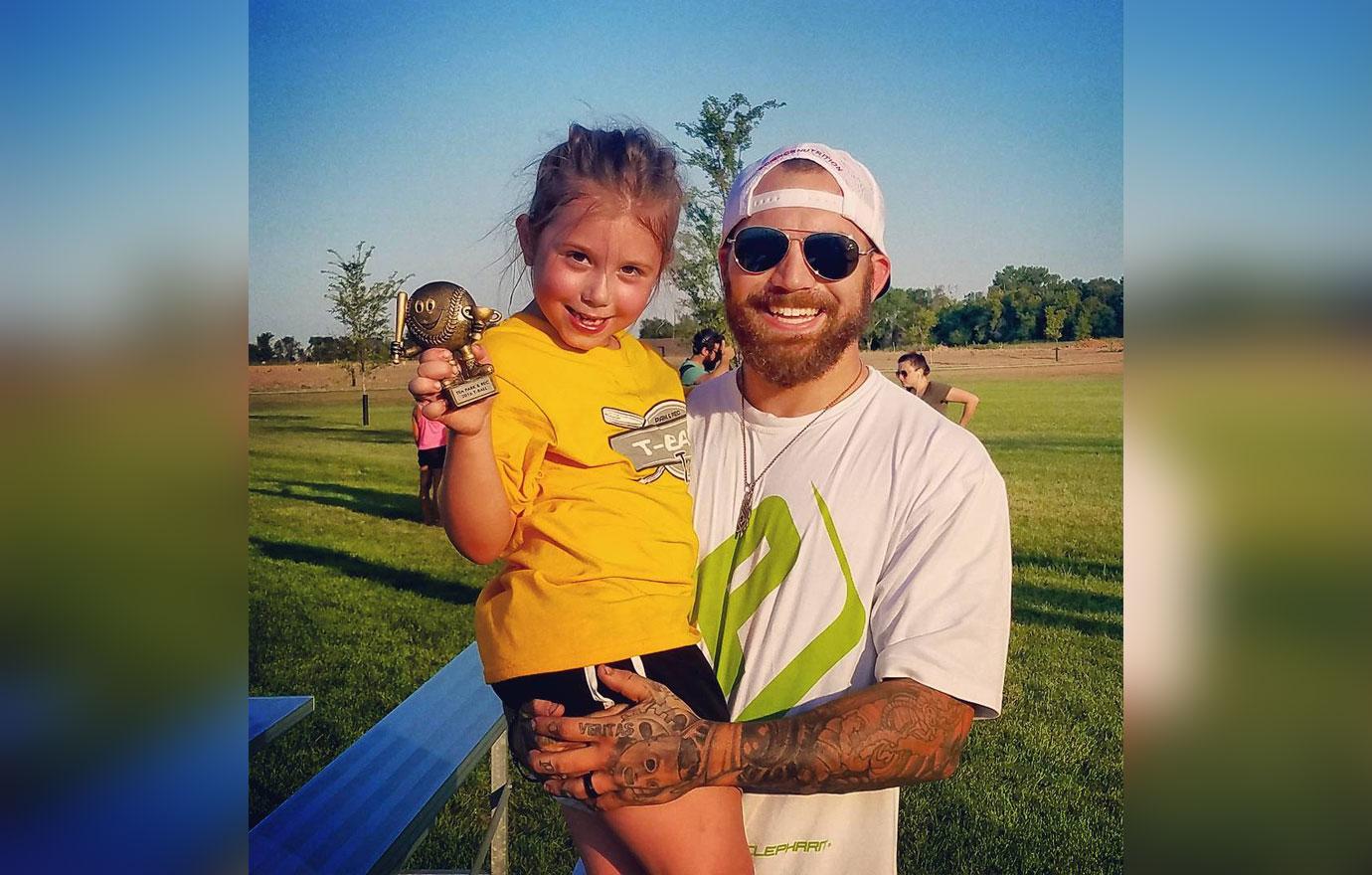
Adam Lind’s involvement in Aubree’s life—his daughter with Teen Mom 2 star Chelsea Houska—has been defined by fluctuating custody arrangements, legal challenges, periods of estrangement, and the stabilizing presence of Chelsea’s husband, Cole DeBoer. Over more than a decade, their dynamic has evolved from a tumultuous co-parenting relationship into a structured arrangement where Chelsea and Cole manage the vast majority of day-to-day parenting and legal responsibilities, while Adam’s contact has become minimal or entirely absent.
The Origins: Early Custody and Co-Parenting Challenges on Reality Television
The public’s awareness of Adam Lind in Aubree’s life began during Chelsea Houska’s tenure on MTV’s 16 and Pregnant and subsequently Teen Mom 2. Aubree was born in September 2009, and the early seasons of the reality franchise documented the volatile nature of Chelsea and Adam’s romantic relationship, as well as the immediate hurdles of young parenthood.
During Aubree's infancy and toddler years, custody arrangements were informal and heavily prone to disruption due to Adam's recurring legal troubles and personal instability. Initial court-ordered agreements granted Adam scheduled visitation, but these schedules were frequently modified or interrupted. Reality television captured numerous instances where Adam failed to show up for scheduled visits, arriving late, or engaging in behavioral patterns that concerned both Chelsea and the court system. Despite these challenges, Chelsea consistently attempted to facilitate a relationship between Aubree and her biological father, encouraging visitation whenever it was deemed safe and legally permissible.
As the years progressed, Adam’s legal record—which included multiple arrests for driving offenses, substance-related issues, and domestic incidents—began to heavily influence family court rulings. Judges gradually restricted his unsupervised visitation, moving requirements toward supervised settings to protect the child's well-being.
The Turning Point: The Role of Cole DeBoer and Family Stabilization
A monumental shift in Aubree’s daily life occurred when Chelsea Houska met Cole DeBoer in 2014, leading to their marriage in 2016. Cole integrated smoothly into the family unit, taking on an active, nurturing paternal role that eventually became foundational in Aubree’s upbringing.
The introduction of a stable male figure altered the legal and emotional landscape of co-parenting. While Adam retained certain visitation rights, Cole’s consistent presence provided Aubree with a reliable home environment. Over time, Aubree began referring to Cole as her primary father figure in daily life, a dynamic that was respected by the court system as Chelsea and Cole built a larger blended family that eventually included several younger siblings (Watson, Layne, and Walker).
Legal modifications followed these domestic developments. In 2019, Chelsea and Adam agreed to a revised custody arrangement that adjusted visitation schedules. Notably, this agreement reduced Adam’s scheduled overnight parenting time and placed clearer boundaries around communication, reflecting both Adam's decreasing involvement and Aubree’s own growing preferences as she advanced through elementary school.
Legal Developments, Visitation Reductions, and Supervision Requirements
Family court proceedings regarding Adam Lind in Aubree’s life have consistently centered on the child’s safety, emotional stability, and the fulfillment of parental duties. Over multiple court filings in South Dakota—where the family resides—legal parameters shifted significantly:
- Supervised Visitation: At various points, courts mandated that Adam’s visits with Aubree take place only under the supervision of third parties, often members of the Lind family, such as Adam's parents, Donna and Randy Lind.
- Voluntary Relinquishment Discussions: Reports and legal filings over the years highlighted discussions regarding custody rights, with family members and public speculation frequently centering on whether Adam would consider relinquishing his parental rights entirely to allow Cole DeBoer to adopt Aubree.
- Grandparent Visitation Rights: Because of the strong bond maintained between Aubree and Adam’s parents, formal and informal arrangements ensured that Donna and Randy Lind continued to see their granddaughter regularly, even during periods when Adam’s direct contact with Aubree was severely limited or paused.
These legal guardrails ensured that while Adam remained legally tied to Aubree, his day-to-day decision-making power and physical custody footprint shrank considerably.
Summary of Custody and Family Dynamics Across Eras
| Timeframe | Primary Custodial Setup | Adam Lind's Involvement Level | Key Influencing Factors |
|---|---|---|---|
| 2009–2013 | Shared/Informal schedule | Moderate to inconsistent | Frequent schedule changes, early relationship volatility, initial legal disputes. |
| 2014–2018 | Legal custody with Chelsea; scheduled visitation for Adam | Declining and increasingly supervised | Introduction of Cole DeBoer, Adam's mounting legal issues, court-ordered supervision. |
| 2019–Present | Primary physical and legal custody with Chelsea and Cole | Minimal to absent | Revised custody agreements, reduced overnight visits, Aubree's personal preferences. |
The Current Reality: Adolescence, Privacy, and Stepparent Adoption Considerations
As Aubree entered her teenage years, the public nature of her upbringing shifted. In late 2020, Chelsea Houska and her family made the decision to depart from MTV’s Teen Mom 2, citing a desire for privacy and a wish to allow their children—particularly Aubree as she grew older—to navigate adolescence away from television cameras and online scrutiny.
This transition allowed Aubree’s relationship with Adam Lind to be handled entirely out of the public eye. Observers and fans frequently questioned the possibility of a stepparent adoption—whereby Cole DeBoer would legally adopt Aubree and Adam would terminate his parental rights. While legal adoption requires either the voluntary consent of the biological parent or a court ruling finding abandonment or unfitness, neither Chelsea nor Adam has publicly pursued a complete legal termination in recent years, preferring to maintain the existing legal status quo while prioritizing Aubree's peace and privacy.
Throughout her middle and high school years, Aubree has continued to participate in extracurricular activities, sports, and family life centered around her mother, stepfather, and siblings. Her relationship with Adam remains private, with family law guidelines continuing to prioritize the established custodial framework managed by Chelsea and Cole.
Frequently Asked Questions
Does Adam Lind still see Aubree?
Adam Lind's direct contact with Aubree has become extremely limited or entirely absent. Over the years, court-ordered restrictions, supervised visitation requirements, and Adam's own withdrawal from the public and private family sphere have resulted in Chelsea and Cole DeBoer managing virtually all aspects of her upbringing.
Does Cole DeBoer have legal custody of Aubree?
No, Cole DeBoer does not possess full legal adoption rights over Aubree, as Adam Lind retains his legal parental status. However, Cole functions as a primary parental figure in everyday life, co-parenting alongside Chelsea Houska and sharing in the daily responsibilities of raising her.
What happened to Chelsea Houska and Adam Lind's original custody agreement?
The original informal arrangements and early court-ordered schedules have been modified numerous times through South Dakota family court. These changes gradually reduced Adam’s overnight parenting time, implemented supervision requirements, and solidified Chelsea's primary legal and physical custody.
Do Adam Lind's parents still see Aubree?
Yes, Aubree has historically maintained a close relationship with her paternal grandparents, Donna and Randy Lind. Even during periods when Adam's direct visitation was restricted, arrangements have often allowed for continued contact between Aubree and her grandparents.
Why did Chelsea Houska leave Teen Mom 2?
Chelsea departed the MTV franchise in late 2020 to focus on her family's privacy as Aubree entered her teenage years. The family wanted to transition away from reality television scrutiny to support a more normal and private household environment.
Conclusion
The narrative of Adam Lind in Aubree’s life illustrates the complexities of reality television co-parenting, legal intervention in family law, and the impact of blended families. While biological ties remain, the day-to-day reality of Aubree’s upbringing has been shaped by the steadfast stability provided by Chelsea Houska and Cole DeBoer. For those following the family's journey, the focus has shifted entirely away from the turbulence of the past toward supporting Aubree through her adolescence with privacy and security.