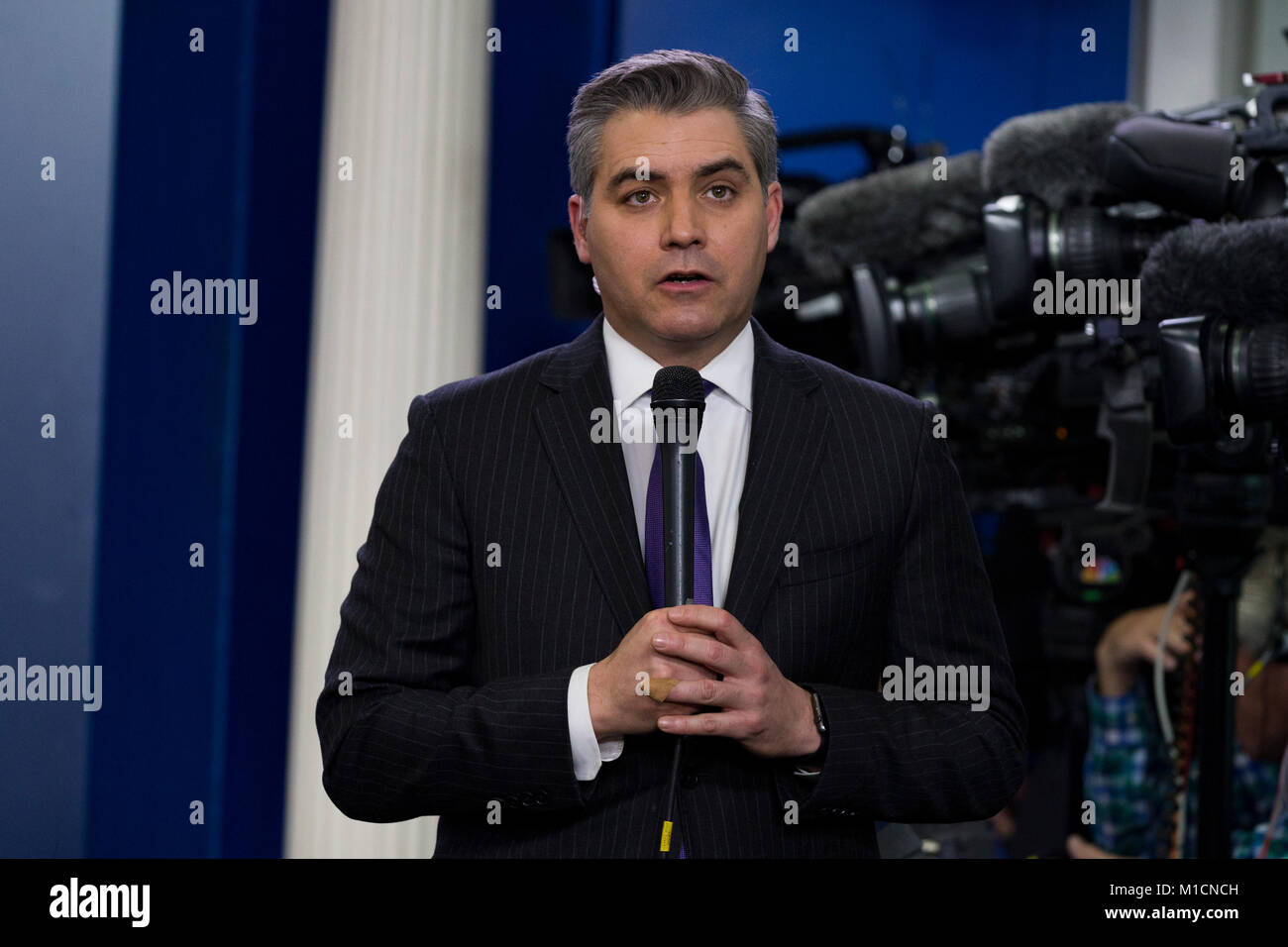
The November 2018 White House press conference altercation between CNN chief White House correspondent Jim Acosta and a press aide holding a microphone resulted in a widely circulated video. This footage became the focal point of a major First Amendment legal battle, intense partisan debate over media decorum, and a subsequent federal lawsuit regarding the revocation of White House press credentials.
Background and Context of the 2018 Press Conference
The pivotal confrontation occurred on November 7, 2018, just one day after the United States midterm elections. President Donald Trump held a wide-ranging, contentious press conference in the East Room of the White House. For nearly ninety minutes, the president sparred with various journalists over campaign coverage, the Russia investigation, and a migrant caravan traveling through Central America toward the U.S. southern border.
Jim Acosta, known for his direct and often confrontational questioning style, attempted to ask multiple follow-up questions regarding the migrant caravan and the ongoing investigations. President Trump rejected the inquiries, stating, "That's enough," and signaling that it was time for another reporter to take the microphone. Despite the directive to yield, Acosta persisted, attempting to pivot to a separate question about the Mueller investigation.
The friction between the administration and major news networks had been escalating for years, creating an environment of heightened tension during briefings. In this pressurized atmosphere, routine disagreements over protocol quickly escalated into public spectacles. The physical interaction that followed immediately after the exchange between the president and the correspondent transformed a standard political disagreement into a multimedia flashpoint analyzed frame-by-frame by legal experts, media analysts, and the public.
Anatomy of the Video: Frame-by-Frame Breakdown
The core controversy centers on a sequence lasting approximately ten seconds. As Acosta continued to speak, a young White House press aide stepped toward him and reached for the hand-held microphone to retrieve it, adhering to the standard protocol of rotating microphones among reporters.
- Initial Contact: The aide approached Acosta’s right side, extending her arm to take the microphone. Acosta lowered his arm slightly and turned his body away, shielding the microphone with his left arm while uttering another question.
- The Arm Movement: As the aide made contact with the microphone and attempted to pull it away, Acosta’s right arm descended. His arm brushed against or came into contact with the aide's right arm as she reached across him.
- The Verbal Exchange: Acosta told the aide, "Pardon me, ma'am," while retaining his grip on the microphone for a moment longer before releasing it to NBC News reporter Peter Alexander, who was standing nearby and yielded his turn.
- The Altered Footage Controversy: Following the event, the administration circulated a video clip of the incident that had been sped up. Critics, independent media analysts, and digital forensics experts pointed out that the altered pacing made Acosta’s downward chopping motion appear more aggressive and forceful than it appeared in real-time footage. The White House press secretary at the time, Sarah Huckabee Sanders, defended the video's distribution, stating that the administration used standard digital zooming and framing techniques, though the manipulation claims fueled an intense debate over digital authenticity and political propaganda.
Revocation of Press Credentials and Legal Escalation
Within hours of the incident, the White House took unprecedented action against a mainstream journalist. Sarah Huckabee Sanders announced that Acosta’s "hard pass," which granted him unescorted access to the White House complex, was being suspended indefinitely.
The administration’s initial justification for the revocation relied heavily on the physical interaction captured in the video. In an official statement, Sanders accused Acosta of "placing his hands on a young woman just trying to do her job as a White House intern," labeling his behavior completely unacceptable. CNN fiercely disputed this characterization, calling the revocation retaliation for Acosta's critical reporting and challenging questions, and branding the administration's claims false and defamatory.
Recognizing the threat to press freedom and constitutional protections, CNN and Jim Acosta, represented by prominent First Amendment attorneys, filed a federal lawsuit against several top Trump administration officials, including Chief of Staff John Kelly and Press Secretary Sarah Huckabee Sanders. The lawsuit argued that the revocation violated Acosta's Fifth Amendment right to due process and his First Amendment right to freedom of the press.
| Legal Claim | Plaintiff's Argument | Defendant's Response |
|---|---|---|
| First Amendment | Revoking credentials based on viewpoint discrimination and hostile questioning unconstitutionally suppresses free press. | The White House has absolute discretion over who receives access and special privileges on federal property. |
| Fifth Amendment | Suspension without a hearing, clear rules, or an appeal process denies basic administrative due process. | Formal hearings are not legally required for temporary credential revocations tied to professional conduct. |
Court Ruling and Subsequent Restoration of Access
The legal battle moved swiftly through the U.S. District Court for the District of Columbia. Judge Timothy J. Kelly, a Trump appointee, presided over the emergency hearing regarding CNN’s motion for a preliminary injunction to restore Acosta’s press pass while the broader lawsuit proceeded.
On November 16, 2018, Judge Kelly ruled in favor of CNN, ordering the White House to temporarily restore Acosta's press credentials. The judge based his decision primarily on the Fifth Amendment due process claim, noting that the administration had failed to provide Acosta with fair notice or an opportunity to respond before stripping him of his pass. The court did not reach a definitive ruling on the First Amendment claims at that preliminary stage, but the procedural victory effectively forced the administration's hand.
Faced with the court order and mounting legal scrutiny, the White House capitulated. Officials sent a letter to Acosta outlining a new set of "rules" for press conferences, stipulating that reporters could ask a single primary question and a single follow-up question, subject to the discretion of the president or administration officials. With these guidelines established, the administration formally restored Acosta's hard pass, and CNN subsequently dropped the lawsuit.
Broader Implications for Media Relations and Political Discourse
The Jim Acosta White House video incident left a lasting mark on the relationship between the executive branch and the journalistic community. It crystallized the adversarial nature of modern political reporting, where televised press briefings frequently function as political theater rather than traditional information-gathering sessions.
The controversy prompted numerous news organizations and press associations to rally around CNN, emphasizing that access to the executive mansion is a public trust rather than a presidential privilege that can be withdrawn at whim based on a reporter's tone or line of questioning. At the same time, supporters of the administration viewed Acosta's persistence as disrespectful and grandstanding, arguing that reporters should respect the authority of the presidency and yield the floor when instructed.
Ultimately, the incident served as a watershed moment for digital media literacy, highlighting how video evidence can be interpreted, edited, and deployed to reinforce partisan narratives. The frame-by-frame dissection of the altercation remains a textbook case study in media ethics, constitutional law, and the ongoing friction inherent in the modern White House press corps.