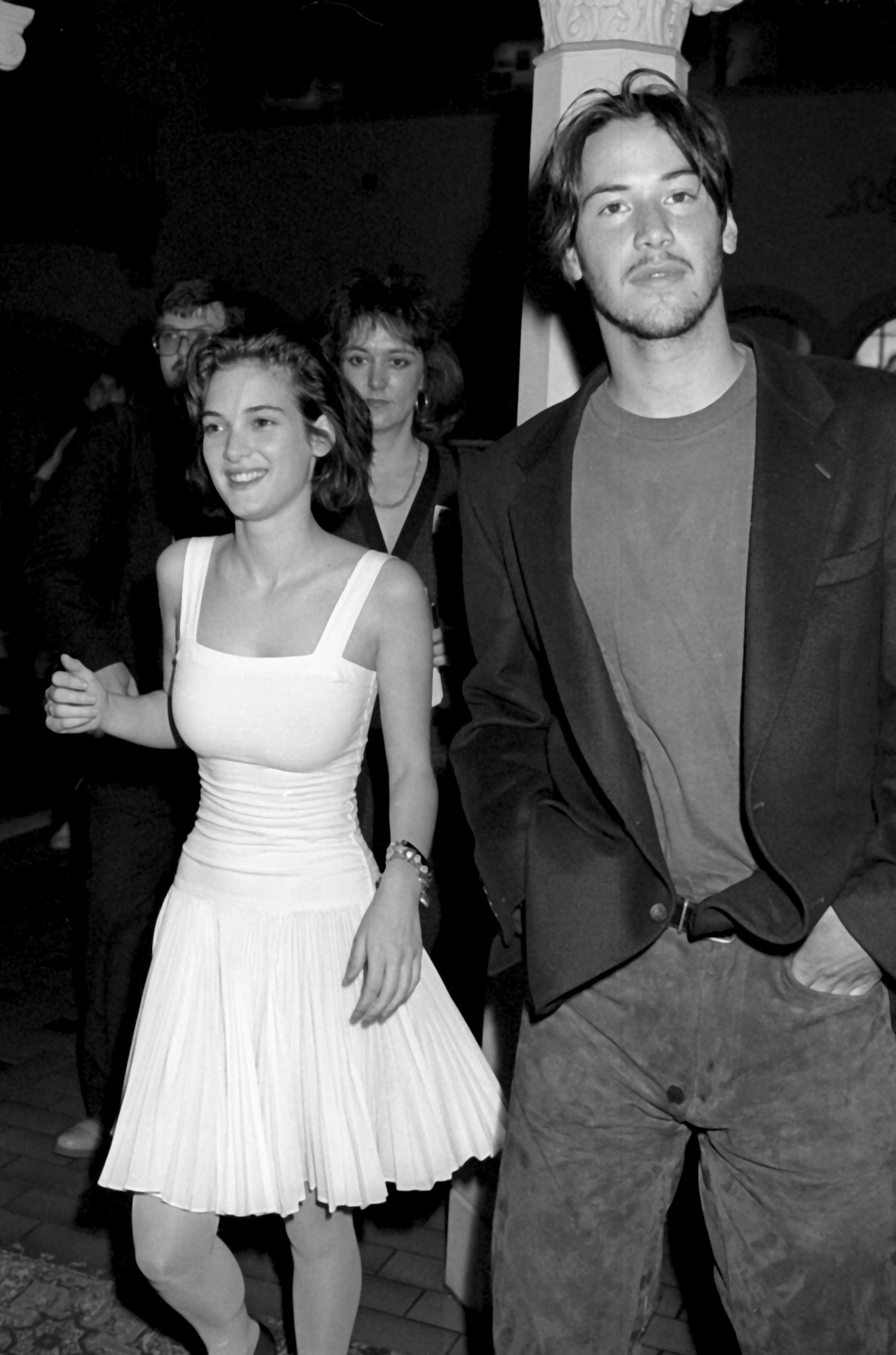
Winona Ryder’s 1980s career trajectory transformed her from a shy debutante in Lucas to the ultimate alternative icon of the decade. Through collaborations with directors like Tim Burton and roles in cult classics like Heathers, she redefined the "teen girl" archetype with intellectual depth, a gothic edge, and an authentic sense of displacement.
The Discovery of an Alternative Icon
Before Winona Ryder became a household name and a face of the 1990s "Generation X," she was a teenager from Petaluma, California, who stood out for her striking, expressive features and an intellectual maturity that far exceeded her peers. Discovered during a screen test at the American Conservatory Theater in San Francisco, Ryder (born Winona Laura Horowitz) made her film debut at age 14.
The 1980s were dominated by the "Brat Pack"—a group of young actors often cast in glossy, John Hughes-directed coming-of-age stories. However, Ryder represented a different path. While Molly Ringwald was the queen of the prom and the relatable suburban girl, Ryder’s 80s filmography suggested a deeper, more cynical, and ultimately more complex reality. Her presence signaled a shift toward "alternative" teen cinema, where the protagonist wasn't looking to fit in, but rather trying to survive the absurdity of the social hierarchies around her.
As we look back from 2026, her 80s output remains a masterclass in screen presence. Even in her earliest roles, Ryder possessed a "listening" quality—an ability to convey a character’s internal world through stillness and silence. This quality made her the perfect muse for the era’s most visionary directors who were looking for something beyond the typical California-blonde aesthetic.
1986–1987: The Vulnerable Debut
Ryder’s entry into the industry began with Lucas (1986), a film that, while ostensibly a teen comedy-drama, provided a surprisingly sensitive look at the pains of adolescent unrequited love. Ryder played Rina, the "geeky" best friend to Corey Haim’s titular character. In a decade of big hair and neon fashion, Ryder appeared on screen with a short, natural haircut and minimal makeup. Her performance was grounded and understated, providing a necessary emotional anchor to the film.
Following Lucas, Ryder appeared in Square Dance (1987). This film was a significant departure from the burgeoning teen-movie machine. Playing 13-year-old Gemma, she shared the screen with seasoned veterans like Jason Robards and Jane Alexander. Square Dance showcased her ability to handle complex, rural-drama themes, earning her early critical acclaim. It proved that she wasn't just a "teen actor" but a performer capable of carrying the weight of a lead role in a serious character study.
The importance of this early period cannot be overstated. It established Ryder’s brand as the "outsider." While her contemporaries were being groomed for blockbuster stardom, Ryder was building a resume of characters who were observers—girls who saw the world for what it was and weren't always happy with the view.
1988: The Tim Burton Connection and "Beetlejuice"
If 1986 was the introduction, 1988 was the explosion. The release of Tim Burton’s Beetlejuice forever changed the trajectory of Ryder’s career and the cultural landscape of the 80s. As Lydia Deetz, the "strange and unusual" goth daughter of New York socialites, Ryder gave a voice to every teenager who felt alienated by their family or the mainstream culture.
Lydia Deetz was a revolutionary character. She wasn't the victim of the story, nor was she the "mean girl." She was the moral center of a supernatural chaos, possessing more wisdom and empathy than the adults around her. Ryder’s performance combined a dry, deadpan wit with a profound sense of melancholy.
The technical synergy between Ryder and Burton was immediate. Burton’s German Expressionist-inspired visuals needed a face that could hold the frame against stop-motion monsters and neon-lit underworlds. Ryder’s large, dark eyes and porcelain skin became the visual shorthand for Burton’s aesthetic. This role solidified her status as a style icon; the black lace, the pointed "v-fringe" bangs, and the heavy cameras she carried influenced the "kinder-goth" and alternative fashions that would dominate the late 80s and early 90s.
1989: Deconstructing the Teen Queen in "Heathers"
While Beetlejuice made her a star, Heathers (1989) made her a legend. Directed by Michael Lehmann and written by Daniel Waters, Heathers was a pitch-black satire that took a chainsaw to the John Hughes formula. Ryder played Veronica Sawyer, a member of the elite "Heathers" clique who grows weary of their cruelty and teams up with a sociopathic outsider named J.D. (Christian Slater) to "accidentally" kill the popular students.
Heathers was a risk for Ryder. Her agents reportedly begged her not to do the film, fearing it would ruin her career to play a character involved in high school murders. Instead, it became her defining role of the decade. Veronica Sawyer was a character of immense intelligence and biting sarcasm. The dialogue, filled with invented slang and rhythmic barbs, required a specific kind of verbal dexterity that Ryder delivered with effortless cool.
The film served as a critical autopsy of the 1980s. It addressed teen suicide, social stratification, and the performative nature of high school grief with a level of cynicism never before seen in the genre. Ryder’s Veronica was the bridge between the audience and the insanity; she was the girl who was popular enough to be "in" but smart enough to want "out." The 1980s ended with Winona Ryder standing in the ashes of her high school, covered in soot but finally free—a perfect metaphor for the shift into the more rugged, cynical decade to follow.
Comparing the Pillars of 80s Winona Ryder
To understand the breadth of her work in this era, it is helpful to look at the specific characteristics of her most influential films. Each role represented a different facet of the adolescent experience as viewed through an "alternative" lens.
| Film | Role | Key Character Attribute | Cinematic Impact |
|---|---|---|---|
| Lucas (1986) | Rina | The Intellectual Confidante | Established the "real girl" persona against 80s tropes. |
| Square Dance (1987) | Gemma Dillard | The Rural Seeker | Demonstrated dramatic range and ability to lead a mature ensemble. |
| Beetlejuice (1988) | Lydia Deetz | The Existential Goth | Created a visual and cultural blueprint for alternative youth. |
| 1969 (1988) | Beth Lathrop | The Anti-War Idealist | Connected her 80s presence to historical counter-culture. |
| Heathers (1989) | Veronica Sawyer | The Reluctant Satirist | Deconstructed the teen movie genre and cemented her cult status. |
| Great Balls of Fire! (1989) | Myra Gale Brown | The Taboo Bride | Showcased her ability to play historical, controversial figures. |
The Visual Language of the Ryder Aesthetic
The 80s were a decade of excess—big hair, shoulder pads, and saturated colors. Ryder’s aesthetic was a deliberate rejection of this. Her "look" was built on a foundation of 1950s and 60s vintage, thrift-store finds, and a monochromatic palette. This wasn't just a fashion choice; it was a character choice that bled into her public persona.
In movies like 1969 and Great Balls of Fire!, Ryder played characters from previous decades, which seemed to suit her better than the 1980s present. She had an "old soul" quality that directors leveraged. On-screen, she often wore oversized sweaters, leather jackets, and Doc Martens—items that would become the uniform of the 1990s grunge movement.
Her collaboration with costume designers during the late 80s helped define a specific brand of "intellectual chic." Whether it was the monocle-wearing, journal-writing Veronica Sawyer or the camera-wielding Lydia Deetz, Ryder’s characters were always defined by their tools of observation. They were girls who documented life rather than just living it for the approval of others.
The Technical Craft: Acting Beyond the Eyes
While much is made of Ryder’s "doe-eyed" look, her 80s performances reveal a sophisticated understanding of physical acting. In Beetlejuice, she adopts a stiff, almost ghostly gait that contrasts with the frantic energy of Michael Keaton. In Heathers, she uses her voice—a low, raspy register—to deliver some of the most famous lines in cinema history with a dry detachment that makes them even funnier.
Ryder also mastered the art of the "reaction shot." In an era where many young actors were coached to "over-act" to be seen, Ryder’s best moments often involved her simply reacting to the chaos around her. This groundedness made the surreal elements of her films feel more believable. When she floats while dancing to "Jump in the Line" at the end of Beetlejuice, the audience believes it because she plays the joy of the moment as something earned and real, despite the supernatural circumstances.
Impact on 21st Century Perspective
Looking back from 2026, the 1980s "Winona Era" is viewed as a pivotal moment in film history. It was the birth of the "Cool Girl" who didn't care about being cool. Modern stars often cite Ryder’s early work as a blueprint for playing complex female protagonists who are allowed to be messy, angry, and intellectual.
Her 80s career didn't just produce good movies; it produced a subculture. The "Winona Forever" sentiment (later popularized by Johnny Depp’s tattoo) began in the late 80s as a genuine appreciation for an actress who seemed to be "one of us." She wasn't a distant Hollywood star; she was the girl who stayed home to read Salinger and listen to The Replacements.
Frequently Asked Questions
Why was Winona Ryder considered "alternative" in the 1980s?
Ryder was considered alternative because she avoided the "pretty girl next door" tropes of the era. She chose scripts that focused on social alienation, dark humor, and gothic themes. Her personal style—often characterized by dark colors and vintage clothing—and her preference for roles like Lydia Deetz and Veronica Sawyer placed her outside the mainstream "Brat Pack" circle.
What was Winona Ryder’s first professional film role?
Her first role was playing Rina in the 1986 film Lucas. At just 14 years old, she played the supportive, intellectual friend to the protagonist. This role was crucial because it introduced her as a relatable, non-glamorous teenager, a persona she would refine throughout the decade.
How did "Heathers" change her career?
Heathers shifted Ryder from a rising star to a cultural icon. It proved she could lead a film that was stylistically daring and morally ambiguous. The film’s success established her as the face of the "disaffected youth" movement, a reputation that carried her into the massive successes of the early 1990s.
Did Winona Ryder do her own stunts in Beetlejuice?
While Beetlejuice relied heavily on practical effects and wire work (especially during the levitation scenes), Ryder performed most of her own movements and interactions with the set. However, the more complex aerial sequences and specialized makeup effects were handled by the film's extensive technical crew and stunt doubles where safety was a concern.
Was Winona Ryder part of the Brat Pack?
Strictly speaking, no. The Brat Pack usually referred to actors like Emilio Estevez, Rob Lowe, Demi Moore, and Molly Ringwald, who appeared in ensemble films like The Breakfast Club and St. Elmo's Fire. Ryder’s career began slightly later and focused on more idiosyncratic, darker films that separated her from the core "Brat Pack" identity.
Final Recommendation for Viewers
For anyone looking to understand the evolution of the modern female protagonist, a marathon of Winona Ryder’s 80s filmography is essential. Start with Lucas to see her raw potential, move to Beetlejuice for the visual transformation, and conclude with Heathers to witness the full deconstruction of the teen idol. These films are more than just 80s nostalgia; they are a blueprint for cinematic authenticity that remains relevant even in 2026.