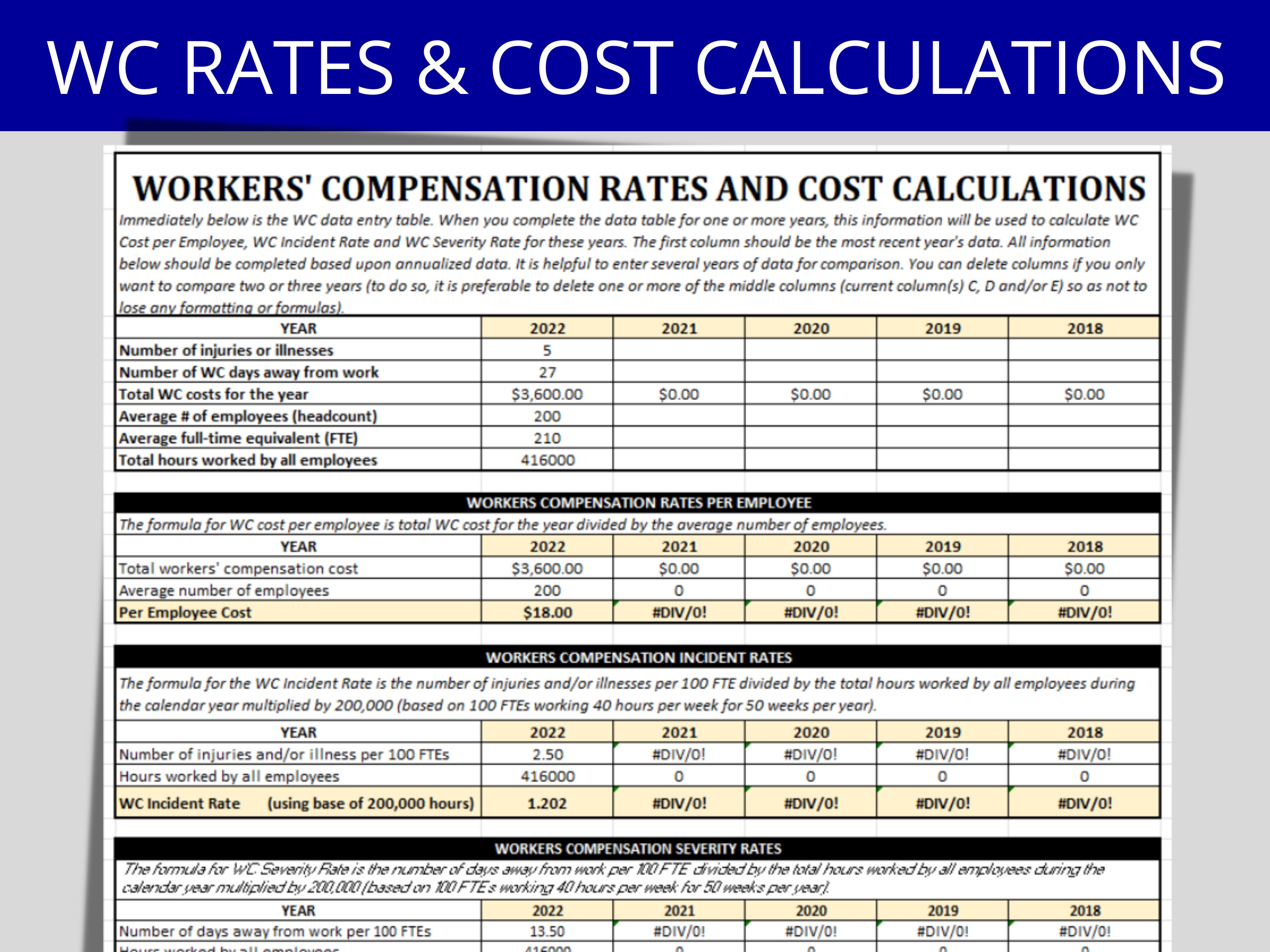
The "8 premium rate" typically refers to the state-mandated assessment rate applied to workers' compensation policies or an experience modification factor of 0.8. For 2026, understanding these percentages is crucial for businesses to calculate total insurance costs, as assessments fund state regulatory boards while a 0.8 modifier provides a significant 20% discount on base premiums.
The Dual Nature of "8" in Workers' Compensation
When employers encounter the number "8" in the context of workers' compensation premiums, it generally surfaces in two distinct but equally important areas of the policy: the State Assessment Rate and the Experience Modification Factor (Ex-Mod). While they sound similar, they function as polar opposites in terms of financial impact. One is a mandatory "tax" that increases the cost, while the other is a performance-based reward that decreases it.
In the current 2026 regulatory environment, state assessments have become a primary focus for CFOs and risk managers. Many states, notably New York and others following a similar fiscal model, utilize an assessment rate that frequently hovers around the 8% to 10% mark. This percentage is not part of the insurance company's profit; rather, it is a pass-through fee collected by the insurer and paid to the state's Workers' Compensation Board.
Conversely, a "rate of 8" might refer to an Experience Modification Factor of 0.80. In the actuarial world of insurance, an Ex-Mod of 1.0 represents the industry average for a specific business class. A 0.80 rating indicates that the employer’s safety record is 20% better than the average. This distinction is vital because mistaking a 0.8 mod for a standard 8% assessment can lead to significant errors in annual budgeting and financial forecasting.
The State Assessment Rate: How the 8% Surcharge Functions
For the 2026 policy year, several jurisdictions have stabilized their assessment rates to ensure the solvency of special disability funds and the administrative operations of compensation boards. The assessment is a percentage applied to the "standard premium"—the amount calculated after applying class rates and the experience modifier.
Why Assessments Exist
State assessments are not arbitrary. They are designed to fund specific social and regulatory pillars:
- Board Administration: Funding the judicial and administrative systems that resolve disputes between injured workers and employers.
- Special Funds: Providing benefits to workers whose employers were illegally uninsured or to cover "second injury" claims that encourage the hiring of individuals with pre-existing disabilities.
- Self-Insurance Security: Protecting the system against the default of self-insured entities.
The Math of the Assessment
If your business has a standard premium of $100,000 and the state assessment rate for 2026 is set at 8.2%, your final bill will include an additional $8,200. It is important to note that this amount is generally not subject to further discounts, credits, or commissions. It is a "pure" cost. Because this rate can fluctuate annually based on the state’s fiscal health and the volume of claims system-wide, businesses must monitor the National Council on Compensation Insurance (NCCI) or their specific state rating bureau for updates.
The 0.8 Experience Modification Factor: A Reward for Safety
While the assessment rate is a mandatory cost, the 0.8 Experience Modification Factor is an earned asset. In 2026, with rising medical costs and inflationary pressures on indemnity benefits, maintaining a sub-1.0 modifier is more valuable than ever.
An Ex-Mod of 0.80 serves as a multiplier. If your manual premium (the base rate multiplied by your payroll) is $50,000, a 0.80 modifier reduces that premium to $40,000 before taxes and assessments are even considered. This 20% reduction acts as a competitive advantage, particularly in industries like construction or manufacturing where insurance costs represent a significant portion of project overhead.
Components of the 0.8 Rating
To achieve an 8-series modifier, an employer must demonstrate a consistent history of low claim frequency. Actuaries place more weight on frequency (how often accidents happen) than severity (how much a single accident costs). The logic is that a high frequency of small accidents is a predictor of a future catastrophic event, whereas a single large accident might be a "freak occurrence."
To maintain a 0.8 rate in 2026, companies typically employ:
- Active Return-to-Work (RTW) Programs: Reducing the "lost time" component of a claim.
- Safety Committees: Documented meetings that identify and mitigate workplace hazards.
- Telehealth Integration: Using immediate virtual medical consultations to prevent minor injuries from escalating into complex claims.
Classification Code 8810: The "8" That Lowers Your Base Rate
Another common occurrence of the number 8 is in the NCCI Classification Code 8810. This is the code for clerical office employees and is often the lowest-rated category on a policy. In 2026, as remote and hybrid work remain the standard for many sectors, the 8810 code remains a critical component of premium calculation.
The rate for code 8810 might be as low as $0.15 per $100 of payroll. If an employer improperly classifies staff—placing office workers under a higher-risk code like 8742 (Salespersons) or a trade code—the premium could double or triple. Understanding the "8810 rule" is essential for an accurate 8% premium rate calculation because the base rate of the classification code is the foundation upon which all other percentages are built.
| Component Type | Example Value (2026) | Impact on Final Cost | Controlled By |
|---|---|---|---|
| State Assessment | 8.2% | Increases total cost | State Legislature/WCB |
| Experience Mod | 0.80 | 20% discount on base | Employer Safety Record |
| Class Code (8810) | $0.18 per $100 | Lowers base premium | Accurate Job Descriptions |
| Expense Constant | $250 - $500 | Flat fee increase | Filing with State Bureau |
How to Calculate Your Total Premium Using the 8% Metrics
Calculating your workers' compensation cost in 2026 requires a step-by-step application of these figures. You cannot simply add the percentages together; they must be applied in a specific order known as the "premium algorithm."
Step 1: Determine Manual Premium
Identify your payroll for each classification code. For example, if you have $1,000,000 in clerical payroll (Code 8810) and the rate is $0.20:
- ($1,000,000 / 100) * $0.20 = $2,000 Manual Premium
Step 2: Apply the Experience Modifier
If you have successfully earned a 0.8 modifier:
- $2,000 * 0.80 = $1,600 Modified Premium
Step 3: Apply Mandatory Assessments
Now, apply the state’s 8% assessment rate (assuming 8.2% for this example) to the modified premium:
- $1,600 * 0.082 = $131.20 Assessment Cost
Step 4: Final Total
- $1,600 (Premium) + $131.20 (Assessment) + Expense Constants = ~$1,981 Total Cost
As demonstrated, the 0.8 modifier significantly offsets the 8% assessment. Without the safety-based discount, the assessment would have been calculated on the higher $2,000 figure, resulting in a more expensive policy overall.
Common Pitfalls and Misunderstandings
In the technical landscape of 2026 insurance audits, many businesses stumble over the nuances of the "8 rate." One of the most common errors is the misapplication of overtime. In most states, the "premium" portion of overtime pay (the "half" in time-and-a-half) should be excluded from the payroll base before the rates are applied. Failing to exclude this can lead to an inflated premium which, in turn, inflates the 8% assessment fee.
Another mistake involves the Experience Rating period. Your 0.8 modifier for 2026 is based on your claims history from a three-year period, typically excluding the immediate past year. For a 2026 policy, the data used generally comes from 2022, 2023, and 2024. Employers often mistakenly believe that a safe 2025 will immediately lower their rate to 0.8, but there is a lag built into the system to ensure actuarial stability.
Strategic Actions for 2026
To manage an 8% assessment and maintain a 0.8 modifier, businesses must move beyond passive insurance purchasing and engage in active risk management.
1. Audit Your Assessments
Ensure your carrier is using the correct 2026 assessment rate. These rates often change on January 1st or July 1st. If your policy straddles two years, the assessment should be pro-rated. Review the New York Workers' Compensation Board or your local equivalent for the most current rate filings.
2. Verify Classification Codes
Confirm that all employees qualifying for the 8810 (Clerical) or 8871 (Telecommuter) codes are properly documented. In 2026, the distinction between "office clerical" and "field sales" (8742) is scrutinized heavily during audits. Misclassification can lead to a "bill-back" that far exceeds the 8% assessment you originally budgeted for.
3. Review Your E-Mod Worksheet
Obtain your NCCI or state bureau worksheet. Check for "open claims" that should have been closed. An open claim with a high reserve will negatively impact your modifier, potentially pushing you from a 0.8 (20% discount) to a 1.0 (neutral) or higher.
Frequently Asked Questions
Does an 8% assessment rate stay the same every year?
No. Assessment rates are recalculated annually by state agencies to reflect the funding needs of the workers' compensation system. While a rate might stay near 8% for several years, it can fluctuate based on the state's total insured payroll and the financial requirements of special funds.
Why is my 0.8 experience mod not showing on my renewal?
Experience modifiers are issued by rating bureaus (like NCCI or the WCIRB in California), not the insurance company. If your data was submitted late or if there is a dispute regarding a claim, the bureau may not have issued the 2026 mod yet. In these cases, carriers often use a "1.0" or "pending" rate until the official 0.8 mod is published.
Is the 8% premium rate tax-deductible?
For businesses, workers' compensation premiums (including the assessment portion) are generally considered a necessary business expense and are tax-deductible. However, you should consult with a tax professional regarding the specific treatment of state-mandated assessments versus voluntary insurance premiums.
Can I negotiate the 8% assessment with my insurance carrier?
No. The state assessment rate is a non-negotiable, government-mandated fee. Insurance carriers are required by law to collect this exact percentage and remit it to the state. However, you can negotiate the base premium and discretionary credits that the carrier applies before the assessment is calculated.
How does the 0.8 modifier affect my ability to get contracts?
In many industries, particularly construction and government contracting, having an Ex-Mod below 1.0 is a prerequisite for bidding. A 0.8 modifier is considered excellent and signals to potential partners that your company has a superior safety culture, making you a lower-risk sub-contractor.
Final Recommendation for Employers
As you navigate the 2026 workers' compensation landscape, treat the "8" in your policy with precision. Differentiate between the mandatory 8% assessment and the performance-based 0.80 modifier. To minimize the impact of the former and achieve the benefits of the latter, focus on accurate payroll classification (specifically utilizing code 8810 where applicable) and aggressive claim management. Conduct a mid-year internal audit of your payroll and safety protocols to ensure that when the final audit occurs, your "8 premium rate" reflects a well-managed, safe, and cost-efficient operation.