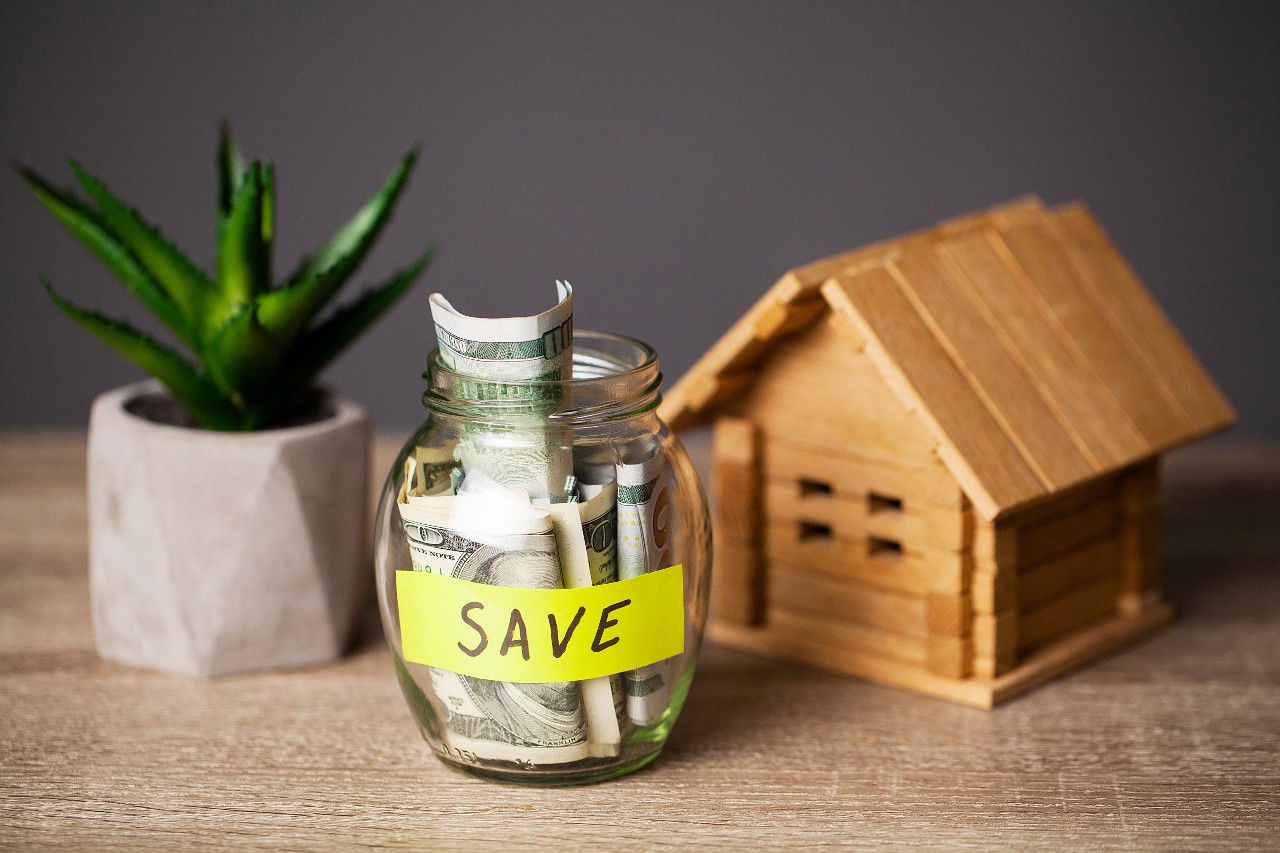
To save for a house in 2026, you must establish a precise savings target that includes a down payment (typically 3.5% to 20%), closing costs, and moving reserves. Success requires automating your contributions to high-yield accounts, auditing your debt-to-income ratio, and utilizing tax-advantaged accounts or down payment assistance programs to accelerate your timeline.
Understanding the Financial Landscape of 2026
Purchasing a home remains one of the most significant financial milestones an individual can achieve. As we navigate the 2026 real estate market, the requirements for entry have evolved. While the traditional 20% down payment remains the gold standard for avoiding Private Mortgage Insurance (PMI), many modern buyers successfully enter the market with much less. However, saving for a house is no longer just about the down payment; it is about "cash to close," which encompasses various administrative, legal, and prepaid fees.
Before implementing specific savings strategies, it is vital to understand the total cost of acquisition. A buyer in 2026 should expect to set aside between 2% and 5% of the home’s purchase price specifically for closing costs. This is in addition to the down payment. Furthermore, lenders now look more closely at "post-closing reserves"—the amount of liquid cash you have left in the bank after the keys are in your hand. Developing a robust savings plan is the only way to meet these multifaceted requirements without exhausting your entire net worth.
1. Maximize High-Yield Savings and Specialized Vehicles
The first step in any home-saving journey is choosing the right vessel for your capital. Placing your house fund in a standard checking or basic savings account is a strategic error, as the interest rates rarely keep pace with inflation. In the current 2026 financial environment, High-Yield Savings Accounts (HYSAs) and Money Market Accounts (MMAs) are the primary tools for short-term capital preservation.
HYSAs offer significantly higher annual percentage yields (APY) than traditional accounts while maintaining full liquidity. Because you may need to move quickly when a house enters the market, you cannot afford to have your funds locked in volatile assets like individual stocks or long-term bonds. For those with a longer timeline—exceeding two years—Certificates of Deposit (CDs) or fixed-term government bonds may offer a slightly higher return in exchange for lower liquidity.
The goal is to ensure your money is working for you while remaining protected by the Federal Deposit Insurance Corporation (FDIC) or the National Credit Union Administration (NCUA). By earning 4% to 5% APY on a $50,000 fund, you generate over $2,000 annually in passive growth, which can cover a significant portion of your inspection fees or initial moving costs.
2. Automate the "Pay Yourself First" Principle
Relying on willpower to save what is "left over" at the end of the month is rarely successful. The most effective way to build a house fund is to treat your savings like a mandatory monthly bill. This is known as the "Pay Yourself First" principle. By automating the transfer of funds from your paycheck directly into your dedicated house savings account, you remove the psychological friction of making a manual decision to save.
Most employers allow you to split your direct deposit into multiple accounts. By sending a fixed percentage or a specific dollar amount—such as $500 or $1,000 per pay period—directly to your HYSA, you adjust your lifestyle to the remaining balance. This creates a "forced scarcity" in your primary checking account, which naturally curbs discretionary spending. Over a 24-month period, an automated $1,000 monthly contribution results in a $24,000 baseline, excluding interest, providing a substantial foundation for a down payment.
3. Conduct a Radical Budget Audit Focusing on the "Big Three"
To accelerate your savings rate, you must look beyond small daily expenses like coffee or streaming subscriptions. While those add up, significant progress is made by addressing the "Big Three" expenses: housing, transportation, and food. In 2026, these categories typically consume over 60% of a household's take-home pay.
- Housing: If you are currently renting, consider "downsizing for a season." Moving to a smaller apartment or taking on a roommate for 12 to 18 months can redirect thousands of dollars toward your future home.
- Transportation: Evaluate your vehicle costs. If you have a high car payment, selling the vehicle for a more affordable, reliable used model can free up significant monthly cash flow.
- Food: Radical budgeting often involves shifting from dining out and delivery services to bulk meal prepping.
Using a framework like the 50/30/20 rule—where 50% of income goes to needs, 30% to wants, and 20% to savings—is a good start. However, those serious about buying a house in a competitive market often strive for a 40/20/40 split to maximize their down payment fund as quickly as possible.
4. Aggressively Manage and Reduce High-Interest Debt
Lenders do not just look at your savings; they look at your Debt-to-Income (DTI) ratio. Even if you have $100,000 in savings, a high monthly credit card or student loan payment can severely limit your borrowing power. High-interest debt, particularly credit card balances, is an "anti-investment" that often carries interest rates far higher than what your savings account can earn.
If you are carrying debt with an interest rate above 7% or 8%, it is mathematically advantageous to pay that debt down before aggressively padding your savings. Not only does this save you money on interest, but it also improves your credit score. A higher credit score directly correlates to a lower mortgage interest rate. In a 30-year fixed mortgage, a difference of just 0.5% in your interest rate can save you tens of thousands of dollars over the life of the loan.
Before you apply for a mortgage, consult the Consumer Financial Protection Bureau (CFPB) resources on debt management to ensure your DTI ratio remains below the preferred 36% to 43% threshold.
5. Leverage Tax-Advantaged Accounts and Incentives
Many prospective buyers overlook the fact that their retirement accounts can sometimes serve as a secondary source for a home purchase. Under IRS guidelines, first-time homebuyers can often withdraw up to $10,000 from a Traditional or Roth IRA without the standard 10% early withdrawal penalty, provided the money is used for a "qualified first-time home purchase."
Additionally, some 401(k) plans allow for "residential loans," where you borrow against your own balance and pay yourself back with interest. While this should be used cautiously—as it removes your money from the market and reduces your retirement growth—it can be a vital tool for bridging a small gap in your down payment.
Furthermore, you should investigate if your state offers Individual Development Accounts (IDAs) or specialized savings programs that provide matching funds for low-to-moderate-income earners who are saving for their first home. These programs are often administered through local housing authorities and non-profits.
6. Explore Down Payment Assistance (DPA) Programs
You may not need to save as much as you think. There are thousands of Down Payment Assistance (DPA) programs available across the United States, often at the state, county, or municipal level. These programs provide grants or low-interest "soft" second mortgages that cover a portion of the down payment or closing costs.
Eligibility for these programs is often based on:
- Total household income.
- The location of the property (certain "target areas" offer more incentives).
- Occupational status (e.g., programs for teachers, first responders, or veterans).
- First-time homebuyer status (defined as not having owned a home in the last three years).
The U.S. Department of Housing and Urban Development (HUD) provides a directory of local homebuyer assistance programs. Utilizing a DPA grant of $5,000 or $10,000 can drastically shorten your savings timeline, allowing you to enter the market months or even years earlier than planned.
7. Capture Windfalls and Incremental Income
Finally, adopt a "found money" policy. Throughout the year, most people receive irregular income in the form of tax refunds, work bonuses, holiday gifts, or even proceeds from selling unused household items. Instead of treating these windfalls as "bonus spending money," commit to directing 100% of them toward your house fund.
In 2026, many buyers also utilize "side hustles" or freelance work specifically designated for their home purchase. If you can generate an extra $400 a month through consulting, ride-sharing, or digital products, that additional $4,800 a year can cover your homeowner's insurance and property tax escrows for the first year. Treating your house fund as a "sinkhole" for all extra income ensures that your progress is not just linear, but exponential.
Comparison of Savings Vehicles for Homebuyers
| Vehicle | Potential Return (2026 Est.) | Risk Level | Liquidity | Best For |
|---|---|---|---|---|
| High-Yield Savings | 4.0% - 5.0% | Very Low (FDIC) | High | Immediate down payment funds |
| Money Market Account | 3.5% - 4.8% | Very Low (FDIC) | High | Funds requiring check-writing access |
| Short-Term CDs | 4.5% - 5.2% | Very Low (FDIC) | Low (Locked) | Funds not needed for 6-12 months |
| Treasury Bills | 4.2% - 4.7% | Extremely Low | Medium | Tax-efficient short-term saving |
| S&P 500 Index Fund | Variable (-10% to +20%) | High | Medium | Timelines longer than 5 years only |
Common Pitfalls in the Saving Process
One of the most frequent mistakes potential buyers make is failing to account for maintenance and repairs. It is a mistake to spend every last cent on the down payment and closing costs. Experts recommend having an additional "emergency fund" specifically for the home, equal to 1% to 2% of the home's value, kept in a separate account. This prevents you from turning to high-interest credit cards when the HVAC system fails or a roof leak appears shortly after closing.
Another pitfall is "lifestyle creep" during the savings phase. As you see your bank balance grow to $30,000 or $40,000, the temptation to dip into it for a vacation or a new car becomes significant. To combat this, give your savings account a specific name in your banking app, such as "Future Home - DO NOT TOUCH." This psychological labeling reinforces the account's purpose and reduces the likelihood of impulsive withdrawals.
Frequently Asked Questions
Is a 20% down payment still required in 2026?
No, a 20% down payment is not a legal or universal requirement. Many conventional loans allow for as little as 3% down, and FHA loans typically require 3.5%. While paying less than 20% usually triggers Private Mortgage Insurance (PMI), the cost of PMI is often lower than the cost of waiting years to save a full 20% while home prices continue to rise.
Should I pay off my student loans before saving for a house?
This depends on the interest rate of the loans and your Debt-to-Income (DTI) ratio. If your student loan interest rate is low (e.g., 3-4%) and your monthly payment is manageable, it may be better to focus on saving for a down payment. However, if the debt prevents you from qualifying for a mortgage due to DTI limits, paying it down becomes a priority.
How much should I set aside for closing costs?
You should generally budget between 2% and 5% of the home’s purchase price for closing costs. On a $400,000 home, this equates to $8,000 to $20,000. These costs cover loan origination fees, title insurance, appraisals, and government recording fees.
Can I use my 401(k) for a down payment?
Yes, you can often take a loan from your 401(k) or a hardship withdrawal, though the latter may carry taxes and penalties. A 401(k) loan allows you to borrow up to $50,000 or 50% of your vested balance (whichever is less) and pay it back through payroll deductions. However, if you leave your job, the loan may become due immediately.
What is the fastest way to save for a house?
The fastest way is a combination of radical expense reduction (downsizing your current living situation) and income expansion (side hustles or overtime). By minimizing your "Big Three" expenses—housing, transport, and food—and automating every spare dollar into a high-yield account, you can significantly compress your timeline.
How does my credit score affect my savings goal?
A higher credit score doesn't change how much you need to save for the down payment, but it drastically reduces the "cost" of the house. A lower credit score results in a higher interest rate, which increases your monthly payment. This might force you to save a larger down payment to keep your monthly mortgage costs affordable.
Final Recommendation
Saving for a house is a marathon, not a sprint. Your next action should be to calculate your "Total Cash to Close" target. Research the average home price in your desired area for 2026, calculate a 3.5% and 10% down payment scenario, and add 4% for closing costs. Once you have this number, subtract your current savings and divide the remainder by the number of months you want to wait. This provides your "Monthly Savings Mandate." Set up an automated transfer for that amount today to begin the process of turning your homeownership goal into a reality.