While Voice over Internet Protocol (VoIP) has become the standard for modern business and residential communication due to its cost-efficiency and flexibility, its integration with emergency services remains a complex technical challenge. Unlike traditional landlines, VoIP 911 calls rely on digital data packets and user-provided location data, which can lead to life-threatening delays if not properly configured.
By 2026, the transition to Next Generation 911 (NG911) has improved some aspects of emergency response, yet the fundamental architecture of VoIP still introduces seven primary vulnerabilities. Understanding these issues is essential for any homeowner or IT administrator responsible for maintaining a reliable safety net.
1. Static Registered Location vs. Physical Mobility
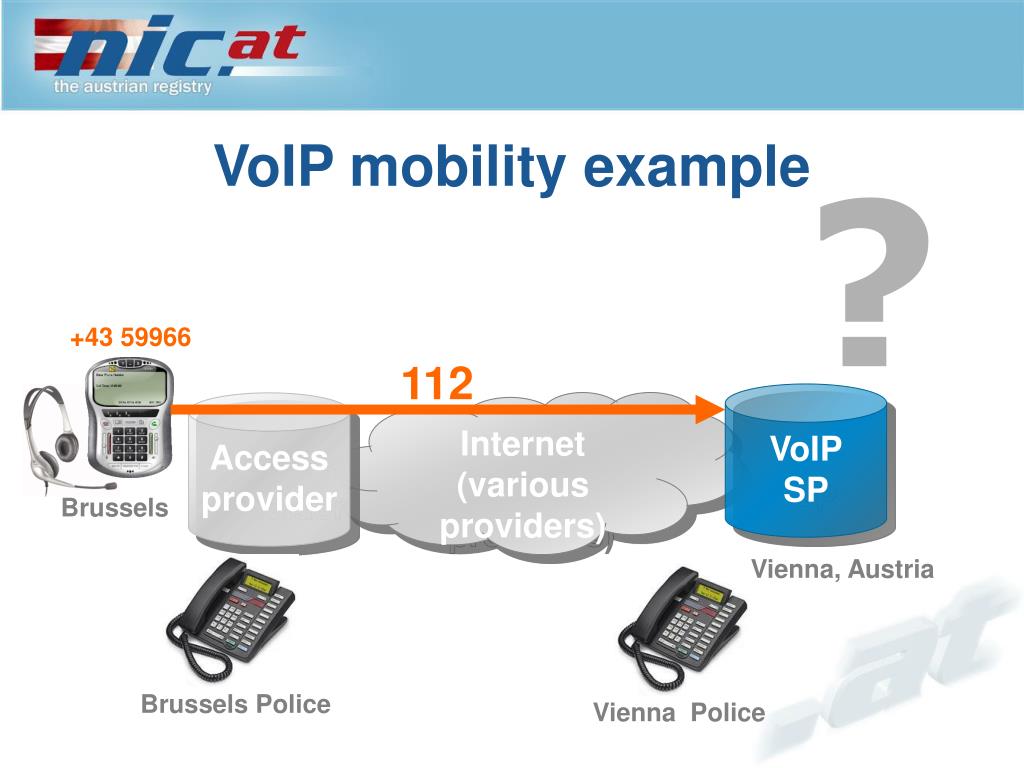
The most significant issue with VoIP 911 calls is the "Registered Location" requirement. Traditional landlines are physically tied to a specific copper wire terminating at a known street address. In contrast, a VoIP phone can be plugged into any internet connection globally.
Because VoIP hardware does not inherently know its physical location, the Federal Communications Commission (FCC) requires users to provide a "Registered Location" to their service provider. If a user moves their VoIP adapter from an office in Chicago to a home in New York without updating this registration, an emergency call will be routed to Chicago dispatchers.
Furthermore, even when the address is updated, there is often a propagation delay. It can take anywhere from a few minutes to 72 hours for the new address to be synchronized across the national Emergency Services Query Key (ESQK) databases. During this window, a 911 call may still transmit the old location, leading first responders to the wrong site.
2. Total Dependency on Local Power Systems
Traditional "Plain Old Telephone Service" (POTS) operates on a dedicated power grid maintained by the phone company. Central offices use massive battery arrays and generators to ensure that even during a city-wide blackout, the copper lines carry enough voltage to power a standard telephone.
VoIP systems enjoy no such luxury. A VoIP call requires a functional modem, a router, and the phone hardware itself (or a computer/mobile device). If your home or office loses power, your internet connection typically goes dark immediately. Without a robust Uninterruptible Power Supply (UPS) or backup generator infrastructure, your ability to dial 911 vanishes the moment the lights flicker. While many modern residential gateways include a small internal battery, these often provide only four to eight hours of standby time, which is insufficient during extended natural disasters or grid failures.
3. Internet Connectivity and Network Stability
A VoIP call is only as reliable as the underlying broadband connection. Unlike traditional telephony, which uses circuit-switching to reserve a dedicated path for a voice call, VoIP uses packet-switching. This means voice data competes for bandwidth with every other activity on the network, from 8K video streaming to cloud backups.
Issues such as high latency, jitter, and packet loss can degrade a 911 call to the point of being unintelligible. In a worst-case scenario, if the Internet Service Provider (ISP) experiences a regional outage or a fiber-optic cable is severed, the VoIP service becomes completely non-functional. Unlike cellular networks, which can often hand off calls to roaming partners, a fixed VoIP line is generally tethered to a single ISP's performance.
4. Complex Emergency Call Routing (The PSAP Hurdle)
When you dial 911 on a landline, the call is routed through a dedicated switch directly to the local Public Safety Answering Point (PSAP). VoIP calls follow a much more convoluted path.
When a 911 call is placed via VoIP, it is first sent to a VoIP Positioning Center (VPC). The VPC queries a database to find the Registered Location associated with that specific IP or account. Once the location is identified, the VPC determines which PSAP serves that area and then routes the call to the PSAP over the administrative lines or through a specialized gateway.
This complexity introduces multiple points of failure:
- Database Errors: If the VPC database contains a typo or an unformatted address, the call might fail to route.
- Gateway Congestion: If the intermediary gateways used by the VoIP provider are overwhelmed, the call may be dropped before reaching a dispatcher.
- Information Mismatch: In some legacy PSAPs, the dispatcher may receive the voice call but not the digital data (Automatic Location Identification), forcing them to ask for the address manually—a critical delay if the caller is incapacitated.
5. Non-Fixed VoIP and the "Softphone" Dilemma
There is a distinct technical difference between "Fixed VoIP" (provided by a cable company at a specific residence) and "Non-Fixed VoIP" (services like Skype, Zoom, or specialized business softphones). Non-fixed VoIP is designed for maximum portability, allowing users to make calls from laptops and tablets anywhere in the world.
For emergency services, this portability is a nightmare. Softphones often lack the hardware-level location triggers found in smartphones (like GPS and Wi-Fi triangulation). If an employee uses a company softphone to call 911 while working from a coffee shop, the system will likely transmit the company's headquarters' address. While the industry has made strides with "Dispatchable Location" requirements under Ray Baum’s Act, many older softphone implementations still struggle to provide granular room or floor-level data in multi-story buildings.
6. Bandwidth Contention and Quality of Service (QoS)
In a business environment, a lack of proper Quality of Service (QoS) configuration can jeopardize 911 calls. QoS is a network setting that prioritizes voice traffic over other types of data. If an office network is not correctly configured, a massive file download or a system-wide software update could consume all available upload bandwidth.
During a 911 call, the dispatcher needs to hear clear, uninterrupted audio to understand the nature of the emergency and provide instructions. If the network is congested, the voice packets may arrive out of order or be dropped entirely, resulting in "robotic" voices or long periods of silence. In high-stress situations, these technical artifacts can lead to misunderstandings that delay the dispatch of emergency personnel.
7. Lack of Dispatcher "Call Back" Reliability
In a traditional emergency call, if the line is disconnected, the dispatcher has the capability to ring the landline back immediately. This is facilitated by the hardwired connection to the local switch.
With VoIP, the "Call Back Number" (CBN) transmitted to the dispatcher may not always route directly back to the handset used to place the call. In complex hosted PBX (Private Branch Exchange) systems used by corporations, the return number might go to a main receptionist or an automated menu rather than the specific desk or office where the emergency is occurring. This creates a "dead end" for dispatchers trying to re-establish contact with a caller who may have lost consciousness or been forced to hide.
Comparison of Emergency Calling Technologies (2026 Standards)
The following table compares how different telephony technologies handle the critical components of a 911 call.
| Feature | Traditional Landline (POTS) | Mobile/Cellular | Fixed VoIP (e.g., Cable) | Non-Fixed VoIP (Softphones) |
|---|---|---|---|---|
| Location Source | Hardwired Database | GPS & Cell Tower Triangulation | User-Registered Address | User-Registered Address |
| Power Source | Telco-provided (Independent) | Internal Device Battery | Local Power (Needs UPS) | Local Power (Needs UPS) |
| Routing Path | Direct to local PSAP | Mobile Switching Center to PSAP | VPC to PSAP Gateway | VPC to PSAP Gateway |
| Reliability | Extremely High | High (Signal dependent) | Moderate (ISP dependent) | Variable (Wi-Fi/Data dependent) |
| Movement | None (Tethered) | High (Dynamic Tracking) | Limited (Needs re-registration) | High (Often inaccurate) |
Technical Standards and Regulatory Compliance
To address these issues, the industry has adopted several key regulations and technical standards that users should be aware of:
- Kari’s Law: This federal law requires that any multi-line telephone system (MLTS) allows users to dial 911 directly without having to dial a prefix (like "9") first. It also requires a notification to be sent to a central location (such as a front desk) when a 911 call is made.
- Ray Baum’s Act: This regulation emphasizes "Dispatchable Location." It mandates that 911 calls from MLTS systems must include enough information—such as room number, floor, or suite—to allow first responders to find the caller quickly in large buildings.
- E911 (Enhanced 911): This is the system that links a phone number to a physical address. For VoIP users, E911 is not automatic; it must be enabled and verified through the provider’s portal.
FAQs about VoIP 911 Services
Can I use 911 on a VoIP phone if my internet is down?
No. Unlike traditional landlines, VoIP requires an active internet connection. If your ISP is experiencing an outage or your modem is disconnected, you cannot place a 911 call. Always maintain a secondary means of communication, such as a charged cellular phone, for emergency backups.
How do I update my 911 address for my VoIP service?
Most providers require you to update your address through their online customer portal. Once you submit the new address, the provider validates it against the Master Street Address Guide (MSAG). It is vital to wait for a confirmation email or notification that the update is active before assuming the 911 routing has changed.
Why does my dispatcher ask for my location if it’s supposed to be automatic?
Dispatchers are trained to verify your location regardless of what appears on their screen. In the case of VoIP, they ask because the registered address may be incorrect, or the digital data (ALI) may not have successfully transmitted through the VPC gateway. Always be prepared to provide your exact address, floor, and room number.
Does VoIP 911 work during a power outage?
Only if your networking equipment (modem and router) and the phone itself are connected to a backup power source, such as a UPS. Without a battery backup, the digital hardware will shut down, and the dial tone will be lost immediately.
Are there any VoIP providers that don't support 911?
In the United States, the FCC requires "interconnected VoIP providers" (those that allow you to make and receive calls to the public phone network) to provide 911 services. However, some "app-to-app" services that do not use standard phone numbers may not support 911. Always check your service agreement to confirm 911 capabilities.
Practical Recommendations for VoIP Users
To ensure your safety when using a VoIP system, follow these expert-recommended steps:
- Install a UPS: Ensure your modem, router, and VoIP base station are plugged into a high-capacity Uninterruptible Power Supply. Test the battery runtime annually to ensure it can sustain your network for at least several hours during an outage.
- Verify Your E911 Registration: Log into your VoIP provider's dashboard today. Confirm that the address listed is correct down to the apartment or suite number. If you move the device, update this immediately.
- Label Your Phones: Especially in an office setting, place a small sticker on VoIP handsets reminding users that the location is fixed. This prevents someone from moving a phone to another office without notifying the IT department.
- Test (Carefully): You can technically test 911, but you must follow strict protocols. Call your local non-emergency police number first and ask if they can schedule a 911 test call. Never dial 911 and hang up; if you do call by accident, stay on the line and explain the mistake.
- Maintain a Backup: Never rely solely on VoIP for emergency services. Keep a mobile phone available, and ensure all members of the household or office know where it is located.