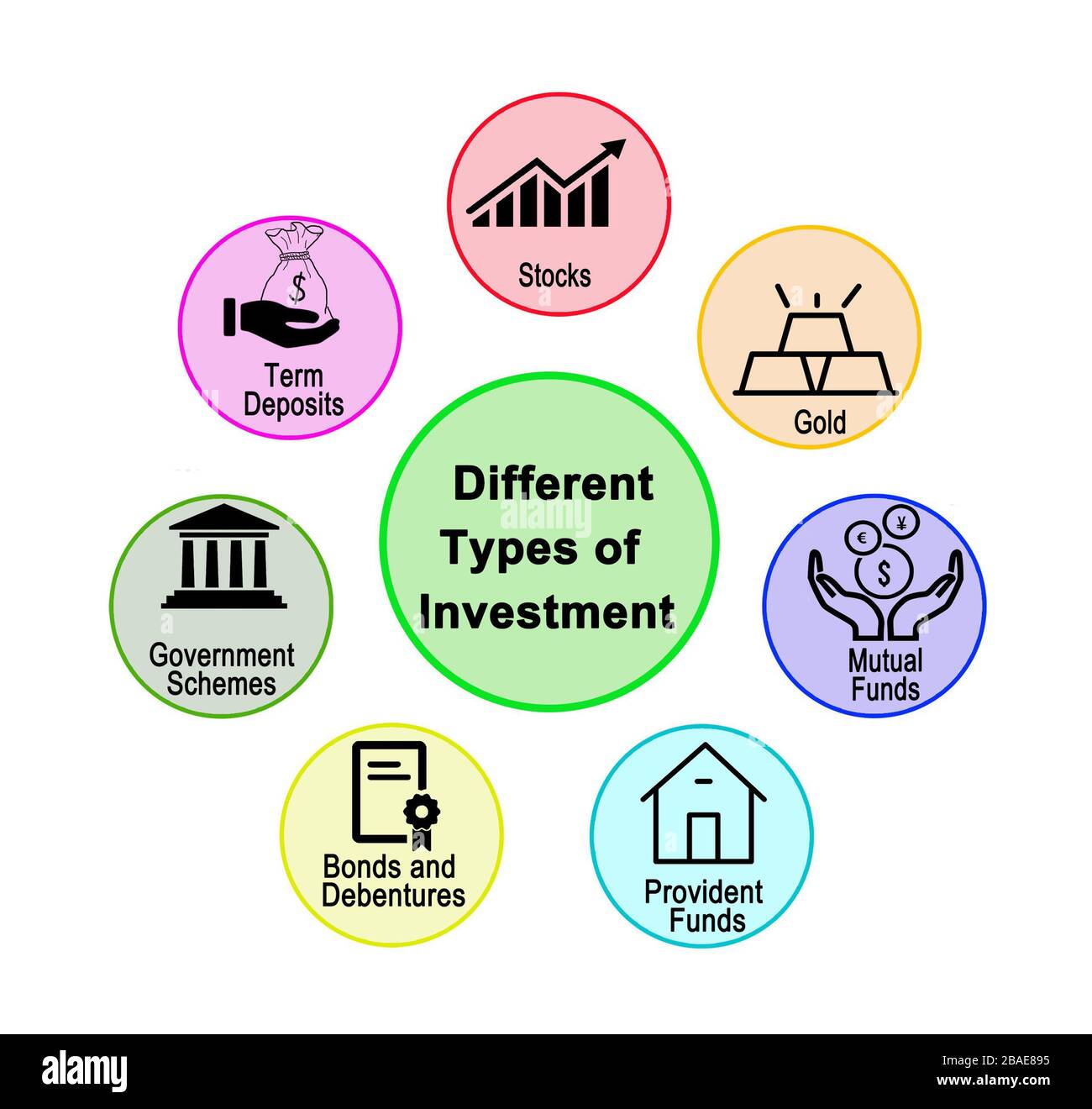
Building a robust investment portfolio requires understanding various financial assets, each offering distinct risk profiles, return potentials, and operational mechanics. Financial investments serve as the primary vehicle for accumulating wealth, hedging against inflation, and securing long-term financial independence. Navigating the modern economic landscape demands more than a basic savings account; it requires a diversified approach spanning equities, fixed income, real estate, and alternative vehicles. This guide explores seven foundational financial investment examples that every investor should understand to build a balanced, resilient portfolio aligned with their personal risk tolerance and time horizon.
1. Stocks (Equities)
Stocks represent fractional ownership, known as shares, in a publicly traded corporation. When you purchase a stock, you become a shareholder, meaning you hold a proportional claim on the company's assets and earnings. Equities have historically delivered some of the highest long-term returns among major asset classes, making them a cornerstone for growth-focused investors.
Mechanics and Return Mechanisms
Investors generally realize returns through two primary mechanisms: capital appreciation and dividends. Capital appreciation occurs when the market value of the stock increases above the investor's purchase price, allowing them to sell the shares for a profit. Dividends represent periodic distributions of a portion of a company's earnings directly to shareholders, typically paid out on a quarterly basis.
Risk Profile and Volatility
While stocks offer substantial upside potential, they also carry significant volatility. Share prices fluctuate daily based on company performance, broader economic conditions, sector trends, and investor sentiment. Within the equity market, risk varies considerably:
- Large-Cap Stocks: Shares of established, financially stable corporations with massive market capitalizations tend to exhibit lower volatility.
- Growth Stocks: Companies expected to grow at an above-average rate relative to the market; these often reinvest earnings rather than paying dividends and can experience sharp price swings.
- Value Stocks: Companies trading below their intrinsic worth, often offering consistent dividend yields and lower price-to-earnings ratios.
2. Bonds (Fixed Income)
Bonds are debt instruments issued by corporations, municipalities, or national governments to raise capital. When you buy a bond, you are essentially lending money to the issuer in exchange for regular interest payments over a specified period, known as the coupon. At the bond's maturity date, the issuer returns the principal amount (face value) to the investor.
Types of Bonds
Fixed-income investments generally fall into three main categories based on the issuing entity:
- Government Bonds: Issued by national governments (such as U.S. Treasury bonds). These are generally considered the safest fixed-income investments because they are backed by the "full faith and credit" of the issuing sovereign state.
- Municipal Bonds: Issued by state and local governments to fund public projects like schools, highways, and hospitals. Interest earned is frequently exempt from federal and, in some cases, state and local taxes.
- Corporate Bonds: Issued by companies. These typically offer higher yields than government bonds to compensate investors for the increased risk of corporate default.
The Inverse Relationship Between Prices and Yields
A fundamental mechanic of bond investing is the inverse relationship between market interest rates and bond prices. When prevailing interest rates rise, newly issued bonds offer higher payouts, making existing older bonds with lower coupon rates less attractive. Consequently, the market price of existing bonds falls. Conversely, when market interest rates drop, existing bonds with higher fixed rates become more valuable, driving their prices up.
3. Mutual Funds
A mutual fund is a professionally managed investment vehicle that pools money from numerous individual investors to purchase a diversified basket of securities, such as stocks, bonds, or other assets. Mutual funds provide an efficient way for everyday investors to achieve immediate portfolio diversification without needing to purchase hundreds of individual stocks or bonds separately.
Active Versus Passive Management
Mutual funds are generally structured in one of two ways:
- Actively Managed Funds: Overseen by professional portfolio managers and research teams who actively buy and sell securities in an attempt to outperform a specific market benchmark index. These funds typically feature higher expense ratios due to management overhead.
- Passively Managed Funds (Index Funds): Designed to track the performance of a specific market index, such as the S&P 500. Because they require minimal active trading, index funds generally feature much lower expense ratios and have historically outperformed many active managers over long horizons.
4. Exchange-Traded Funds (ETFs)
Exchange-Traded Funds share many similarities with mutual funds—both pool investor capital to hold a diversified collection of assets. However, ETFs trade on public stock exchanges throughout the trading day, exactly like individual stocks.
Key Advantages of ETFs
- Intraday Liquidity: Unlike mutual funds, which are priced only once at the end of the trading day, ETFs can be bought and sold at any time during market hours.
- Tax Efficiency: Due to their unique in-kind creation and redemption mechanism, ETFs generally distribute fewer capital gains taxes to shareholders compared to traditional mutual funds.
- Low Cost: Many ETFs track broad market indexes with exceptionally low expense ratios, making them a favorite tool for both cost-conscious long-term investors and active traders.
5. Real Estate
Real estate investing involves the purchase, ownership, management, rental, or sale of land and buildings for profit. Real estate is a tangible asset class that can generate reliable cash flow through rental income alongside long-term capital appreciation.
Direct Real Estate Investment
Direct ownership involves purchasing residential, commercial, or industrial properties. This approach requires substantial upfront capital, active property management, and ongoing maintenance. While direct real estate can offer significant leverage and tax advantages, it suffers from low liquidity—converting property into cash can take months.
Indirect Real Estate Investment (REITs)
For investors seeking real estate exposure without the burdens of property management, Real Estate Investment Trusts (REITs) offer a compelling alternative. A REIT is a company that owns, operates, or finances income-producing real estate. Many REITs trade publicly on major stock exchanges, allowing investors to buy shares of a diversified real estate portfolio with minimal capital and high liquidity.
6. Certificates of Deposit (CDs)
A Certificate of Deposit is a low-risk, fixed-income financial product offered by banks and credit unions. When you purchase a CD, you deposit a lump sum of money for a predetermined fixed term—ranging from a few months to several years—in exchange for a guaranteed interest rate.
Safety and Liquidity Trade-offs
CDs are exceptionally secure when purchased through institutions insured by federal agencies, such as the Federal Deposit Insurance Corporation (FDIC) in the United States, which protects deposits up to statutory limits per depositor, per institution.
The primary trade-off with CDs is liquidity. Your capital is locked away for the duration of the term. Withdrawing funds early typically triggers an early withdrawal penalty, which can forfeit several months' worth of interest earnings. Therefore, CDs are best suited for cash that is not needed in the short term but must remain secure from market volatility.
7. Alternative Investments (Commodities and Cryptocurrency)
Alternative investments encompass asset classes outside of traditional stocks, bonds, and cash. Two prominent examples within this category are commodities and digital assets.
Commodities
Commodities are basic physical goods used in commerce, categorized primarily into agricultural products (wheat, corn, coffee), energy resources (crude oil, natural gas), and precious metals (gold, silver). Investors often use commodities as a hedge against inflation and economic uncertainty, as physical goods tend to retain or increase in value when currency purchasing power declines.
Cryptocurrency
Cryptocurrency is a digital or virtual currency secured by cryptography, operating on decentralized blockchain networks. Unlike fiat currencies issued by central banks, most cryptocurrencies operate without a central authority. While digital assets like Bitcoin have gained institutional acceptance and massive market capitalization, they are characterized by extreme price volatility and evolving regulatory landscapes, making them a high-risk, speculative component of a modern portfolio.
Comparing the 7 Financial Investments
| Investment Type | Primary Return Source | Typical Risk Level | Liquidity | Main Purpose in Portfolio |
|---|---|---|---|---|
| Stocks | Appreciation & Dividends | Moderate to High | High | Long-term capital growth |
| Bonds | Interest (Coupon) Payments | Low to Moderate | Moderate | Income generation & stabilization |
| Mutual Funds | Varies by underlying assets | Low to High | Moderate | Diversified professional management |
| ETFs | Varies by underlying assets | Low to High | High | Cost-effective index tracking & trading |
| Real Estate | Rental Income & Appreciation | Moderate | Low to High (REITs) | Cash flow & inflation hedge |
| Certificates of Deposit | Fixed Interest Rate | Very Low (Insured) | Low | Capital preservation |
| Alternatives | Price Appreciation | High | Variable | Speculation & portfolio diversification |
Frequently Asked Questions
What is the safest investment among these seven options?
Certificates of Deposit (CDs) and government-issued bonds are generally considered the safest options. CDs backed by FDIC insurance protect principal up to statutory limits against bank failure, while high-grade government bonds carry minimal default risk. However, low-risk assets typically offer lower long-term returns, exposing investors to inflation risk over extended time horizons.
How much money do I need to start investing in stocks and ETFs?
Many modern brokerage platforms offer fractional shares, allowing investors to purchase portions of high-priced stocks or ETFs with as little as $1 to $5. This accessibility eliminates traditional capital barriers, enabling beginners to build a diversified portfolio incrementally over time.
What is the difference between mutual funds and ETFs?
While both pool investor money to purchase a basket of assets, ETFs trade on public stock exchanges throughout the day like individual stocks, offering intraday pricing and high liquidity. Mutual funds are priced only once per market day after the close, and transactions are executed at that single Net Asset Value (NAV). ETFs also tend to have lower expense ratios and greater tax efficiency.
How do I choose the right mix of investments for my portfolio?
Selecting the right asset allocation depends on your personal financial goals, investment time horizon, and risk tolerance. Younger investors with long time horizons often allocate a higher percentage to growth-oriented assets like stocks and ETFs, while investors nearing retirement typically shift toward income-generating assets like bonds and dividend-paying stocks to preserve capital.
Are alternative investments necessary for a healthy portfolio?
Alternative investments, such as commodities or real estate, are not strictly mandatory, but they can enhance diversification. Because alternative assets often exhibit low correlation with traditional stock and bond markets, including them can help reduce overall portfolio volatility and protect against economic shocks.
Next Steps for Investors
To begin building or refining your investment strategy, start by evaluating your current financial health, establishing an emergency fund, and defining your timeline and risk tolerance. Research brokerage platforms that align with your trading preferences, low-cost fee structures, and educational resources. For tailored tax or legal strategies regarding large portfolio allocations, consult a qualified fee-only financial planner or certified financial advisor to ensure your selections match your long-term objectives.