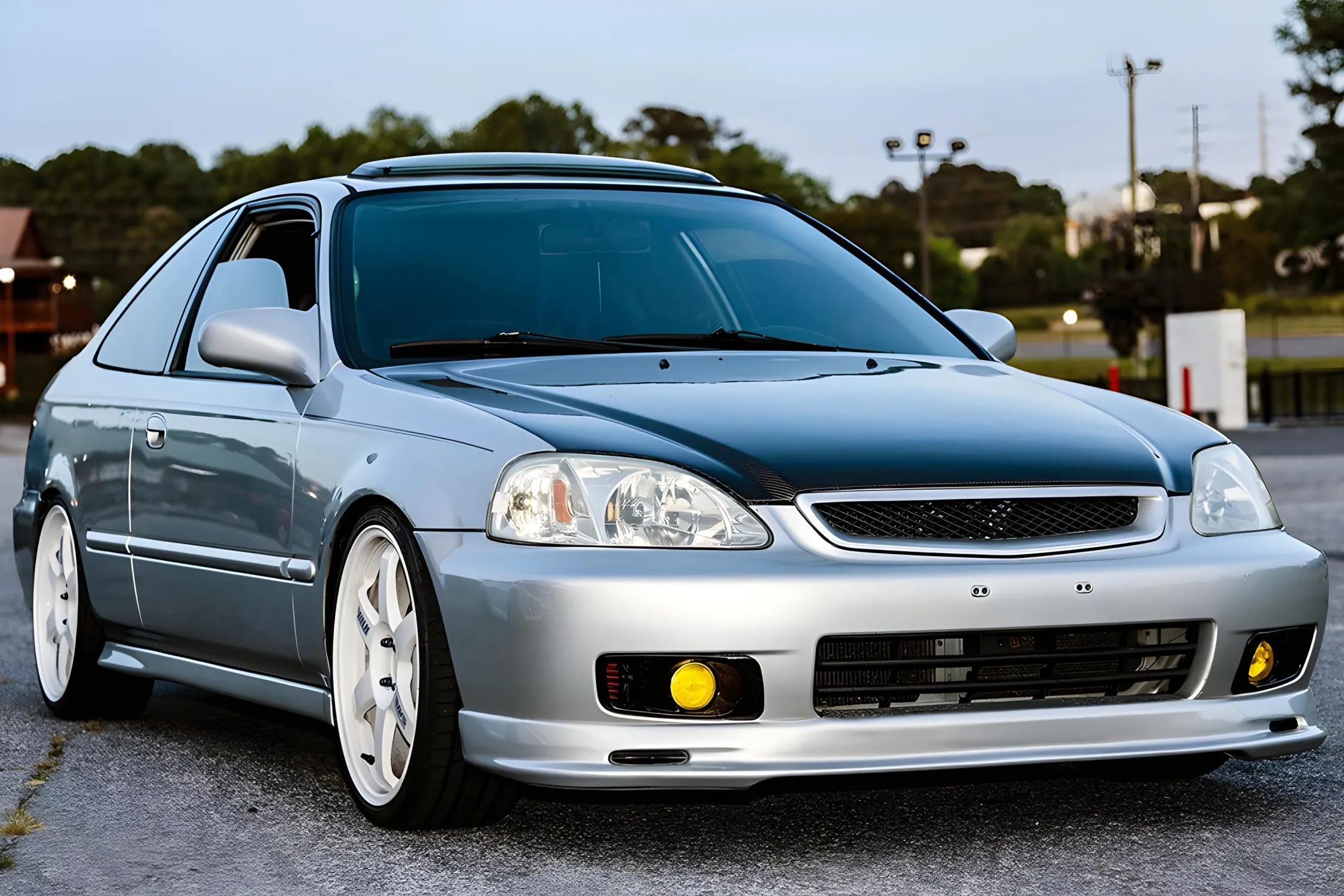
The sixth-generation Honda Civic hatchback, produced for the 1996 through 2000 model years, represents a golden era of lightweight Japanese automotive engineering, offering exceptional fuel economy, remarkable aftermarket support, and nimble handling that continues to captivate enthusiasts and daily commuters alike.
The sixth-generation (EK/EJ/EN/EM series) Honda Civic hatchback remains one of the most culturally significant and mechanically revered compact cars ever produced. Built on an era-defining platform, this three-door configuration—sold primarily as the CX, DX, and Si (in Canada) or standard trim variants globally—bridged the gap between utilitarian commuter vehicle and highly capable enthusiast platform. Today, finding a clean, unmodified, or tastefully built example requires navigating decades of modifications, rust issues, and varying maintenance histories. This guide explores the historical context, powertrain options, suspension mechanics, common failure points, and purchasing considerations for the sixth-generation Civic hatchback.
Historical Context and Lineup Overview
Introduced for the 1996 model year, the sixth-generation Civic arrived with smoother, more aerodynamic styling than its predecessor, the fifth-generation (EG) chassis. While sedan and coupe models were produced in North America, the hatchback body style retained a unique appeal due to its glass tailgate, folding rear seats, and distinct cargo versatility.
In North America, the hatchback lineup was streamlined compared to other markets, focusing on efficiency and affordability. The base CX and mid-tier DX trims served as the volume sellers, powered by non-vtec 1.6-liter engines optimized for fuel economy rather than raw acceleration. Meanwhile, other global markets enjoyed high-performance variants like the Japanese Domestic Market (JDM) Civic Type RX and the legendary EK9 Type R, featuring a hand-built hand-ported B16B engine, seam-welded chassis, and championship white paint.
Understanding these regional differences is vital for modern buyers and builders. While North American hatchbacks required engine swaps to match the performance of their Japanese counterparts, the underlying unibody chassis shared the same fundamental lightweight architecture, making it an ideal canvas for custom builds.
Powertrain Specifications and Engine Options
The North American sixth-generation Civic hatchback relied primarily on the D-series engine family, known for its reliability and fuel efficiency. Global markets received more diverse powerplants.
| Trim / Model | Engine Code | Displacement | Stock Output |
|---|---|---|---|
| CX / DX (US) | D16Y7 | 1.590 L (1.6L) | 106 hp @ 6200 |
| Si (Canada) | D16Y8 | 1.590 L (1.6L) | 127 hp @ 6600 |
| SiR (Canada) | B16A2 | 1.595 L (1.6L) | 160 hp @ 7600 |
| EK9 Type R | B16B | 1.595 L (1.6L) | 185 hp @ 8200 |
The D-Series Workhorses: D16Y7 and D16Y8
The standard North American CX and DX models came equipped with the D16Y7 engine, a single-overhead-camshaft (SOHC) non-VTEC motor producing 106 horsepower. While unexciting on paper, it features a robust iron-block design capable of high mileage when properly maintained.
The Canadian Civic Si and select other trim levels featured the D16Y8, which incorporated VTEC (Variable Valve Timing and Lift Electronic Control) technology on the intake side. This raised output to 127 horsepower, providing a more responsive powerband and a distinct VTEC crossover feel. Both engines were paired with either a 5-speed manual transmission or a 4-speed automatic, though the manual gearbox is vastly preferred for its durability and engagement.
Performance Swaps: B-Series and K-Series
Because of the chassis's light weight—tipping the scales at roughly 2,200 to 2,400 pounds depending on options—even modest power upgrades transform the driving dynamics. A common modification path involves swapping in a Honda B-series engine (such as the B16A, B18C from the Integra GSR/Type R) or, more recently, a modern K-series (K20/K24) motor using aftermarket mount kits. These swaps require upgrading axles, engine harness wiring, and braking components to safely manage the increased power.
Suspension, Chassis, and Handling Dynamics
One of the defining engineering achievements of the sixth-generation Civic is its four-wheel double-wishbone suspension setup. Unlike modern compact cars that rely on simpler MacPherson strut layouts, the double-wishbone design allows the tire to maintain a more optimal contact patch with the road through its range of travel.
- Front Suspension: Upper and lower control arms with coil-over springs and a standard anti-roll bar on higher trims.
- Rear Suspension: Multi-link double-wishbone architecture with trailing arms, lateral links, and upper control arms.
- Steering: Power-assisted rack-and-pinion steering offering precise, communicative feedback with minimal dead zones.
This layout makes the sixth-gen hatchback exceptionally agile, rewarding smooth inputs and cornering momentum. However, decades of wear mean that rubber bushings, ball joints, and struts are frequently degraded on surviving examples. Upgrading to polyurethane or hardened rubber bushings, combined with quality coil-overs and adjustable camber kits, restores or significantly improves upon factory handling limits.
Common Weaknesses and Inspection Checklist
Purchasing or maintaining a sixth-generation Civic hatchback requires vigilance regarding specific structural and mechanical vulnerabilities. Because these cars are frequently modified, abused, or exposed to harsh winter road salts, a thorough inspection is mandatory.
1. Structural Rust
The rear quarter panels—specifically where the outer skin meets the inner wheel arch—are notoriously prone to rust accumulation. Moisture gets trapped behind the plastic bumper liners and unpainted inner lips, causing bubbling paint and structural degradation. Additionally, check the floor pans beneath the driver and passenger footwells, as well as the spare tire well in the trunk for water intrusion through failing taillight gaskets or sunroof drain tubes.
2. Oil Consumption and Head Gaskets
High-mileage D-series engines frequently suffer from worn piston rings or valve stem seals, leading to noticeable oil consumption. Furthermore, the D16Y7 and D16Y8 engines are susceptible to blown head gaskets if they have ever experienced an overheating event. Always check coolant condition for signs of oil contamination and inspect the radiator for discoloration.
3. Electrical Issues and Distributor Wear
The internal ignition coil and igniter housed inside the distributor cap are common failure points. A failing igniter often manifests as intermittent stalling when the engine reaches operating temperature, followed by a failure to restart until cooled down. Power door lock actuators and window regulators also tend to fail or become sluggish with age.
4. Interior Wear and Sagging Headliners
The interior materials of 1990s Hondas are durable, but sun exposure frequently cracks dashboards, causes fabric door card inserts to sag, and makes plastic trim brittle. Hatchback cargo privacy covers are frequently missing or broken on used examples, making replacement units a sought-after commodity in the enthusiast community.
Maintenance Schedules and Practical Ownership
Keeping a sixth-generation Civic on the road is remarkably straightforward due to massive parts availability and a simple engine bay layout. However, adherence to specific maintenance intervals ensures long-term reliability.
- Timing Belt and Water Pump: Must be replaced every 60,000 to 90,000 miles or every seven years. A snapped timing belt on these interference engines (particularly swapped or VTEC variants) will result in severe valve-to-piston contact.
- Valve Clearance Adjustments: SOHC and DOHC engines require manual valve lash inspections and adjustments every 30,000 miles to prevent ticking noises and maintain proper compression.
- Fluid Flushes: Regular changes of manual transmission fluid (using genuine Honda MTF or high-grade synchromesh) preserve smooth shifting synchronization.
Fuel economy remains a massive practical benefit. Even with aggressive driving, a healthy stock D-series hatchback easily returns between 30 and 35 miles per gallon in mixed driving conditions, making it an exceptionally cost-effective daily driver.
Frequently Asked Questions
What is the difference between the CX, DX, and Si trims for the 6th gen Civic hatchback?
The CX was the base model, often lacking power steering, a rear wiper, and a radio in certain early years. The DX added standard amenities like power steering and more comprehensive interior trim. While North America did not receive a factory domestic hatchback Si, Canadian markets received the Si featuring the VTEC D16Y8 engine, power sunroof, and upgraded instrumentation.
Are 6th gen Civic hatchbacks easy to engine swap?
Yes. The engine bay is spacious, and the aftermarket supports virtually every conceivable swap. B-series, D-series, and K-series swaps are well-documented, with plug-and-play wiring harnesses and engine mounts readily available from reputable manufacturers.
How can I prevent my Civic hatchback from being stolen?
Sixth-generation Civics are historically among the most targeted vehicles for theft due to the interchangeability of their parts and simplistic factory ignition security (on non-immobilizer models). Installing a hidden kill switch, a robust steering wheel lock, and an aftermarket alarm system with an ignition cutoff is strongly recommended for all owners.
What wheels and tire sizes fit best on a stock suspension?
The factory bolt pattern is 4x100. A 15-inch wheel with a 15-inch or 16-inch diameter, paired with a 205/50R15 tire, offers an ideal balance of grip, comfortable ride quality, and clearance without requiring fender rolling.
Is the chassis rigid enough for track use?
While lightweight, the unibody chassis benefits significantly from structural reinforcement. Adding a front upper strut tower brace, a rear sway bar, and aftermarket subframe connectors or a roll bar vastly improves chassis stiffness during aggressive cornering.
Conclusion and Next Actions
The sixth-generation Honda Civic hatchback remains an enduring icon of accessible automotive enthusiasm and reliable daily transportation. Whether you are looking to restore a clean DX commuter to factory specifications, build a reliable canyon carver, or execute a high-horsepower engine swap, success depends entirely on locating a chassis free of terminal rust and structural compromise. Inspect potential purchases thoroughly for quarter-panel corrosion, verify the maintenance history of the timing belt, and prioritize suspension refreshment before pursuing power modifications to fully experience the engineering brilliance of the EK chassis.