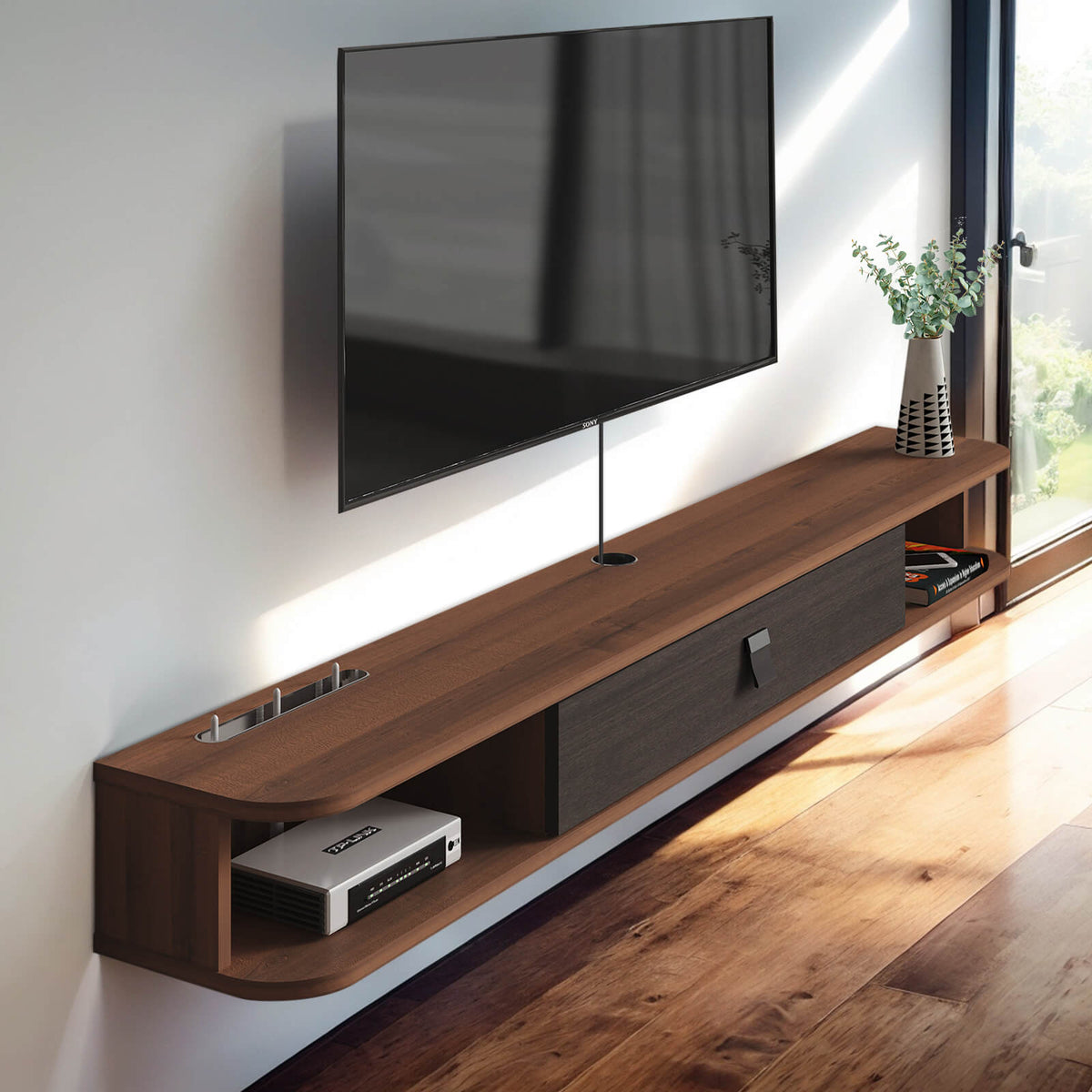
A 48-inch long TV stand is designed to support televisions ranging from 43 inches to 55 inches comfortably while providing proportional clearance, integrated cable management, and functional storage options like cabinets, drawers, or open shelving for media components and accessories.
Selecting the right furniture for a home entertainment space requires careful consideration of physical constraints, aesthetic preferences, and the technical specifications of your audio-visual equipment. Among the various sizes available on the furniture market, the 48-inch long TV stand represents a versatile, mid-sized footprint. It bridges the gap between compact corner consoles and massive entertainment centers, making it an ideal choice for urban apartments, medium-sized living rooms, bedrooms, and home offices. Understanding the features, precise dimensions, weight capacities, and material compositions of a 48-inch TV stand ensures that your living space remains organized, safe, and visually balanced.
Understanding the 48-Inch Footprint: Dimensions and Spatial Planning
When evaluating a 48-inch long TV stand, the primary measurement—its width—is fixed at approximately 48 inches (typically ranging between 46 and 50 inches depending on decorative side moldings). However, width is only one variable in spatial planning. Depth and height play equally critical roles in determining whether the console will fit your room layout and accommodate your equipment properly.
Standard Dimensional Profiles
Most standard 48-inch media consoles feature a depth ranging from 15 inches to 20 inches. This specific depth range is deliberately engineered to support the base stands of modern flat-panel televisions while maintaining a low-profile footprint that does not protrude excessively into walkways or traffic paths.
- Width (Horizontal Span): ~46 to 50 inches (Nominally 48 inches). Ideal for centering along standard wall segments or positioning between architectural features like windows and doorways.
- Depth (Front-to-Back): 15 to 20 inches. Sufficient for housing older AV receivers, modern soundbars, gaming consoles, and streaming boxes without crowding the rear cabling space.
- Height (Vertical Clearance): 20 to 30 inches. This range places the center of the television screen at standard eye level when seated on an average living room sofa, reducing neck strain during extended viewing sessions.
Sizing Rules for Televisions
A common technical error in home theater setup is pairing a television with a stand that is either too small or disproportionately large. While a television screen is measured diagonally, its physical width dictates how it will look resting on a 48-inch surface.
A 48-inch TV stand is mathematically optimized for televisions up to 55 inches wide. A standard 55-inch flat-screen TV typically measures approximately 48.5 inches wide. Placing a 55-inch TV on a 48-inch stand means the edges of the TV will align almost flush with the edges of the console, or overhang by a negligible fraction of an inch if the TV's feet are positioned at the extreme outer edges. For a safer visual margin and greater stability, many interior designers and audio-visual technicians recommend limiting a 48-inch stand to TVs sized between 43 inches and 50 inches, leaving 2 to 4 inches of clearance on either side.
Core Structural Features and Design Configurations
Beyond basic measurements, the internal layout and architectural features of a 48-inch media console dictate its functionality. Manufacturers design these units to balance open display space with concealed storage, addressing the modern need to hide unsightly wires and peripheral equipment.
Open Shelving Versus Closed Cabinetry
The debate between open shelves and closed cabinets involves a trade-off between thermal management and aesthetic cleanliness.
- Open Shelving: Consoles featuring open central cubbies allow for uninterrupted infrared remote control signals to reach your cable box, Blu-ray player, or streaming devices. Furthermore, open shelving provides superior passive airflow, preventing high-performance gaming consoles and amplifiers from overheating.
- Closed Cabinetry: Units equipped with wooden, glass, or mesh doors hide clutter completely. Glass doors (tempered safety glass) offer a middle ground, allowing remote controls to function while keeping dust accumulation to a minimum. Mesh or louvered wooden doors provide ventilation while maintaining privacy for stored items.
Cable Management Infrastructure
An effective 48-inch TV stand incorporates built-in cable routing holes at the back panel. These cutouts prevent power cords, HDMI cables, and speaker wires from tangling or crimping against the wall. Premium models often include integrated power strips, cable raceways, or Velcro straps mounted to the interior frame, ensuring that the back of the console remains orderly and safe from electrical hazards.
| Feature Type | Primary Function | Ideal Use Case | Potential Limitation |
|---|---|---|---|
| Open Cubbies | Maximum airflow & IR signal pass-through | Gaming consoles, soundbars, streaming boxes | Exposes dust and tangled wires to view |
| Glass Doors | Dust protection with remote control visibility | Cable boxes, media players, DVD collections | Requires frequent wiping of fingerprints |
| Solid Cabinets | Complete visual concealment of clutter | Board games, extra blankets, miscellaneous items | Blocks infrared signals; traps heat if unventilated |
| Cable Portals | Organizing power cords and signal wires | Managing multi-device home theater setups | Fixed position limits custom routing options |
Materials and Weight Capacities
The longevity and structural integrity of a 48-inch media console depend heavily on its construction materials. Because these stands must support significant weight—not only from the television itself, but also from auxiliary audio equipment, books, and decorative objects—material selection is a critical specification.
Common Construction Materials
- Solid Wood: Materials like oak, walnut, pine, and mahogany offer exceptional durability, timeless aesthetics, and high weight tolerance. Solid wood stands are heavy, stable, and resistant to sagging over time, though they generally command a higher price point.
- Manufactured Wood (MDF and Particle Board): Medium-Density Fiberboard (MDF) and high-grade particle board covered in wood veneer or laminate are common in modern flat-pack furniture. They provide a smooth, consistent surface and lower manufacturing costs, but require careful assembly to prevent structural weakening.
- Metal and Glass Combinations: Industrial-style stands often feature powder-coated steel frames paired with tempered glass shelving. This combination creates an open, airy feel in smaller rooms while providing robust vertical load-bearing capacity.
Load-Bearing Specifications
A critical safety parameter often overlooked by consumers is weight capacity. A 48-inch TV stand typically features two distinct weight ratings: the top surface capacity and the shelf capacity.
- Top Surface Rating: Usually ranges from 100 to 250 pounds, depending on whether the unit is solid wood or engineered board. This rating easily accommodates a standard 50-inch LED or OLED television (which typically weighs between 30 and 50 pounds with its stand).
- Shelf Rating: Individual interior shelves generally support between 25 and 50 pounds. Heavy components, such as vintage tube amplifiers or large multi-channel receivers, should always be placed on the bottom shelf or directly on the floor of the unit to maintain a low center of gravity and prevent tipping hazards.
Ergonomics, Viewing Angles, and Room Placement
Integrating a 48-inch TV stand into a room requires careful attention to ergonomic principles. Proper placement reduces physical fatigue, optimizes screen visibility, and enhances the overall acoustic and visual experience.
Height and Eye-Level Alignment
Human neck muscles tire quickly when forced to look upward or downward for extended periods. According to standard ergonomic guidelines, the optimal viewing height is achieved when the vertical center of the television screen aligns with the viewer's eye level while seated.
Because a standard 48-inch TV stand typically stands between 20 and 30 inches tall, it places a medium-sized television at the correct height for standard living room seating. If your sofa features an exceptionally low profile or deep recline, a lower console (around 20 to 22 inches) is preferable. Conversely, in a bedroom setting where viewers may be watching from an elevated bed, a taller console (28 to 32 inches) prevents the need to tilt the head downward uncomfortably.
Room Flow and Spatial Clearance
Before purchasing a 48-inch console, measure the available wall space and map out surrounding furniture. Ensure there is at least 24 to 30 inches of clearance between the front of the TV stand and any coffee tables, accent chairs, or opposing walls. This maintains a comfortable walking path and prevents the room from feeling cramped.
Common Mistakes to Avoid When Choosing a TV Stand
Selecting media furniture involves several pitfalls that can compromise safety, functionality, and interior design harmony. Being aware of these common errors helps ensure a successful purchase.
- Ignoring Base Stand Width: Measuring only the diagonal screen size of the television without checking the stance width of its feet or central pedestal. Some modern televisions feature wide-set legs that exceed the 48-inch span of the console, creating an unsafe overhang.
- Overlooking Thermal Constraints: Placing high-heat-generating electronics inside tightly sealed wooden cabinets without adequate rear ventilation ports, leading to thermal throttling or premature hardware failure.
- Neglecting Cord Lengths: Forgetting to account for the distance between wall power outlets and the console's cable management ports, which can require unsightly extension cords.
- Disregarding Material Weight Limits: Placing heavy CRT televisions (legacy equipment) or massive multi-speaker surround sound systems on lightweight, decorative particle-board stands designed exclusively for ultra-slim flat panels.
Frequently Asked Questions
What size TV fits best on a 48-inch long TV stand?
A 48-inch TV stand is ideally suited for televisions ranging from 43 inches to 55 inches measured diagonally. A 55-inch flat-screen TV typically measures about 48.5 inches wide, meaning it will sit flush or with a very minor overhang, while 43-inch to 50-inch models leave comfortable safety margins on either side.
How much weight can a standard 48-inch media console hold?
Most standard 48-inch media consoles support between 100 and 250 pounds on their top surface, with individual interior shelves supporting 25 to 50 pounds. Always verify the manufacturer's exact weight specifications, especially if you are using older, heavier equipment or large audio receivers.
Are 48-inch TV stands suitable for small bedrooms?
Yes, a 48-inch footprint is compact enough for most average bedrooms. Its moderate width provides ample surface area for a secondary TV and a small cable box or streaming device without dominating the room's floor space or obstructing bedroom storage furniture.
How do I manage tangled cords behind a small TV stand?
Utilize the built-in cable management holes on the back panel of the stand. Group power cables and signal wires together using Velcro fastening strips or plastic zip ties, and route them down a single vertical path to the nearest wall outlet to maintain a clean appearance.
Should I choose a TV stand with glass doors or solid wood doors?
The choice depends on your equipment. Glass doors allow infrared signals from remote controls to pass through to your cable box or DVD player while protecting gear from dust. Solid wood or louvered doors completely hide clutter, but you must ensure your remote control uses radio frequency (RF) or that you install an IR repeater system.
Practical Next Steps for Your Purchase
Before finalizing your selection of a 48-inch long TV stand, take precise measurements of your designated wall space using a tape measure, accounting for baseboards, heating vents, and electrical outlets. Verify the exact dimensions and weight of your television, including its feet or base mount. Cross-reference these figures with the manufacturer’s technical specifications for top-surface weight capacity and shelf dimensions. By aligning your spatial constraints with the structural capabilities of the furniture, you will secure a stable, functional, and aesthetically pleasing foundation for your home entertainment system.