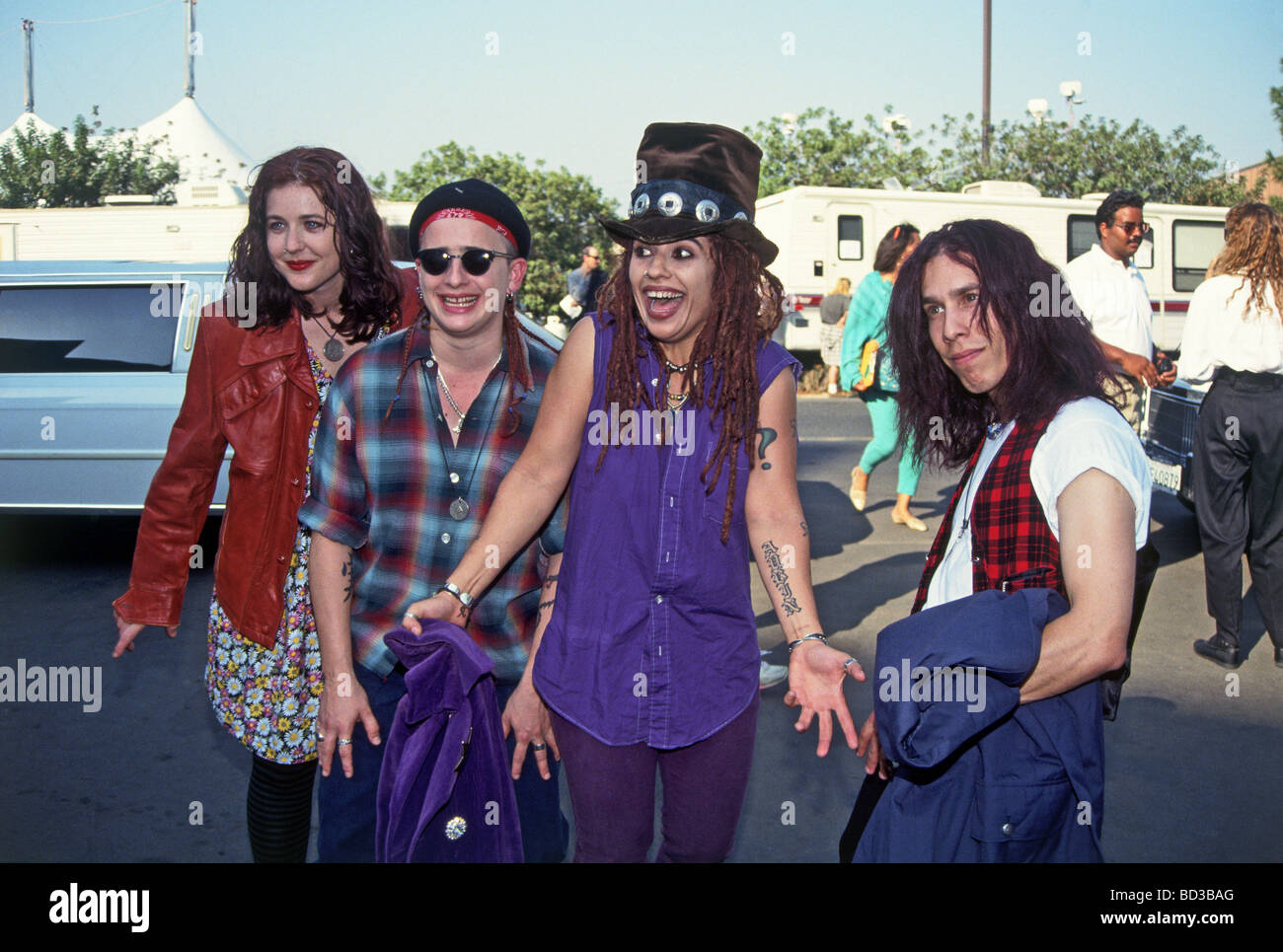
The famous song by 4 Non Blondes is titled "What's Up?", released in 1993 as the second single from their only studio album, Bigger, Better, Faster, More!. Written by lead singer Linda Perry, the track became a global anthem for existential angst and female-led alternative rock, reaching the top ten in dozens of countries.
The Genesis of an Alternative Rock Anthem
To understand the weight of "What's Up?", one must look back at the San Francisco music scene of the early 1990s. 4 Non Blondes, consisting of Linda Perry, Christa Hillhouse, Shaunna Hall (later replaced by Roger Rocha), and Wanda Day (later replaced by Dawn Richardson), emerged as a gritty, queer-friendly, and unapologetically raw ensemble. While the grunge movement was exploding in Seattle, 4 Non Blondes brought a more melodic, yet equally tortured, blues-rock sensibility to the airwaves.
Linda Perry wrote "What's Up?" long before the band achieved stardom. Legend has it she penned the track while sitting on the hallway floor of her apartment, struggling with the typical frustrations of a young artist trying to find her place in the world. The song was not an immediate favorite within the industry's corporate structure; however, its raw honesty resonated with a generation tired of the polished pop of the 1980s.
In the year 2026, looking back across more than three decades, the song remains the definitive example of the "one-hit wonder" that transcends the label. It didn't just top charts; it defined a specific cultural moment where alternative culture and mainstream success briefly shook hands.
Song Composition and Musical Analysis
Musically, "What's Up?" is deceptively simple, which is a hallmark of many great anthems. It follows a straightforward progression—A major, B minor, D major, and A major—throughout the entire song. This repetition creates a hypnotic, circular feel that mirrors the lyrical theme of being stuck in a cycle of questioning and frustration.
Vocal Prowess and Delivery
The defining characteristic of the song is Linda Perry’s vocal performance. She moves from a controlled, almost conversational croon in the verses to an explosive, rasp-filled belt in the chorus. Her delivery of the "Hey-ey-ey-ey-ey" hook is one of the most recognizable vocal motifs in rock history. It requires significant breath control and a specific "break" in the voice that many singers have attempted to emulate, often unsuccessfully.
Production Decisions and Title Confusion
A common point of confusion for listeners is the song’s title. Despite the phrase "What's Up?" never appearing in the lyrics—where the refrain is clearly "What's going on?"—the song was titled to avoid confusion with Marvin Gaye’s 1971 masterpiece "What's Going On."
The production of the track was famously contentious. Linda Perry was reportedly unhappy with the initial polished version produced by David Tickle. She felt the soul of the song was being scrubbed away by high-end studio gloss. In an act of artistic defiance, she insisted on re-recording it to capture the raw, unrefined energy that fans hear on the radio today. This decision proved to be the making of the track; the version that became a hit was the one that stayed true to the band's club-circuit roots.
Lyrical Meaning and Existential Themes
The lyrics of "What's Up?" deal with the universal experience of existential dread and the search for purpose. The opening lines, "Twenty-five years and my life is still / Trying to get up that great big hill of hope / For a destination," set a tone of weary perseverance.
The "Great Big Hill of Hope"
In 1993, this spoke to a generation facing economic uncertainty and a shifting social landscape. In 2026, these lyrics continue to resonate with young adults entering their mid-20s, a period often characterized by the "quarter-life crisis." The song captures the feeling of doing everything "right"—praying, trying, crying—yet still feeling like something fundamental is missing or that the world is inherently broken.
The Institutional Critique
The line "And I realized quickly when I knew I should / That the world was made up of this brotherhood of man / For whatever that means" hints at a burgeoning awareness of systemic issues. Perry’s lyrics suggest an outsider looking in, trying to decipher the unwritten rules of society and finding them wanting. This sense of alienation was a core component of the 1990s "slacker" and "alternative" identities.
Commercial Performance and Global Reach
Upon its release in June 1993, "What's Up?" became an unstoppable force on international charts. While it peaked at number 14 on the US Billboard Hot 100, its impact was even more pronounced in Europe and Oceania.
| Country | Peak Position | Certification (Historical) |
|---|---|---|
| United States (Billboard Hot 100) | 14 | Gold |
| United Kingdom (OCC) | 2 | Platinum |
| Germany (Official German Charts) | 1 | 2x Platinum |
| Australia (ARIA) | 2 | Platinum |
| Ireland (IRMA) | 1 | Gold |
| Netherlands (Single Top 100) | 1 | Gold |
The song’s longevity is bolstered by its ubiquity in karaoke bars, cinematic soundtracks, and television commercials. It is a "participation" song; the chorus is designed for a crowd to sing along, regardless of their vocal ability.
The Iconic Music Video and Aesthetic
The music video for "What's Up?", directed by Morgan Lawley, was a staple of MTV’s "Buzz Bin" and heavy rotation. It features the band in a park and a cluttered room, but the most enduring image is Linda Perry wearing a large, top-heavy steampunk-style hat with goggles.
This visual helped cement the band’s identity as quirky and non-conformist (living up to the name 4 Non Blondes). The fashion—layers of flannel, combat boots, and thrift-store finds—became a template for the alternative look of the era. The video currently holds hundreds of millions of views on digital platforms, proving that its visual language still appeals to new generations of viewers.
The He-Man Meme and Internet Longevity
One cannot discuss the fame of "What's Up?" in the modern era without mentioning its second life as an internet meme. In 2005, a video titled "HEYYEYAAEYAAAEYAEYAA" was uploaded by the animation collective Slackcircus. The video features clips from the 1980s cartoon He-Man and the Masters of the Universe edited to a dance-remix cover of "What's Up?".
The meme exploded in the late 2000s and early 2010s, introducing the song to a demographic that wasn't even alive when the original single was released. The juxtaposition of He-Man’s hyper-masculine physique with the high-pitched, emotional delivery of Perry’s lyrics created a comedic masterpiece that remains a cornerstone of early YouTube culture. Even in 2026, the meme is frequently referenced in digital spaces, keeping the song's melody alive in the collective consciousness.
Linda Perry’s Post-Band Legacy
While 4 Non Blondes disbanded shortly after the success of their first album, the legacy of "What's Up?" served as a springboard for Linda Perry’s career as one of the most successful songwriters and producers in pop music history.
After leaving the band, Perry realized that her true strength lay in helping other artists find their authentic voices. She is responsible for some of the biggest hits of the 21st century, including:
- P!nk: "Get the Party Started"
- Christina Aguilera: "Beautiful"
- Gwen Stefani: "What You Waiting For?"
Her work often mirrors the emotional vulnerability found in "What's Up?". When listening to "Beautiful," one can hear the same commitment to raw truth and the celebration of the "outsider" that made her own 1993 hit so successful. Perry was inducted into the Songwriters Hall of Fame in 2015, a testament to the enduring craft she first displayed with 4 Non Blondes.
Common Misconceptions and Comparisons
Many listeners associate 4 Non Blondes with the "Lilith Fair" era of female singer-songwriters. While they paved the way for artists like Alanis Morissette and Sheryl Crow, 4 Non Blondes were considerably more rock-oriented and eccentric than their successors.
Another common comparison is made between "What's Up?" and the works of The Cranberries or Hole. While all three acts featured powerful frontwomen, 4 Non Blondes leaned more into 70s-style classic rock and blues than the dream-pop or punk-inflected styles of their contemporaries. "What's Up?" is often categorized as "Soft Rock" or "Alternative Rock," but its structure is closer to a folk-rock protest song updated for the MTV age.
Technical Specifications for Musicians
For those looking to cover or study the song, the following technical details are essential:
- Standard Tuning: The original recording is played in standard tuning (EADGBE), though the track is often perceived as slightly sharp due to tape speed or tuning variations during the 1992 recording sessions.
- Tempo: Approximately 110 BPM.
- Key: A Major.
- Vocal Range: E3 to E5. The song requires a singer who can handle a significant "chest-to-head" transition and sustain power in the upper-mid range.
Summary of the Song’s Cultural Impact
"What's Up?" remains a staple of modern culture for several reasons:
- Relatability: The existential questioning in the lyrics is timeless.
- Vocal Hook: The "Hey-ey-ey" hook is one of the most effective earworms in music history.
- Cross-Generational Appeal: From 90s radio to 2010s memes to 2020s streaming playlists, the song has successfully navigated every major shift in media consumption.
- Artistic Integrity: The song’s raw production stands in stark contrast to the overly processed tracks of both its era and the modern day.
Frequently Asked Questions
Why is the song called "What's Up?" if the lyrics say "What's Going On?"
The band chose the title "What's Up?" to avoid legal or branding conflicts with Marvin Gaye’s legendary song "What's Going On." It also reflects a more casual, 90s-appropriate greeting that fit the band's image better than the more formal-sounding refrain.
Did 4 Non Blondes release any other hit songs?
While "What's Up?" was their only massive global hit, other singles like "Spaceman" and "Drifting" received moderate airplay and remain favorites among alt-rock enthusiasts. However, the band broke up during the recording of their second album, leading to their status as a "one-hit wonder."
Is Linda Perry still active in the music industry in 2026?
Yes. As of 2026, Linda Perry remains a highly influential producer, songwriter, and mentor. She continues to work with both established legends and emerging indie artists, consistently advocating for artistic freedom and authentic performance.
What is the most famous cover of "What's Up?"
Aside from the Slackcircus meme version, the song has been covered by numerous artists, including Lady Gaga, P!nk, and even the cast of the Netflix series Sense8. Each cover tends to emphasize different aspects of the song, from its powerhouse vocals to its communal, sing-along nature.
Why did 4 Non Blondes break up so soon after their success?
Linda Perry has stated in various interviews that she was unhappy with the musical direction of the band’s second album and felt that the group’s sound was becoming too "pop" or controlled by the label. She chose to leave to pursue a solo career and eventually shifted into songwriting and production.
Practical Recommendation for Listeners
To truly appreciate "What's Up?", it is recommended to listen to the remastered 25th-anniversary editions of Bigger, Better, Faster, More!. These versions preserve the dynamic range of the original recording while cleaning up the analog hiss, allowing the power of Perry’s vocal performance to cut through more clearly. For those interested in the songwriting process, searching for early live recordings from San Francisco clubs in the late 80s provides a fascinating look at how the song evolved from a raw acoustic idea into a global phenomenon.