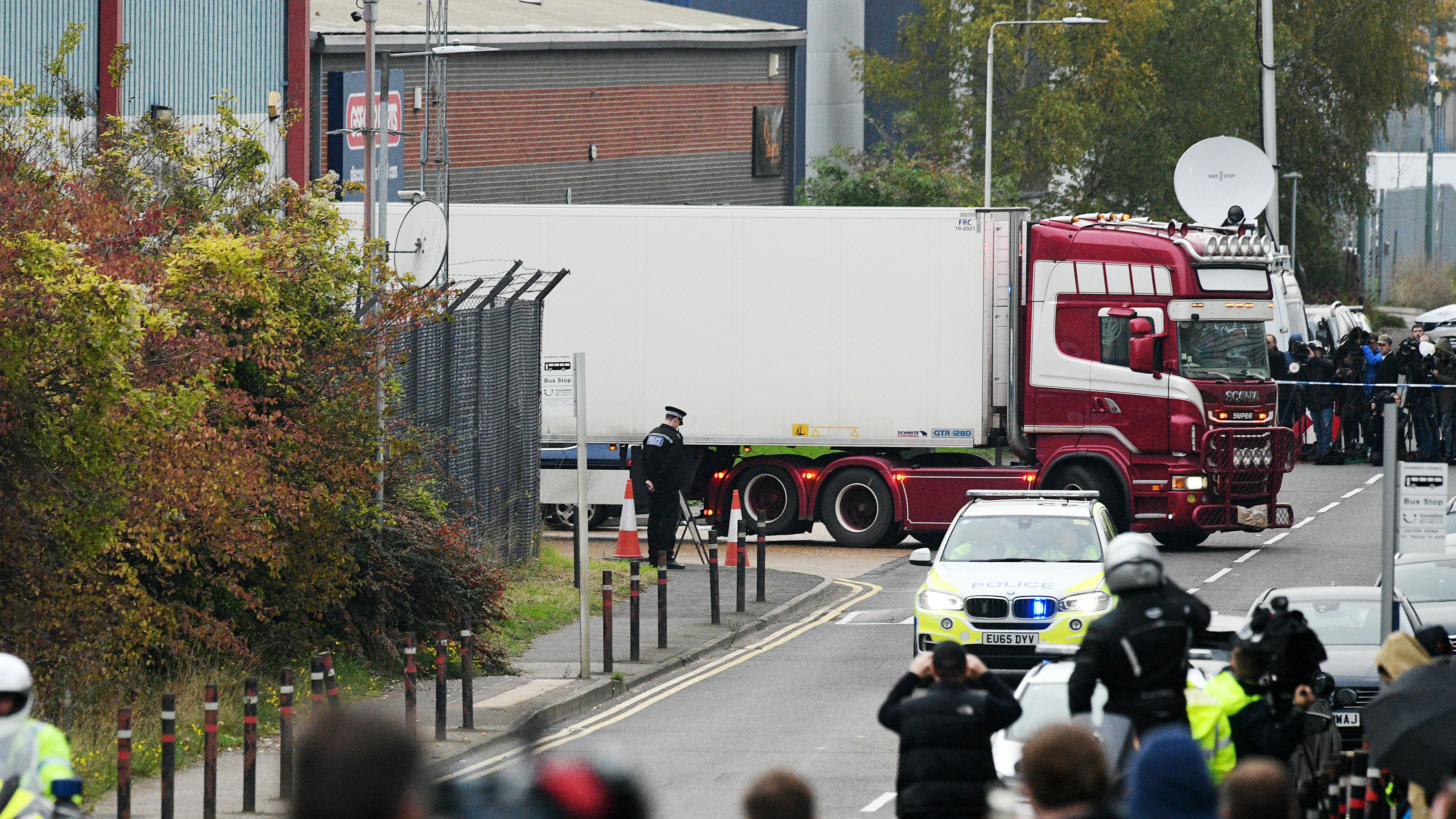
The October 2019 discovery of 39 Vietnamese nationals dead inside a refrigerated truck trailer in Grays, Essex, remains one of the most devastating human smuggling tragedies in modern British history. This incident exposed the expansive, ruthless nature of transnational organized crime rings, prompting widespread security overhauls, international law enforcement cooperation, and rigorous legal proceedings across multiple jurisdictions.
Overview of the Essex Lorry Tragedy
On the morning of October 23, 2019, emergency services were called to the Waterglade Industrial Park in Grays, Essex. Inside the refrigerated container of a Scania lorry, police discovered the bodies of 39 Vietnamese migrants—8 women and 31 men, including two 15-year-old boys. Post-mortem examinations confirmed that all victims died from a combination of asphyxiation and hyperthermia in the airtight, unventilated container as temperatures inside rose significantly during the crossing.
The truck had arrived on a ferry from Zeebrugge, Belgium, to Purfleet, Essex, early that morning. The trailer itself had traveled a complex route across Europe, highlighting the vulnerabilities in supply chains and border security networks. The sheer scale of the loss shocked the public and forced governments across Europe and Asia to confront the lethal mechanics of modern people smuggling operations.
Timeline of Key Events
| Date / Phase | Event / Action Taken | Significance |
|---|---|---|
| October 22–23, 2019 | Trailer arrives in Purfleet via Zeebrugge; bodies discovered in Grays. | Initiates the largest mass murder and smuggling investigation in UK history. |
| October–November 2019 | International raids and arrests in the UK, Vietnam, and continental Europe. | Dismantles key nodes of the cross-border smuggling network. |
| January–December 2020 | Extradition proceedings and high-profile trials at the Old Bailey. | Secures multiple convictions for manslaughter and conspiracy to assist unlawful immigration. |
| 2021–Present | Ongoing legislative reviews, enhanced port security protocols, and victim support. | Shifts focus toward long-term deterrence, financial tracing, and anti-trafficking partnerships. |
Anatomy of a Smuggling Operation
The journey of the 39 victims exposed the complex operational blueprint utilized by transnational human trafficking syndicates. Migrants from economically depressed regions in Vietnam—predominantly Nghe An and Ha Tinh provinces—often pay exorbitant fees, frequently tens of thousands of pounds, to secure passage to Europe and the UK under the promise of lucrative employment.
These networks rely on a tiered structure:
- Local Recruiters: Operating in villages, they pitch fake opportunities and manage initial fee collections.
- Logistics Coordinators: Arrange fraudulent documents, safe houses, and ground transport across European transit hubs like France and Belgium.
- Transport Specialists: Handle the high-risk maritime and cross-border trucking legs, often exploiting commercial freight systems where physical checks on every container are logistically impossible.
In the Essex case, the victims were loaded into the trailer in northern France or Belgium. The container was sealed to prevent detection by border sensors, effectively turning a commercial cargo box into a lethal trap. The lack of ventilation and temperature control meant that as oxygen depleted, survival became impossible within hours.
The Investigation and International Cooperation
The investigation, led by Essex Police working in tandem with the National Crime Agency (NCA), Europol, and Vietnamese authorities, required an unprecedented cross-border data-sharing effort. Identifying the victims proved difficult due to the lack of official documentation, requiring DNA profiling, fingerprint analysis, and the collection of personal effects matched with families back in Vietnam.
Law enforcement agencies mapped financial trails that revealed substantial sums paid by the victims' families to criminal accounts. This financial intelligence was critical in dismantling cell structures in both Europe and Southeast Asia. The cooperation between UK and Vietnamese authorities demonstrated a growing recognition that destination-country enforcement alone cannot stop supply-driven migration networks.
Legal Proceedings and Judicial Outcomes
The judicial response in the UK resulted in significant prison sentences for the primary operators involved in the logistics and transport chain:
- The Haulers: Drivers and organizers who managed the UK leg of the journey were convicted of manslaughter and conspiracy to assist unlawful immigration. Sentences ranged from 13 to 27 years.
- The International Ring: Parallel investigations in Vietnam and continental Europe led to the prosecution of local organizers and recruiters, who received lengthy prison terms under domestic human trafficking statutes.
The trials underscored a crucial legal distinction: while the defendants may not have intended to kill the migrants, their reckless disregard for human life—evidenced by sealing the container and ignoring warnings about oxygen levels—constituted gross negligence manslaughter.
Broader Policy Impacts and Border Security Reforms
The tragedy catalyzed substantial policy shifts regarding freight security and immigration enforcement:
- Enhanced Port Technology: Ports like Purfleet, Dover, and Holyhead ramped up the deployment of non-intrusive scanning equipment, including heartbeat detectors and carbon dioxide monitors, to screen unescorted freight trailers.
- Supply Chain Accountability: Logistics companies and transport firms faced stricter compliance standards regarding cargo security, seals, and route verification.
- Public Awareness Campaigns: Governments launched targeted information campaigns in source countries like Vietnam to warn prospective migrants of the lethal dangers associated with undocumented transport methods.
Frequently Asked Questions
What caused the deaths of the 39 people in Essex?
The victims died from asphyxiation (lack of oxygen) and hyperthermia (extreme heat) inside a sealed, unventilated refrigerated shipping container during transit across the English Channel.
Where did the victims originate from?
All 39 victims were Vietnamese nationals, hailing primarily from rural provinces such as Nghe An and Ha Tinh, where economic hardship drives individuals to seek clandestine pathways to employment abroad.
Who was held legally responsible for the tragedy?
Multiple individuals were convicted in the UK courts for manslaughter and conspiracy to assist unlawful immigration, receiving prison sentences ranging from over a decade to 27 years. Additional conspirators were prosecuted in mainland Europe and Vietnam.
How did the truck enter the United Kingdom?
The trailer carrying the victims was loaded onto a freight ferry in Zeebrugge, Belgium, and transported to Purfleet, Essex, where a local driver collected it before driving to the industrial park in Grays.
What security measures changed following the incident?
Authorities increased physical and technological inspections at key European and British ports, utilizing advanced cargo scanners, CO2 monitors, and heightened intelligence sharing between European and Asian law enforcement agencies.
Final Recommendation
For researchers, policymakers, and legal professionals studying modern supply chain security and human trafficking, analyzing the Essex tragedy offers vital insight into the mechanics of transnational crime. Reviewing official reports from the National Crime Agency and parliamentary inquiries provides an accurate, evidence-based understanding of the systemic vulnerabilities that enabled this disaster and the ongoing measures required to prevent future occurrences.