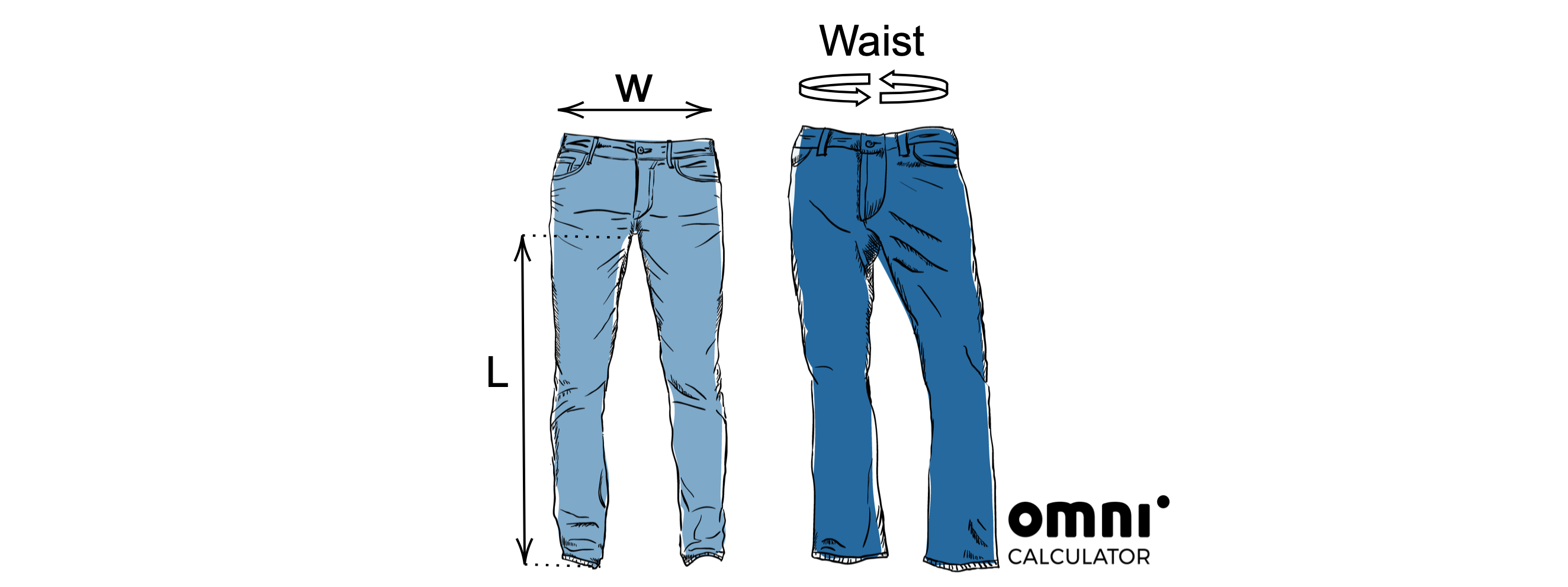
In the context of pant sizing, a "32 length" refers specifically to the inseam measurement, which is the distance in inches from the crotch seam to the bottom of the leg hem. When you see a size label like 34x32, the first number represents the waist circumference, while the second indicates the leg length.
Clothing sizes can often feel like a cryptic language, particularly when shopping across different brands or styles. However, the numeric system used for trousers is one of the most standardized aspects of the garment industry. Understanding what a 32 length means—and more importantly, how it relates to your specific body proportions—is the key to moving away from "good enough" fits toward a tailored, professional appearance. As of 2026, while vanity sizing continues to affect waist measurements, inseam lengths remain relatively grounded in actual physical inches, making them a reliable anchor for shoppers.
The Anatomy of the Numeric Sizing System
Most men’s and unisex pants are sized using a two-number system, typically formatted as "Width x Length" (W x L). If you are looking at a pair of pants labeled 32x32, 34x32, or 36x32, the "32" at the end is the constant representing the length.
The Inseam Explained
The inseam is the most critical measurement for determining how a pair of pants will sit on your footwear. It is measured along the inner seam of the leg. This measurement starts at the highest point of the crotch—the "four-way intersection" where the left leg, right leg, and seat of the pants meet—and extends straight down to the very edge of the leg opening.
It is important to distinguish the inseam from the outseam. The outseam measures the distance from the top of the waistband down the outside of the leg to the hem. Because different pants have different "rises" (the distance from the crotch to the waistband), the outseam can vary wildly even if the length of the leg is the same. Therefore, the industry uses the inseam (the 32 in our example) because it focuses purely on the length of your actual leg.
The Role of the Waist (The First Number)
While the "32 length" tells you how long the pants are, the first number tells you how wide they are. A 32-inch waist measurement is intended to fit a person whose natural waistline (or where they prefer to wear their pants) is approximately 32 inches in circumference. However, unlike the inseam, the waist measurement is frequently subject to "vanity sizing," where a garment labeled as a 32 might actually measure 33 or 34 inches to make the wearer feel slimmer. Fortunately, the length measurement is rarely falsified in this manner because an extra two inches of fabric would be physically obvious as it bunched around the ankles.
Is a 32 Length Right for Your Height?
A common misconception is that pant length is a direct proxy for a person's total height. In reality, two people who are both 6'0" tall may require different inseam lengths based on their torso-to-leg ratio.
Generally speaking, in the United States and much of Europe, a 32-inch inseam is considered the "average" or "standard" length for men. It typically accommodates individuals between 5'10" and 6'1".
Body Proportions and the 32 Length
- Long Torso, Shorter Legs: A person who is 6'2" but has a very long torso might find that a 32 length fits them perfectly.
- Short Torso, Longer Legs: Conversely, someone who is 5'9" but has "all legs" might need a 32 length to avoid the pants looking like high-waters.
- The "Average" Fit: For the majority of the population, a 32 length is the "Goldilocks" zone of retail. This is why 32 is often the most stocked length in department stores; it is long enough for tall individuals to wear with a "slight break" and short enough for average-height individuals to have tailored if necessary.
How to Measure for a 32 Length Inseam
To determine if a 32 length is actually what you need, you should measure yourself or a pair of pants that already fits you perfectly. Relying on your "usual size" can be risky because different fabrics drape differently.
Measuring Your Body
To get an accurate body measurement, it is best to have a second person help you, as bending over to read the tape measure will shorten your leg and skew the results.
- Stand Straight: Stand with your back against a wall, feet slightly apart, wearing the type of shoes you plan to wear with the pants.
- Locate the Crotch: Have your partner place the end of a soft measuring tape at the point where your legs meet.
- Measure to the Floor: Run the tape down the inside of the leg to the point where you want the pants to end. For a standard fit, this is usually the top of the shoe's sole or the middle of the heel.
- Record the Number: If that number is 32, then a 32 length is your "true" size.
Measuring Existing Pants
If you have a favorite pair of jeans or trousers that fit perfectly, you can use them as a template.
- Lay Flat: Lay the pants on a flat surface like a table or a clean floor.
- Fold One Leg Out: Fold one leg out of the way so you can see the full inseam of the other leg.
- Measure the Seam: Measure from the crotch seam (the center point) down the inner leg seam to the very bottom of the hem.
- Check for Variations: Note that if the pants are heavily wrinkled or have "knees" stretched out, you should smooth them out to get an accurate reading.
The Impact of Pant "Break" on Length Choice
The "break" is the fold or creasing of fabric that occurs when the bottom of your pant leg hits your shoe. This style choice can dictate whether you should buy a 32 length even if your leg measurement is slightly different.
| Break Type | Description | Ideal Length Strategy |
|---|---|---|
| No Break | The hem just barely touches the top of the shoe. A clean, modern look. | Choose exactly your measured inseam or 1/2 inch shorter. |
| Slight Break | A single, subtle fold in the fabric above the shoe. The most versatile standard. | Choose your true inseam measurement (e.g., 32 if you measure 32). |
| Medium Break | A noticeable fold that covers the top of the laces. Traditional and conservative. | Choose 1/2 to 1 inch longer than your measured inseam. |
| Full Break | Multiple folds of fabric; the hem reaches the top of the sole. Best for wide-leg styles. | Choose 1 to 2 inches longer than your measured inseam. |
If you measure a 31-inch inseam but want a traditional "full break" look, buying a 32 length is the correct move. If you prefer the modern, cropped look often seen in 2026 fashion trends, someone with a 32-inch leg might actually buy a 30 length.
Fabric Considerations: Shrinkage and Stretch
Not all 32-length pants will stay 32 inches after a few trips through the laundry. The material composition of the pants plays a significant role in how the length behaves over time.
Raw Denim
Raw or "unsanforized" denim is famous for shrinking. If you buy a pair of raw denim jeans with a 32 inseam, they may shrink by as much as 5% to 10% after the first wash. In this specific niche, many enthusiasts buy a "34 length" to ensure that after the initial soak, the pants result in a 32-inch fit. By 2026, most commercial brands use "sanforized" (pre-shrunk) denim, but checking the label is still vital.
100% Cotton Chinos
Cotton is prone to minor shrinkage, especially in the length. A 32 length in a pair of 100% cotton chinos might lose about a half-inch over a year of hot-water washes and high-heat drying. If you are on the edge between a 30 and a 32, it is usually safer to go with the 32 and allow for minor shrinkage.
Synthetic Blends (Polyester/Spandex)
Pants with a high percentage of synthetic fibers are much more stable. A 32 length in a "performance" chino or a pair of athletic-tapered trousers will likely remain a 32 length for the life of the garment. These fabrics do not react to heat in the same way natural fibers do.
International Sizing and Conversions
While the "32" convention is standard for US and UK sizing (where inches are the primary unit for tailoring), other regions use different systems. If you are shopping for international brands, you may encounter centimeter-based sizing.
- Metric Conversion: A 32-inch inseam is approximately 81.28 centimeters. In European sizing (EU), you might see lengths labeled in centimeters, or you might see a "Drop" system used in Italian tailoring.
- Small/Medium/Large: Many casual brands (sweatpants, joggers) forgo the numeric length entirely. In these cases, a "Medium" or "Large" usually defaults to a 32-inch inseam, while "Short" or "Small" versions often drop to a 30.
- Women's Sizing: Women's pants rarely use the W x L format in mainstream retail. Instead, they use even numbers (2, 4, 6, etc.) followed by a descriptor like "Petite," "Regular," or "Tall." In most cases, a women's "Regular" length is roughly equivalent to a 30-32 inch inseam, while "Tall" usually starts at 34 inches.
What to Do if the 32 Length is Too Long
One of the great advantages of the 32 length being a "standard" size is that it is designed with tailoring in mind. It is significantly easier and cheaper to shorten a pair of pants than it is to lengthen them.
If you find a pair of pants you love but the 32 length is dragging on the floor, you have three main options:
- The Professional Hem: A tailor can cut the excess fabric and create a new hem for a small fee (typically $10–$20). This is the best option for dress pants or chinos.
- The "Original Hem" (Jeans): For high-end denim, tailors can perform an "original hem" alteration, where they cut off the factory-distressed bottom edge and reattach it at the 30 or 31-inch mark, preserving the aesthetic of the jeans.
- The Cuff/Roll: In casual settings, rolling your pants (the "pinroll" or "single cuff") is a valid stylistic choice that effectively turns a 32 length into a 30 or 31 length without permanent alterations.
Frequently Asked Questions
Does a 32 length mean the same thing for all brands?
Technically, yes, as it represents 32 inches. However, due to manufacturing tolerances, a "32" from one brand might measure 31.5 inches while another measures 32.5. Additionally, the "rise" of the pants can change how the length feels; a high-rise pant sits higher on your waist, which can sometimes make the leg feel slightly shorter than a low-rise pant of the same inseam.
I am 5'9". Should I wear a 32 length?
Generally, a 30-inch inseam is the standard for someone who is 5'9". However, if you have long legs for your height, or if you plan to wear boots with a significant heel, a 32 length might be necessary. If you buy a 32 and it is too long, it is a very simple fix for a tailor.
How do I know if my 32 length pants are too long?
If the fabric is bunching significantly at the ankle (creating a "puddle" effect) or if you are stepping on the back of the hem with your heel while walking, the pants are too long. Ideally, the hem should rest lightly on the top of your shoe.
Can I turn a 32 length into a 34 length?
Usually, no. Most mass-produced pants only have about 0.5 to 1 inch of "let-out" fabric inside the hem. While a tailor can sometimes squeeze an extra half-inch out, you cannot fundamentally change a 32 into a 34. Always buy for your longest requirement and hem downward.
Do 32 length pants shrink in the dryer?
Yes, particularly if they are 100% cotton or wool. To preserve the 32-inch length, it is recommended to wash in cold water and air-dry or use a low-heat setting on the dryer. High heat is the primary cause of inseam shrinkage.
Practical Recommendation
When shopping for pants, do not assume that being a "32" in one brand makes you a "32" in all of them. Your next action should be to measure your favorite pair of pants today. Keep that number (your "ideal inseam") in a note on your phone. If your ideal measurement is 31 inches, always buy the 32 length and spend the few extra dollars to have them hemmed. A pair of pants that hits at exactly the right point on your shoe is the fastest way to look taller, slimmer, and more put-together.