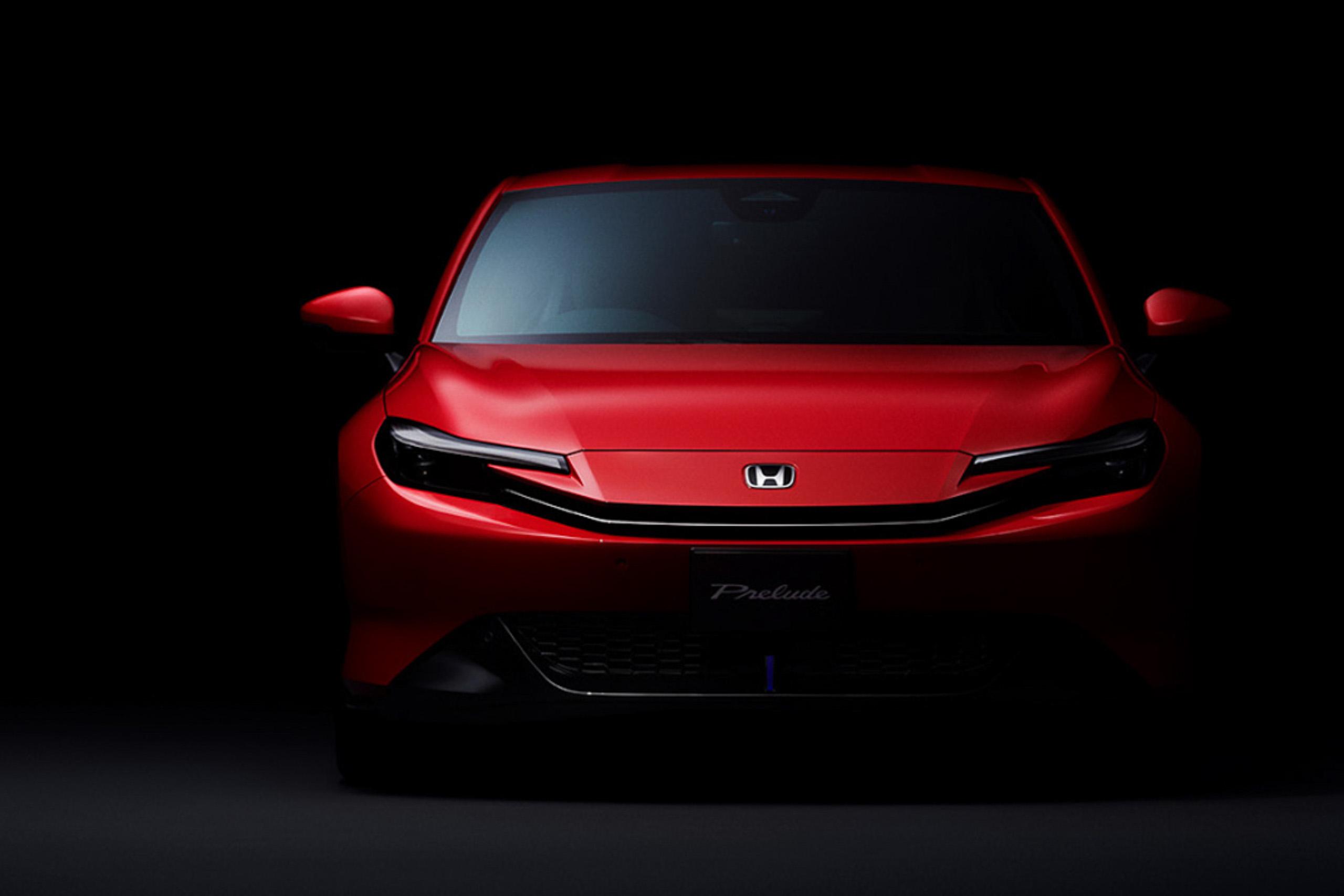
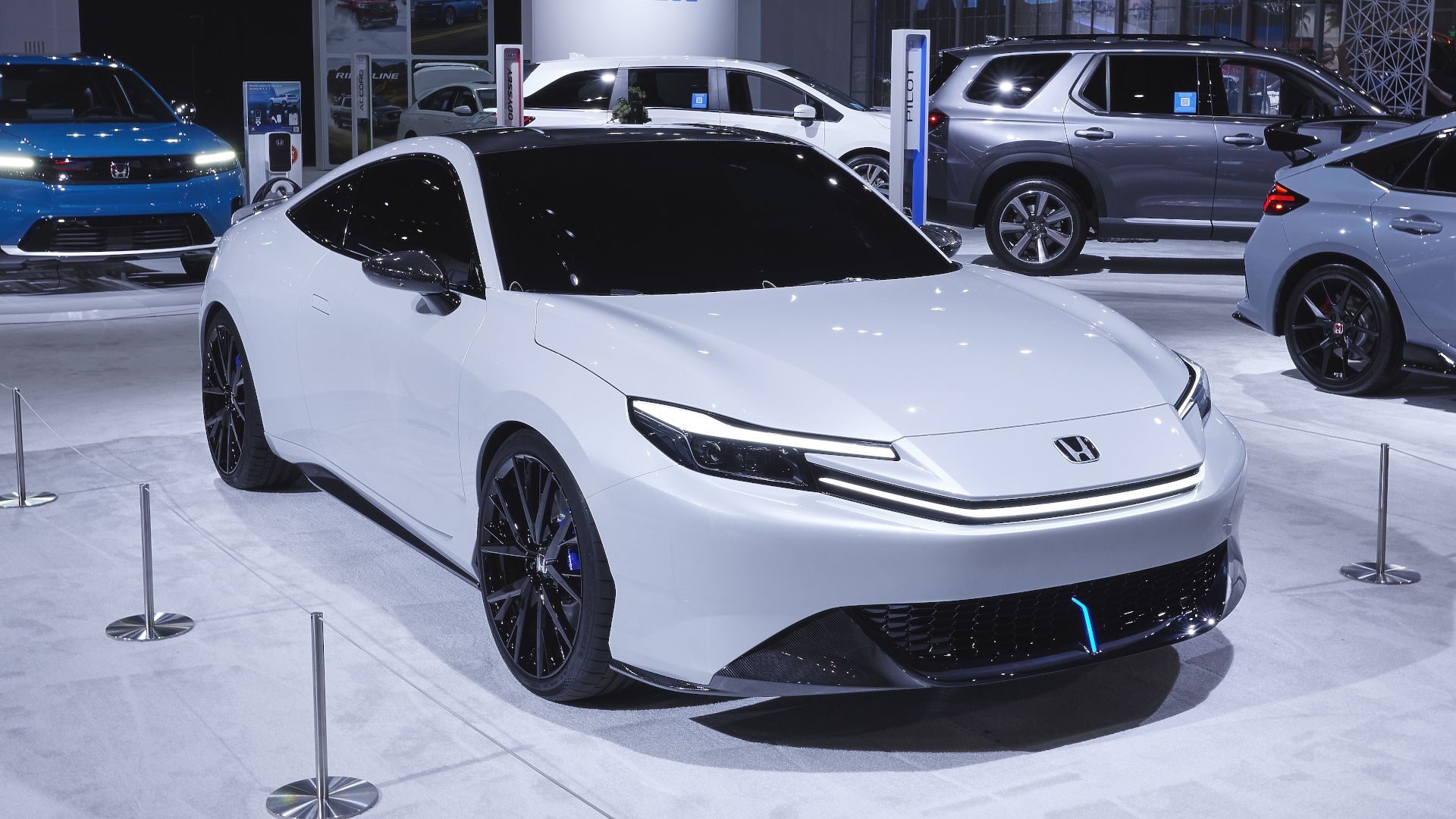
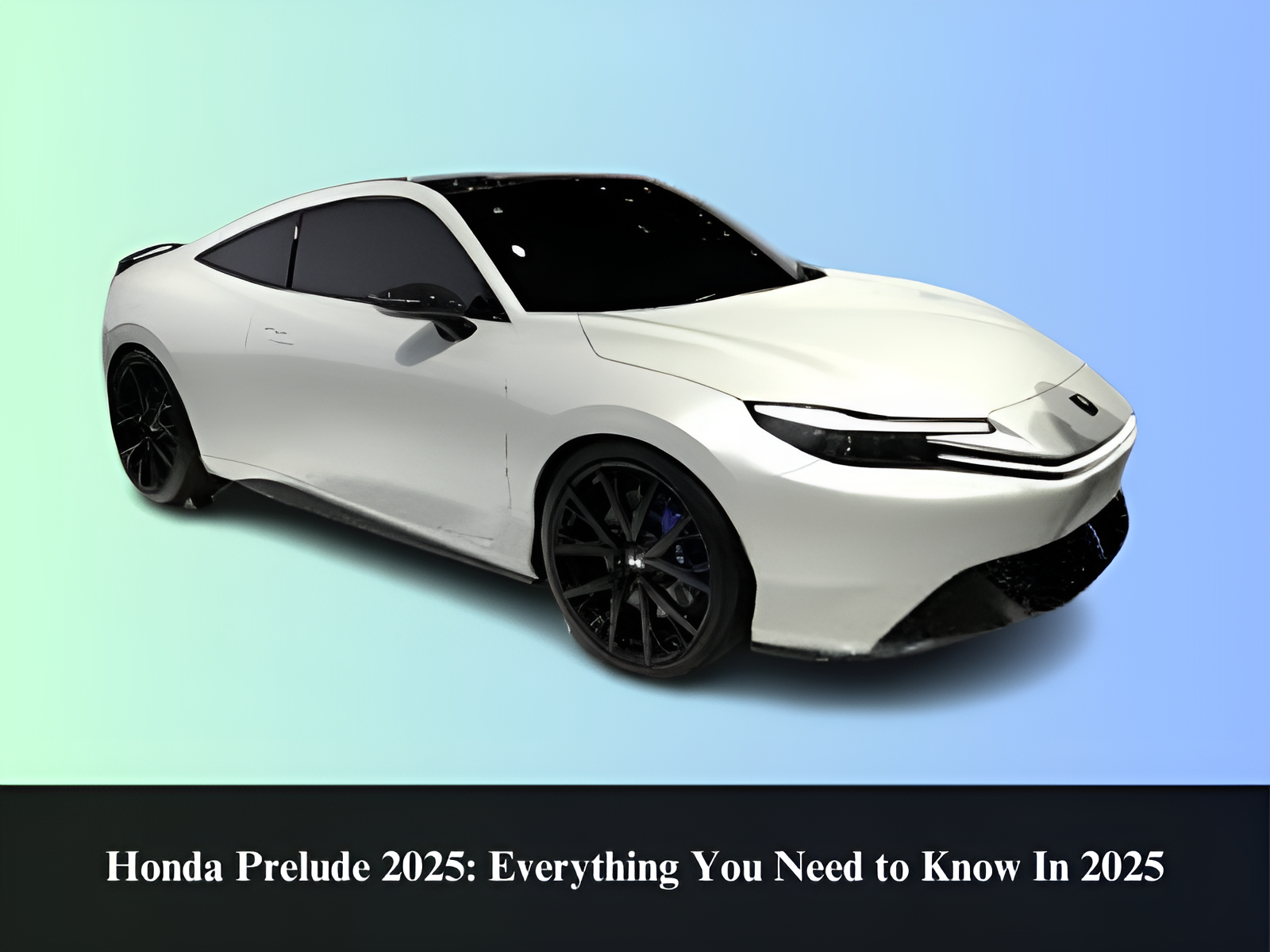
The 2025 Honda Prelude returns as a two-door electrification-focused coupe built on a refined version of Honda's global compact architecture. It features a 2.0-liter Atkinson-cycle four-cylinder engine paired with a dual-motor e:HEV hybrid system that generates approximately 200 horsepower. Designed as an efficient, front-wheel-drive daily driver, the Prelude balances agile handling, sleek styling, and estimated fuel economy approaching 50 mpg.
1. Executive Summary & Vehicle Positioning
The revival of the Honda Prelude badge marks a major shift in Honda's sport-oriented lineup. Rather than pursuing raw track performance or traditional internal combustion power, the modern Prelude bridges the gap between everyday efficiency and driver engagement. Positioned above the Civic sedan and hatchback, the Prelude serves as a indirect replacement for both the discontinued Civic Coupe and Accord Coupe, appealing to buyers who want a stylized personal commuter without sacrificing hybrid fuel economy.
Built on the same base platform as the 11th-generation Civic and Acura Integra, the Prelude utilizes a low-slung, front-wheel-drive coupe footprint. Honda engineers focused on structural rigidity, a lowered center of gravity, and optimized suspension geometry to deliver the responsive cornering expected from a car bearing the Prelude name.
| Model Class | Primary Focus |
|---|---|
| Civic Sedan / Hatchback | Practical Daily Commuter |
| Civic Type R | High-Performance Track/Street |
| Honda Prelude | Premium Hybrid Sport Coupe |
For buyers evaluating compact specialty cars, the Prelude occupies a unique space. Unlike pure rear-wheel-drive sports cars that require fuel or practicality compromises, the Prelude integrates a proven two-motor hybrid drive system designed to reduce fuel consumption while delivering instant low-end torque from its electric propulsion motor.
2. Powertrain Mechanics and Performance Specifications
At the heart of the vehicle is Honda’s two-motor e:HEV hybrid system, customized specifically to offer a sportier throttle response and distinct engine notes compared to its application in the Accord Hybrid or Civic Hybrid.
The Engine and Electric Motors
The primary internal combustion component is a naturally aspirated 2.0-liter direct-injection Atkinson-cycle inline-4 engine. In Honda's e:HEV architecture, the engine functions largely as a generator to feed electrical energy to a lithium-ion battery pack or directly to the electric traction motor.
- Engine Displacement: 1,993 cc (2.0 Liters)
- Combustion Cycle: Atkinson-cycle with high thermal efficiency (~41%)
- Primary Electric Motor: Traction motor delivering driving force directly to the front wheels in most driving conditions.
- Secondary Electric Motor: Generator motor attached to the internal combustion engine to recharge the hybrid battery and power the primary drive motor.
- Combined System Output: Targeted at ~200 horsepower and 232 lb-ft of torque.
Because the electric traction motor provides torque instantly off the line, acceleration response is immediate. The combustion engine engages directly to the front wheels through a lock-up clutch only at steady highway cruising speeds, where mechanical drive is more efficient than converted electrical energy.
- 2.0L Engine
- Generator Motor
- Battery Pack
- Electric Traction Motor
- Front Wheels
- Electric Traction Motor
- Battery Pack
- Generator Motor
Transmission and "S+ Shift" Dynamics
The Prelude does not use a traditional manual gearbox or a conventional geared automatic. Power transfers through an e-CVT (electronic continuous variable transmission). However, to maintain an engaging driving feel, Honda integrated simulated gear steps paired with paddle shifters.
The system utilizes an updated version of Honda’s linear shift control, styled as an S+ Shift system (or drive-mode system). When accelerating under heavy throttle, the software modulates engine RPM to mimic the rev-climbing and gear-drop sensation of a multi-speed transmission, complete with synthesized engine sound pumped through the cabin audio system.
3. Chassis, Suspension, and Braking Systems
While sharing core structural components with the Civic Type R and Acura Integra Type S, the Prelude's chassis is tuned specifically for balanced road manners rather than extreme lap times.
| Component | Setup |
|---|---|
| Front Suspension | Dual-Axis MacPherson Strut |
| Rear Suspension | Multi-Link with Stabilizer Bar |
| Steering | Dual-Pinion Variable-Ratio EPS |
| Braking | Vented Front / Solid Rear Discs |
Front & Rear Suspension Architecture
To combat torque steer inherent in higher-torque front-wheel-drive vehicles, Honda equipped the Prelude with a modified dual-axis MacPherson strut front suspension setup, similar to that used in high-performance Civic variants. This design separates the steering axis from the strut damper line, drastically reducing steering kickback under hard acceleration.
The rear uses an independent multi-link suspension configured for stability and ride compliance over rough pavement. Active or adaptive dampers are tuned to offer distinct ride profiles when switching between Drive Modes (Econ, Normal, Sport, and Individual).
Steering and Braking Systems
- Steering: Dual-pinion, variable-ratio electric power steering (EPS) tuned for rapid center return and feedback.
- Front Brakes: Ventilated disc brakes (approx. 12.3-inch to 13.0-inch rotors depending on trim level) with aluminum multi-piston calipers.
- Rear Brakes: Solid disc brakes with integrated electronic parking brake and automatic brake hold function.
- Regenerative Braking: Steering-wheel-mounted deceleration selectors (paddle shifters) allow the driver to adjust regenerative braking drag across multiple strength levels to slow the vehicle without applying the mechanical brakes.
4. Exterior Dimensions, Interior Layout, and Practicality
The Prelude features traditional long-hood, short-deck coupe proportions with aerodynamic elements tailored to lower drag and maximize efficiency.
| Dimension | Specification |
|---|---|
| Overall Length | ~178.0 inches (4,520 mm) |
| Overall Width | ~74.0 inches (1,880 mm) |
| Overall Height | ~53.5 inches (1,360 mm) |
| Wheelbase | ~107.5 inches (2,730 mm) |
| Front/Rear Track | Expanded vs. standard Civic |
Exterior Aesthetics and Aerodynamics
The front end incorporates a slim LED headlight ensemble connected by a horizontal accent bar, anchored by a low, wide intake grille. Flush surface integration along the side profile, sculpted side skirts, and a subtle rear lip spoiler optimize airflow over the bodywork, reducing turbulence at highway speeds. Standard wheels feature lightweight 19-inch alloy construction wrapped in performance-oriented summer or high-performance all-season tires.
Interior Packaging and Technology
Inside, the Prelude uses a 2+2 seating configuration. The front bucket seats are heavily bolstered, featuring integrated headrests and synthetic suede or leather upholstery designed to hold occupants firmly during high-g cornering.
| Feature | Specification |
|---|---|
| Seating Capacity | 4 (2+2 layout) |
| Driver Display | 10.2-inch full digital cluster |
| Central Infotainment | 9.0-inch or larger touchscreen |
| Smartphone Integration | Wireless Apple CarPlay & Android |
| Premium Audio | Available Bose 12-speaker system |
- Infotainment: The center console hosts a high-definition touchscreen running Honda’s latest interface, featuring Google built-in (including Google Maps, Google Assistant, and Play Store access) alongside wireless connectivity for Apple CarPlay and Android Auto.
- Driver Interface: A standard 10.2-inch digital instrument cluster displays energy flow diagrams, charge/power meters, vehicle speed, and active safety alerts.
- Practicality & Cargo: As a liftback-style coupe, the rear hatch opens wide to reveal a flat cargo floor. While rear seat legroom is tight—best suited for emergency seating or small children—the 60/40 split-folding rear seatbacks fold down to accommodate larger items, such as luggage or sports gear.
5. Standard Safety Systems and Driver Assistance
Every model comes equipped with the updated Honda Sensing suite of active safety and driver-assistive technologies. The system relies on a single wide-angle camera mounted behind the windshield paired with radar sensors around the vehicle perimeter.
| Feature | Function |
|---|---|
| Collision Mitigation Braking (CMBS) | Forward collision warning |
| Lane Keeping Assist System (LKAS) | Active steering corrections |
| Adaptive Cruise Control (ACC) | Low-speed follow capability |
| Traffic Sign Recognition | Camera-based speed sign alerts |
| Blind Spot Information (BSI) | Radar lane-change protection |
- Collision Mitigation Braking System (CMBS): Uses camera and radar to detect vehicles, pedestrians, and cyclists, automatically applying brake pressure if a forward impact is imminent.
- Adaptive Cruise Control with Low-Speed Follow: Maintains a set distance behind detected vehicles, capable of bringing the car to a complete stop in traffic and resuming automatically.
- Lane Keeping Assist System (LKAS) & Road Departure Mitigation: Gently adjusts steering input if the vehicle begins to drift out of a detected lane without signaling.
- Traffic Jam Assist: Combines low-speed lane centering and cruise control functions to lessen driver fatigue in heavy traffic stop-and-go scenarios.
6. Comprehensive Specifications Table
The following table summarizes key technical specifications, operational data, and estimated metrics for the Honda Prelude.
| Feature / Metric | Specification Details |
|---|---|
| Engine Architecture | 2.0-Litre DOHC 16-valve 4-Cylinder (Atkinson-cycle) |
| Electric Propulsion | Two-Motor Hybrid System (e:HEV Traction & Generator) |
| System Output | ~200 hp / 232 lb-ft Torque |
| Drive Layout | Front-Wheel Drive (FWD) |
| Transmission Type | Electronic Continuously Variable Transmission (e-CVT) |
| 0–60 mph Acceleration | ~6.5 - 6.8 seconds (Estimated) |
| Estimated Fuel Economy | ~48 - 50 mpg Combined (EPA cycle equivalent) |
| Front Suspension | Dual-Axis MacPherson Strut |
| Rear Suspension | Multi-Link Independent |
| Wheel Size | 19-inch Aluminum Alloy |
| Seating Capacity | 4 Passengers (2+2 Arrangement) |
| Curb Weight | ~3,100 – 3,250 lbs (Estimated) |
| Fuel Tank Capacity | ~10.6 Gallons |
| Primary Infotainment | 9.0-inch Touchscreen with Google built-in |
| Safety Suite | Honda Sensing Standard |
7. Comparative Analysis: Prelude vs. Competitors
Buyers looking at the Honda Prelude often evaluate it against traditional gas-powered sports coupes and efficient sporty hatchbacks. Understanding how the Prelude compares to vehicles like the Toyota GR86/Subaru BRZ, Mazda MX-5 Miata, and Honda's own Civic Sport Touring helps clarify its value proposition.
| Feature | Honda Prelude | Toyota GR86 | Mazda Miata |
|---|---|---|---|
| Drivetrain | FWD | RWD | RWD |
| Powertrain | 2.0L Hybrid | 2.4L Flat-4 (Gas) | 2.0L I4 |
| Horsepower | ~200 hp | 228 hp | 181 hp |
| Transmission | e-CVT | 6-Spd Man / Auto | 6-Spd |
| Combined Fuel Econ | ~48-50 MPG | 22-25 MPG | 30 MPG |
| Practicality | High (Liftback) | Low (Small Trunk) | Very Low |
Honda Prelude vs. Toyota GR86 / Subaru BRZ
The Toyota GR86 and Subaru BRZ represent traditional lightweight sports car engineering: front-engine, rear-wheel drive, naturally aspirated flat-four engine, and an available manual transmission.
- Performance & Dynamics: The GR86 offers a purer rear-wheel-drive drift capability and a raw mechanical manual transmission experience.
- Efficiency & Daily Comfort: The Prelude delivers more than double the fuel economy in city driving conditions, significantly better interior refinement, and lower cabin noise levels during daily commuting.
Honda Prelude vs. Mazda MX-5 Miata
The Mazda Miata is a dedicated two-seat roadster designed purely for open-top driving pleasure and minimal curb weight.
- Space & Usability: The Miata is strictly a two-seater with a tiny trunk (~4.6 cubic feet). The Prelude provides a 2+2 arrangement, a liftback layout with usable cargo space, and modern cabin conveniences suitable for long-distance travel.
- Drive Style: While the Miata relies on lightweight rear-wheel drive agility, the Prelude offers smooth, continuous electric torque, front-wheel-drive traction stability, and superior highway efficiency.
8. Buyer Considerations and Ownership Experience
Purchasing a hybrid performance coupe involves balance trade-offs. Prospective owners should weigh the following key factors:
| ADVANTAGES | TRADE-OFFS |
|---|---|
| Excellent targeted fuel economy | No manual transmission option |
| High-torque electric acceleration | FWD layout vs RWD rivals |
| Low noise, vibration, & harshness | Limited rear passenger space |
| Honda Sensing safety standard | Premium over base Civic |
1. Transmission and Driver Engagement
For drivers who require a traditional three-pedal manual transmission, the Prelude may not fit the bill. Honda’s decision to pair the e:HEV hybrid powertrain exclusively with an e-CVT means manual shifting is simulated through software. While paddle shifters and simulated gear drops provide visual and auditory feedback, the physical mechanical connection of a clutch pedal is absent.
2. Maintenance and Reliability Expectations
Because the Prelude shares its core hybrid componentry with high-volume models like the Civic Hybrid and Accord Hybrid, maintenance costs are expected to stay relatively low:
- Brake Wear: Regenerative braking reduces mechanical brake pad wear, extending rotor and pad replacement intervals.
- Engine Wear: The 2.0-liter Atkinson-cycle engine operates within optimal thermal bands, reducing stress compared to high-boost turbocharged engines.
- Battery Warranty: High-voltage hybrid battery components are backed by federally mandated warranties (8 years/100,000 miles in most US states, or 10 years/150,000 miles in California-emissions states).
3. Estimated Pricing and Trims
While official trim-by-trim MSRP breakdowns depend on final regional allocation, the Prelude is positioned as a premium niche product. Estimated base pricing is projected to start between $32,000 and $38,000, landing directly between a mid-spec Civic Hatchback and the top-tier Civic Type R.
9. Frequently Asked Questions
Is the 2025 Honda Prelude fully electric or a hybrid?
The Prelude is an advanced two-motor gas-electric hybrid (e:HEV), not a fully electric vehicle (BEV). It combines a 2.0-liter four-cylinder gasoline engine with an electric traction motor, meaning it uses standard gasoline and never needs to be plugged in.
Will the new Honda Prelude offer a manual transmission?
No. Honda’s e:HEV hybrid system relies on an electronically controlled continuous variable transmission setup (e-CVT) coupled directly to electric drive motors. Shifts are simulated electronically via paddle shifters and software tuning.
Is the new Prelude front-wheel drive or all-wheel drive?
The Prelude is front-wheel drive (FWD). Power from both the electric motor and the 2.0-liter engine is routed exclusively to the front wheels.
How fast is the Prelude zero to 60 mph?
While official track tests are pending production release, estimates place the 0–60 mph acceleration time in the 6.5 to 6.8 second range, comparable to the Civic Hybrid while providing superior cornering dynamics.
What kind of gas mileage will the Prelude get?
Targeted EPA ratings are anticipated to land near 50 mpg City / 45 mpg Highway / 48 mpg Combined, making it one of the most fuel-efficient two-door coupes available.
10. Final Recommendation & Next Steps
The 2025 Honda Prelude is best suited for buyers who want an eye-catching, engaging two-door coupe that serves as a practical, high-efficiency daily commuter. It trades the absolute raw track focus of sports cars like the Civic Type R or Toyota GR86 for refined road manners, high-tech features, and low fuel operating costs.
Recommended Next Actions:
- Assess Driving Priorities: Determine whether high fuel efficiency (45–50 MPG) and smooth hybrid torque align better with your needs than a pure manual, rear-wheel-drive setup.
- Review Vehicle Dimensions: Measure garage and storage needs against a 2+2 layout; ensure the rear seats are treated as secondary or temporary storage space rather than full-sized passenger seating.
- Monitor Dealer Order Availability: Contact a local authorized Honda dealer to track order book openings, regional allocation timing, and test-drive availability as demonstration models arrive.