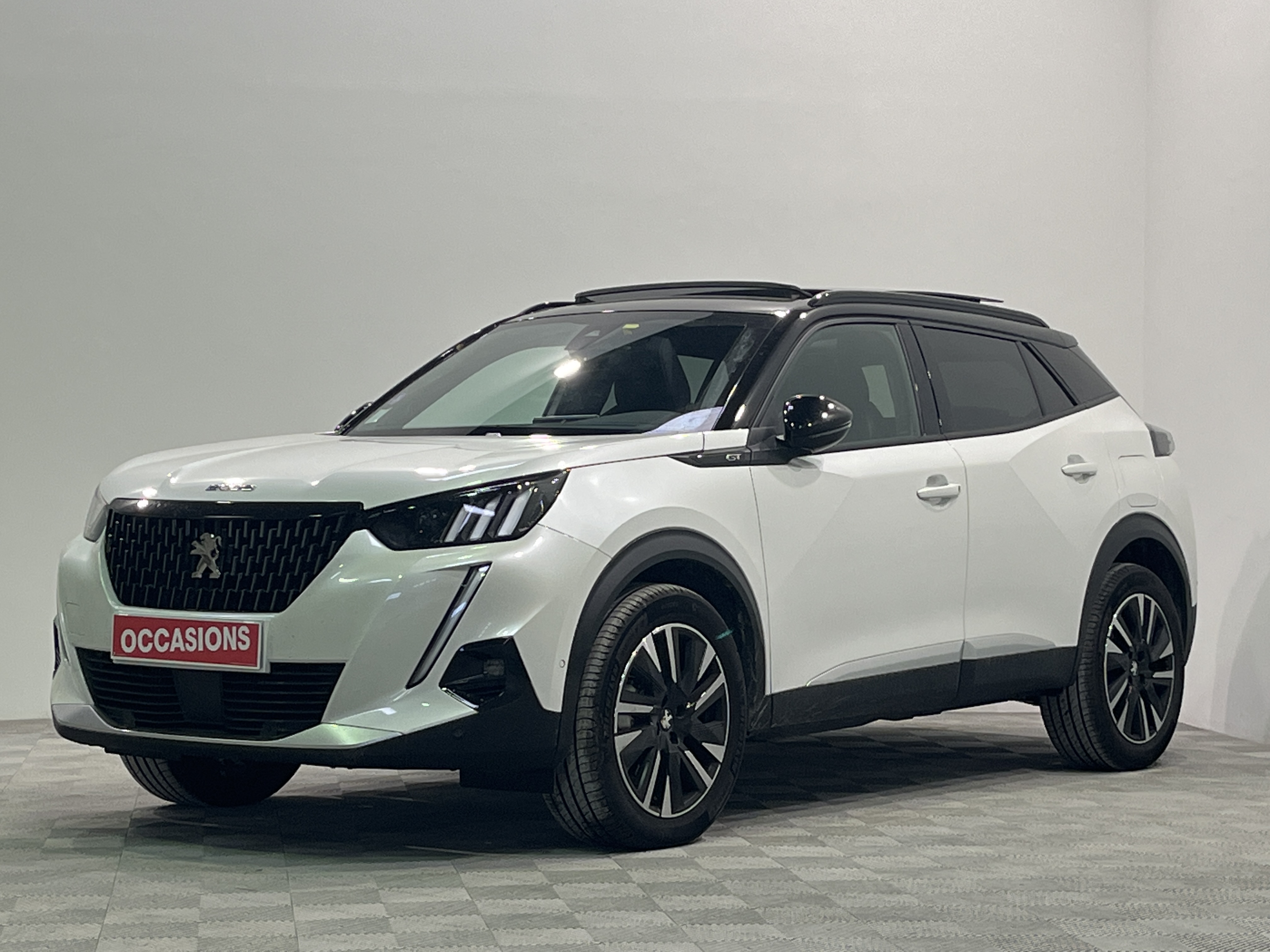
The 2020 Peugeot 2008 is a second-generation subcompact crossover SUV that introduced a striking exterior design, an updated i-Cockpit interior layout, and a multi-energy platform supporting petrol, diesel, and fully electric powertrains. It represents a major leap forward from its predecessor in terms of technology, cabin refinement, and market positioning.
Introduction to the Second-Generation Peugeot 2008
When Groupe PSA launched the second-generation Peugeot 2008 for the 2020 model year, the French manufacturer aimed to capture a dominant share of the fiercely contested European B-SUV segment. Built on the advanced Common Modular Platform (CMP)—also utilized by the Opel Mokka, DS 3 Crossback, and Peugeot 208—the 2020 Peugeot 2008 shed the somewhat wagon-like proportions of the first-generation model. Instead, it adopted an aggressive, SUV-inspired stance characterized by sharp creases, a prominent vertical front grille, and signature "lion's claw" LED lighting elements.
This model year is particularly significant because it marked the introduction of the e-2008, the battery-electric variant that brought zero-emission driving to the subcompact crossover market without sacrificing trunk space or cabin design. Understanding the 2020 Peugeot 2008 specs requires a close examination of its dimensional growth, powertrain options, trim architecture, and the technological ecosystem that defines its driver experience.
Exterior Dimensions and Aerodynamics
The transition to the CMP platform resulted in a substantial dimensional expansion compared to the original 2008. This growth directly translated to improved interior roominess, enhanced road presence, and greater load-carrying capacity.
- Overall Length: 4,300 mm (a significant increase of roughly 140 mm over the first generation)
- Overall Width (excluding mirrors): 1,770 mm
- Overall Width (including mirrors): 1,987 mm
- Overall Height: 1,530 mm to 1,550 mm depending on roof rails and wheel specifications
- Wheelbase: 2,605 mm
- Ground Clearance: Approximately 160 mm to 170 mm depending on powertrain and load
Aerodynamic efficiency was carefully optimized through a smooth underbody design, active grille shutters on select internal combustion engine (ICE) models, and carefully sculpted rooflines that manage airflow to the rear spoiler. Despite its taller stance, the drag coefficient ($C_d$) remains competitive for the B-SUV segment, aiding both fuel economy and high-speed acoustic comfort.
Powertrain Options and Performance Specifications
The 2020 Peugeot 2008 was engineered from the ground up to accommodate multiple energy sources. Buyers could choose among efficient PureTech petrol engines, BlueHDi diesel engines, and the pure electric e-2008.
1. Petrol Engines (1.2-Liter PureTech Inline-3)
The backbone of the lineup is the award-winning 1.2-liter turbocharged three-cylinder PureTech petrol engine, available in three distinct power outputs:
- PureTech 100: Produces 100 horsepower (74 kW) and 205 Nm of torque at 1,750 rpm. Paired exclusively with a 6-speed manual transmission.
- PureTech 130: Produces 130 horsepower (96 kW) and 230 Nm of torque at 1,750 rpm. Available with either a 6-speed manual or an 8-speed automatic (EAT8) transmission.
- PureTech 155: Produces 155 horsepower (114 kW) and 240 Nm of torque at 1,750 rpm. Available exclusively with the 8-speed automatic (EAT8) transmission and reserved for the sporty GT trim.
2. Diesel Engines (1.5-Liter BlueHDi Inline-4)
For high-mileage drivers, Peugeot retained a diesel option in select European markets:
- BlueHDi 110: Produces 110 horsepower (81 kW) and 250 Nm of torque, paired with a 6-speed manual transmission.
- BlueHDi 130: Produces 130 horsepower (96 kW) and 300 Nm of torque at 1,750 rpm, paired exclusively with the 8-speed automatic (EAT8) transmission.
3. Fully Electric Powertrain (Peugeot e-2008)
The battery-electric variant utilizes a front-mounted permanent magnet synchronous motor powered by a 50 kWh lithium-ion battery pack (gross capacity, with approximately 46 kWh usable).
- Electric Motor Output: 136 horsepower (100 kW) and 260 Nm of instantaneous torque.
- Acceleration (0–100 km/h): 8.5 seconds in Sport mode.
- Range: Up to 310 kilometers under the WLTP test cycle.
- Charging Capabilities: Supports up to 100 kW DC fast charging, allowing a 10% to 80% charge in approximately 30 minutes. An 11 kW three-phase onboard AC charger was available as an option (7.4 kW single-phase standard).
Technical Specifications Comparison Table
| Powertrain Variant | Horsepower (hp) | Torque (Nm) | Transmission Options | 0–100 km/h (sec) | WLTP Fuel / Energy Consumption |
|---|---|---|---|---|---|
| PureTech 100 | 100 | 205 | 6-speed manual | 10.9 | ~5.4 L/100 km |
| PureTech 130 | 130 | 230 | 6-man / 8-speed auto | 8.9 (Auto: 9.1) | ~5.5 L/100 km |
| PureTech 155 | 155 | 240 | 8-speed auto | 8.2 | ~5.9 L/100 km |
| BlueHDi 110 | 110 | 250 | 6-speed manual | 11.4 | ~4.1 L/100 km |
| BlueHDi 130 | 130 | 300 | 8-speed auto | 9.3 | ~4.3 L/100 km |
| e-2008 (Electric) | 136 | 260 | Single-speed reduction | 8.5 | ~17.7 kWh/100 km |
Interior Architecture and the 3D i-Cockpit
The cabin of the 2020 Peugeot 2008 centers around the brand's signature i-Cockpit philosophy, which features a compact, low-mounted steering wheel and a high-set instrument cluster designed to be viewed over the rim of the wheel rather than through it.
Higher trim levels (Allure, GT Line, and GT) introduced a world-first configuration for this class: the 3D Quartz digital instrument cluster. This system projects driving data onto a digital screen via a holographic effect, presenting urgent safety warnings or navigation prompts closer to the driver's line of sight on a floating transparent panel.
Central infotainment is managed via a touchscreen ranging from 7 inches on entry models up to 10 inches on higher specs. The interface integrates Apple CarPlay, Android Auto, and connected 3D navigation powered by TomTom. Piano-style toggle switches ("toggles") sit below the central screen, offering tactile shortcuts for climate control, audio, navigation, and hazard lights.
Cargo Capacity and Practicality
Despite its compact exterior footprint, the CMP platform allows for efficient packaging, ensuring that passenger and cargo volume remain competitive against class benchmarks like the Renault Captur and Ford Puma.
- Boot Capacity (ICE Models): 434 liters under the parcel shelf, expanding to 1,467 liters with the 60:40 split rear seats folded flat.
- Boot Capacity (e-2008 Electric): Identical 434-liter boot capacity, as the battery pack is flat-mounted beneath the floor pan rather than encroaching on the cargo area.
- Cabin Storage: Features deep door pockets, a lidded central console storage bin, a smartphone charging slot ahead of the gear selector, and dual cupholders.
Safety and Driver Assistance Systems (ADAS)
The 2020 Peugeot 2008 achieved a 4-star safety rating in standard Euro NCAP testing when equipped with basic safety gear, and a 5-star rating when fitted with the optional Safety Plus pack. Standard and available driver aids include:
- Drive Assist Plus: Combines Adaptive Cruise Control with Stop & Go functionality and Lane Positioning Assist for semi-autonomous Level 2 driving on highways.
- Automatic Emergency Braking (AEB): Operates at night and day, detecting pedestrians and cyclists from speeds ranging from 5 km/h to 140 km/h.
- Active Lane Keeping Assistance: Corrects steering drift when unintentional lane departure is detected.
- Extended Traffic Sign Recognition: Reads speed limit signs and recommends speed adjustments to the cruise control system.
- Blind Spot Monitoring: Features active steering correction if a vehicle is detected in the adjacent lane.
Trim Level Hierarchy
Peugeot structured the 2008 lineup around a clear ascending trim hierarchy, allowing buyers to select comfort, styling, or performance-oriented packages:
- Active: The entry-level specification featuring 16-inch alloy wheels, manual air conditioning, fabric seating, cruise control, and basic halogen headlights with LED daytime running lights.
- Allure: Adds 17-inch diamond-cut alloy wheels, automatic climate control, modular boot floor, dark-tinted rear windows, and higher-grade interior upholstery.
- GT Line: Introduces sporty exterior cues including full LED headlights with the three-claw signature, ambient interior lighting with eight color choices, contrasting black roof, and specific GT Line badging.
- GT: The flagship specification reserved for the high-output PureTech 155 and e-2008 models. It adds Alcantara and leather-effect trim, 18-inch wheels, Drive Assist Plus, and chrome exhaust finishers on ICE variants.
Frequently Asked Questions
Does the 2020 Peugeot 2008 come with all-wheel drive?
No, the 2020 Peugeot 2008 is strictly front-wheel drive across all petrol, diesel, and electric variants. To handle slippery conditions or mild off-road terrain, Peugeot offers Grip Control—an advanced electronic traction management system with selectable modes for Snow, Mud, Sand, and ESP Off, paired with Mud & Snow all-season tires.
What is the real-world driving range of the 2020 Peugeot e-2008?
While the official WLTP rating is up to 310 kilometers, real-world testing typically yields between 220 and 260 kilometers on a single charge under mixed driving conditions. Colder winter temperatures, highway speeds, and heavy use of cabin climate control will reduce real-world range closer to the 200-kilometer mark.
Is the small steering wheel comfortable for all drivers?
The compact steering wheel is a defining characteristic of the Peugeot i-Cockpit. While most drivers adapt quickly and appreciate the sporty, agile steering feel, taller drivers or those with specific driving postures may find that the upper rim of the wheel partially obstructs their view of the instrument cluster. It is recommended to test-drive the vehicle to verify personal ergonomic compatibility.
Which engine is the best balance of performance and fuel economy?
The 1.2-liter PureTech 130 horsepower engine is widely considered the sweet spot of the lineup. It provides adequate power for highway overtaking without feeling strained, and when paired with the 8-speed automatic transmission, it delivers smooth power delivery and competitive real-world fuel economy averaging around 5.8 L/100 km.
How reliable is the 1.2-liter PureTech engine in the 2020 model?
The PureTech engine utilizes a wet timing belt design (a belt running in engine oil). Owners must strictly adhere to maintenance schedules using the exact manufacturer-specified oil grade (typically Total Quartz Ineo First 0W-30 or equivalent PSA-approved spec) to prevent premature belt degradation, oil pickup tube clogging, and associated engine wear.
Conclusion and Next Actions
The 2020 Peugeot 2008 remains a compelling choice in the used B-SUV market, combining high-end interior design, practical dimensions, and a diverse array of efficient powertrains. Prospective buyers should verify service history documentation—especially concerning oil change frequency on PureTech petrol engines—and test-drive the vehicle to ensure the i-Cockpit layout suits their driving posture. For zero-emission urban commuting, the e-2008 offers a refined electric drive, provided the real-world range aligns with daily mileage requirements.