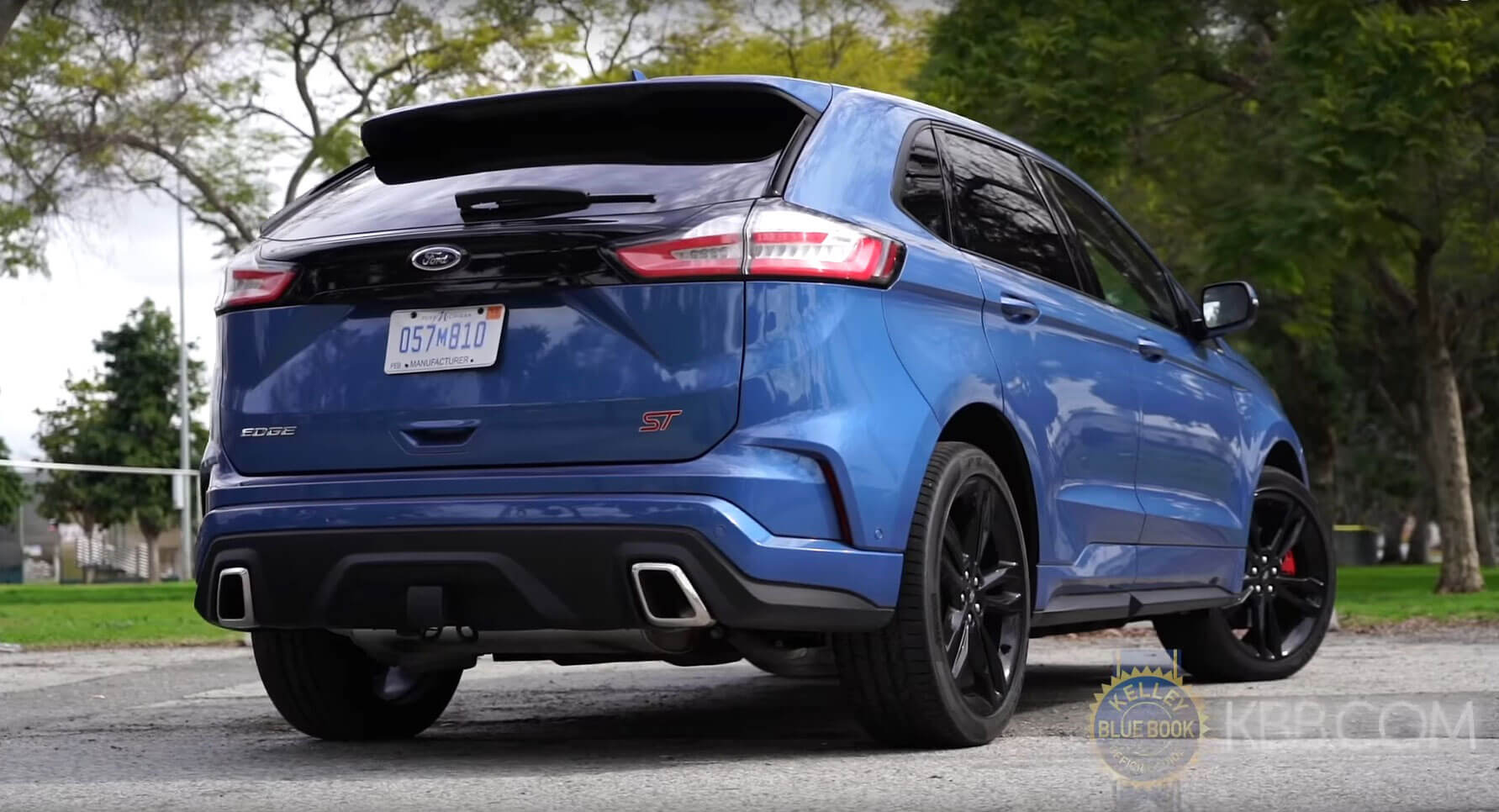
The 2019 Ford Edge ST is generally regarded as a performance-oriented SUV with a reliable 2.7L EcoBoost V6 engine, though it is prone to specific issues involving the electrical system, adaptive steering components, and potential coolant intrusion in early production models. Prospective owners should prioritize detailed maintenance records and verify that all safety recalls have been addressed before purchase.
Understanding the 2019 Ford Edge ST Platform
The 2019 model year marked the introduction of the ST trim to the Ford Edge lineup, replacing the previous Sport trim. As the first SUV from the Ford Performance division, the Edge ST was engineered to bridge the gap between a practical family hauler and a driver-focused machine. Under the hood lies a 2.7-liter twin-turbocharged EcoBoost V6, delivering 335 horsepower and 380 lb-ft of torque.
While the powertrain is largely shared with other Ford products—notably the F-150 and the Lincoln Continental—the application in the Edge ST is unique due to its performance tuning. When evaluating the reliability of this vehicle, it is critical to distinguish between the performance-tuned components and the underlying chassis, which is shared with the standard Ford Edge. Reliability, in this context, must account for the added thermal stress and mechanical load placed on the powertrain compared to the base-model Edge.
The 2.7L EcoBoost Powertrain: Performance vs. Longevity
The 2.7L EcoBoost engine is widely considered one of Ford’s more robust engine platforms, but it is not without its specific maintenance requirements. The primary concern reported by owners and documented in technical service bulletins involves the cooling system.
Historically, certain EcoBoost engines have faced challenges related to coolant intrusion into the combustion chambers. This typically stems from a design flaw in the cylinder head or head gasket sealing, which can lead to engine misfires and, in extreme cases, catastrophic internal failure. For the 2019 model year, Ford implemented design improvements; however, high-mileage examples should be inspected for coolant consumption. If you notice a sweet smell from the exhaust or a consistent loss of coolant in the reservoir without an obvious external leak, a compression test or a cooling system pressure test is mandatory.
Common Reliability Concerns and Known Issues
Beyond the engine, the 2019 Ford Edge ST exhibits a few recurring patterns that owners should monitor. Understanding these allows for proactive maintenance rather than reactive repairs.
Electrical and Infotainment Systems
The SYNC 3 infotainment system is generally stable, but owners frequently report issues with the rearview camera, which can suffer from intermittent blank screens or distorted images. This is often linked to a wiring harness fault rather than a failure of the camera unit itself. Furthermore, the battery management system (BMS) in the 2019 Edge can be sensitive. If the battery voltage drops even slightly below optimal levels, it can trigger false "Service AdvanceTrac" or "Hill Start Assist" warnings. Replacing the battery with a high-quality AGM (Absorbent Glass Mat) unit often resolves these spurious electronic glitches.
Adaptive Steering and Suspension
The ST trim features sport-tuned suspension and often came equipped with optional adaptive steering. While this enhances handling, it adds complexity to the steering rack. Owners have reported occasional "clunking" sounds from the front end, which are often traced back to sway bar end links or the strut mounts. These are standard wear-and-tear items for an SUV of this weight and performance level, rather than fundamental design failures, but they should be assessed during any pre-purchase inspection.
Transmission Performance
The 8-speed automatic transmission (8F35) was a significant update for 2019. Initial feedback indicated some owners experienced "harsh shifting" or hesitation during low-speed gear changes. Ford issued several software updates (Technical Service Bulletins) to address these shift-quality issues. If you are test-driving a 2019 Edge ST, verify that the transmission software has been updated to the latest version, as this significantly improves the driving experience and long-term transmission longevity.
Preventive Maintenance Strategy
To maximize the reliability of the 2019 Ford Edge ST, adherence to a stricter maintenance schedule than the factory-suggested "normal" interval is recommended.
- Oil Changes: Use only full-synthetic, API-certified motor oil that meets Ford’s specifications. Due to the twin-turbocharger setup, the oil is subjected to extreme temperatures. Changing the oil every 5,000 miles is a cheap insurance policy against turbo bearing wear.
- Transmission Fluid: Despite many manufacturers claiming "lifetime" fluid, the 8-speed transmission benefits from a fluid exchange every 60,000 miles, especially in a vehicle that is driven aggressively.
- Coolant System: Replace the engine coolant at the intervals specified in your owner’s manual, and ensure the cooling fan operation is checked annually.
- Spark Plugs: The 2.7L EcoBoost engine is sensitive to plug degradation. Replacing them every 60,000 to 75,000 miles prevents ignition system stress and potential misfires.
Comparative Reliability Analysis
The table below summarizes the reliability factors for the 2019 Edge ST compared to common mid-size performance SUVs of the same era.
| Component | 2019 Ford Edge ST | Typical Competitor (e.g., Grand Cherokee) | Impact on Ownership |
|---|---|---|---|
| Engine Platform | 2.7L EcoBoost (Proven) | 5.7L HEMI / 3.6L Pentastar | Turbochargers require specific warm-up/cool-down |
| Transmission | 8-Speed Automatic | 8-Speed ZF (Generally superior) | Software updates critical for shift quality |
| AWD System | Intelligent AWD (Front-biased) | Rear-biased / Permanent AWD | Efficient but less "sporty" feel |
| Infotainment | SYNC 3 (Stable) | Uconnect (High reliability) | SYNC 3 is intuitive but prone to wiring faults |
Frequently Asked Questions
Is the 2019 Ford Edge ST expensive to maintain?
Maintenance costs are generally in line with other mid-size luxury or performance-oriented SUVs. Parts are readily available through Ford’s extensive dealer network, which helps keep labor costs lower than European performance SUV equivalents.
How do I check if my Edge ST has outstanding recalls?
You can verify the recall status of any vehicle by entering the 17-digit Vehicle Identification Number (VIN) into the National Highway Traffic Safety Administration (NHTSA) official safety issues website.
Does the 2019 Ford Edge ST have a "timing chain" issue?
Unlike some of Ford's older Duratec-based engines, the 2.7L EcoBoost does not have a widespread, chronic history of catastrophic timing chain failure. However, regular oil changes are the most effective way to protect the timing chain tensioners from premature wear.
What is the most common failure point on a high-mileage Edge ST?
The most common "nuisance" failure is the electrical harness for the rear camera or the adaptive steering sensors. Mechanically, the suspension components (struts and bushings) are the first parts to reach the end of their service life after 80,000 miles.
Should I buy a 2019 Edge ST with over 100,000 miles?
A high-mileage Edge ST can be a reliable purchase provided there is documentation of consistent oil changes and transmission fluid services. Avoid vehicles with modifications to the engine control unit (ECU) or aftermarket "tunes," as these significantly increase stress on the transmission and turbos.
Final Recommendation
The 2019 Ford Edge ST is a balanced choice for those seeking performance without the maintenance burden of a German luxury competitor. Its reliability is highly dependent on how the previous owner treated the engine—specifically regarding warm-up periods and oil change frequency. Before finalizing any purchase, ensure you perform a test drive that focuses on transmission shift quality and listen for any suspension noises. A thorough pre-purchase inspection by an independent technician who has access to Ford-specific diagnostic software (such as FORScan) will help identify any hidden software-level issues or pending component failures. If maintained according to an enthusiast’s schedule, the Edge ST is a capable and durable vehicle for daily use.